

Public
consultation
is
a
constitutional
obligation,
not
a
mere
public
relations
exercise
to
legitimise
political
expediency
and
to
massage
the
egos
of
political
elites. The
Committee
failed
that
test.
Its
report
lacks
rigorous
constitutional
analysis
and
instead
rubber-stamps
proposals
that
violate
the
supreme
law
of
the
land.
The
Constitution
is
not
a
political
tool.
It
is
the
supreme
law,
binding
on
all
persons
and
institutions.
Constitutional
principles,
democratic
values,
and
the
sovereign
will
of
the
people
must
guide
its
amendment.
It
must
never
be
driven
by
political
expediency
or
personal
ambition.
ZICOMO
rejects,
in
the
strongest
terms,
the
Committee’s
endorsement
of
provisions
that:
-
Extend
presidential
and
parliamentary
terms
from
five
to
seven
years
—
a
direct
assault
on
term
limits; -
Remove
the
people’s
right
to
directly
elect
the
President
—
replacing
democracy
with
appointment
by
Parliament; -
Transfer
electoral
functions
from
the
independent
ZEC
to
the
Registrar-General
—
concentrating
power
and
destroying
electoral
integrity; -
Weaken
constitutional
safeguards
for
judicial
independence
—
exposing
the
courts
to
executive
capture; -
Fragment
electoral
management
through
new
bodies
with
no
guaranteed
independence
—
opening
the
door
to
manipulation.
On
constitutional
breaches
and
dismissal
of
minority
views:
The
report
also
dismisses
minority
views
without
adequate
engagement.
In
numerous
sections,
concerns
about
direct
presidential
elections,
electoral
independence,
judicial
appointments,
traditional
leaders
and
politics,
and
the
Constitutional
Court’s
jurisdiction
are
acknowledged
only
to
be
immediately
rejected.
The
Committee
admits
these
proposals
may
violate
Section
328
of
the
Constitution,
yet
recommends
them
regardless.
That
is
not
an
oversight.
That
is
complicity.
The
Committee
rarely
provides
detailed
legal
reasoning
to
show
why
these
objections
are
wrong.
A
parliamentary
report
must
evaluate
competing
constitutional
arguments,
not
simply
record
them
and
proceed.
Rubber-stamping
political
intent
is
not
constitutional
analysis.
Discrepancies
in
Submission
Numbers
Raise
Red
Flags
The
report
states
that
540,037
written
submissions
were
received,
with
537,102
supporting
the
Bill
and
only
2,935
opposing
it.
However,
Parliament
also
reports
that
only
54,231
people
attended
public
hearings
nationwide.
These
figures
raise
serious
questions.
It
is
difficult
to
explain
how
more
than
half
a
million
written
submissions
were
received
when
fewer
than
55,000
people
attended
the
hearings.
The
discrepancy
creates
concerns
about
the
accuracy
of
the
figures,
possible
duplication
of
submissions,
and
whether
the
reported
level
of
support
genuinely
reflects
public
opinion.
Constitutional
reform
must
be
based
on
a
credible,
transparent,
and
verifiable
process.
Public
confidence
cannot
be
built
on
statistics
that
appear
inconsistent
and
require
further
explanation.
On
the
claim
of
537,000
“supporters”:
The
report
alleges
that
537,000
of
540,000
submissions
supported
CAB3,
yet
it
fails
to
explain
how
these
submissions
were
verified,
whether
identical
responses
were
counted
multiple
times,
whether
organised
campaigns
submitted
bulk
responses,
whether
independent
auditing
was
conducted,
or
whether
any
assessment
of
authenticity
took
place.
Without
transparent
verification
and
independent
scrutiny,
these
figures
are
unverified
and
cannot
be
used
to
manufacture
public
consent
for
constitutional
change.
Without
methodological
transparency,
the
figures
cannot
be
independently
verified
and
therefore
cannot
serve
as
a
reliable
basis
for
constitutional
reform.
We
therefore
demand
immediate
publication
of
all
submissions
for
independent
verification
and
audit.
Until
then,
these
numbers
are
unproven
and
must
not
be
used
to
justify
constitutional
vandalism.
Credibility
is
not
claimed.
It
is
proven.
Our
position
is
non-negotiable:
Any
amendment
affecting
presidential
terms,
electoral
rights,
democratic
participation,
or
the
separation
of
powers
MUST
be
approved
by
the
people
of
Zimbabwe
through
a
national
referendum,
as
required
by
Section
328.
Parliament
has
no
authority
to
substitute
itself
for
the
sovereign
will
of
the
people.
The
Constitution
belongs
to
the
people
of
Zimbabwe.
Not
to
Parliament.
Not
to
political
parties.
Not
to
any
individual.
ZICOMO
therefore
demands:
-
Parliament
must
REJECT every
provision
that
undermines
constitutional
democracy,
electoral
independence,
and
judicial
independence; -
Government
must
OBEY Section
328
—
no
shortcuts,
no
circumvention; -
Citizens,
churches,
unions,
students,
traditional
leaders,
and
civil
society
must
STAND
UP and
defend
the
Constitution
before
it
is
stolen; -
SADC,
AU, and
the
international
community must
ACT —
monitor
CAB3
and
speak
out
against
constitutional
manipulation
in
Zimbabwe.
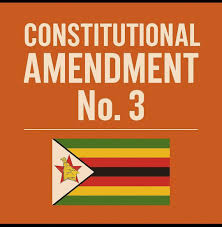
As
a
result,
the
report
reads
more
as
an
endorsement
of
Constitutional
Amendment
Bill
No.
3
than
as
an
objective
parliamentary
assessment
of
its
constitutional
validity
and
democratic
implications.
For
a
constitutional
amendment
of
such
far-reaching
significance,
Zimbabweans
deserve
a
more
rigorous,
transparent
and
constitutionally
grounded
analysis.
Zimbabwe’s
future
will
be
determined
by
constitutional
democracy,
not
by
constitutional
manipulation.
ZICOMO
will
use
every
lawful
means
to
defend
constitutionalism,
term
limits,
democratic
accountability,
separation
of
powers,
and
the
sovereign
right
of
Zimbabweans
to
determine
their
own
future.
The
Constitution
is
the
People’s
Covenant.
It
will
not
be
amended
against
the
people.
Post
published
in:
Featured