

Every
morning
at
about
6:47
AM,
my
4-year-old
daughter’s
head
pops
off
the
pillow
with
the
same
urgent
question:
“What
are
we
doing
today?”
I’ll
be
brutally
honest
–
most
mornings
I’m
just
hoping
for
30
minutes
of
uninterrupted
coffee
time.
But
she
needs
that
roadmap.
She
needs
to
know
what’s
next.
As
adults,
we
often
forget
we’re
wired
the
same
way.
You
wouldn’t
buy
a
house
without
seeing
the
contractor’s
blueprint
first.
You’ll
never
see
the
finished
house
until
it’s
built,
but
that
detailed
plan
gives
you
confidence
it’ll
look
right.
The
same
principle
applies
to
retirement
–
especially
for
lawyers.
When
I
talk
with
lawyers
approaching
retirement,
the
anxiety
isn’t
usually
about
the
numbers.
You’ve
built
successful
careers,
accumulated
assets,
done
the
“right”
things
financially.
The
struggle
runs
deeper
than
that.
It’s
a
loss
of
identity.
Who
are
you
without
the
courtroom,
the
clients,
the
late-night
brief
writing?
But
there’s
another
piece
that
compounds
this
emotional
uncertainty:
no
one
has
ever
shown
you
a
clear
financial
blueprint
for
how
retirement
actually
works.
And
it’s
really
hard
to
feed
your
emotional
confidence
when
there
isn’t
even
a
clear
picture
of
how
it
all
works
from
a
financial
perspective.
That’s
where
a
strategic
plan
with
tax-smart
withdrawal
strategies
comes
in.
Think
of
this
as
your
retirement
blueprint
–
a
detailed
plan
that
marries
the
emotional
side
with
the
financial
side
to
provide
confidence
about
what
the
next
phase
should
look
like.
Why
Withdrawal
Sequencing
Matters
More
Than
You
Think
You’ve
got
three
main
buckets
of
retirement
assets,
and
each
gets
taxed
differently:
Taxable
accounts
(your
regular
investment
accounts)
–
You
pay
taxes
on
dividends
and
capital
gains,
but
you’ve
already
paid
income
tax
on
the
money
that
went
in.
Tax-deferred
accounts
(Traditional
401k,
Traditional
IRA)
–
Every
dollar
you
withdraw
gets
taxed
as
ordinary
income.
Yikes.
Tax-free
accounts
(Roth
IRA,
Roth
401k)
–
No
taxes
on
withdrawals
in
retirement.
None.
Why
does
this
matter?
Because
the
order
you
tap
these
accounts
can
make
the
difference
between
keeping
more
of
your
money
versus
handing
it
over
to
Uncle
Sam.
We’re
talking
about
spendable
income,
gifting
capacity,
and
funds
for
your
beneficiaries.
The
conventional
wisdom
says
just
take
a
little
from
each
account
pro-rata
style
(might
as
well
spread
it
around,
right?).
But
here’s
where
it
gets
interesting
–
that’s
not
always
the
smartest
approach.
Let
me
introduce
you
to
Rachel
and
Caleb
Justice
(not
their
real
names
of
course).
Both
lawyers,
both
65,
both
ready
to
retire
with
a
$2.6
million
net
worth.
They
need
about
$10,000
monthly
in
after-tax
expenses
plus
healthcare
costs
–
roughly
$120,000+
annually.
Here’s
what
their
retirement
asset
picture
looks
like:
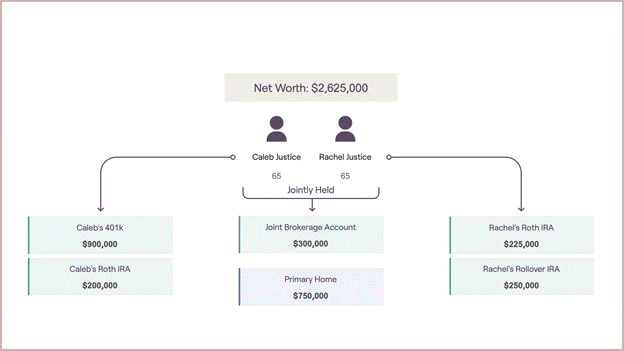
Looking
at
their
three
buckets:
-
Tax-deferred
accounts:
$1.15
million
(Caleb’s
401k
+
Rachel’s
Rollover
IRA) -
Tax-free
accounts:
$425,000
(both
Roth
IRAs) -
Taxable
accounts:
$300,000
(Joint
Brokerage)
Rachel
and
Caleb
had
a
critical
decision
to
make
about
Social
Security
timing
and
withdrawal
sequencing.
In
their
case,
they
were
solving
for
lifetime
income
while
paying
the
least
amount
in
projected
taxes.
They
employed
an
intentional
withdrawal
strategy:
taxable
accounts
first,
then
tax-free,
then
tax-deferred.
And
instead
of
taking
Social
Security
immediately,
they
delayed
until
full
retirement
age
(67
in
their
case).
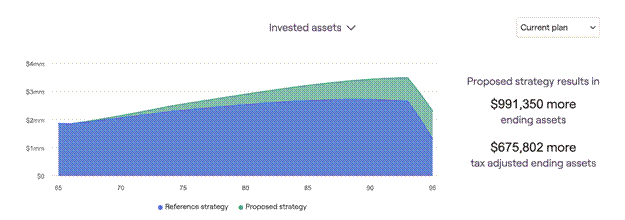
The
result?
This
strategy
added
over
$675,000
in
tax-adjusted
ending
assets
to
their
plan
compared
to
the
conventional
pro-rata
approach.
But
they
didn’t
stop
there.
The
Power
of
Strategic
Roth
Conversions
First,
let
me
explain
what
a
Roth
conversion
actually
is.
It’s
pretty
simple:
you
take
money
from
your
tax-deferred
accounts
(like
a
401k
or
traditional
IRA)
and
move
it
to
a
Roth
IRA.
You
pay
taxes
on
that
money
today,
but
then
it
grows
tax-free
forever.
No
taxes
when
you
withdraw
it.
No
Required
Minimum
Distributions
forcing
you
to
take
money
out.
It’s
like
paying
the
tax
bill
upfront
to
never
get
another
tax
bill
on
that
money
again.
With
that
introduction
to
Roth
conversions
out
of
the
way,
let’s
get
back
to
Caleb
and
Rachel:
Between
ages
65
and
73
(when
Required
Minimum
Distributions
kick
in),
they
made
a
strategic
move:
they
converted
money
from
their
tax-deferred
accounts
(401k
and
Rollover
IRA)
to
Roth
IRAs
–
enough
to
fill
up
their
10%
tax
bracket
each
year.
They
didn’t
spend
this
money.
Instead,
they
elected
to
pay
taxes
today
at
a
lower
rate
than
they
were
projected
to
be
once
those
pesky
RMDs
kicked
in.
Think
of
it
as
“topping
off”
their
lowest
tax
bracket
and
moving
money
from
the
“pay
taxes
later”
bucket
to
the
“never
pay
taxes
again”
bucket.
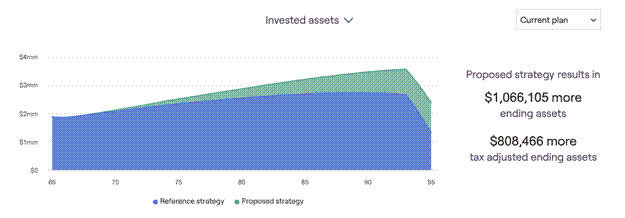
This
additional
wrinkle?
Now
we’re
looking
at
over
$800,000
in
more
tax-adjusted
ending
assets.
Let’s
bring
this
concept
home
—
proper
coordination
between
Social
Security
timing,
pension
sources,
and
your
distribution
strategy
can
dramatically
impact
your
lifetime
income.
It’s
not
just
about
having
money
–
it’s
about
keeping
more
of
it.
Capital
Gains
Harvesting:
The
“0%”
Sweet
Spot
Here’s
something
that
might
surprise
you:
there’s
actually
a
0%
capital
gains
tax
bracket
in
retirement.
Here’s
how
it
works
—
When
you
sell
investments
in
your
taxable
accounts,
you
pay
capital
gains
tax
on
the
profit.
If
you
hold
those
investments
for
more
than
one
year,
you
get
preferential
tax
treatment
called
“long-term
capital
gains”
–
which
is
taxed
at
much
lower
rates
than
ordinary
income.
But
–
and
this
is
the
beautiful
part
–
if
your
taxable
income
stays
below
certain
thresholds,
you
pay
exactly
zero
percent
on
long-term
capital
gains.
For
2025,
married
couples
filing
jointly
can
have
up
to
$94,050
in
taxable
income
and
still
qualify
for
the
0%
capital
gains
rate.
Single
filers
get
up
to
$47,025.
Again,
this
is
taxable
income,
which
means
with
a
standard
deduction
a
couple
filing
jointly
could
have
up
to
$127,250
in
total
income
and
still
qualify
($94,050
plus
standard
deduction
of
$33,200).
Where
does
this
fit
in?
Well,
let’s
head
back
to
our
example
with
Caleb
and
Rachel:
Between
ages
67
and
75,
their
strategic
withdrawal
sequencing
kept
their
taxable
income
in
that
sweet
spot.
The
result?
They
paid
0%
in
capital
gains
taxes
during
those
crucial
early
retirement
years.

This
isn’t
about
fancy
financial
engineering.
It’s
about
understanding
how
the
tax
code
works
and
positioning
yourself
to
take
advantage
of
it.
Your
Retirement
Blueprint
Starts
Here
Remember
my
daughter’s
morning
question?
“What
are
we
doing
today?”
The
lawyers
I
work
with
need
that
same
clarity
about
retirement.
Not
just
the
warm,
fuzzy
vision
of
“more
time
with
family”
–
though
that’s
important
too.
You
need
a
concrete
financial
blueprint
that
shows
exactly
how
the
money
flows,
when
taxes
hit,
and
how
to
keep
more
of
what
you’ve
worked
so
hard
to
build.
Tax-smart
withdrawal
strategies
aren’t
just
about
minimizing
taxes
(though
they
do
that
beautifully).
They’re
about
creating
a
clear,
executable
plan
that
gives
you
confidence
in
your
next
chapter.
And
I’ve
learned
that
when
you
have
that
financial
blueprint
in
place,
the
emotional
piece
starts
falling
into
place
too.
You
begin
to
see
retirement
not
as
an
ending,
but
as
a
strategic
transition
to
a
new
phase
of
life.
Your
retirement
deserves
more
than
a
“wing
it
and
hope”
withdrawal
strategy
–
and
so
do
you.
DISCLOSURE:
The
information
in
this
article
is
not
intended
as
tax,
accounting,
retirement
or
legal
advice,
as
an
offer
or
solicitation
of
an
offer
to
buy
or
sell,
or
as
an
endorsement
of
any
company,
security,
fund,
or
other
securities
or
non-securities
offering.
This
information
should
not
be
relied
upon
as
the
sole
factor
in
an
investment
making
decision
or
your
decision
to
retire.
In
any
examples
or
case
studies
used,
all
client
names
have
been
changed.

David
Hunter,
CFP®
is
a
CERTIFIED
FINANCIAL
PLANNER™
and
owner
of First
Light
Wealth,
LLC,
a
financial
planning
&
wealth
management
firm
with
a
unique
focus
on
serving
attorneys
nationwide.
David
has
over
a
decade
of
experience
helping
clients
build
financial
plans
and
has
been
featured
in
publications
such
as
Attorney
at
Work,
ThinkAdvisor,
MarketWatch,
Financial
Planning,
and
InvestmentNews.
David
also
writes
weekly
to
attorneys
in
his
popular Money
Meets
Law newsletter.
For
more
about
David,
visit firstlightwealth.com/lawyers or
connect
with
him
on LinkedIn.