
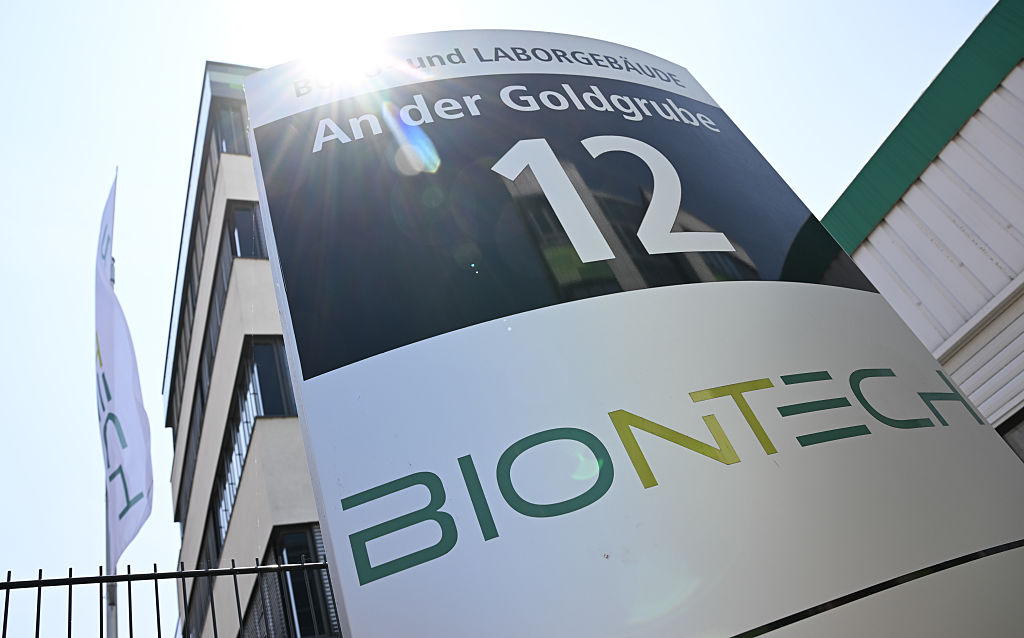
BioNTech,
a
biotech
company
best
known
for
its
successful
development
of
a
messenger
RNA
Covid-19
vaccine,
is
acquiring
fellow
mRNA
company
CureVac
in
a
$1.25
billion
stock
deal
that
brings
together
firms
applying
their
respective
technologies
to
the
development
of
new
treatments
for
cancer.
The
acquisition
agreement
announced
Thursday
will
place
the
mRNA
pipeline
and
manufacturing
infrastructure
of
CureVac
under
the
umbrella
of
the
much
larger
BioNTech,
whose
pipeline
growth
has
been
fueled
by
revenue
from
the
commercialized
Covid-19
vaccine.
The
joint
BioNTech
and
CureVac
announcement
Thursday
framed
the
acquisition
as
a
way
to
combine
complementary
technologies
and
capabilities.
But
BioNTech
and
CureVac
were
not
always
on
such
cordial
terms.
In
fact,
they’ve
been
fighting
in
court
for
the
past
three
years.
Mainz,
Germany-based
BioNTech
and
Tübingen,
Germany-based
CureVac
both
rose
to
prominence
during
the
Covid-19
pandemic
due
to
their
respective
mRNA
technology
platforms.
While
CureVac’s
vaccine
candidate
for
the
novel
coronavirus
fell
short
of
expectations
in
clinical
testing,
BioNTech’s
mRNA
vaccine,
partnered
with
Pfizer,
went
on
to
become
the
first
FDA-authorized
and
then
the
first
FDA-approved
Covid-19
vaccine,
Comirnaty.
CureVac
was
founded
eight
years
before
BioNTech
and
it
contended
its
inventions
were
key
to
the
design
and
development
of
Comirnaty.
In
2022,
CureVac
sued
BioNTech
in
Europe,
claiming
Comirnaty
infringed
key
mRNA
patents.
Recent
rulings
have
gone
CureVac’s
way.
In
March
and
in
May,
the
European
Patent
Office
issued
rulings
upholding
the
validity
of
two
CureVac
patents.
Additional
patent
hearings
were
expected
over
the
summer.
To
Leerink
Partners
analyst
Daina
Graybosch,
BioNTech’s
acquisition
of
CureVac
is
essentially
a
hedge
against
legal
and
financial
uncertainty.
The
patent
litigation
put
BioNTech
at
risk
of
paying
backdated
royalties
on
about
$32
billion
of
global
Comirnaty
sales
to
date,
Graybosch
said
in
a
research
note.
Paying
about
$1.25
billion
to
acquire
CureVac
is
essentially
an
out-of-court
settlement,
she
said,
adding
that
BioNTech
has
the
additional
potential
upside
of
being
able
to
leverage
CureVac’s
emerging
mRNA-based
oncology
platform
and
expertise
to
complement
its
own
work
in
cancer
drug
R&D.
CureVac’s
Covid-19
vaccine
was
developed
with
GSK
under
an
alliance
that
covered
infectious
disease
broadly.
Last
year,
GSK
took
over
development
of
an
avian
influenza
vaccine
candidate
that
emerged
from
the
partnership.
CureVac
also
completed
a
restructuring
that
left
the
company
focused
on
R&D
of
mRNA
cancer
vaccines
that
are
currently
in
preclinical
and
early
clinical
development.
Well
before
Covid-19’s
emergence,
cancer
was
the
focus
of
BioNTech.
The
company
still
has
several
mRNA
cancer
immunotherapies
in
its
pipeline.
But
during
the
recent
annual
meeting
of
the
American
Society
of
Clinical
Oncology,
Chief
Commercial
Officer
Annemarie
Hanekamp
told
MedCity
News
that
a
bispecific
antibody,
codenamed
BNT327,
is
the
centerpiece
of
the
company’s
oncology
strategy.
This
antibody
is
engineered
to
bind
to
two
cancer
targets,
the
proteins
PD-L1
and
VEGF-A.
BNT327
is
currently
in
pivotal
testing
in
lung
and
breast
cancers,
but
BioNTech
views
the
bispecific
antibody
as
a
drug
combination
backbone,
potentially
paired
with
other
assets
from
the
BioNTech
pipeline,
such
as
mRNA
immunotherapies
and
antibody
drug
conjugates.
That
strategy
has
a
big
boost
from
Bristol
Myers
Squibb,
which
last
week
agreed
to
pay
$1.5
billion
up
front
to
begin
a
collaboration
with
BioNTech
on
BNT327.
BioNTech,
whose
American
depositary
shares
(ADS)
trade
on
the
Nasdaq,
opened
Thursday
at
$105.64
per
share.
According
to
terms
of
the
all-stock
acquisition,
each
CureVac
share
will
be
exchanged
for
about
$5.45
in
BioNTech
ADS.
That
price
represents
a
premium
of
32.6%
to
CureVac’s
closing
stock
price
on
Wednesday
and
a
nearly
55%
premium
to
the
biotech’s
average
stock
price
in
the
three
months
leading
up
to
the
deal.
The
transaction
comes
with
a
collar
agreement
that
sets
a
ceiling
and
a
floor
for
the
exchange
depending
on
changes
to
BioNTech’s
stock
price.
When
the
deal
closes,
CureVac
shareholders’
ownership
stake
in
BioNTech
will
be
between
4%
and
6%.
In
addition
to
the
customary
regulatory
approvals,
the
acquisition
requires
a
minimum
of
80%
of
CureVac
shares
to
accept
the
transaction
terms.
A
shareholder
meeting
is
planned,
but
has
not
yet
been
scheduled.
BioNTech
said
it
may
unilaterally
reduce
the
minimum
threshold
to
75%
under
certain
circumstances
that
weren’t
specified.
The
acquisition
announcement
states
that
shareholders
representing
36.76%
of
CureVac’s
shares
have
agreed
to
tender
their
shares
and
to
vote
in
favor
of
the
transaction
at
the
upcoming
meeting.
Also,
BioNTech
said
the
German
government
has
“confirmed
to
generally
have
a
positive
view
on
the
transaction.”
BioNTech
and
CureVac
expect
the
acquisition
will
close
later
this
year.
Afterward,
CureVac
will
operate
as
a
wholly
owned
subsidiary
with
its
manufacturing
site
in
Tübingen
integrated
into
BioNTech.
“This
transaction
is
another
building
block
in
BioNTech’s
oncology
strategy
and
an
investment
in
the
future
of
cancer
medicine,”
BioNTech
CEO
and
co-founder
Ugur
Sahin
said
in
a
prepared
statement.
“We
intend
to
bring
together
complementary
capabilities
and
leverage
technologies
with
the
goal
of
advancing
the
development
of
innovative
and
transformative
cancer
treatments
and
establishing
new
standards
of
care
for
various
types
of
cancer
in
the
coming
years.”
Photo:
Arne
Dedert/picture
alliance,
via
Getty
Images