
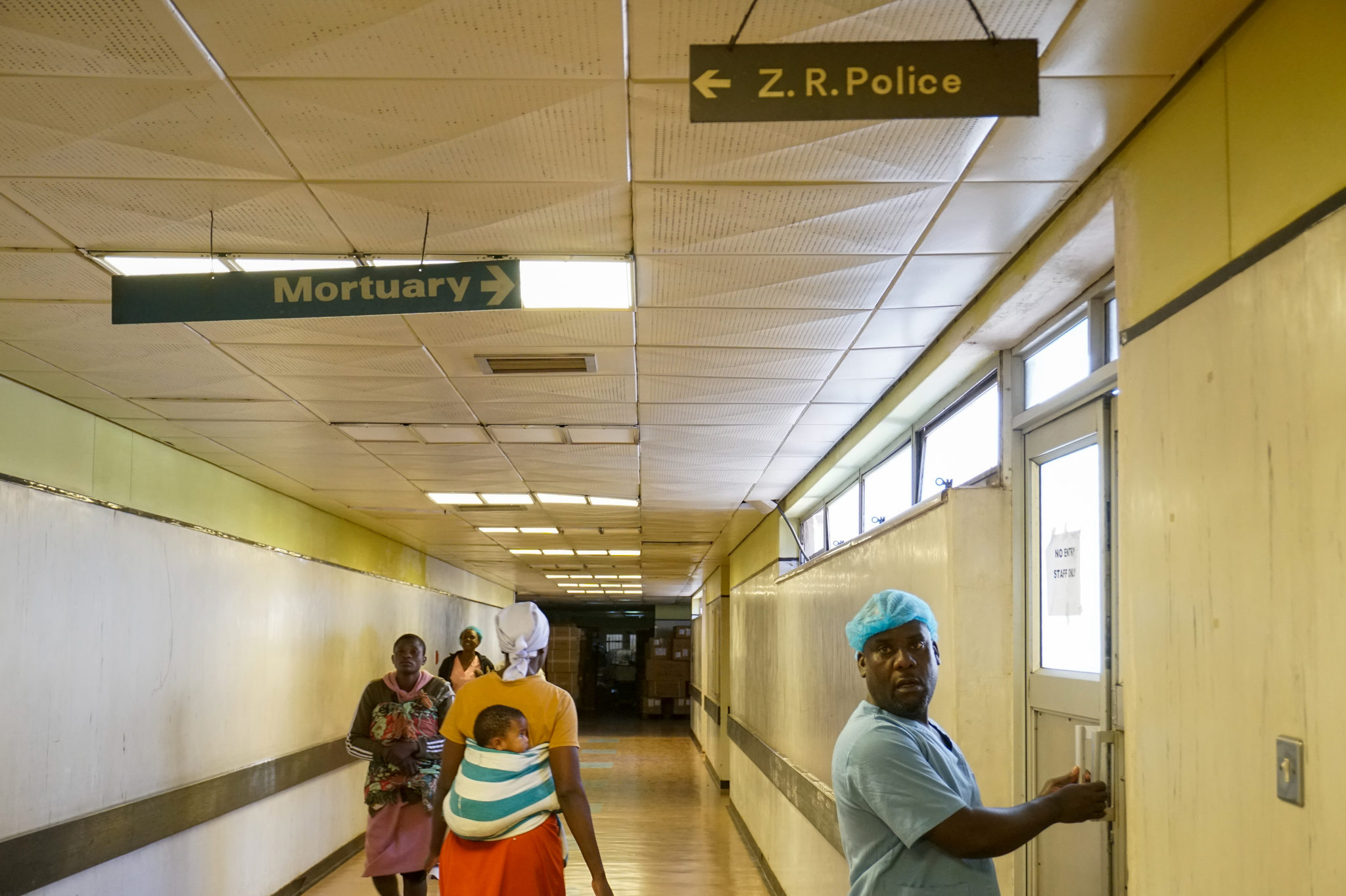
HARARE,
ZIMBABWE
—
Blessing
Mucharambei’s
uncle
was
just
having
lunch
when
he
stood
up,
then
collapsed.
“[He]
started
bleeding
from
the
nose,”
she
says,
“and
died
on
the
spot.”
As
far
as
his
family
knew,
he
had
no
health
problems.
As
they
struggled
to
make
sense
of
the
news,
Chitungwiza
Hospital
—
where
his
body
had
been
taken
to
a
mortuary
—
told
them
that
a
forensic
postmortem
would
be
required.
Zimbabwean
law
mandates
postmortems
for
sudden
or
unexplained
deaths,
and
public
hospitals
offer
them
for
free.
But
there
are
only
five
qualified
pathologists
in
Zimbabwe
serving
a
population
of
close
to
17
million
people.
The
wait
could
stretch
for
days.
And
each
day
the
funeral
was
delayed
would
add
to
the
cost
of
hosting
mourners,
as
some
traditions
require.
A
police
officer
stationed
at
the
hospital
offered
them
a
workaround.
Instead
of
a
forensic
postmortem,
they
could
do
a
general
one
—
an
option
when
no
foul
play
is
suspected,
and
quicker
since
it
doesn’t
require
a
specialist.
But
even
that,
he
warned,
could
take
days.
He
offered
to
fast-track
the
process
for
a
US$30
fee.
Desperate
to
bury
their
loved
one,
they
paid.
“We
couldn’t
afford
the
time,”
Mucharambei
says.
“We
did
it
because
we
had
no
choice.”
A
country
in
freefall
Postmortem
bribes
are
just
one
element
of
a
health
system
—
and
state
—
in
freefall. Hospitals
across
the
country
are
plagued by
chronic
underfunding,
obsolete
infrastructure
and
the
mass
emigration
of
medical
professionals
seeking
better
pay
abroad.
The
government
estimates
that
the
country
needs
more
than
US$1.6
billion
for
its
health
sector
to
recover.
Underpaid
and
overstretched
health
workers
have
come
to
rely
on
informal
payments
as
a
means
of
survival,
says
Dr.
Norman
Matara,
secretary
general
of
the
Zimbabwe
Hospital
Doctors
Association.
“People
are
trying
to
survive.
But
over
time,
corruption
becomes
part
of
the
culture.”
He
says
it’s
a
common
problem
across
hospital
services,
from
the
moment
a
patient
is
admitted. New
mothers,
for
example,
face
extortion for
birth
cards
meant
to
be
free.
A
2021
study
from
Transparency
International
Zimbabwe
surveyed
over
1,000
people
in
Zimbabwe
and
found
that
74%
had
been
asked
to
pay
a
bribe
while
trying
to
access
health
care
services.
In
March,
a
nurses’
protest
at
Sally
Mugabe
Central
Hospital
—
the
largest
referral
hospital
in
the
country
—
exposed
how
dire
the
situation
is.
It
was
the
latest
in
a
long
history
of
strikes
by
health
workers,
who
have
repeatedly
protested
poor
pay
and
deteriorating
working
conditions.
But
their
actions
are
often
met
with
intimidation.
In
June
2022,
the
government
responded
to
a
strike
by
passing
a
law
banning
health
care
workers
from
striking
longer
than
72
hours,
with
penalties
of
up
to
six
months
in
jail
for
participants
and
organizers.
A
manufactured
problem
Pathology
services
are
particularly
strained,
Matara
says.
The
few
available
specialists
are
clustered
in
major
hospitals,
which
creates
opportunities
for
exploitation.
Few
medical
students
choose
the
career,
and
those
who
do
face
an
uphill
battle.
Training
programs
are
underfunded,
mentorship
is
scarce
and
working
conditions
at
public
hospitals
are
dismal.
But
this
is
partly
a
manufactured
problem,
says
Memory,
a
nurse
at
Sally
Mugabe
Central
Hospital,
who
asked
to
use
her
middle
name
for
fear
of
losing
her
job.
Memory
has
worked
at
the
hospital’s
mortuary
close
to
20
years.
“There
isn’t
really
a
backlog
but
a
fake
one
is
created
by
police
officers,
the
doctors
and
mortuary
staff
to
pressure
families
into
paying,”
she
says.
These
services
are
supposed
to
be
easily
available,
she
adds.
A
Cuban
doctor
performs
the
forensic
postmortems
on
Mondays,
Wednesdays
and
Fridays,
while
the
general
ones
are
done
daily.
But
families
are
often
told
there
are
delays.
At
times,
they
are
asked
to
pay
US$50
to
skip
it
entirely,
even
when
it’s
required
by
law,
or
US$100
to
expedite
the
process,
Memory
says.
“It’s
a
moneymaking
scheme
at
the
expense
of
grieving
people,”
she
says.
Global
Press
Journal
reached
out
to
Sally
Mugabe
Central
Hospital
for
a
response
to
these
allegations.
They
declined
to
comment.
Tendai
Terrence
Mautsi,
the
public
relations
officer
at
Parirenyatwa
Hospital,
the
largest
public
hospital
in
Zimbabwe,
says
there
are
occasional
delays
with
forensic
postmortem
cases,
mostly
due
to
demand.
The
hospital,
he
says,
has
responded
by
increasing
forensic
postmortem
days
from
two
to
three.
They’ve
also
cut
the
average
waiting
time
from
up
to
two
weeks
to
just
three
days.
To
address
the
national
shortage,
Mautsi
says,
the
hospital
has
partnered
with
Cuban
doctors
to
fill
the
skills
gap.
He
acknowledges
that
corruption
has
plagued
the
process.
But,
he
says,
it’s
part
of
a
much
bigger
unravelling,
and
everyone
has
become
complicit.
“At
times
you
can’t
find
evidence,”
he
says.
“When
you
want
to
investigate
it,
the
patient
is
complicit.
The
service
provider
is
also
complicit.”
In
the
end,
corruption
harms
people
in
need,
says
Tafadzwa
Chikumbu,
the
executive
director
of
Transparency
International
Zimbabwe.
“For
those
who
can’t
afford
to
pay
[a
bribe],
it
means
being
left
unattended,”
he
says,
which
erodes
the
integrity
of
public
institutions.
The
solution,
he
says,
is
to
make
ethical
conduct
—
including
fair
hiring
and
honest
service
delivery
—
the
standard.

A
cover-up?
Postmortem
corruption
means
some
families
never
find
out
what
happened
to
their
loved
one.
When
Emily
Muchabaiwa’s
brother
was
found
dead
in
Harare’s
industrial
area,
his
family
was
desperate
for
answers.
The
circumstances
of
his
death
weren’t
clear,
and
the
family
hoped
a
postmortem
at
Parirenyatwa
Hospital
would
offer
closure.
Per
standard
procedure,
a
medical
doctor
or
the
pathologist
should
explain
the
results
to
the
family,
Matara
says.
There
should
also
be
a
written
report.
But
it
was
a
police
officer
who
delivered
the
results,
verbally,
to
Muchabaiwa’s
family.
There
was
no
official
report.
“[He]
told
us
my
brother
had
died
from
tuberculosis
and
a
cold
in
the
lungs,
but
he
struggled
to
explain
the
medical
terms.
Prior
to
all
this,
my
brother
had
no
signs
of
sickness,”
she
says.
The
family
was
suspicious.
Muchabaiwa
says
they
believe
the
death
involved
foul
play
and
the
process
was
compromised.
It
would
cost
the
family
money
to
delay
the
funeral,
so
they
buried
her
brother,
who
left
behind
a
young
son.
“We
had
no
choice,”
she
says,
voice
trembling.
“The
postmortem
failed
us.
Corruption
failed
us.”