
Everyone’s
talking
about
AI
in
legal
—
for
better
or
worse
—
and
lawyers
are
mostly
using
some
mix
of
AI
tools
in
some
form
or
another
occasionally.
But
how
many
firms
out
there
have
a
strategy
beyond,
“I
dunno,
you
all
figure
it
out”?
It
seems
the
answer
is
“not
many,”
which
is
unfortunate
because
having
a
strategy
is
far
more
important
than
whether
or
not
anyone’s
using
it.
The
Thomson
Reuters
“Future
of
Professionals”
report
just
dropped
and
one
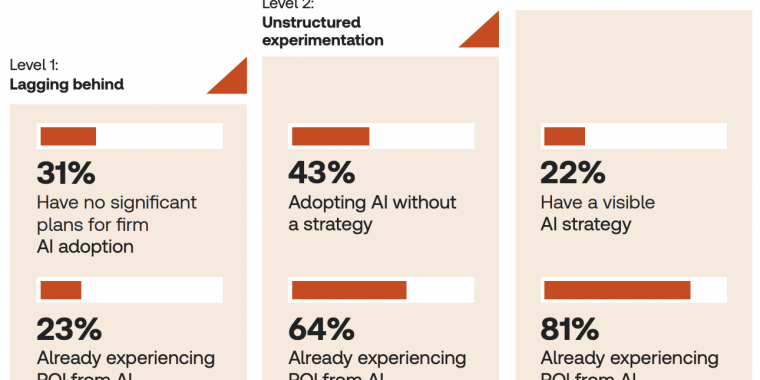
stat
standing
out
among
its
insights
is
that
organizations
with
a
visible
AI
strategy
are
not
only
twice
as
likely
to
report
growth,
they’re
also
3.5
times
more
likely
to
see
actual,
tangible
benefits
from
AI
adoption.
And
yet,
of
a
profession
that
fancies
itself
a
bunch
of
4D
chess
players,
only
22
percent
of
organizations
have
such
a
plan.
Come
on!
This
isn’t
like
the
nation’s
Iran
policy…
you
actually
need
to
do
some
strategic
planning
for
this
one.
While
headlines
have
focused
on
the
gap
between
the
31
percent
with
no
plans
for
adoption
and
everyone
else,
the
more
pressing
concern
might
be
the
43
percent
just
winging
it.
That
31
percent
may
be
left
behind
while
they
fax
their
Word
Perfect
drafts
to
co-counsel,
but
they’ll
be
relatively
harmless
in
their
Faraday
cage
of
sadness.
The
43
percent
are
going
to
reap
fewer
of
the
benefits
while
taking
on
a
whole
lot
of
the
risk.
Sort
of
“malpractice
slow
motion.”
Or,
if
it’s
not
malpractice,
it’s
at
least
leaving
money
on
the
table.
Thomson
Reuters
estimates
AI
will
save
professionals
five
hours
a
week
—
or
nearly
240
hours
per
year
—
which
they
estimate
as
about
$19,000
per
professional
annually.
That
scales
up
to
about
$32
billion
in
unlocked
capacity
across
the
industry.
But
that
industry
estimate
assumes
an
hourly
rate
of
less
than
a
hundred
(because
it’s
mixed
to
include
the
whole
range
of
legal
professionals).
Assuming
lawyers
think
their
time
is
more
valuable
—
and
they
definitely
think
that
—
and
that
there’s
five
hours
a
week
worth
of
work
that
a
junior
associate
can
offload
to
AI,
that’s
like
$150K
in
time
they
can
be
forced
to
toil
on
other
projects.
They
can’t
double
bill
time
of
course,
but
adopt
some
fixed
fee
projects
to
capture
the
value
of
saved
time
and
that’s
money
waiting
to
be
grabbed
BY
YOU.
One
of
the
biggest
stumbling
blocks
in
legal
tech
is
adoption.
Many
firms
have
savvy
tech
professionals
who
can
go
out
and
buy
the
right
products,
but
they’re
only
valuable
if
lawyers
know
they
exist.
That’s
where
a
good
strategy
would
come
in.
The
good
news
is
that
roughly
96
percent
of
respondents
have
a
grasp
that
AI
exists.
The
bad
news
is
that
most
lawyers
are
finding
out
about
AI
by
randomly
hunting
and
pecking
on
their
own:

To
all
of
you
learning
about
AI
strategy
by
voluntarily
coming
to
Above
the
Law
right
now…
welcome!
Please
enjoy
your
stay.
Learn
about
federal
chewing
gum
caselaw
while
you’re
here.
This
is
Underpants
Gnome
territory:

The
question
for
law
firms
isn’t
“Should
we
adopt
AI?”
That
ship’s
left
the
harbor,
and
it’s
firing
on
your
position.
The
question
is
how
to
harness
the
tech,
leverage
the
firm’s
years
of
intellectual
capital,
avoid
pitfalls,
protect
client
data,
and
turn
all
that
free
time
into
new
revenue.
Thankfully
for
firms,
most
of
your
competitors
are
lagging
behind
too
so
there’s
plenty
of
time
to
get
ahead
on
this.
Those
that
don’t,
as
the
report
concludes,
“will
find
themselves
floundering
and
ultimately
failing
to
maintain
a
competitive
advantage
or
deliver
value
to
their
businesses
or
clients.”
 Joe
Joe
Patrice is
a
senior
editor
at
Above
the
Law
and
co-host
of
Thinking
Like
A
Lawyer.
Feel
free
to email
any
tips,
questions,
or
comments.
Follow
him
on Twitter or
Bluesky
if
you’re
interested
in
law,
politics,
and
a
healthy
dose
of
college
sports
news.
Joe
also
serves
as
a
Managing
Director
at
RPN
Executive
Search.