
When
it
comes
to
adopting
generative
artificial
intelligence,
lawyers
are
faced
with
competing
incentives.
On
the
one
hand,
clients
are
demanding
that
their
firms
become
more
efficient
—
and
a
lawyer’s
competitors
are
already
delivering
on
this
goal.
On
the
other
hand,
evolving
ethical
concerns
continue
to
dog
the
industry
and
present
challenges
to
innovation.
The
good
news
is
that
modern
legal
AI
tools
make
it
possible
to
work
more
efficiently
while
staying
firmly
within
ethical
guardrails.
Here,
we’ll
explore
how
firms
can
responsibly
integrate
AI
into
financial
workflows
without
compromising
trust,
compliance,
or
the
lawyer’s
central
role
in
judgment
and
decision-making.
The
Intersection
of
AI,
Ethics,
and
Legal
Practice
While
discussions
of
the
pitfalls
of
generative
AI
often
focus
on
the
problem
of
hallucinations,
the
core
concerns
for
legal
professionals
are
more
grounded:
accuracy,
security,
and
ethical
integrity.
As
noted
in
MyCase’s
2025
Legal
Industry
Report,
76%
of
respondents
said
“significant”
or
“moderate”
ethics
concerns
were
slowing
their
adoption
of
AI.
These
concerns
aren’t
just
theoretical.
The
legal
field
is
governed
by
strict
professional
conduct
rules,
particularly
when
it
comes
to
confidentiality,
accuracy
of
communication,
and
the
nondelegation
of
key
legal
tasks
to
non-lawyers
or
technology.
Firms
exploring
AI
must
be
cautious
and
intentional,
choosing
tools
that
are
built
specifically
for
legal
use
and
that
reinforce
the
lawyer’s
central
role
in
decision-making.
Responsible
AI
in
Action
MyCase
recently
announced
the
launch
of
MyCase
IQ,
which
draws
on
cutting-edge
generative
AI
tailored
for
the
legal
industry.
MyCase
is
dedicated
to
a
conscientious
and
ethically
grounded
approach
to
AI
innovation.
MyCase
IQ
is
a
suite
of
tools
within
the
MyCase
platform
that
brings
AI
into
everyday
legal
workflows
in
a
way
that
supports
—
but
doesn’t
replace
—
human
judgment.
The
MyCase
IQ
features
now
include:
•
AI
Text
Editing:
Quickly
revise
legal
documents
with
AI-powered
suggestions
while
staying
in
control
of
the
tone,
legal
accuracy,
and
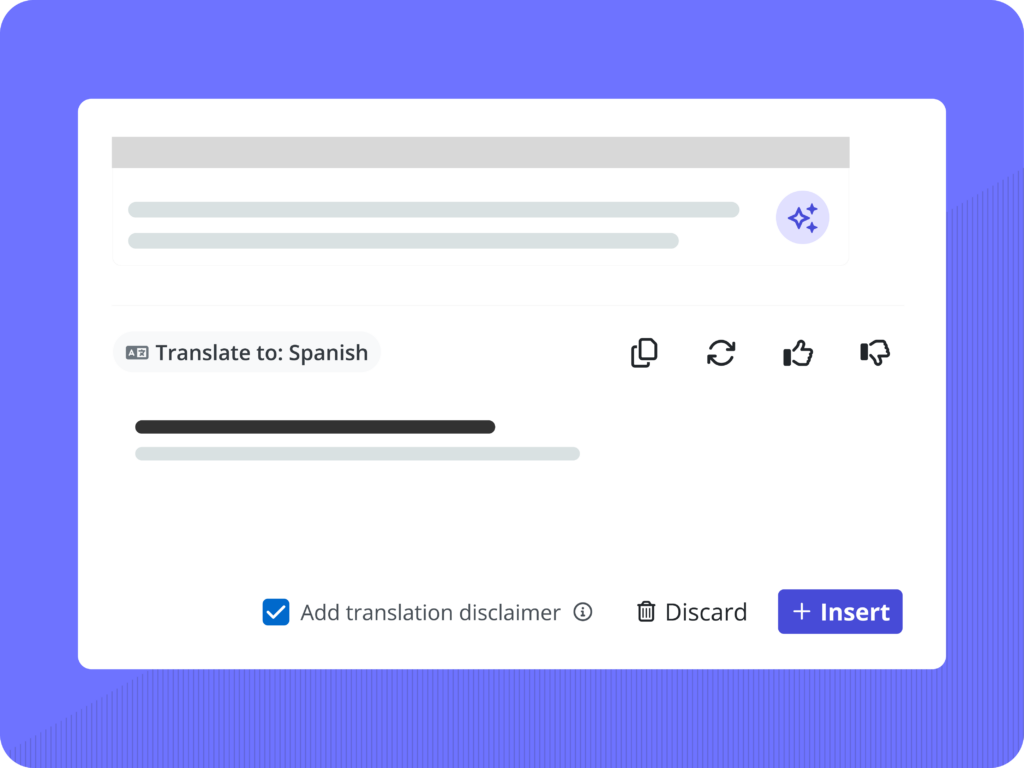
structure.
MyCase
IQ
also
translates
from
Arabic
and
Spanish
to
English
and
vice
versa.
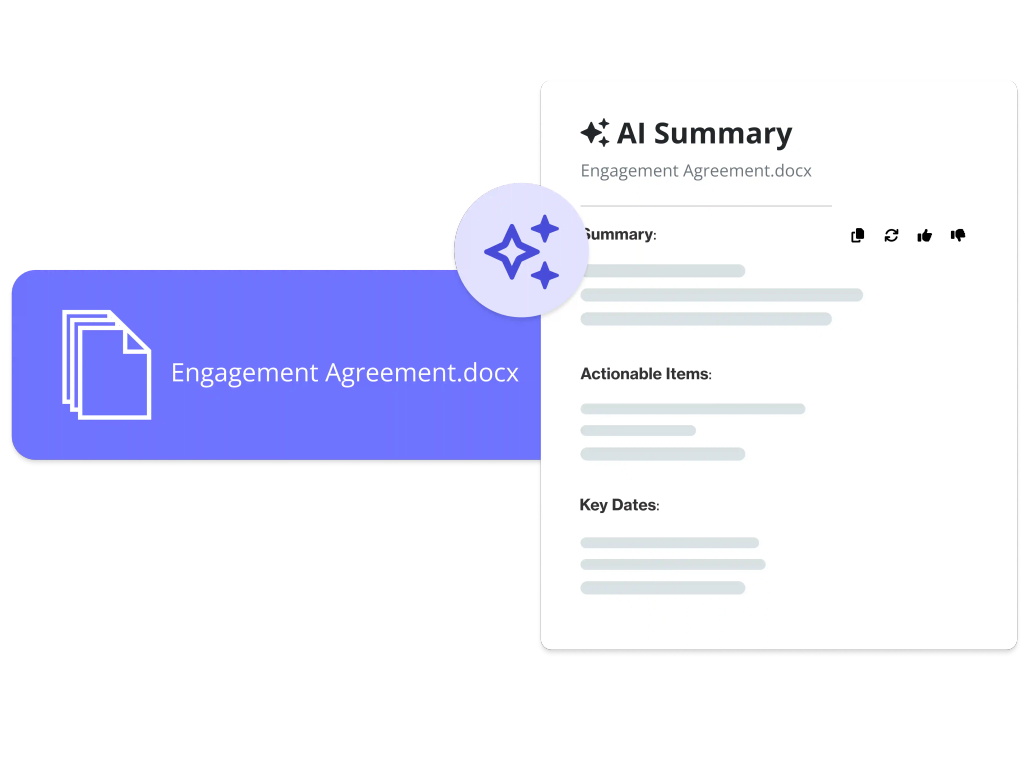
•
Document
Summarization:
Save
time
reviewing
lengthy
files
by
generating
document
summaries
—
helping
attorneys
and
staff
get
to
the
heart
of
a
matter
faster
without
compromising
security.
Real
Use
Cases
So,
how
can
ethical
AI
emerge
in
the
daily
business
of
law?
•
Drafting
and
Editing
Legal
Documents:
With
MyCase
IQ,
attorneys
can
clean
up
written
content,
improve
clarity,
and
revise
tone
without
handing
control
to
a
generic
chatbot.
The
result?
Lawyers
stay
efficient
while
keeping
their
voice
and
authority
intact.
Additionally,
the
translation
capabilities
include
Spanish
and
English,
reducing
miscommunication
due
to
language
barriers.
•
Understanding
Case
Materials
Faster:
MyCase
IQ
document
summarization
provides
a
quick,
reliable
overview
of
complex
documents,
without
compromising
confidentiality.
Whether
it’s
intake
notes,
discovery
files,
or
correspondence,
summaries
enable
a
faster
way
to
prepare
for
client
calls
—
all
with
appropriate
human
oversight.
In
both
cases,
AI
works
in
the
background,
supporting
better
legal
service
without
sacrificing
ethical
obligations
or
introducing
compliance
risks.
Legal-Specific
AI
Generic
tools
aren’t
enough
—
law
firms
need
platforms
built
with
legal
workflows,
confidentiality,
and
compliance
standards
in
mind.
MyCase
integrates
AI
responsibly,
enabling
faster
work
while
reinforcing
ethical
guardrails.
The
tools
are
embedded
into
the
daily
systems
you
already
use,
meaning
there’s
no
need
to
learn
a
separate
app
or
risk
sensitive
data
on
platforms
not
built
for
legal
use.
MyCase
IQ
ensures
your
firm
can
adopt
AI
on
your
own
terms,
with
a
clear
understanding
of
where
automation
helps
—
and
where
attorney
judgment
remains
irreplaceable.
Learn
more
about
MyCase
IQ
and
discover
how
your
firm
can
work
smarter
—
ethically.