
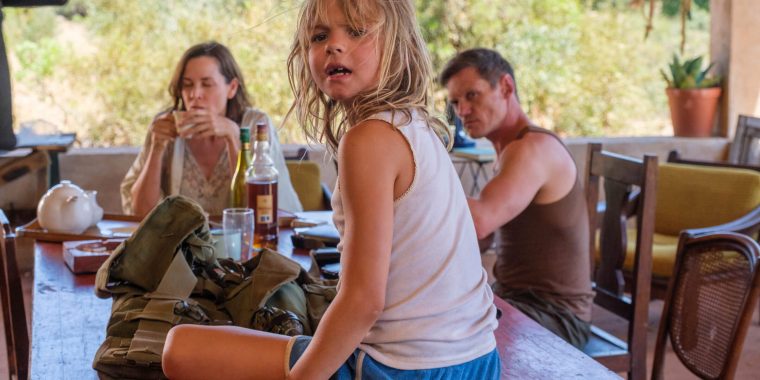
Embeth
Davidtz,
Lexi
Venter
and
Rob
Van
Vuuren
in Don’t
Let’s
Go
to
the
Dogs
Tonight. Photo
by
Coco
Van
Oppens.
Courtsey
of
Sony
Pictures
Classics.
Embeth
Davidtz
remembers
the
violence
—
and
the
fear.
When
she
was
8,
she
moved
from
bucolic
New
Jersey,
with
its
rolling
green
hills
and
yellow
school
buses,
to
her
father’s
home
country
of
South
Africa.
Newly
off
the
plane,
she
remembers
walking
home
from
her
bus
stop
and
watching
as
police
“chucked”
and
“bundled”
a
Black
man
into
the
back
of
a
yellow
van
and
drove
off.
(His
crime
was
not
carrying
his
identification.)
Another
time,
Davidtz
was
at
a
roadhouse
with
her
parents
stopping
for
hamburgers
and
saw
a
Black
family
with
two
young
children.
Two
drunk
white
men
approached
the
father,
pulled
him
from
the
car
and
punched
him
as
his
kids
looked
on.
“It
leaves
an
imprint
on
you,”
Davidtz,
an
actor
known
for
starring
as
Helen
Hirsch
in Schindler’s
List,
said
in
an
interview
at
the
Sony
offices
in
New
York.
“I
feel,
on
a
cellular
level,
my
whole
being
was
sort
of
rewired
seeing
stuff
like
that.”
When
Davidtz
read
Alexandra
Fuller’s
2001
memoir, Don’t
Let’s
Go
to
the
Dogs
Tonight,
about
growing
up
in
Zimbabwe
during
and
after
its
War
of
Independence
in
the
1970s,
she
saw
a
world
she
recognized
and
optioned
it
for
a
film,
now
her
powerful
directorial
debut,
out
July
11.
She
spent
six
years
adapting
the
book
into
a
screenplay,
ultimately
deciding
to
reduce
its
scope
to
Fuller’s
early
childhood
in
1980,
the
year
Robert
Mugabe
was
elected
prime
minister.
It
was
a
moment
of
fear
that
Davidtz
herself
sensed
during
the
Soweto
Uprising
in
1976.
The
8-year-old
Fuller
—
called
Bobo,
and
played
by
outstanding
newcomer
Lexi
Venter
—
begins
the
film
in
voiceover
calling
Africans
terrorists,
parroting
the
language
of
her
mother,
played
by
Davidtz.
Telling
the
story
through
the
perspective
of
a
young
child,
Davidtz
hoped
to
convey
the
disconnect
she
felt
between
the
way
adults
speak
about
conflict,
and
the
world
children
see.
“I
would
see
humanity,
and
I
would
see
kindness,
and
I
would
see
people
being
treated
really
badly,”
Davidtz
said.
“I
knew
as
an
8-year-old,
there’s
something
discordant
about
this.”
The
project
took
on
new
urgency
for
Davidtz,
whose
husband
and
children
are
Jewish,
when
Hamas
attacked
Israel
on
Oct.
7
as
she
was
filming
in
South
Africa.
The
script
was
locked,
but
Davidtz
changed
her
approach
in
the
edit,
where
she
added
images
of
violence
on
the
television,
playing
in
the
background
while
Bobo
snacks
on
cookies
and
watches.
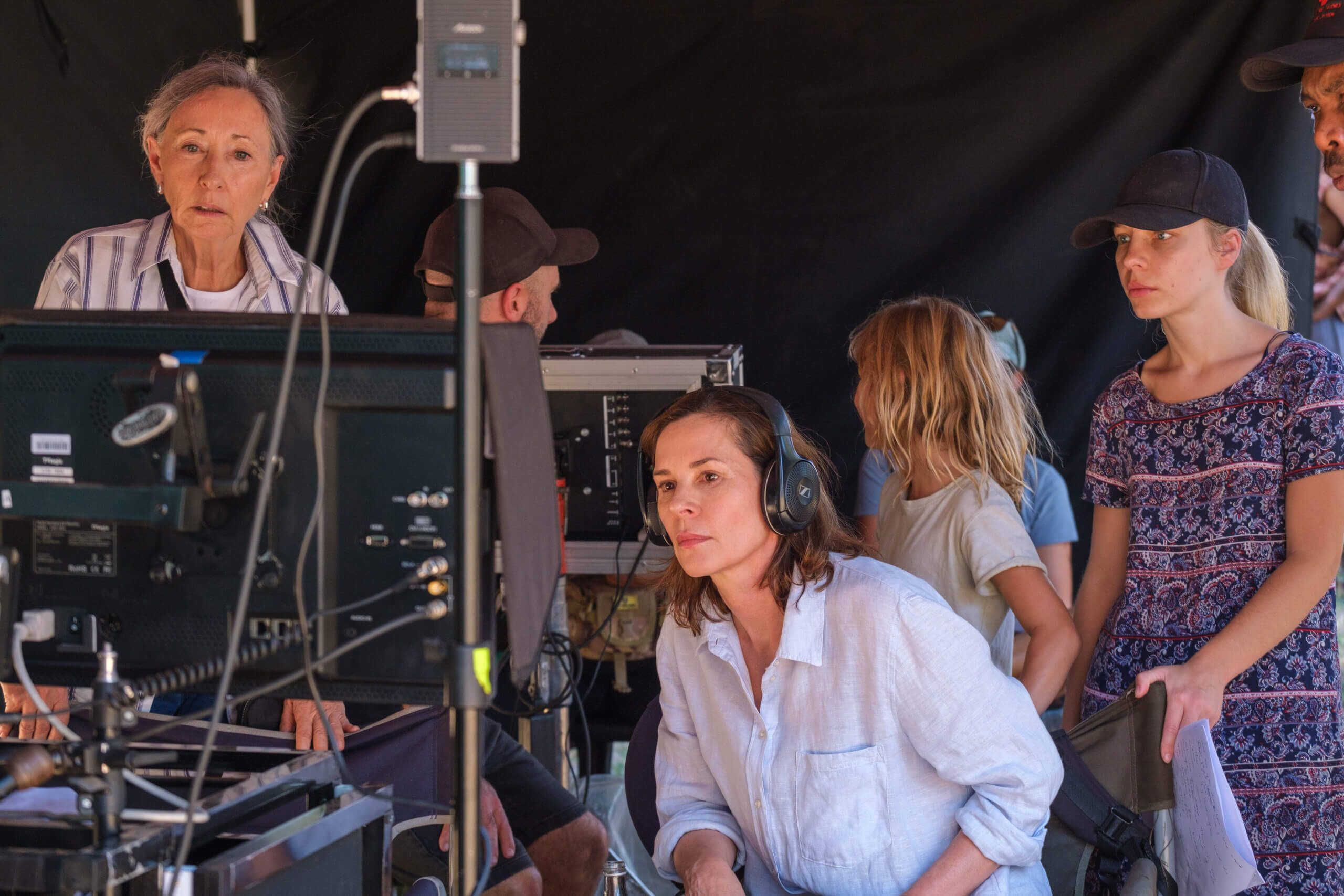
Davidtz
in
the
director’s
chair. Photo
by
Coco
Van
Oppens.
Courtsey
of
Sony
Pictures
Classics.
“There
are
children
in
bomb
shelters
right
now
hearing
that
sound,”
Davidtz
said.
“There
are
kids
all
over
the
world
having
that
imprinted
in
them
right
now.
And
I
wanted
to
put
that
more
strongly
in
the
film,
because
the
horror
of
October
7,
I
could
not
shake
it.
I
couldn’t
shake
what
happened
there
and
I
can’t
shake
that
human
beings
do
this
to
each
other”
(She
believes
the
campaign
in
Gaza
needs
to
stop,
but
the
hostages
also
need
to
come
home.
“If
you
were
to
decorate
me
with
pins,
it
would
be
all
the
pins,
because
I
think
none
of
this
is
solving
the
problem.”)
Filming Schindler’s
List on
location
in
Poland,
Davidtz
remembers
seeing
antisemitic
graffiti
and
how
the
crew
hoped
the
project
would
move
the
world
forward.
After
Oct.
7,
she
wonders
if
dehumanization
is
once
again
winning.
The
child
who
shouts
“Goodbye
Jews”
as
the
Krakow
ghetto
is
liquidated
in
that
film,
absorbed
those
views
from
her
parents,
just
as
Bobo
learned
from
her
mother
not
to
speak
to
Africans
or
that
their
Black
servants
don’t
have
last
names.
But
as
formative
an
experience
as
the
Spielberg
set
was,
she
says
it
was
another
film
of
his,
1987’s Empire
of
the
Sun,
about
a
young
boy
coming
of
age
during
Japan’s
invasion
of
Shanghai,
that
served
as
a
major
touchpoint
for Don’t
Let’s
Go
to
the
Dogs.
“Empire
of
the
Sun gave
this
notion
of
a
child
who’s
been
cosseted
and
given
one
point
of
view
and
not
expanded
by
those
parents,”
Davidtz
said.
“And
if
it’s
one
thing
that
I’ve
tried
to
do
with
my
kids,
I
really
try
to
give
them
both
sides,
and
say,
‘You
have
to
look
at
the
world
in
its
full
entirety,
and
not
just
be
single
minded
in
one
thing.’”
Like
much
of
Spielberg’s
work, Don’t
Let’s
Go
to
the
Dogs excels
in
delivering
a
child’s-eye-view
of
the
world.
(Bobo
even
has
a
bike
like
the
kids
in E.T. —
though
hers
is
a
motorbike.)
“It’s
funny,
I
think
I
have
an
arrested
development
at
the
point
of
my
youth,
of
the
age
that
I
was
when
I
entered
the
world
that
I
cover
in
the
film,”
Davidtz
said.
“And
I
think
Steven
has
some
arrested
development
in
that
area
of
his
life.”

Shooting
in
South
Africa
with
a
mostly
Black
crew,
Davidtz
said
the
experience
was
liberating,
if
at
times
difficult
when
she
depicted
scenes
of
racist
violence.
(Zimbabwe,
she
hastened
to
add,
had
a
much
bloodier
process
of
decolonization,
though
South
Africa’s
“went
on
for
longer,
and
was
much
more
insidious.”)
Pulling
from
her
own
life,
she
worked
with
Fuller
to
recognize
commonalities
between
the
two
countries
and
underline
the
specificity
of
Zimbabwe’s
indigenous
culture,
including
a
Shona
hymn
on
the
soundtrack.
Asked
about
allegations
of
white
genocide
in
South
Africa
pushed
by
the
Trump
administration,
Davidtz
said
she
is
baffled
by
the
claim,
likening
it
to
what
she
heard
growing
up
—
or
Bobo’s
parents
might
say
—
as
opposed
to
what
she
knows
to
be
true
from
experience.
Davidtz
is
eager
to
direct
again,
but
is
looking
for
the
right
project,
noting
it
has
to
be
something
she
feels
a
personal
connection
to.
But
not
too
personal:
When
I
mentioned
Damon
Galgut’s The
Promise,
the
Booker-winning
novel
about
a
white
South
African
family,
with
a
Jewish
matriarch
who
willed
a
house
to
their
Black
maid,
she
recused
herself.
“He’s
my
best
friend
from
childhood,”
Davidtz
said
of
Galgut.”I
just
worry
about
our
friendship
if
I
were
the
person
trying
to
tell
the
story,
because
you
have
to
take
license.”
Davidtz
said
Spielberg
has
yet
to
see Don’t
Let’s
Go
to
the
Dogs,
but
his
cinematographer
Janusz
Kamiński,
who
first
collaborated
with
him
on Schindler’s
List,
has
read
the
script,
and
gave
some
good
advice
as
Davidtz
panicked
about
the
technical
stuff.
“He
said,
‘Embeth,
you
know
this
world
better
than
anybody.
You
will
know
what
the
world
needs
to
look
like.
So
don’t
worry.
Don’t
get
caught
up.
Don’t
let
your
cinematography
take
too
long
to
light.
Just
shoot,
shoot,
shoot,’”
Davidtz
recounted.
“I
sort
of
went,
‘I
can’t
doubt
myself.
What
I
know
is
I’ve
got
to
be
inside
this
child’s
face
and
head,
and
that’s
the
way
to
tell
the
story.’”
Post
published
in:
Entertainment