
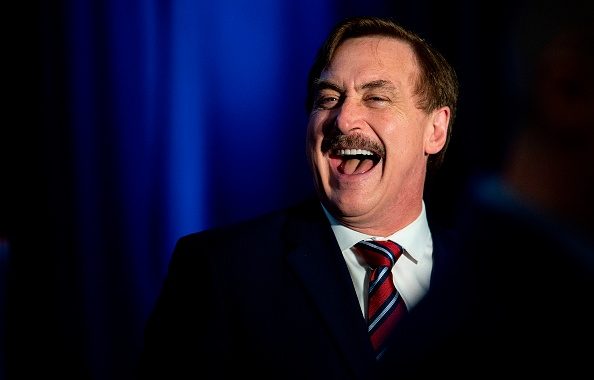
by
JIM
WATSON/AFP
via
Getty
Images)
Given
Mike
“MyPillow”
Lindell’s
history
of
claims
about
the
2020
election,
it’s
a
fair
question
whether
turning
his
legal
filings
over
to
generative
AI
might
actually
reduce
the
hallucinatory
nonsense.
Alas,
the
court
did
not
engage
in
that
comparative
analysis
and
slapped
Rule
11
fines
on
two
of
the
pillow
purveyor’s
lawyers
—
Christopher
Kachouroff
and
Jennifer
DeMaster —
over
a
series
of
fake
cites
and
quotes
in
Lindell’s
filings.
Specifically,
Judge
Nina
Wang’s
order
noted
that
the
issue
arose
after
argued
a
motion
in
limine
and
asked
if
there
was
anything
else
the
judge
wanted
him
to
address.
At
that
point
Judge
Wang
discussed:
[M]isquotes
of
cited
cases;
misrepresentations
of
principles
of
law
associated
with
cited
cases,
including
discussions
of
legal
principles
that
simply
do
not
appear
within
such
decisions;
misstatements
regarding
whether
case
law
originated
from
a
binding
authority
such
as
the
United
States
Court
of
Appeals
for
the
Tenth
Circuit;
misattributions
of
case
law
to
this
District;
and
most
egregiously,
citation
of
cases
that
do
not
exist.
That
may
sound
bad,
but
then
you
notice
the
order
reads
“The
discussed
errors
included
but
were
not
limited
to.”
(emphasis
added).
The
mistakes,
of
course,
originated
with
generative
AI,
but
it’s
still
not
fair
to
blame
the
technology.
Westlaw
isn’t
responsible
if
your
bad
search
brought
up
a
case
that
doesn’t
fit.
The
problem
is,
and
always
has
been,
lawyers
who
treat
“verify
your
work”
as
a
suggestion
instead
of
a
professional
obligation.
Maybe
Lindell
saw
the
bill
and
thought
it
read
“verify
your
WOKE”
and
refused
to
pay?
On
the
subject
of
Westlaw
being
responsible
for
errors,
the
lawyers
defended
themselves
by
pointing
to
a
“Westlaw
Report”
that
analyzed
the
brief
and
suggested
better
cases.
According
to
contemporaneous
email
correspondence,
DeMaster
told
Kachouroff
that
the
report
“didn’t
flag
us
for
any
obviously
bad
case
law.”
They
then
claim
that
the
Westlaw
Report
allowed
them
to
fix
the
final
version
but
that
they
then
accidentally
filed
an
earlier
broken
version.
The
judge
didn’t
see
it
that
way,
noting
that
the
version
referred
to
in
the
Westlaw
Report
email
seems
to
have
the
same
mistakes
as
the
filed
version.
“Put
simply,
neither
defense
counsel’s
communications
nor
the
‘final’
version
of
the
Opposition
that
they
reviewed
corroborate
the
existence
of
the
‘correct’
version.”
But
either
way,
the
defense
seems
to
be
“we
used
a
different
tech
tool
to
do
the
cite
checking
for
us,”
which
is
still
not
really
the
same
as
CITE
CHECKING.
The
judge
fined
each
$3000.
Lindell’s
attorneys
should
be
ecstatic
they’re
getting
off
this
easy.
In
2023’s
legal
ChatPocalypse
Mata
v.
Avianca,
a
hapless
New
York
lawyer
who
took
ChatGPT’s
word
for
it
that
all
those
suspiciously
perfectly
tailored
precedents
were
real
and
not
AI
shamelessly
sucking
up
to
him
like
the
AI
from
Her.
While
ruthless
professional
mockery
took
its
toll,
the
court
cut
that
guy
some
slack
for
being
the
first
unlucky
sod
to
fall
for
generative
AI.
It
was
a
teachable
moment
and
a
$5,000
slap
on
the
wrist
seemed
fine.
But
we’ve
had
that
moment.
This
is
a
sequel
—
and
everyone
knows
sequels
have
a
higher
body
count.
Actually,
this
is
the
sequel
of
a
sequel
of
a
sequel
in
a
case
with
substantial
public
notoriety
because
the
litigant
is
a
Pillow
Pitching
loon.
In
light
of
Avianca,
lawyers
making
this
mistake
today
are
clearly
dissuaded
by
the
possibility
of
a
$5000
sanction
much
less
a
$3000
one.
We
recently
saw
a
$31,000
sanction
for
a
generative
AI
error.
That’s
far
more
in
line
with
where
we
are
right
now.
Without
higher
stakes
for
lawyers
making
this
mistake
—
one
that
everyone
has
full
and
fair
warning
about
—
there’s
no
incentive
for
lawyers
to
get
it
right.
Indeed,
$3000
is
chump
change
if
turning
a
blind
eye
to
the
AI-juiced
brief
convinces
a
judge
to
side
with
the
client.
As
much
as
we
all
rely
on
judges
to
act
as
an
impermeable
firewall
for
fakery,
a
judge
just
fell
for
AI
cases
in
Georgia.
And
so,
for
their
sins,
Lindell’s
lawyers
must
take
their
lumps
and
pay
up
by
August
4.
Just
don’t
use
words
like
“lumps”
when
talking
about
Lindell’s
pillows.
(Check
out
the
order
on
the
next
page…)
 Joe
Joe
Patrice is
a
senior
editor
at
Above
the
Law
and
co-host
of
Thinking
Like
A
Lawyer.
Feel
free
to email
any
tips,
questions,
or
comments.
Follow
him
on Twitter or
Bluesky
if
you’re
interested
in
law,
politics,
and
a
healthy
dose
of
college
sports
news.
Joe
also
serves
as
a
Managing
Director
at
RPN
Executive
Search.