
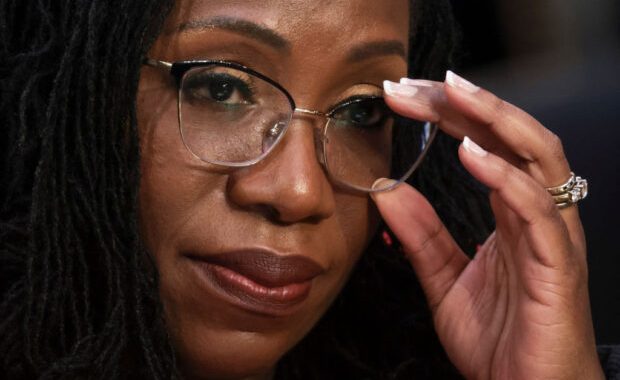
by
Win
McNamee/Getty
Images)
At
the
end
of
Chinatown,
as
our
protagonist
watches
the
bad
guys
win,
he’s
pulled
away
and
admonished,
“Forget
it,
Jake.
It’s
Chinatown.”
The
phrase
lives
on
as
a
warning
when
corruption
runs
so
deep
that
there’s
no
fighting
it.
In
the
film,
the
bad
guy
is
a
rich
real
estate
baron
who
manipulates
a
government
agency
and
bilks
senior
citizens
for
his
personal
profit.
Despite
the
pervasive
criminality,
he’s
actually
backed
up
by
law
enforcement
who
aid
and
abet
his
dirty
work.
In
case
that
sounds
like
anyone
you
know.
Also
the
bad
guy
is
a
pedophile
sexually
attracted
to
his
daughter.
Do
with
that
information
what
you
will.
In
Trump
v.
American
Federation
of
Government
Employees,
the
Supreme
Court
again
invoked
the
unaccountability
shield
of
its
shadow
docket
to
strike
down
a
preliminary
injunction
issued
in
the
Northern
District
of
California
that
had
blocked
Executive
Order
No.
14210,
Trump’s
5-page
edict
that
turned
the
federal
government
over
to
someone
named
“Big
Balls”
with
a
mission
to
slash
the
federal
workforce.
While
the
executive
branch
can
obviously
hire
and
fire
agency
staff,
the
plan
to
wholesale
gut
departments
approved
and
funded
by
Congress
without
congressional
action
runs
afoul
of
well-established
precedent,
not
to
mention
the
“Major
Questions
Doctrine”
that
conservative
legal
scholars
invented
to
prevent
Democratic
presidents
from
taking
basic
executive
action
through
an
agency
(like,
say,
DOGE)
without
the
express
written
consent
of
the
House,
the
Senate,
and
probably
Major
League
Baseball.
Given
that
legal
landscape,
the
Supreme
Court
obviously
supported
the
injunction…
PSYCHE!
The
District
Court’s
injunction
was
based
on
its
view
that
Executive
Order
No.
14210,
90
Fed.
Reg.
9669
(2025),
and
a
joint
memorandum
from
the
Office
of
Management
and
Budget
and
Office
of
Personnel
Management
implementing
that
Executive
Order
are
unlawful.
Because
the
Government
is
likely
to
succeed
on
its
argument
that
the
Executive
Order
and
Memorandum
are
lawful
—
and
because
the
other
factors
bearing
on
whether
to
grant
a
stay
are
satisfied
—
we
grant
the
application.
Likely
to
succeed…
why?
The
Court
declines
to
say.
But
the
government
is
likely
to
succeed,
we
are
assured,
in
the
two
paragraph
order
authorizing
the
dismantling
of
the
federal
government
while
the
merits
can
be
hashed
out
later.
Might
this
strategy
result
in
irreparable
harm?
The
unsigned
majority
opinion
does
not
even
mention
that
part
of
the
injunctive
relief
equation.
They
must
have
forgotten
it
like
it
was
a
prong
of
the
First
Amendment
or
something.
Justice
Ketanji
Brown
Jackson
penned
the
lone
dissent,
though
Justice
Sotomayor
wrote
a
concurrence
that
might
as
well
have
said,
“Forget
it
Ketanji,
It’s
Chinatown.”

This
seems
like
Sotomayor
running
back
her
strategy
from
the
D.V.D.
v.
DHS
case.
In
that
case,
also
a
shadow
docket
opinion,
Sotomayor
wrote
a
lengthy
dissent
that
took
it
upon
itself
to
characterize
the
majority
opinion.
Hey,
if
the
Republican
justices
want
to
shirk
responsibility
with
unsigned,
unexplained
orders,
why
not
take
the
initiative?
Signaling
to
the
lower
courts
that
the
government
had
flunked
procedure
and
only
appealed
the
preliminary
injunction
—
arguably
too
broad
because
it
applied
to
“any
alien”
—
and
not
the
remedial
order
—
specific
to
certain
individuals
already
sent
to
Africa.
Therefore,
the
sparsely
reasoned
shadow
docket
opinion
did
not
properly
stop
the
remedial
order.
It
had
the
benefit
of
being
both
clever
and
accurate.
The
Supreme
Court
went
ahead
and
issued
a
follow
up
clarifying
that
they
were
going
to
stay
the
remedial
order
too.
They
based
it
on
dicta
from
an
inapposite
1947
decision.
Really.
Here,
Sotomayor
does
much
the
same
but
in
a
concurrence,
leaning
into
the
idea
that
the
executive
order
required
DOGE
to
come
up
with
a
plan
first
and
so,
she
reasons,
the
district
court
can’t
stop
DOGE
from
coming
up
with
a
plan
to
fire
everyone
and
the
courts
can
decide
if
that
plan
is
an
illegal
wreck
later.
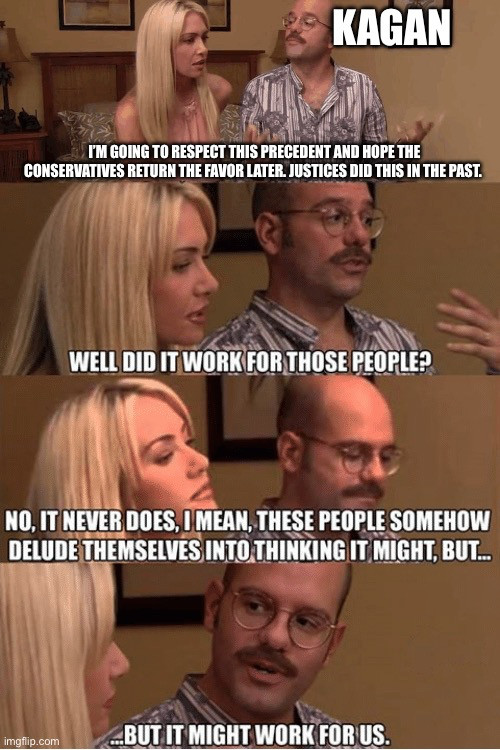
Kagan,
by
the
way,
joined
the
D.V.D.
clarification
and
seemingly
this
opinion
too.
It
appears
that
she’s
employing
a
strategy
she’s
used
before
where
she
sides
with
the
majority
on
formal,
respect
for
precedent
grounds
in
hopes
that
they’ll
return
the
favor.
But
Justice
Jackson
wasn’t
willing
to
let
it
slide.
The
executive
order
at
issue
might
technically
only
ask
Musk’s
minions
for
a
plan,
but
the
ask
is
in
itself
an
assault
on
the
separation
of
powers
and
the
Court
offered
nothing
to
explain
how
the
preliminary
injunction
failed
to
clear
all
the
established
considerations.
Unfortunately,
as
Jackson
explains,
the
common
sense
and
well-settled
legal
principles
ran
afoul
of
a
powerful
obstacle:
“this
Court’s
demonstrated
enthusiasm
for
greenlighting
this
President’s
legally
dubious
actions
in
an
emergency
posture.”

Jackson
expounds
upon
that
history,
discussing
both
the
multiple
times
that
Congress
authorized
presidents
to
embark
on
reorganization
efforts,
and
the
times
when
presidents
ASKED
to
perform
minor
government
reorganization
and
Congress
told
them
no.
Including,
for
the
record,
Donald
Trump
who
in
his
first
term
understood
—
who
are
we
kidding…
who
had
people
working
for
him
then
who
understood
—
that
the
White
House
couldn’t
embark
on
an
effort
to
reorganize
the
government
after
Congress
refused.
It
will
shock
you
not
at
all
to
learn
that
Jackson
also
managed
to
remember
the
irreparable
harm
prong
of
the
test.

The
folks
who
might
“know”
the
answer
to
these
questions
are
the
district
judges
themselves.
The
fact
that
Justice
Jackson
once
served
as
a
district
judge
shines
through
in
the
disdain
she
has
for
two-step-removed
appellate
jurists
substituting
their
reasoning
for
a
trial
judge
without
the
benefit
of
the
record
or
the
courtesy
of
a
real
opinion.
“[H]ubristic
and
senseless,”
to
use
her
words.
But,
hey,
maybe
Amy
Coney
Barrett
can
channel
her
experience
of
grading
papers
to
scold
Jackson
again
for
daring
to
know
how
trial
courts
actually
work.
It’s
easy
to
say
Justice
Jackson
has
the
better
of
the
case
here
since
she’s
the
only
one
bothering
to
defend
her
position,
but
it’s
hard
to
see
how
the
majority
would
get
ahead
on
any
of
these
arguments.
The
last
time
they
tried
Jackson
on
injunctions
they
refused
to
“dwell”
on
her
arguments.
At
least
ignoring
them
altogether
avoids
further
embarrassment.
But
maybe,
just
maybe,
we
should
demand
the
Supreme
Court
put
in
the
limited
effort
required
to
try
to
respond?
Ah.
There
I
go
again.
I
can
hear
it
softly
over
my
shoulder,
“Forget
it,
Joe.
It’s
One
First
Street.”
(Opinion
on
the
next
page…)
 Joe
Joe
Patrice is
a
senior
editor
at
Above
the
Law
and
co-host
of
Thinking
Like
A
Lawyer.
Feel
free
to email
any
tips,
questions,
or
comments.
Follow
him
on Twitter or
Bluesky
if
you’re
interested
in
law,
politics,
and
a
healthy
dose
of
college
sports
news.
Joe
also
serves
as
a
Managing
Director
at
RPN
Executive
Search.