
Ed.
note:
Please
welcome
Renee
Knake
Jefferson
back
to
the
pages
of
Above
the
Law.
Subscribe
to
her
Substack,
Legal
Ethics
Roundup, here.
Hello
from
Maine.
This
week
I’m
writing
you
from
Rockport,
Maine,
where
I’m
attending
the Conference
of
Chief
Justices
(CCJ)
Annual
Meeting.
Much
of
the
conversation
has
focused
on
reforms
to
legal
education,
so
even
though
*technically*
I
am
here
as
a
plus-one
(my
husband
is
a
former
president
of
the
CCJ
which
is
how
we
received
an
invitation),
I
feel
right
at
home
and
I’ve
been
learning
a
LOT.
As
a
bonus,
I
got
the
chance
to
catch
up
with
my
wonderful
former
Dean
at
Michigan
State
University
College
of
Law, Joan
Howarth (UNLV),
who
spoke
about
her
work
on
bar
exam
reforms
(for
more
on
that,
check
out
her
book Shaping
the
Bar:
the
Future
of
Attorney
Licensing).
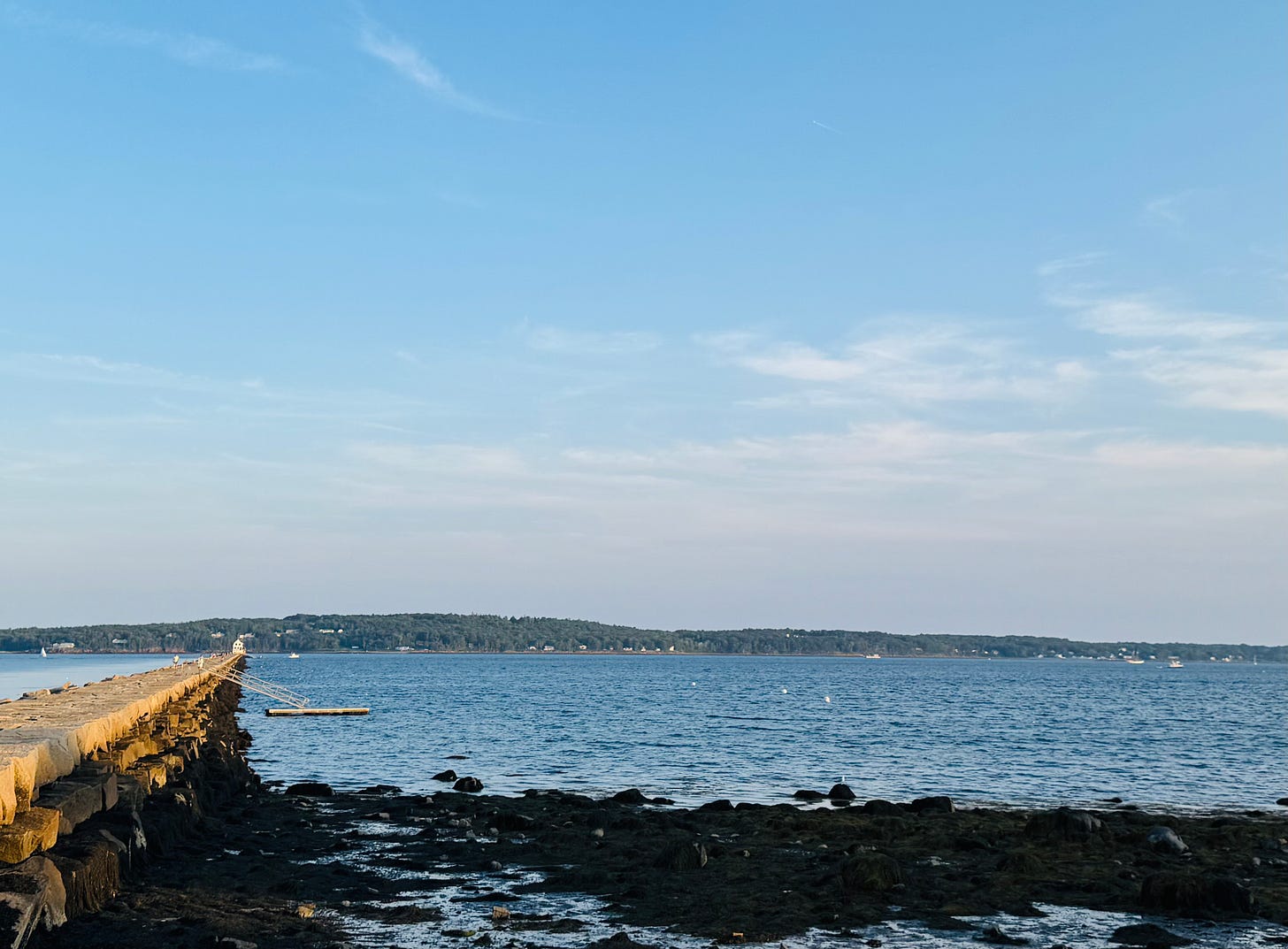
Breakwater
Jetty,
Rockport,
Maine
(photo
by
Renee
Jefferson)
In
addition
to
your
regular
list
of
legal
ethics
headlines
below,
this
week
I
want
to
highlight
a
piece
by Etienne
C.
Toussaint (South
Carolina)
in Current
Affairs: “How
Ta-Nehisi
Coates
Helped
Me
See
Palestine.” Here’s
a
brief
excerpt:
Eleven
years
ago,
I
stood
smiling
before
the
Dome
of
the
Rock
in
Jerusalem,
posing
with
other
Christian
tourists
as
cameras
clicked
around
us,
eager
to
capture
proof
of
our
spiritual
devotion.
We
were
on
a
pilgrimage
designed
to
draw
us
closer
to
the
sacred.
Yet
just
beyond
the
frame
of
our
photos,
checkpoints
loomed,
armed
soldiers
patrolled
the
streets,
and
Palestinian
life
endured
under
occupation.
We
cropped
those
inconvenient
truths
out,
not
only
from
our
photos
but
from
our
consciousness,
desperate
to
preserve
the
purity
of
our
religious
experience.
At
the
time,
we
believed
we
were
innocent
pilgrims.
But
I
now
understand
that
our
sense
of
innocence
masked
a
deeper
truth.
We
were
complicit.That
memory,
along
with
my
struggle
to
face
my
own
complicity,
has
clarified
how
easily
faith
can
become
a
veil
that
obscures
our
proximity
to
violence.
It
has
made
me
think
about
how
often,
throughout
history,
ordinary
people
have
borne
witness
to
brutality
not
with
resistance,
but
with
silence—or
worse,
with
a
smile.
I
used
to
wonder
how
someone
could
stand
beneath
a
lynched
Black
man—dangling
legs
grazing
the
tops
of
grease-slicked
hair,
wide-eyed
children
staring
in
bewilderment
nearby—and
pose
for
the
camera.
What
kind
of
world
cultivates
such
moral
decay
that
families
could
discover
joy
in
the
public
spectacle
of
Black
bodies
swinging
in
the
southern
breeze?Then
I
read
“The
Gigantic
Dream,”
the
final
chapter
of
Ta-Nehisi
Coates’s
latest
book, The
Message.
In
it,
Coates
reflects
on
his
visit
to
the
West
Bank
and
explores
the
parallels
between
American
racial
apartheid
and
the
Israeli
occupation
of
Palestine.
His
vivid
observations—of
segregated
roads,
militarized
borders,
and
the
quiet
complicity
of
onlookers—made
me
feel
something
I
couldn’t
ignore.
As
shame
washed
over
me
like
cold
February
rain—slow,
steady,
and
sobering—I
began
to
recognize
in
those
silent
onlookers
a
part
of
myself.
The
person
I
had
long
condemned
for
their
inaction,
their
silence
in
the
face
of
white
supremacy
and
racial
terror,
their
ease
in
the
shadow
of
death,
lived
in
me
too.Read
more here.
And
now
for
your
headlines,
once
again
too
many
to
limit
at
ten.
#1 “A
DOJ
Whistleblower
Speaks
Out.” From The
Daily
Podcast
(New
York
Times):
“An
explosive
whistle-blower
report
claims
that
the
Justice
Department
is
asking
government
lawyers
to
lie
to
the
courts,
and
that
this
has
forced
career
officials
to
choose
between
upholding
the
Constitution
and
pledging
loyalty
to
the
president. Rachel
Abrams speaks
to
the
whistleblower Erez
Reuveni about
his
career
in
the
Justice
Department
and
his
complaint
saying
he
was
fired
for
telling
the
truth.”
Listen here.
(It’s
just
under
an
hour,
and
well-worth
your
time.)
#2 “Big
Law
Firms
Bowed
to
Trump.
A
Corps
of
‘Little
Guys’
Jumped
in
to
Fight
Him.” From
the New
York
Times:
“President
Trump’s executive
orders
seeking
to
punish
big
law
firms
have
led
some
of
them
to
acquiesce
to
him
and
left
others
reluctant
to
take
on
pro
bono
cases
that
could
put
them
at
odds
with
the
administration.
But
as
opponents
of
the
White
House’s
policies
organized
to
fight
Mr.
Trump
in
court
on
a
vast
range
of
actions
and
policies,
they
quickly
found
that
they
did
not
need
to
rely
on
Big
Law.
Instead,
an
army
of
solo
practitioners,
former
government
litigators
and
small
law
firms
stepped
up
to
volunteer
their
time
to
challenge
the
administration’s
agenda.
‘I
don’t
know
if
the
administration
knew
how
many
little
guys
are
out
there,’
said Michael
H.
Ansell, a
solo
practitioner
in
Morristown,
N.J.,
who
earlier
this
year
joined
the Pro
Bono
Litigation
Corps,
newly
launched
by Lawyers
for
Good
Government,
a
legal
nonprofit.
He
answered
the
nonprofit’s
plea
for
lawyers
willing
to
give
at
least
20
hours
a
week
to
an
upcoming
case.
More
than
80
volunteered.”
Read
more here (gift
link).
#3 “A
Slightly
Less
Sorry
State
of
Disclosure.” From
the Fix
the
Court:
“Once
again
Fix
the
Court
has
rated
the
judicial
financial
disclosures
in
the
50
states
based
on
how
long
it
took
us
to
get
them
—
we
requested
the
2023
and
2024
reports
of
each
state’s
chief
justice
—
and
the
amount
of
content
useful
for
oversight
therein.
The report we’re
releasing
today,
termed
‘A
Slightly
Less
Sorry
State
of
Disclosure,’
reflects
the
changes
in New
Jersey, Colorado and Hawaii as
well
as
proposed
improvements
in Michigan and Vermont,
both
of
which
may
be
adding
new
disclosure
categories
to
their
forms
in
the
near
future.
(The
database
with
links
to
all
the
disclosures
is here.)”
Read
more here.
#4 “Disinformation
is
Driving
the
Rule
of
Law
Crisis.” From
the International
Academy
of
Trial
Lawyers :
“This
week, Joe
Tucker sits
down
with Karen
Burgess of
Burgess
Law
in
Austin,
Texas,
to
discuss
how
disinformation
is
fueling
the
global
Rule
of
Law
crisis.
Together,
they
examine
the
increasing
influence
of
state
actors
in
driving
disinformation
campaigns,
the
rise
of
deepfakes
and
AI-generated
content,
and
how
social
media
algorithms
are
accelerating
the
dissemination
of
false
narratives
that
erode
trust
in
courts,
elections,
and
democratic
institutions.”
Watch here.
#5 “DOJ
Appeals
Ruling
for
Jenner
&
Block
in
Trump
Big
Law
Battle.” From Bloomberg
Law:
“The
Trump
administration’s
court
battle
with Andrew
Weissmann’s former
law
firm
is
moving
to
a
DC
appeals
court.
The
Justice
Department
on
Monday
asked
the
US
Court
of
Appeals
for
the
District
of
Columbia
to
review
a
federal
judge’s
order
that
struck
down President
Trump’s directive
against
Jenner
&
Block,
according
to
a
notice
of
appeal
filed
by
Justice
Department
lawyer Richard
Lawson.
Trump’s
directive
against
Jenner
&
Block
cited
the
firm’s
previous
employment
of Andrew
Weissmann,
a
former
partner
who
worked
on
special
counsel Robert
Mueller’s investigation
of
alleged
Russian
interference
in
the
2016
presidential
election. Judge
John
D.
Bates
of
the
US
District
Court for
the
District
of
Columbia
found
Trump’s
March
25
order
against
the
firm
violated
its
First
Amendment
rights
by
retaliating
against
Jenner
for
its
work
in
court
and
ties
to
lawyers
the
president
perceives
as
enemies.”
Read
more here.
#6 “Ethics
Appeal
Over
Columbia
Letter
Nixed
As
Judge
Joins
USDA.” From Law360:
“In
its
first
decision
of
2025,
the
Judicial
Conference’s
conduct
committee
on
Tuesday
dismissed
a
challenge
to
the
Seventh
Circuit
Judicial
Council’s
decision
to
toss
ethics
claims
against
a
U.S.
Court
of
International
Trade
judge
who
threatened
not
to
hire
law
clerks
from
Columbia
University
over
the
school’s
handling
of
Israel
protests.”
Read
more here.
#7 “New
Bill
Aims
to
Protect
State
Judges
as
Threats
Surge
400%.” From
the Georgia
Sun:
“A
bipartisan
bill
introduced
by Reps.
Lucy
McBath and Michael
McCaul would
create
the
first-ever
threat
monitoring
center
for
30,000
state
and
local
judges
who
currently
lack
federal
protection.”
Read
more here.
#8 “DOJ
Fires
Newly
Appointed
US
Attorney
in
NJ
After
Judges
Vote
Against
Keeping
Alina
Habba
in
Role.” From CNN:
“The
Department
of
Justice
quickly
fired
the
newly
named
US
attorney
in
New
Jersey
on
Tuesday
after
federal
judges
in
the
state
declined
to
extend Alina
Habba’s interim
appointment. Attorney
General
Pam
Bondi’s announcement
came
after
the
district
court
voted
to
elevate Desiree
Leigh
Grace,
New
Jersey’s
first
assistant
US
attorney,
to
replace
the
Trump
ally.”
Read
more here.
#9 “Judge
Scraps
Opinion
After
Lawyer
Flags
Made-Up
Quotes.” From Bloomberg
Law:
“A
New
Jersey
US
district
court
judge
withdrew
his
decision
in
a
biopharma
securities
case
Wednesday
after
lawyers
complained
that
his
opinion
contained
numerous
errors,
including
made-up
quotes
and
misstated
case
outcomes. Judge
Julien
Xavier
Neals
of
the
US
District
Court
for
the
District
of
New
Jersey on
June
30
denied
CorMedix
Inc.’s
request
to
dismiss
a
lawsuit
by
shareholders.
‘That
opinion
and
order
were
entered
in
error,’
according
to
a
notice
the
court
posted
in
the
case
docket
on
Wednesday.
‘A
subsequent
opinion
and
order
will
follow.’”
Read
more here.
#10 “Ohio
to
Review
ABA
Accreditation
for
Lawyers
as
Political
Pressures
Mount.” From Reuters:
“Ohio
on
Thursday
became
the
third
U.S.
state
to
reconsider
rules
requiring
attorneys
to
attend
an American
Bar
Association-accredited
law
school
to
be
admitted
to
practice,
after
the
Trump
administration
threatened
to
revoke
the
ABA’s
status
as
the
federal
government’s
designated
accreditor
of
law
schools
due
to
its
diversity
and
inclusion
efforts.
The Supreme
Court
of
Ohio said
it
has
convened
an
advisory
committee
to
review
its
law
school
accreditation
process,
citing
a
need
to
ensure
‘excellence
and
innovation.’
Texas
and
Florida
have
launched
similar
reviews.”
Read
more here.
#11
“Stefanik
Ethics
Complaint
Against
D.C.
Judge
Is
Tossed.” From Bloomberg
Law:
“A
Washington
federal
judge
who
lamented
the
impact
of
the
‘big
lies’
on
Capitol
rioters
facing
criminal
charges
didn’t
breach
judicial
ethics
rules,
a
federal
judicial
council
has
found.
The
judicial
council
for
the US
Court
of
Appeals
for
the
Tenth
Circuit dismissed a
complaint
by Rep.
Elise
Stefanik
(R-N.Y.) against Judge
Beryl
Howell
of
the
US
District
Court
for
the
District
of
Columbia,
related
to
a
speech
the
judge
delivered
at
a
white
collar
defense
attorney
event
in
November
2023.
Howell
said
during
the
speech
that
she
and
her
colleagues
‘regularly
see
the
impact
of
big
lies’
at
sentencing
hearings
for
participants
in
the
Jan.
6,
2021
riot
at
the
US
Capitol.
She
also
described
‘a
very
surprising
and
downright
troubling
moment
where
the
importance
of
facts
is
dismissed,
or
ignored.’
Howell
didn’t
mention
former President
Donald
Trump by
name
during
her
remarks. Chief
Judge
Jerome
A.
Holmes
of
the
Tenth
Circuit held
in
a
decision
posted
Monday
that
the
judge’s
comments
‘do
not
reasonably
appear
to
reflect
adversely
on
impartiality,
nor
could
they
lead
to
disqualification.’
Her
perspective
is
‘consistent’
with
those
raised
by
her
and
other
judges
‘on
the
record
in
numerous
cases
they
presided
over
prior
to
the
event
at
issue,’
he
wrote.
Holmes
also
noted
that
Howell
gave
her
speech
at
a
‘law-related
event,
not
a
political
function,’
and
didn’t
name
any
modern
politicians.”
Read
more here.
#12
“Immigration
Courts
Hiding
the
Names
of
ICE
Lawyers
Goes
Against
Centuries
of
Precedent
and
Legal
Ethics
Requiring
Transparency
in
Courts.” From Cassandra
Burke
Robertson (Case
Western)
in The
Conversation:
“Something
unusual
is
happening
in
U.S.
immigration
courts.
Government
lawyers
are refusing
to
give
their
names
during
public
hearings.
In
June
2025, Immigration
Judge
ShaSha
Xu in
New
York
City reportedly
told lawyers
in
her
courtroom:
‘We’re
not
really
doing
names
publicly.’
Only
the
government
lawyers’
names
were
hidden
–
the
immigrants’
attorneys
had
to
give
their
names
as
usual.
Xu
cited
privacy
concerns,
saying,
‘Things
lately
have
changed.’
…
This
secrecy
violates
a
fundamental
principle
that
has
protected
Americans
for
centuries: open
courts.
Here’s
how
those
courts
operate
and
why
the
principle
governing
them
matters.”
Read
more here.
#13
“DOJ
Faces
Credibility
Questions
as
it
Investigates
Jeffrey
Epstein.” From
NPR:
“As
the
Department
of
Justice
continues
its
investigation
into
disgraced
financier
and
convicted
sex
offender Jeffrey
Epstein,
some
are
raising
questions
about
its
credibility
under
the
current
administration.
… [Todd]
Blanche’s direct
involvement
raises
a
key
question.
His
boss, Attorney
General
Pam
Bondi,
herself
a
former
Trump
lawyer,
reportedly
told
the
president
in
May
that
his
name
appeared
in
the
Epstein
files,
in
a
breach
of
the
attorney
general’s
independence.
Would
Blanche
similarly
tip
off
Trump? Stephen
Gillers is
a
legal
ethics
expert
at
the
NYU
School
of
Law
and
says
it’s
safe
to
assume
Blanche
will
debrief
Trump.
He
also
believes
the
Justice
Department
should
assign
a
career
prosecutor
to
question
Maxwell,
who
likely
has
her
own
motivations
at
play.”
Read
more here.
#14 “Ex-Bank
Robber
and
Georgetown
Law
Professor
Found
Guilty
of
Assaulting
Wife.” From
the ABA
Journal:
“A
former
bank
robber
who
became
a
professor
at
the
Georgetown
University
Law
Center
has
been
convicted
of
multiple
criminal
charges
related
to
a
domestic
violence
incident
involving
his
wife.
A
superior
court
jury
found Shon
Hopwood,
50,
of
the
District
of
Columbia
guilty
of
three
counts
of
simple
assault,
five
counts
of
contempt
and
two
counts
of
obstructing
justice,
the
U.S.
attorney’s
office
for
the
District
of
Columbia
announced
Friday.
‘A
D.C.
jury
is
demanding
accountability
from
the
batterer
who
not
only
beat
his
wife
but
was
on
the
faculty
of
Georgetown
Law
teaching
criminal
law,’
said Interim
U.S.
Attorney
Jeanine
Ferris
Pirro in
a
statement.
‘This
D.C.
jury
wasn’t
afraid
to
demand
accountability
no
matter
who
the
defendant
is.’
Hopwood
is
well
known
for
the
story
of
how
he
turned
his
life
around
after
becoming
a
skilled
jailhouse
lawyer
while
in
prison
for
bank
robbery.
He
went
to
the
University
of
Washington
School
of
Law
and
clerked
for
a
federal
appeals
judge
before
becoming
a
law
professor.”
Read
more here.
#15
“Remote
Court
Appearance
Pilot
Program
Launched.” From
the Hometown
Register:
“The Illinois
Supreme
Court’s
Commission
on
Access
to
Justice (ATJ
Commission),
partnering
with
the Second
Judicial
Circuit
of
Illinois and Land
of
Lincoln
Legal
Aid,
Inc.,
announced
the
launch
of
a
two-year
pilot
program
on
remote
court
appearances
in
southern
counties
of
Illinois.”
Read
more here.
Did
you
miss
the
150+
job
postings
from
previous
Roundups?
Find
them
all here.
Did
you
miss
an
announcement
from
previous
Roundups?
Find
them
all here.
-
News
tips?
Announcements?
Events? A
job
to
post? Reading
recommendations? Email [email protected] –
but
be
sure
to
subscribe
first,
otherwise
the
email
won’t
be
delivered.
Renee
Knake
Jefferson
holds
the
endowed
Doherty
Chair
in
Legal
Ethics
and
is
a
Professor
of
Law
at
the
University
of
Houston.
Check
out
more
of
her
writing
at
the Legal
Ethics
Roundup.
Find
her
on
X
(formerly
Twitter)
at @reneeknake or
Bluesky
at legalethics.bsky.social.