
Guest
article
by
Diego
Castagnasso,
a
fresh
produce
and
blueberry
industry
expert.
Loud,
opinionated,
INFORMED!
Diego
writes
DC’s
B-Side’s
newsletter
as
he
speaks
and
speaks
as
he
writes.
You
can
subscribe,
under
your
own
peril,
to his
newsletter here
or
visit
his
less
fun
(for
now)
website Drip
Consulting.
In
the
produce
industry, there’s
always
a
race
to
become
the
top
exporter,
the
largest
producer,
or
the
first
to
enter
a
promising
new
market.
I’ve
witnessed
a
few
of
those
in
my
region.
Take
Chile,
for
example—the
country was
the
leading
blueberry
exporter
for
some
time
and
was
the
first
to
open
access
to
the
Chinese
market.
China
remains
the
golden
goose
in
the
global
agricultural
industry—the
market
everyone
wants
to
reach.
For
growers
across
all
categories,
gaining
access
to
the
Asian
giant
represents
a
major
milestone.
Entering
this
market
is
like
earning
a
gold
star
on
your
chest,
much
like
in
middle
school.
In
this
case, Zimbabwe
has
earned
that
star,
beating
South
Africa to
secure
access
to
China.
But
even
more
notably,
the
African
nation
did
it
with zero
tariffs,
which
is
a
significant
accomplishment.
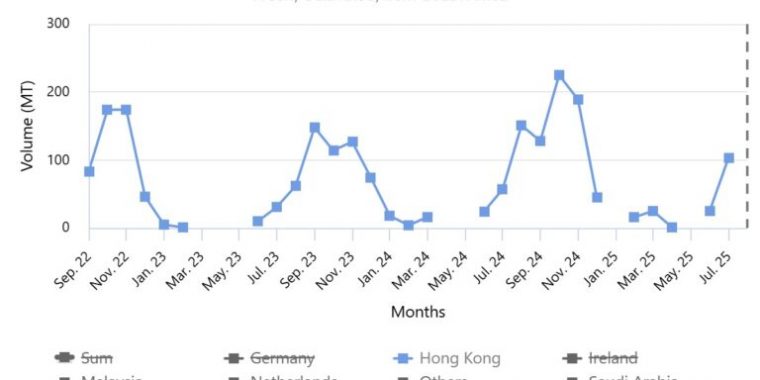
Now,
it
appears
China
is
placing
its
bets
on
Zimbabwe.
The
reason
is
unknown,
but
I
suspect
the
Chinese
have
been
testing
Zimbabwean
blueberries
through
Hong
Kong,
which
often
acts
as
an
informal
‘beta
tester’
for
products
entering
mainland
China.
Source:
USDA
Market
News
via Agronometrics.
(Agronometrics
users
can
view
this
chart
with
live
updates here)

Source:
USDA
Market
News
via Agronometrics.
(Agronometrics
users
can
view
this
chart
with
live
updates here)
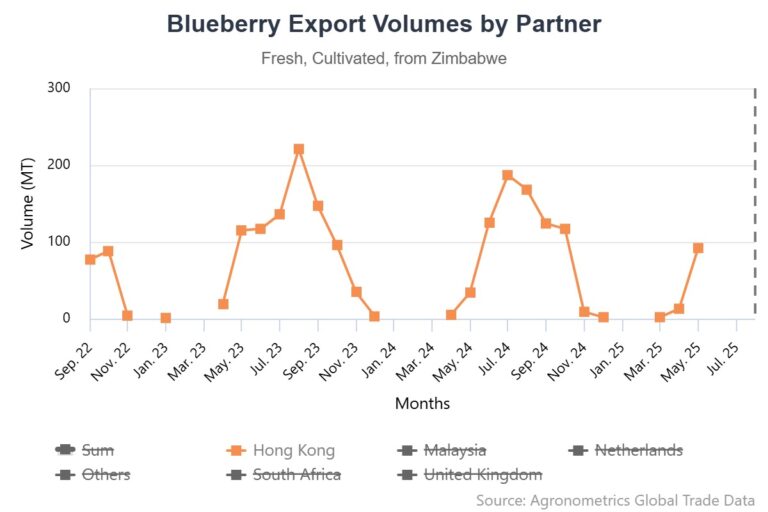
Despite
the
large
difference
in
overall
production
volumes
between
Zimbabwe
and
South
Africa,
their
exports
to
Hong
Kong
appear
similar
in
size,
and
Zimbabwe
may
even
be
shipping
more
fruit.
However, the
two
countries
aren’t
in
direct
competition,
as
their
harvest
peaks
occur
at
different
times.
Zimbabwe’s
peak
arrives
earlier,
which
allows
the
two
to
complement
rather
than
compete
with
each
other
in
the
Chinese
market.
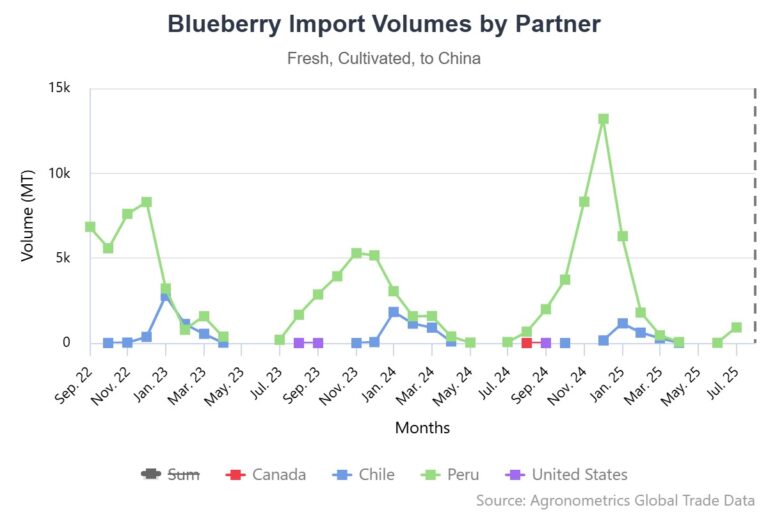
That
said,
both
countries
still
represent
relatively
small
volumes
when
compared
to
China’s
leading
blueberry
suppliers:
Peru
and
Chile.
These
two
continue
to
dominate,
thanks
in
part
to
their
robust
export
infrastructure
and
tariff-free
access.
Source:
USDA
Market
News
via Agronometrics.
(Agronometrics
users
can
view
this
chart
with
live
updates here)
Looking
at
the
data,
one
question
comes
to
mind:
Why
does
China,
with
such
a
vast
appetite
for
fruit,
limit
itself
to
just
four
blueberry
suppliers?
And
why
not
lower
tariffs
to
attract
more
competition?
I
believe
that
if
China
extended
zero-percent
tariffs
to
countries
like
Argentina
and
Uruguay
(which
already
have
approved
export
protocols),
they
might
start
exporting
more
actively
as
well. It’s
a
matter
of
strategy,
and
such
adjustments
are
often
well
within
China’s
capabilities
when
the
timing
is
right.
In
the
meantime, congratulations
to
Zimbabwe.
With
this
new
market
opportunity,
the
country
becomes
a
more
attractive
destination
for
foreign
investment
in
its
blueberry
sector.
P.S. In
South
America,
Chile
was
the
first
to
open
the
Chinese
market
for
blueberries
and
eliminate
tariffs
through
a
Free
Trade
Agreement.
Uruguay
followed,
but
faced
high
tariffs
(30
percent),
which
limited
the
impact
of
market
access.
Peru
later
joined
with
the
added
benefit
of
duty-free
access,
also
thanks
to
its
FTA.
P.S.
2. For
clarity,
when
I
said
“the
reason
is
unknown”
regarding
why
China
chose
Zimbabwe,
I
meant
that
while
there
are
many
possible
explanations,
I
don’t
know
which
specific
factors
influenced
the
decision.
The
likely
explanations,
in
my
view,
are
political
and
unrelated
to
the
blueberry
market
itself.
Source:
Zimbabwe
secures
zero-tariff
access
for
blueberries
–
FreshFruitPortal.com