
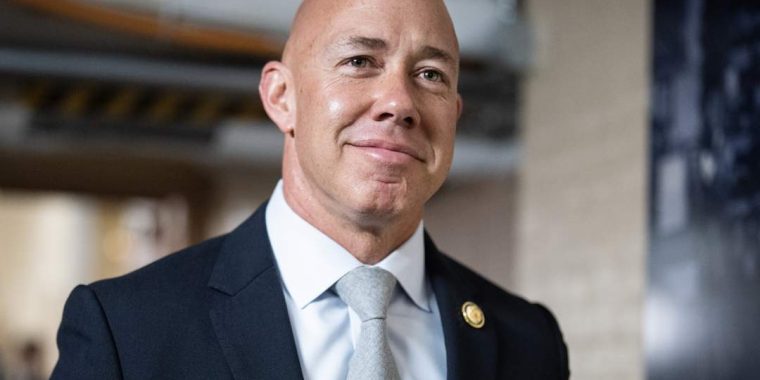

Brian
Mast,
a
Florida
Republican
congressman
and
chairman
of
the
House
of
Representatives
Foreign
Affairs
Committee,
seeks
to
block
US
support
for
any
new
or
expanded
funding
to
Zimbabwe.
Tom
Williams/CQ-Roll
Call,
Inc
via
Getty
Images
The
southern
African
nation
struck
a
deal
in
2020
under
a
so-called
Global
Compensation
Deed
to
reimburse
the
farmers
for
improvements
they
made
to
land
that
was
seized
by
government-backed
militants.
The
initial
terms
of
the
deal
were
never
met
and
have
since
been
revised
several
times.
In
April,
the
authorities
unveiled
a
new
payment
plan
that
would
see
treasury
bonds
being
issued
to
the
farmers,
an
option
most
of
them
rejected.
A
September
11
bill,
proposed
by
Brian
Mast,
a
Florida
Republican
congressman
and
chairman
of
the
House
of
Representatives
Foreign
Affairs
Committee,
seeks
to
block
US
support
for
any
new
or
expanded
funding
to
Zimbabwe
unless
it
commits
to
settling
its
arrears
within
12
months
of
the
financing
being
approved.
If
passed,
the
legislation
will
also
require
the
southern
African
nation
to
adjust
the
compensation
for
inflation
and
ensure
it
isn’t
settled
using
Zimbabwe-issued
securities.
Zimbabwe
has
been
locked
out
of
international
capital
markets
since
1999
after
it
defaulted
on
debt
from
lenders
including
the
World
Bank,
Paris
Club
and
African
Development
Bank.
It
has
appealed
to
10
nations
including
China
and
France
to
consider
providing
bridge
finance
totalling
$2.6
billion
to
help
it
repay
multilateral
lenders,
but
none
have
committed
so
far.
Relations
between
Washington
and
Harare
have
been
frosty
due
to
longstanding
tensions
over
human-rights
abuses,
a
lack
of
democratic
reforms
and
unresolved
disputes
stemming
from
the
land
seizures,
which
led
to
US
sanctions.