
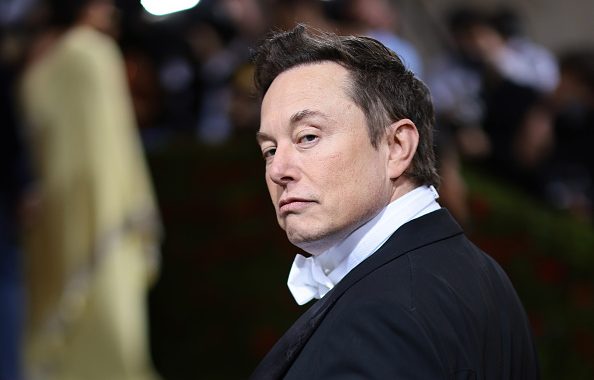

by
Dimitrios
Kambouris/Getty
Images
for
The
Met
Museum/Vogue)
It
was
May
of
2018.
“Avengers:
Infinity
War”
was
in
theaters.
Prince
Harry
and
Meghan
Markle
got
married,
which
people
cared
about
for
some
reason.
Mike
Pence
was
the
vice
president,
and
no
one
had
tried
to
hang
him
yet.
As
for
me,
there
I
was,
hustling
as
an
associate
litigator
out
in
the
wild
with
something
to
prove.
I
was
still
a
few
months
away
from
penning
my
first
substantive
column
for
this
site,
building
street
cred
not
only
as
a
lawyer
but
as
an
investor,
when
I
made
a
little
gamble
on
a
few
shares
of
an
electric
automaker
called
Tesla.
And
a
gamble
it
was.
If
you’ve
followed
this
column
from
the
beginning,
you
know
that
I
don’t
consider
buying
individual
stocks
to
be
much
more
economically
productive
than
wandering
a
casino
floor.
Tesla
was
no
exception:
in
2018,
the
company
was
still
two
years
away
from
achieving
its
first
full
year
of
net
income,
and
most
of
that
from
selling
regulatory
credits
to
other
automakers
rather
than
from
actually
selling
vehicles.
At
the
time,
however,
I
considered
it
worth
the
financial
risk
to
invest
a
little
money
in
companies
like
Tesla
as
a
sort
of
moral
imperative.
Since
I
am
not
a
dolt,
I
accept
the
reality
of
climate
change.
For
those
like
me
with
a
little
extra
money
to
invest,
and
an
appetite
for
risk,
helping
along
the
only
American
car
company
that
was
actually
making
electric
vehicles
cool
seemed
a
worthwhile
pursuit
for
the
planet
if
not
necessarily
for
one’s
stock
portfolio.
Then
there
was
the
matter
of
Tesla’s
young,
promising
CEO
Elon
Musk.
Now
just
hang
on,
hear
me
out
before
you
start
launching
rotten
vegetables
in
my
direction.
Remember,
this
was
early
2018
Elon
Musk!
What
the
man
actually
believes,
if
anything,
is
incredibly
difficult
to
ascertain
at
this
point.
There
is
a
whole
(lengthy)
Wikipedia
page
dedicated
solely
to
Musk’s
shifting,
shimmering,
often
contradictory
views.
Things
did
not
seem
so
complicated
in
2018.
Yes,
Musk
was,
even
then,
an
incredibly
rich
person
(he
wouldn’t
become
the
world’s
wealthiest
person
until
2021).
Yet,
stories
kept
coming
out
about
how
he
lived
like
a
monk.
He
spoke
out
passionately
about
the
risks
of
climate
change.
He
had
publicly
supported
the
presidential
campaigns
of
Barack
Obama
and
Hillary
Clinton.
For
a
CEO,
the
guy
was
pretty
likable.
Charismatic,
even.
He
was
daring
to
do
with
his
companies
what
everyone
else
said
was
impossible.
Then
the
infamous
420
tweet
happened.
Musk’s
relationship
with
the
musician
Grimes
fell
apart.
His
oldest
child
(nearly
tied
for
oldest
with
her
twin,
to
be
precise)
came
out
as
transgender
and
disowned
him
because
of
the
way
he’d
treated
her.
He
was
sucked
into
the
darkest
corners
of
Twitter
during
the
pandemic.
The
ketamine,
the
unsatisfactorily
explained
black
eyes,
the
repeated
unfunny
attempts
at
comedy,
working
for
Donald
Trump
to
pointlessly
destroy
the
lives
of
thousands
of
federal
workers
while
he
waved
around
a
chainsaw
on
stage
like
a
lunatic;
something
—
a
lot
of
things
—
went
terribly,
terribly
wrong.
Meanwhile,
Tesla’s
share
price
during
this
period
was
as
volatile
as
its
CEO’s
life.
At
first,
and
for
quite
a
while,
it
looked
like
I
was
going
to
lose
it
all.
Then,
right
about
the
time
when
Musk
was
revealing
his
rightward
pivot,
the
stock
soared.
It
cratered
after
that,
only
to
ascend
again,
creating
a
chart
reminiscent
of
the
jagged
EKG
readout
of
a
patient
whose
heart
is
about
to
explode.
Of
course,
I
changed
too
over
the
past
seven
years.
We
all
did.
For
instance,
a
number
of
my
early
ATL
columns
focused
largely
on
praising
Musk.
Then
somewhere
along
the
line
I
found
myself
more
often
defending
him.
Until
I
finally
just
settled
on
the
skewering
he
deserves.
Still,
I
can’t
complain
about
the
returns
on
my
Tesla
investment
over
the
course
of
this
story
arc.
If
you’re
wondering
how
I
did,
well,
you
can
take
my
initial
capital
from
May
of
2018,
multiple
it
by
23,
and
you’ll
come
out
almost
to
the
penny
at
where
I’m
at
after
liquidating
my
position
on
Monday.
I’m
happy
with
the
money.
You
know
what
pleases
me
even
more
than
that
though?
I
like
the
person
I
am
today
better
than
the
one
I
was
in
May
of
2018.
I
don’t
think,
if
he’s
really,
brutally
honest,
Musk
could
say
the
same.
Jonathan
Wolf
is
a
civil
litigator
and
author
of Your
Debt-Free
JD (affiliate
link).
He
has
taught
legal
writing,
written
for
a
wide
variety
of
publications,
and
made
it
both
his
business
and
his
pleasure
to
be
financially
and
scientifically
literate.
Any
views
he
expresses
are
probably
pure
gold,
but
are
nonetheless
solely
his
own
and
should
not
be
attributed
to
any
organization
with
which
he
is
affiliated.
He
wouldn’t
want
to
share
the
credit
anyway.
He
can
be
reached
at [email protected].