
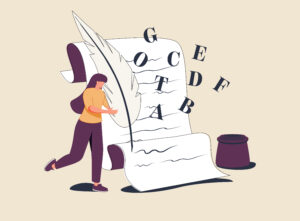
State
and
federal
courts
have
adopted
a
number
of
technological
advances
in
recent
years
that
make
it
much
easier
to
handle
judicial
matters.
For
instance,
many
courts
adopted
virtual
courtrooms
complete
with
cameras,
monitors,
and
other
systems
to
accommodate
remote
proceedings.
In
addition,
most
courts
have
adopted
electronic
filing
systems
that
are
much
more
efficient
than
paper
filing
systems.
However,
many
courts
still
issue
handwritten
orders. Although
this
might
be
more
convenient
in
certain
circumstances,
courts
should
avoid
handwritten
orders
for
a
variety
of
reasons.
Difficult
To
Read
Perhaps
the
most
important
reason
why
handwritten
orders
should
be
avoided
is
that
they
are
difficult
to
read. In
many
instances,
handwritten
orders
are
written
on
carbon-copy
forms,
and
a
copy
of
a
form
might
be
difficult
for
a
litigant
to
review. The
process
of
scanning
a
handwritten
order
might
also
degrade
the
quality
of
the
text
on
the
decision. Moreover,
some
judges
and
judicial
staff
have
absolutely
horrible
handwriting,
and
it
is
altogether
difficult
to
discern
what
is
written
in
the
order.
A
few
years
ago,
I
filed
a
motion
that
the
judge
wanted
to
resolve
while
all
of
the
parties
were
in
the
courtroom. The
judge
wrote
out
an
order
that
was
around
a
paragraph
long,
and
he
told
us
we
would
be
able
to
see
the
decision
once
it
was
uploaded
later
that
day. When
I
finally
viewed
the
decision,
I
could
not
make
out
some
critical
language
in
the
order. My
adversary
and
I
had
different
interpretations
of
what
was
written
since
different
interpretations
of
the
language
had
different
impacts
on
our
clients. We
ended
up
needing
to
request
clarification
from
the
court,
which
wasted
more
time
than
if
the
court
typed
out
the
order
and
uploaded
that
instead
of
a
handwritten
order.
Space
Limitations
Handwritten
order
are
often
much
shorter
than
typed
orders. This
is
because
it
usually
takes
longer
to
write
a
decision
than
it
does
to
type
an
order. Accordingly,
judges
may
not
include
much
reasoning
around
their
decisions
when
they
choose
to
handwrite
an
order. This
can
have
significant
consequences
if
an
order
is
appealed
and
if
another
judge
needs
to
evaluate
why
a
judge
made
a
given
decision
on
an
issue.
Sometimes,
litigants
can
procure
the
record
of
oral
argument
to
ascertain
more
context
about
how
a
judge
arrived
at
a
given
decision.
However,
not
all
oral
arguments
are
recorded,
and
sometimes
judges
do
not
specify
why
they
decided
a
certain
way
during
oral
argument.
It
is
much
more
prudent
in
many
circumstances
for
judges
to
take
their
time
to
type
out
orders
so
that
they
can
be
more
comprehensive
when
deciding
how
they
arrived
at
a
given
position.
Editing
Is
Difficult
It
is
much
more
difficult
to
edit
a
handwritten
order
than
it
is
to
edit
a
typed
order. If
a
judge
wants
to
change
something
in
a
handwritten
decision,
they
may
need
to
strike
out
language,
include
arrows
to
added
language,
and
tuck
extra
words
into
the
margins. One
time,
I
saw
a
heavily
edited
handwritten
order
that
looked
more
like
a
treasure
map
than
a
judicial
order! If
judges
type
out
their
order,
they
can
just
delete
or
add
text
before
printing
out
the
order
and
filing
it. This
has
a
much
cleaner
look
than
a
handwritten
order
in
most
circumstances.
Clearly,
some
orders
are
just
easier
to
handwrite. For
instance,
if
the
parties
stipulate
to
items,
it
is
usually
easier
for
the
parties
to
write
the
items
down
and
have
a
judge
“so
order”
the
stipulation. Moreover,
for
smaller
matters,
it
might
be
completely
appropriate
for
a
judge
to
scribble
out
a
brief
order. However,
in
the
majority
of
circumstances,
it
is
usually
best
to
avoid
handwritten
orders
for
the
sake
of
clarity
and
efficiency.
Jordan
Rothman
is
a
partner
of The
Rothman
Law
Firm,
a
full-service
New
York
and
New
Jersey
law
firm.
He
is
also
the
founder
of Student
Debt
Diaries,
a
website
discussing
how
he
paid
off
his
student
loans.
You
can
reach
Jordan
through
email
at jordan@rothman.law.