
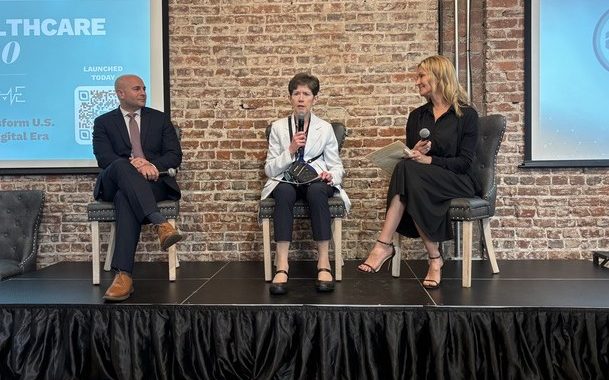
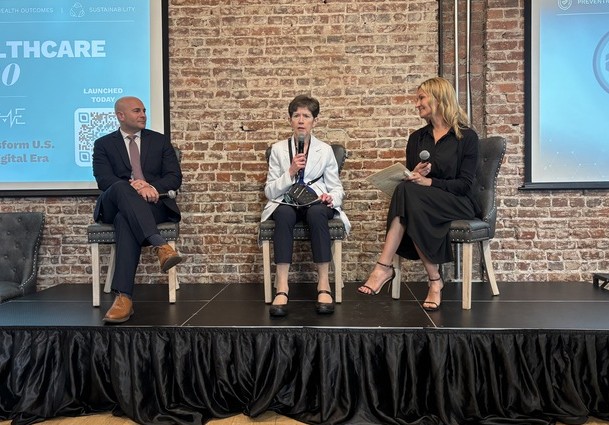
Building
a
better
healthcare
system
isn’t
just
about
adopting
the
latest
technology
—
it’s
about
redesigning
processes,
policies
and
patient
experiences.
Leaders
from
the
Department
of
Veterans
Affairs
and
the
Office
of
the
National
Coordinator
for
Health
Information
Technology
(ONC)
talked
about
what
this
looks
like
at
their
organizations
during
a
Monday
panel
at
the
Digital
Medicine
Society’s
Healthcare
2030
Summit
in
Washington,
D.C.
The
VA
has
offered
telehealth-based
care
since
2006,
but
it
has
significantly
scaled
these
programs
—
such
as
tele-rehabilitation,
tele-ICU
and
tele-oncology
—
since
the
pandemic,
said
Carolyn
Clancy,
the
department’s
under
secretary
for
health.
The
expansion
of
these
programs
was
spurred
by
the
pandemic,
during
which
clinicians
devised
creative
solutions
when
in-person
care
wasn’t
possible,
she
explained.
For
example,
she
recalled
when
acupuncture
sessions
shifted
online
during
the
pandemic.
A
VA
physician
quickly
pivoted
to
holding
virtual
appointments
teaching
veterans
“acu-touch”
techniques
they
could
use
at
home
to
relieve
pain.
This
shows
that
innovation
involves
more
than
just
technology,
Clancy
noted.
It’s
about
changing
care
delivery
methods
to
meet
patients
where
they
are.
This
is
especially
important
for
rural
patients,
she
added.
“Depending
on
which
source
I’m
looking
at,
either
a
quarter
or
a
third
of
our
veterans
live
in
rural
areas.
I’m
not
talking
about
lovely
exurbs
—
I
mean
seriously
rural.
And
unlike
most
systems,
we
don’t
have
the
luxury
[of
choosing
our
market.]
We
have
to
provide
care
to
all
veterans
—
we
can’t
say
‘that’s
not
a
good
market
to
be
in,’”
Clancy
stated.
To
better
care
for
these
patients,
the
VA
has
invested
in
better
broadband
access
and
provided
telehealth
pods
in
community
locations
like
VFW
halls.
This
has
saved
thousands
of
veterans
from
driving
hours
to
seek
care,
she
pointed
out.
The
department
has
also
struck
partnerships
with
community
groups
like
volunteer
fire
departments
to
help
veterans
learn
to
use
telehealth
technology.
This
step
is
key
because
access
is
not
only
about
connectivity,
but
also
ease
of
use,
especially
for
older
veterans
or
those
with
sensory
impairments,
Clancy
noted.
While
the
VA
is
scaling
innovations
on
the
ground,
the
ONC
is
creating
policy
and
technical
infrastructure
aimed
at
making
health
data
flow
more
efficiently.
Steve
Posnack,
principal
deputy
national
coordinator,
explained
that
over
the
past
decade,
the
office
has
pushed
for
standards-based
APIs
and
frameworks
like
FHIR
to
make
patient
records
more
accessible.
Beyond
improved
data
movement,
Posnack
also
highlighted
the
need
to
make
data
more
actionable
and
easier
to
glean
insights
from.
“First,
it’s
about
getting
us,
as
individuals,
access
to
our
information
and
our
entire
record.
And
that’s
scattered
still,
so
we
have
a
lot
of
work
to
do
in
that
space.
The
second
is
to
help
our
overworked
clinicians
across
the
entire
spectrum
—
nurses,
docs,
et
cetera
—
to
have
better
tools
that
can
help
synthesize
all
of
the
data
that
we’re
shooting
at
them
in
different
ways,”
he
remarked.
Ultimately,
Posnack
said
that
the
ONC’s
work
complements
the
VA’s
on-the-ground
innovations.
The
federal
division
is
trying
to
ensure
that
when
new
tools
and
care
models
are
developed,
they
can
connect
across
systems
and
support
clinicians,
he
stated.