
A
study
examining
artificial
intelligence
adoption
in
legal
aid
organizations
has
revealed
that
these
resource-constrained
nonprofits
are
embracing
AI
technology
at
nearly
double
the
rate
of
the
broader
legal
profession,
driven
by
the
urgent
need
to
serve
millions
of
underserved
Americans.
The
survey,
The
AI
Advantage:
How
Technology
Can
Help
Bridge
the
Justice
Gap,
was conducted
by
Everlaw
in
partnership
with
the
National
Legal
Aid
&
Defender
Association
(NLADA),
Paladin,
and
LawSites.
It
found
that
74%
of
legal
aid
organizations
are
already
using
AI
in
their
work
–
significantly
higher
than
the
37%
adoption
rate
recently
reported
across
the
wider
legal
profession
for
generative
AI
tools.
AI
As
Justice
Gap
Solution
The
study’s
most
striking
finding
centers
on
legal
aid
professionals’
optimism
about
AI’s
potential
impact:
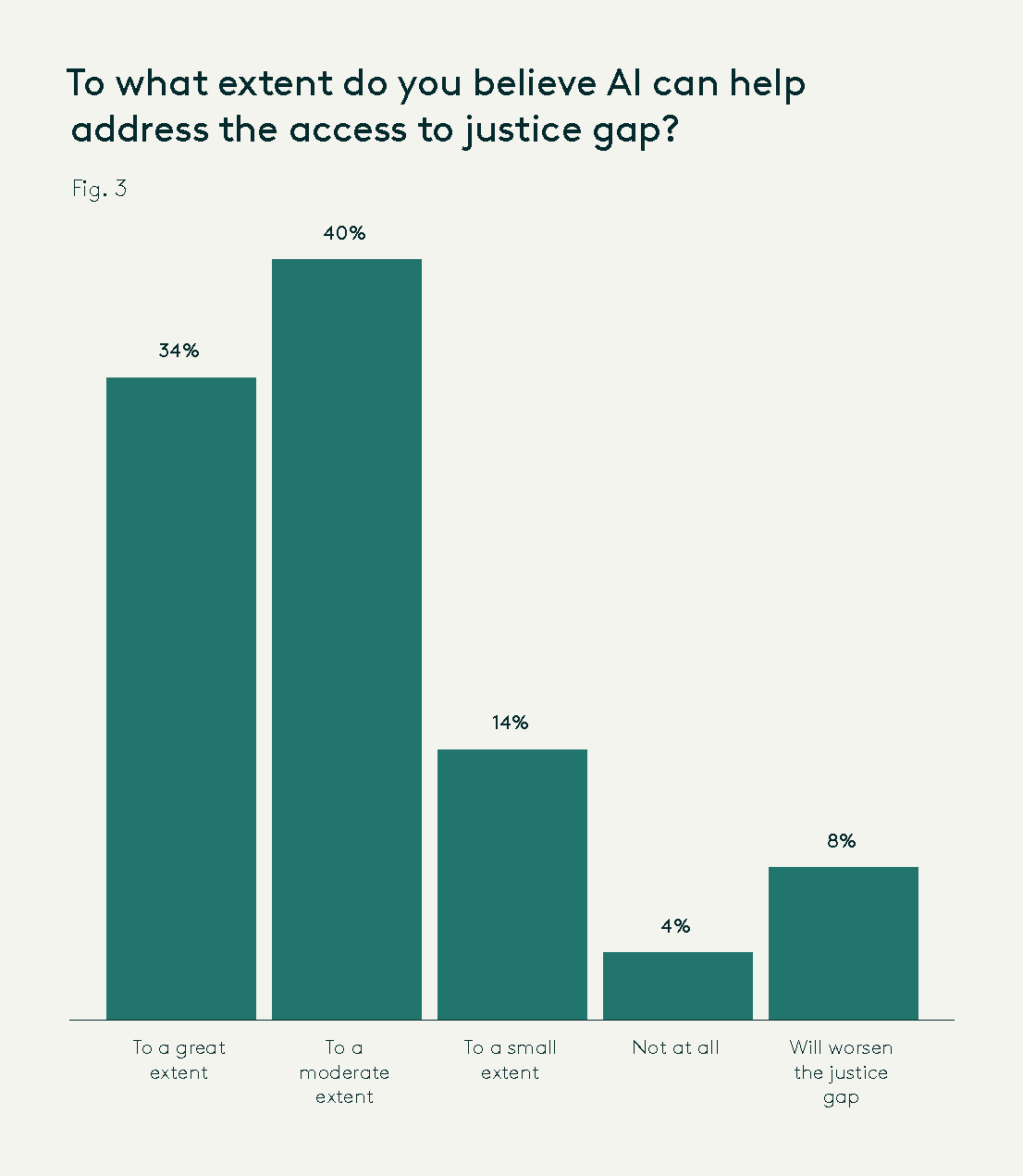
88%
of
respondents
believe
AI
can
help
address
the
access
to
justice
gap
to
some
extent,
with
34%
saying
it
can
help
“to
a
great
extent.”
This
widespread
belief
in
AI’s
transformative
potential
comes
against
the
backdrop
of
a
stark
justice
crisis
in
America.
According
to
the
study,
92%
of
civil
legal
problems
encountered
by
low-income
Americans
receive
no
or
inadequate
legal
help,
and
the
United
States
ranks
just
107th
out
of
142
countries
in
affordability
and
accessibility
of
civil
justice.
As
I
am
quoted
in
the
study
as
saying:
“This
survey
reveals
that
AI
adoption
is
not
just
happening
in
well-funded
BigLaw
firms
–
it
is
being
driven
by
organizations
serving
our
most
vulnerable
populations
When
88%
of
legal
aid
professionals
see
AI
as
a
tool
to
address
the
justice
gap,
that
underscores
its
potential
to
fundamentally
democratize
access
to
legal
services.”
Regular
Use
of
AI
The
survey
revealed
significant
integration
of
AI
into
the
daily
operations
of
legal
aid
organizations.
Among
the
112
legal
aid
professionals
surveyed
in
May
2025:
-
40%
reported
using
AI
at
least
weekly. -
26%
use
it
daily. -
12%
use
it
multiple
times
per
day.
Common
applications
include
document
summarization,
legal
research,
analysis,
translations,
and
development
work
–
showing
AI’s
versatility
across
different
aspects
of
legal
aid
practice.
Increasing
Client
Capacity
 The
The
Legal
Services
Corporation
estimates
that
nearly
one
of
every
two
people
who
qualify
for
legal
aid
are
turned
away
due
to
lack
of
resources.
For
these
legal
aid
organizations
struggling
with
overwhelming
caseloads,
perhaps
one
of
the
survey’s
most
compelling
findings
is
that
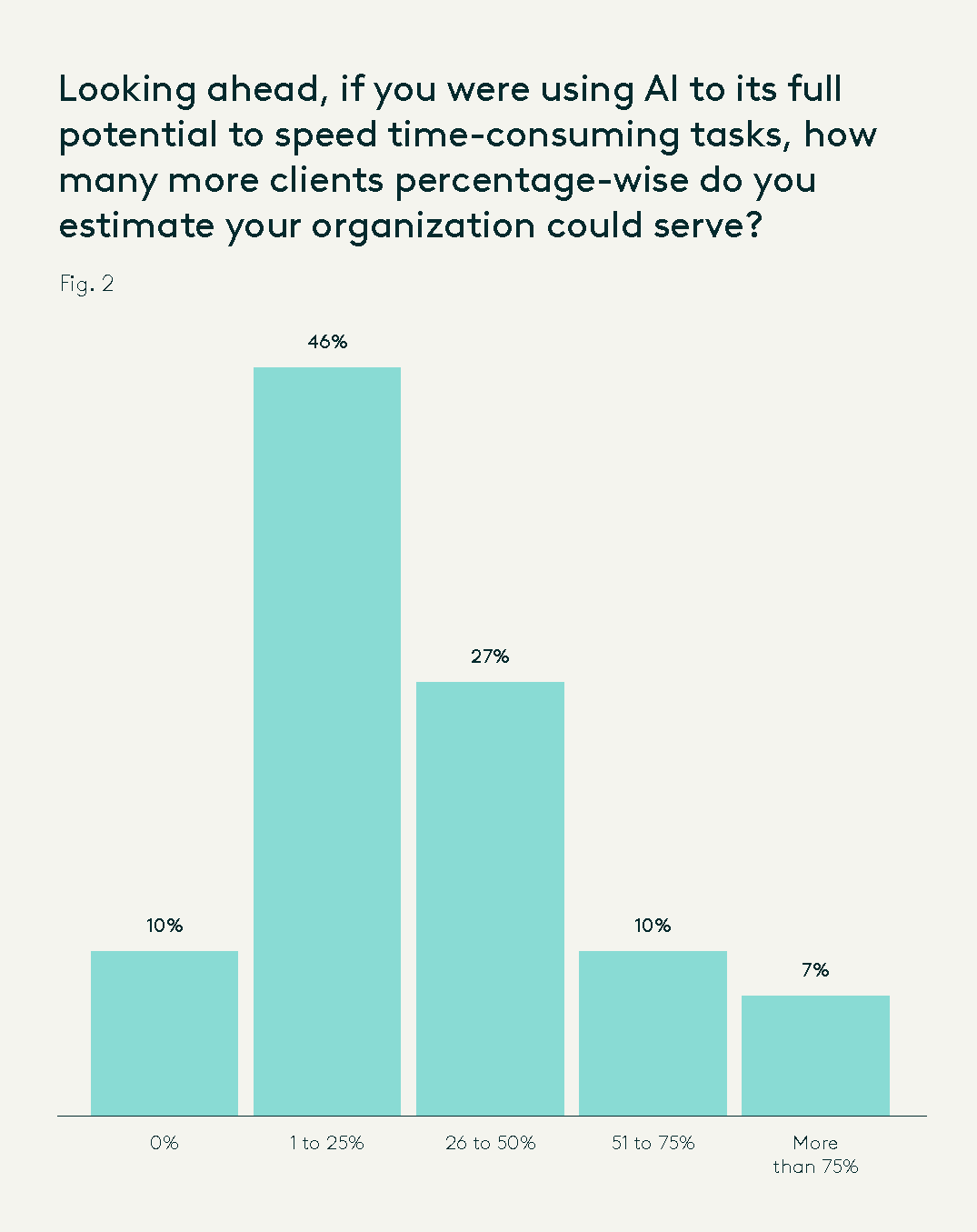
90%
of
respondents
said
using
AI
to
its
full
potential
would
enable
them
to
serve
more
clients.
When
asked
to
quantify
potential
impact,
respondents
provided
specific
projections:
-
46%
estimated
they
could
serve
1-25%
more
clients. -
27%
believed
they
could
serve
26-50%
more
clients. -
17%
projected
capacity
increases
of
over
50%.
“AI
presents
a
generational
opportunity
to
fundamentally
expand
who
has
access
to
justice,
but
it’s
not
a
foregone
conclusion,”
said
Joanne
Sprague,
head
of
Everlaw
for
Good.
“By
empowering
these
critical
legal
organizations
with
AI
tools,
we
can
make
a
real
difference
in
the
lives
of
millions.”
Implementation
Challenges
Remain
Despite
widespread
optimism,
the
survey
identified
significant
obstacles
to
full
AI
implementation.
The
top
areas
of
concern,
ranked
by
severity,
include:
-
Data
privacy
and
confidentiality
(5.8
out
of
10
on
concern
scale). -
Hallucinations
and
AI
quality
(5.6
out
of
10). -
Ethical
and
professional
responsibility
(5.0
out
of
10). -
Prohibitive
cost
(3.6
out
of
10). -
Lack
of
technical
resources
(3.2
out
of
10).
These
challenges
highlight
the
complex
considerations
legal
aid
organizations
face
when
implementing
AI,
particularly
given
their
ethical
obligations
to
vulnerable
client
populations
and
limited
financial
resources.
Spotlight
on
North
Carolina
The
report
spotlights
Legal
Aid
of
North
Carolina
(LANC)
as
an
example
of
innovative
AI
implementation.
The
state’s
largest
nonprofit
law
firm
serves
300,000
people
annually
seeking
help
with
issues
such
as
domestic
violence
and
unlawful
eviction.
LANC
is
testing
an
AI-powered
voice
agent
for
initial
intake
that
operates
24/7
in
multiple
languages,
addressing
accessibility
challenges
for
clients
in
rural
areas
or
those
with
transportation
issues.
By
automating
this
foundational
step,
LANC’s
200
statewide
attorneys
can
focus
on
high-value
work
such
as
court
appearances
and
client
advocacy,
the
survey
notes.
“We
will
never
be
able
to
‘lawyer
ourselves’
out
of
this
access-to-justice
crisis,”
said
LANC’s
Chief
Innovation
Officer
Scheree
Gilchrist
in
the
survey
report.
“AI
is
a
force
multiplier
to
scale
our
services.”
A
Powerful
Tool
for
Legal
Aid
According
to
experts
cited
in
the
report,
the
study’s
findings
align
with
broader
observations
about
AI’s
democratizing
potential
in
legal
services.
“Generative
AI
offers
a
rare
chance
to
address
this
crisis,”
said
Kristen
Sonday,
cofounder
and
CEO
of
Paladin.
“It
can
democratize
legal
information,
simplify
processes,
and
offer
meaningful
legal
tools
at
scale.”
The
survey
results
suggest
that
legal
aid
organizations
view
AI
not
as
a
threat
to
legal
employment,
but
as
a
crucial
tool
for
expanding
access
to
justice.
The
technology
appears
to
be
enabling
these
organizations
to
stretch
limited
resources
further
while
maintaining
quality
representation
for
vulnerable
populations.
“Professionals
across
the
access
to
justice
community
are
embracing
this
technology
as
a
crucial
ally
in
the
long-term
fight
to
close
the
persistent
justice
gap,”
the
report
concludes.
“This
isn’t
about
automating
jobs
or
taking
work
away
from
lawyers;
it’s
about
equipping
advocates
with
a
powerful
new
instrument
to
manage
complex
caseloads,
streamline
tasks,
and
supercharge
their
capacity
to
serve
more
clients
more
effectively.”
Methodology
and
Participants
The
survey
was
conducted
in
May
2025
by
Everlaw
in
partnership
with
NLADA,
Paladin
and
LawSites.
It
surveyed
112
legal
aid
society
professionals,
examining
their
AI
usage
patterns,
perceptions
of
AI’s
potential
to
support
access
to
justice,
and
views
on
how
AI
might
help
their
organizations
better
serve
people
facing
housing,
family,
employment,
and
other
critical
legal
issues.