

WASHINGTON
— While
all
eyes
were
on
the
efforts
to
avert
a
government
shutdown
at
the
end
of
September,
a
lesser
known
tool
used
by
the
Pentagon
to
support
small
companies
was
left
fighting
for
its
own
life:
the
Small
Business
Innovation
Research
program.
As
of
eight
days
ago,
funding
for
SBIR
lapsed,
and
while
it
could
be
restored,
lawmakers
are
at
a
hard
impasse
about
whether
it
should
be
— at
least
in
its
current
form.
The
program,
launched
in
1982
and
administered
by
the
Small
Business
Administration,
provides
seed
funding
to
small
businesses
for
technology
development,
with
the
Defense
Department
as
the
largest
participant
of
the
program.
Proponents
say
it’s
an
initiative
with
a
proven
track
record
of
success,
and
that
allowing
funding
to
lapse
permanently
or
enact
reforms
too
aggressively
will
do
irreparable
damage
to
the
small
defense
business
ecosystem.
But
critics
say
it
is
not
fulfilling
its
mandate,
and
that
changes
are
needed
to
bring
in
new
entrants
and
ensure
repeat
awardees
eventually
“graduate”
from
the
program.
“You
look
at
the
DoD
in
particular
…
25
companies
sucked
up
18
percent
of
the
[SBIR]
funding
at
DoD
and
are
not
really
producing,”
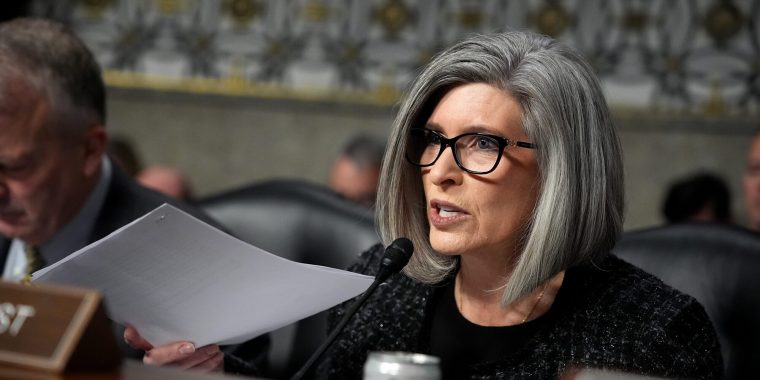
Sen.
Joni
Ernst,
chairwoman
of
the
Senate
Small
Business
and
Entrepreneurship
Committee,
said
in
September
at
the
Center
for
Strategic
and
International
Studies.
“It’s
really
like
a
negative
investment
strategy,
because
we’re
pumping
the
money
in
but
not
getting
anything
back
out.”
For
now,
the
Pentagon
has
given
guidance
to
companies
stating
that
while
current
contracts
“remain
valid
unless
otherwise
directed,”
new
solicitations
are
paused
and
pending
awards
will
only
proceed
if
fiscal
2025
funding
is
available,
a
department
official
told
Breaking
Defense
in
a
statement.
“While
the
War
Department’s
Small
Business
Innovation
Research
(SBIR)
and
Small
Business
Technology
Transfer
(STTR)
programs’
authorization
lapsed,
that
does
not
mean
ongoing
work
has
been
terminated,”
the
official
said,
using
a
secondary
name
for
the
Defense
Department.
“Until
reauthorized,
we
encourage
our
small
business
partners
to
use
this
pause
to
assess
how
their
capabilities
align
with
Department
needs.
Once
restored,
the
program
and
its
functions
will
swiftly
resume.”
It’s
the
longer
term
future
of
the
program
that
appears
most
murky,
in
part
because
of
a
split
in
industry
and
its
congressional
supporters
about
how
SBIR
has,
or
has
not,
been
exploited
by
some
firms.
At
the
center
of
the
debate
is
the
Investing
in
National
Next-Generation
Opportunities
for
Venture
Acceleration
and
Technological
Excellence
(INNOVATE)
Act
proposed
by
Ernst,
R-Iowa.
The
INNOVATE
Act
imposes
new
rules
meant
to
root
out
the
risks
of
foreign
nations
like
China
gaining
control
of
US
technology,
and
shifts
some
money
from
the
Small
Business
Technology
Transfer
(SBTT)
program
to
a
new
“Strategic
Breakthrough”
initiative
aimed
at
helping
companies
bridge
the
timeline
between
developing
a
new
technology
and
producing
it.
However,
the
bill’s
most
controversial
provision
would
create
a
$75
million
cap
on
SBIR
funds
a
company
could
win
throughout
its
lifetime
—
a
measure
meant
to
force
companies
to
move
on
from
the
program
and
find
a
wider
market
for
their
products
in
the
commercial
sector.
Ernst
and
the
venture-backed
startup
community
contend
that
there
are
so-called
“SBIR
mills”—
research
and
development
firms
that
have
historically
specialized
in
winning
SBIR
contracts
but
do
not
typically
compete
for
larger
defense
programs.
Those
firms,
the
critics
say,
soak
up
most
of
the
funding
made
available,
at
the
expense
of
new
entrants
who
could
use
that
money
to
scale
technologies
for
mass
production.
But
defenders
of
the
program
state
that
eliminating
longstanding
SBIR
winners
would
punish
companies
who
have
a
track
record
of
successfully
developing
and
producing
technology
for
the
Defense
Department.
“All
that
we’re
saying
is
that,
why
can’t
everybody
compete?”
said
Jay
Rozzi,
vice
president
and
principal
engineer
for
Creare,
a
research
and
development
company
that
could
be
forced
out
of
the
SBIR
program
under
an
award
cap.
“Why
can’t
the
market
be
open
for
everyone?”
A
Political
Stalemate
The
House
passed
a
clean,
one-year
extension
for
the
SBIR/STTR
programs
in
mid-September.
But
although
that
bill
was
backed
on
a
bipartisan
basis
by
members
of
the
House
Small
Business
Committee,
the
Senate
has
yet
to
vote
on
the
measure.
On
Sept.
30,
with
just
hours
counting
down
before
the
program
lapsed,
Massachusetts
Sen.
Ed
Markey,
the
top
Democrat
on
the
Senate
Small
Business
Committee,
took
to
the
Senate
floor
to
seek
agreement
to
bring
the
House
bill
up
for
a
vote,
defending
the
ability
for
companies
to
win
multiple
SBIR
awards.
“These
programs
work
because
of
their
merit-based
competition
nature.
Darwinian,
paranoia-inducing
competition,”
he
said.
“Kicking
successful
companies
out
of
these
programs
would
be
like
cutting
your
highest
scorers
after
winning
the
NBA
title.”
However,
Ernst
made
clear
she
would
oppose
any
effort
to
pass
a
clean
extension
of
the
program
and
offered
her
own
substitute
proposal:
A
30-day
extension,
during
which
the
$75
million
lifetime
cap
on
awards
would
be
in
effect.
“If
my
colleagues
truly
oppose
even
basic
safeguards,
then
this
SBIR
set-aside
charade
should
end,
and
taxpayer
dollars
should
be
restored
to
the
agency’s
R&D
budgets
where
they
will
better
serve
our
warfighters
and
strengthen
our
nation’s
competitiveness,”
she
said
in
a
speech
on
the
floor.
“Instead
of
recklessly
extending
the
status
quo
for
another
year,
these
set
aside
dollars
would
simply
be
returned
to
each
agency.
And
small
businesses
can
continue
to
compete
for
those
awards.”
In
the
end,
both
Ernst
and
Markey
objected
to
each
others’
proposals,
effectively
cancelling
each
other
out
and
leaving
the
SBIR
program
in
limbo.
RELATED:
The
$35
billion
question:
Is
SBIR
funding
delivering
for
America’s
warfighters?
In
the
wake
of
the
failed
vote,
bipartisan
leaders
from
two
House
committees
called
on
the
Senate
to
pass
a
short-term
extension.
“The
House
came
together
across
party
lines
to
pass
a
one-year
extension
that
would
provide
certainty
to
Main
Street
while
Congress
worked
toward
a
strong,
long-term
reauthorization.
Without
it,
research
could
be
delayed,
innovation
diminished,
and
America’s
competitive
edge
on
the
world
stage
eroded,”
said
House
Committee
on
Small
Business
Chairman
Roger
Williams,
Ranking
Member
Nydia
M.
Velázquez
(D-NY),
House
Science,
Space,
and
Technology
Committee
Chairman
Brian
Babin
and
Ranking
Member
Zoe
Lofgren
in
a
Sept.
30
statement.
In
a
statement
to
Breaking
Defense,
a
Democratic
spokeswoman
for
the
Senate
Small
Business
Committee
said
that
Markey
continues
to
support
a
one-year
extension
of
the
program,
which
would
allow
time
for
both
parties
to
negotiate
a
longer
extension.
Otherwise,
she
said,
the
SBIR
and
STTR
programs
will
end.
“Senator
Markey
will
continue
to
show
up
to
the
table
and
negotiate
with
Senate
Republicans
on
SBIR/STTR,
but
the
uncertainty
for
small
businesses
will
be
detrimental
to
innovation,”
she
said.
“By
being
the
only
Republican
leader
to
not
support
the
one
year
extension,
R&D
funds
would
go
back
to
the
participating
agencies,
forcing
small
businesses
to
compete
with
bigger
businesses.
She
[Ernst]
is
leaving
small
businesses
behind.”
A
Republican
congressional
aide
responded,
“The
reason
small
businesses
and
others
are
unable
to
access
funding
right
now
is
because
of
the
Schumer
Shutdown.”
(While
the
government
shutdown
is
also
complicating
funding
for
the
SBIR
program,
SBIR
reauthorization
can
occur
independently
of
solving
the
shutdown.)
Industry
groups
and
SBIR
recipients
said
there
doesn’t
appear
to
be
a
clear
path
forward
to
end
the
stalemate.
“It
does
seem
to
be
that
there
is
an
impasse,”
said
Eric
Blatt,
the
executive
director
of
the
Alliance
for
Commercial
Technology
in
Government,
which
represents
startups
and
the
commercial
tech
sector.
“My
sense
is
that
there
really
has
not
been
much
progress
toward
the
middle.”
A
Need
To
Reform
SBIR?
While
the
debate
on
repeat
winners
of
SBIR
funds
has
overwhelmed
the
discussion
over
the
INNOVATE
Act,
which
the
Alliance
supports,
Blatt
said
the
industry
group
does
not
see
that
issue
as
its
most
important
reform.
Rather,
he
pointed
to
the
new
Strategic
Breakthrough
initiative
meant
to
help
firms
transition
technologies
into
production
as
the
“breakthrough
reform.”
The
SBIR
award
cap
“was
priority
number
five
or
so
in
our
goals
for
SBIR
reauthorization
this
year,”
he
said.
“So
our
viewpoint
is
that
we
should
find
something
between
massive
reforms
that
kick
all
these
companies
out
of
the
program
and
no
reforms
at
all.”
At
the
same
time,
Blatt
said
that
SBIR
authorization
needs
to
come
with
an
updated
commercialization
benchmark
that
all
firms
must
meet
to
receive
funds.
“There
is
a
lot
of
resentment
in
the
[startup]
community
that
goes
after
SBIR
awards,
that
20
percent
of
the
money
is
going
to
companies
that
are
just
doing
research
and
development
and
are
not
able
to
create,
whether
by
intent
or
just
lack
of
capacity,
they
are
not
creating
products
and
services
that
are
competitive
on
the
open
market,”
he
said.
However,
Alliance
chairman
Warren
Katz
noted
that
some
of
the
organizations’
members
want
to
see
Ernst
continue
her
aggressive
posture
toward
rooting
out
repeat
SBIR
winners.
“Our
constituencies
are
going
to
be
greatly
harmed
by
the
SBIR
either
being
delayed
or
canceled.
The
SBIR
mill
community
will
actually
be
positively
decimated.
They’ll
be
killed
off
entirely,”
he
said.
“Now,
if
you
ask
some
of
our
membership:
Would
you
just
bite
the
bullet
and
take
whatever
deal
you
can
get
to
get
the
SBIR
program
back
on
track
and
let
the
SBIR
mills
stay
in
the
system,
and
let
them
continue
to
be
parasites?
Half
of
our
constituency
would
probably
say
yes
to
that
question.
“The
other
half
would
probably
say,
‘Fuck
it.
Finally
clean
those
bastards
out.
Get
rid
of
them.
I’ll
take
the
hit
for
a
year.’”
When
There’s
‘No
Commercial
Market’
Executives
at
firms
who
have
repeatedly
won
SBIR
contracts
argue
that
their
firms
fill
a
particular
niche
in
the
program,
as
they
are
scoped
to
develop
and
produce
low-volume,
military-specific
technologies
for
which
there
is
no
commercial
market
—
opportunities
that
venture-backed
startups
for
dual-use
tech
would
not
be
interested
in.
For
example,
Physical
Sciences
Inc.
is
working
on
specialty
battery
technology
that
can
be
used
by
the
Navy
in
undersea
applications,
said
William
Marinelli,
CEO
of
the
Massachusetts-based
research
and
development
company.
Because
those
batteries
must
conform
to
stricter
safety
standards
than
those
used
in
electric
vehicles,
no
commercial
option
is
readily
available.
Another
such
product,
created
by
Creare
and
sold
to
the
Navy,
allows
the
sea
service
to
repair
the
landing
cables
aboard
aircraft
carriers
while
at
sea,
Rozzi
said.
“There’s
no
commercial
market
for
this.
There’s
no
commercial
supplier
that
you
could
go
to
find
it.
There’s
no
one
that
you
could
ask
to
do
the
NRE
[non-recurring
engineering]
to
develop
it,
because
you’re
only
going
to
sell
30
of
them,
or
36
of
them
when
you
make
them,”
Rozzi
said.
“That’s
where
companies
like
Creare
and
many
of
the
multiple
award
winners
step
in.
They
have
the
infrastructure.
They
can
build
these
things.
They
can
go
through
the
difficult
qualification
processes.
They
can
withstand
the
often
fickle
and
non-linear
procurement
process
at
DoD.”
Both
Marinelli
and
Rozzi
also
noted
that
their
companies’
ratio
of
SBIR
work
and
production
contracts
has
shifted
over
time.
Marrinelli
said
about
59
percent
of
PSI’s
revenue
currently
comes
from
SBIR
contracts.
However,
it
used
to
be
the
opposite,
and
will
shift
again
once
PSI’s
current
development
contracts
switch
to
their
production
phase,
he
said.
Meanwhile,
Creare
gets
“substantially
more”
of
its
revenue
from
non-SBIR
sources,
Rozzi
said,
a
change
that
he
attributed
to
the
military
services
making
improvements
to
carry
technologies
from
development
to
production.
All
three
SBIR
awardees
who
spoke
to
Breaking
Defense
expressed
concern
about
how
a
long
lapse
in
SBIR/STTR
authorization
could
impact
businesses.
“If
I
were
a
much
smaller
company
and
a
startup
where
I
was
looking
at
maybe
one
or
two
or
three
awards
that
were
supporting
my
company,
I
would
probably
be
very
concerned
right
now
about
what’s
happening
with
the
program,”
Marinelli
said.
“Assuming
that
the
current
state
continues
for
a
while,
the
people
who
are
going
to
be
hurt
the
most
in
the
short
term
are
going
to
be
the
people
that
INNOVATE
seems
to
want
to
elevate.”
One
CEO
from
a
small
technology
startup
that
recently
won
its
first
SBIR
contract,
who
asked
not
to
be
identified
to
speak
freely
about
his
firm’s
financial
status,
said
that
the
company’s
other
revenue
streams
would
be
enough
to
keep
it
going
during
the
government
shutdown
and
reauthorization
pause.
However,
he
described
the
situation
as
“frustrating,”
noting
that
the
lapse
had
delayed
future
contracting
opportunities
that
are
pivotal
for
startups
seeking
to
scale.
“For
small
startups
like
us,
SBIRs
are
a
critical
influx
of
cash,
and
also
they
show
investors
interest
from
the
DoD,”
the
CEO
said.
“Especially
when
the
DoD
is
your
main
customer,
those
SBIRs
are
a
lifeline.”
But
when
asked
whether
he
would
like
to
see
Ernst
continue
to
hold
out
against
a
clean-sheet
reauthorization,
the
CEO
acknowledged
that
there
was
no
easy
answer.
“I
would
love
to
see
something
to
start
preventing
the
SBIR
mills
from
taking
advantage
of
the
program.
But,
I
mean,
I
know
there’s
a
lot
of
nuance
to
it,”
he
said.