
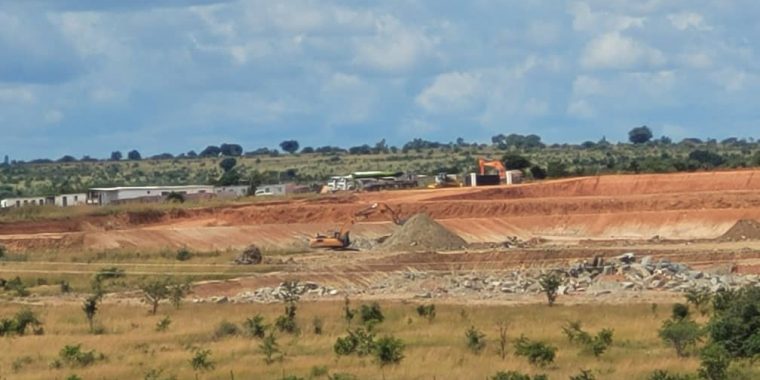

The
government
continues
to
make
efforts
to
lure
investors
in
various
sectors
as
it
moves
to
revive
the
country’s
ailing
economy
but
the
fundamental
question
and
probably
the
major
concern
from
communities
around
the
country
is;
At
what
costs
for
our
fundamental
rights?.
A
case
in
point
is
the
cement
plant
in
Hurungwe,
Mashonaland
West
province
being
set
up
by
a
Chinese
firm,
Labenmon
Investments
(Pvt)
Ltd.
The
case
of
Labenmon
Investments
has
revealed
a
complete
disregard
of
citizens’
fundamental
rights
as
well
as
complete
disregard
of
clearly
laid
down
procedures
in
terms
of
land
allocation,
compensation
and
relocation
of
affected
villagers
and
procedures
on
setting
up
investments
in
Zimbabwe.
Of
major
note
is
the
fact
that
the
Chinese
investors
have
chosen
to
disregard
fundamental
rights
and
the
law;
including
court
orders
by
riding
on
political
connections
and
communities
in
Hurungwe
have
been
left
vulnerable
and
continue
to
watch
as
the
Chinese
operate
with
impunity.
The
proposed
Hurungwe
cement
plant
is
located
at
Katenhe
turn-off,
Ward
11,
Magunje
Constituency.
In
June
last
year,
Vice
President,
Kembo
Mohadi,
directed
the
Chairperson
of
Hurungwe
Rural
District
Council,
Mary
Mliswa
to
allocate
135
hectares
of
land
to
Labenmon
Investments
for
the
cement
plant
claiming
this
had
been
endorsed
by
the
Presidency.
“The
company
above
met
with
His
Excellency
the
President,
Cde
E.D
Mnangagwa
in
the
presence
of
his
two
(2)
Vice
Presidents
and
he
directed
that
they
be
allocated
the
land
they
require.
By
this
letter,
you
are
therefore
requested
to
facilitate
the
acquisition
of
that
land,”
read
the
letter
from
Mohadi.
Mohadi’s
instructions
ignored
resistance
and
environmental
concerns
raised
by
affected
villagers
who
were
facing
eviction
from
their
ancestral
land
as
the
land
allocated
to
the
Chinese
firm
stretched
to
their
fields,
grazing
land
and
villages.
Following
the
letter
from
Mohadi,
Labenmon
Investments
started
pegging
land
in
July
last
year
and
this
resulted
in
villagers
being
prohibited
from
accessing
grazing
fields
and
farming
land.
About
80
families,
who
were
not
consulted
prior
to
the
allocation
of
the
land
to
the
Chinese
firm,
face
eviction
as
result
of
the
project.
The
unprocedural
land
allocation
to
the
Chinese
firm
reveals
the
complicit
nature
of
high
profile
politicians,
local
authorities,
government
agencies
and
the
traditional
leadership
and
could
probably
explain
the
reason
behind
the
Chinese
firm
operating
with
such
impunity
in
the
area.
Issues
of
major
concern
to
the
affected
villagers
include
impending
displacements
without
compensation,
lack
of
consultation
prior
to
the
allocation
of
the
land
to
the
Chinese
firm,
disregard
of
environmental
rights,
pollution
of
their
main
water
source,
Kemureza
Dam
as
well
as
other
rights
violations
that
include
arbitrary
arrests
and
torture.
The
cement
plant
project-
located
1.5
kilometres
upstream
of
Kemureza
Dam
is
a
huge
threat
to
the
villagers’
constitutional
right
to
water
and
villagers
from
Chasara
and
Kapere
villages
in
Wards
10
and
11
respectively
have
raised
concern
that
the
project
is
located
on
the
catchment
area
of
Kemureza
Dam-
a
wetland
area-
and
this
posed
risks
of
siltation
and
pollution
of
the
water
body.
The
villagers
also
contend
that
the
project
poses
a
huge
threat
to
Hurungwe’s
flora
and
fauna
as
well
as
aquatic
life.
Already,
there
is
massive
pollution
of
Kemureza
Dam
as
the
Chinese
company
continues
to
extract
water
from
the
dam
which
supplies
water
to
10
000
people
from
surrounding
communities.
In
August
last
year,
the
Environmental
Management
Agency
(EMA)
dispelled
fears
of
pollution
of
Kemureza
Dam
but
in
September,
affected
villagers
petitioned
the
Zimbabwe
Human
Rights
Commission
(ZHRC)
over
water
contamination
as
a
result
of
the
cement
manufacturing
project.
Unprocedural
land
allocation
and
subsequent
rights
violations
Investigations
have
revealed
serious
flaws
in
the
land
allocation
process
with
EMA
being
complicit
as
well.
Details
show
that
EMA
acted
in
direct
disregard
of
the
laid
down
procedures
on
the
allocation
of
an
Environmental
Impact
Assessment
(EIA)
to
Labenmon
Investments.
The
environmental
agency
issued
an
EIA
certificate
to
Labenmon
Investments
under
Certificate
Number
L10000034346
before
the
company
submitted
its
own
reports
on
environmental
impacts
associated
with
its
projects.
The
Zimbabwe
Lawyers
for
Human
Rights
(ZLHR)
contends
that
this
is
a
serious
violation
of
Section
100
(1)
and
(2)
of
EMA
Act
as
read
with
Section
10
of
the
Environmental
Management
Act
(Environmental
Impact
Assessment
and
Ecosystems
Protection
Regulations,
2007).
According
to
the
ZLHR,
EMA
violated
Section
100
(2)
(c)
of
the
EMA
Act
by
failing
to
conduct
a
consultative
meeting
with
Labenmon
Investments
and
interested
parties
before
issuance
of
the
EIA
certificate.
The
ZLHR
further
contends
that
the
proposed
cement
plant
project
failed
to
comply
with
the
Environmental
Management
Act
and
the
Zimbabwe
National
Water
Authority
Act
thus
posing
a
huge
threat
to
villagers’
fundamental
rights
enshrined
in
the
constitution.
According
to
villagers
who
now
face
eviction
as
a
result
of
the
proposed
cement
plant
project,
consultations
ahead
of
the
land
allocation
to
Lebanmon
Investments
were
held
in
Chinhoyi,
which
is
located
about
120
kilometres
from
their
area.
The
affected
villagers
only
became
aware
of
the
issuance
of
the
EIA
certificate
through
a
newspaper
article.
According
to
EMA,
“the
project
was
issued
an
EIA
Certificate
in
accordance
with
the
Environmental
Management
Act
(CAP
20:27),
as
read
with
Statutory
Instrument
7
of
2007”
and
the
EIA
report
had
documentation
of
public
consultations
with
both
the
affected
and
interested
parties.
However,
the
EMA
Spokesperson,
Amkela
Sidange
also
confirmed
that
“the
project
in
question
faced
non-compliance
to
the
terms
and
conditions
outlined
in
the
Environmental
Impact
Assessment
Certificate
thus
resulting
in
litigation
being
instituted”.
Due
to
concerns
over
violation
of
their
rights
by
the
Chinese
firm,
villagers,
represented
by
the
ZLHR
approached
the
High
Court
in
Chinhoyi
seeking
an
order
barring
Labenmon
Investments
from
setting
up
their
cement
plant
in
their
grazing
area
and
argued
that
the
Chinese
firm
had
not
compensated
or
relocated
them
from
their
ancestral
land.
The
villagers
also
raised
concern
over
the
manner
in
which
EMA
conducted
its
Environmental
Impact
Assessment.
The
High
Court
in
February
this
year
barred
Labenmon
Investments
from
expanding
its
project
into
the
grazing
area
owned
by
villagers
from
Chasara
and
Kapere
villages.
The
court
order
also
prohibited
the
Chinese
firm
from
continuing
operations
pending
the
outcome
of
investigations
on
the
breach
of
the
EIA
certificate.
Before
the
issuance
of
the
High
Court
order,
villagers
had
sought
the
intervention
of
Parliament
on
the
issue.
In
direct
disregard
of
the
High
Court
order,
Labenmon
Investments
continued
with
its
operations
and
a
series
of
human
rights
violations
were
reported
as
affected
villagers
continued
to
resist
the
company’s
operations
which
are
in
contempt
of
the
law.
Interviewed
villagers
confirmed
the
rights
violations
and
alleged
that
Labenmon
Investments
was
“enjoying
protection
from
the
local
police”.
“Human
rights
violations
have
become
rampant
since
the
Chinese
came
here.
We
have
recorded
cases
of
arbitrary
arrests,
displacements
and
physical
abuse
of
villagers
for
resisting
encroachment
into
their
fields
and
grazing
areas.
Of
major
concern
is
that
we
are
failing
to
get
justice
as
the
local
police
are
siding
with
the
Chinese.
The
police
have
chosen
to
ignore
our
concerns
but
they
are
swift
to
act
whenever
the
Chinese
lodge
a
complaint
against
local
villagers,”
said
a
concerned
villager.
Another
villager
said,
“Its
quite
disheartening
when
development
comes
with
costs
for
our
fundamental
rights.
Since
the
Chinese
came
here,
we
have
been
treated
as
slaves
and
our
genuine
concerns
continue
to
be
ignored.
A
genuine
investment
must
follow
the
proper
processes
such
as
consultation
and
compensation
of
affected
communities
but
that
has
not
been
the
case
here.
You
just
wake
up
to
find
out
that
you
have
been
dispossessed
of
your
land
and
any
attempt
to
defend
your
ancestral
land
attracts
punishment.
One
of
our
major
concerns
is
the
pollution
of
our
water
source
which
poses
a
major
threat
to
our
health.”
A
visit
to
Kemureza
Dam
revealed
serious
pollution
of
the
water
source
with
villagers
expressing
concerns
about
their
health.
Zimbabwe
Human
Rights
Commission
confirms
rights
violations.
The
Zimbabwe
Human
Rights
Commission
(ZHRC)
was
alerted
of
the
pollution
of
the
water
source
during
an
interview
with
a
representative
from
the
Zimbabwe
National
Water
Authority
(ZINWA).
“There
had
also
been
reports
that
muddied
water
recently
came
out
of
the
taps
in
Magunje.
ZINWA
had
to
go
and
raise
the
inlet
point
of
the
dam
to
get
less
muddied
water,
which
is
an
indicator
of
siltation.
So
two
concerns
arose
in
this
regard,
which
are
the
fact
that
siltation
will
occur
and
the
fact
that
the
water
quality
will
be
affected.
ZINWA
had
also
previously
challenged
the
location
of
the
cement
plant,”
read
a
report
from
the
ZHRC.
Following
concerted
efforts
by
affected
villagers
to
protect
their
constitutional
rights,
the
ZHRC
in
March
conducted
an
investigation
into
the
reported
rights
violations
in
the
area.
The
ZHRC
investigation
focused
on
violation
of
fundamental
rights
that
include
environmental
rights,
freedom
from
arbitrary
eviction,
right
of
access
to
information,
right
to
administrative
justice
and
the
right
to
property.
Commission
conducted
interviews
with
affected
villagers,
the
traditional
leadership,
the
Zimbabwe
Republic
Police
(ZRP),
officials
from
Hurungwe
Rural
District
Council,
the
EMA
and
the
Secretary
for
Provincial
Affairs
and
Devolution
(Mashonaland
West).The
report
exposed
serious
flaws
in
the
allocation
of
the
land
to
the
Chinese
firm,
violation
of
the
villagers’
constitutional
rights
and
a
deliberate
attempt
by
politicians
to
mislead
communities
regarding
the
project.
“In
December
2023,
a
helicopter
landed
in
the
field
in
Ward
11
out
of
the
blue.
Since
this
was
not
a
usual
occurrence
in
the
rural
areas,
people
rushed
from
all
over
to
see
what
was
going
on.
On
arrival
at
the
site,
they
realised
that
the
occupants
of
the
helicopter
were
Chinese
people
together
with
the
ZANU
PF
District
Chairperson,
Mr
Ziko
and
some
members
of
Parliament.
When
they
saw
the
community
gathering
around
them,
the
Members
of
Parliament
began
to
explain
that
they
had
brought
investors
with
a
wonderful
development
opportunity
to
Magunje
which
would
create
jobs.
Initially,
on
hearing
this
good
news,
everyone
was
excited
and
they
welcomed
the
visitors
as
they
awaited
further
meetings
for
in-depth
explanations
and
consultations.
“The
Chinese
then
applied
to
Hurungwe
Rural
District
Council
for
land
and
on
24
January
2024,
they
were
awarded
50
hectares
of
land
in
Magunje
Growth
Point,
close
to
the
Grain
marketing
Board.
This
is
the
known
and
designated
industrial
zone
in
the
area.
However
the
company
did
not
take
up
this
offer
and
instead
approached
Chief
Chanetsa
for
an
alternative
area
from
which
to
operate.
The
younger
Chief
Chanetsa
(son
to
Chief
Chanetsa)
then
came
with
the
Chinese
for
them
to
pick
out
from
his
area
where
they
would
prefer
to
work.
Ultimately,
the
land
in
which
the
complainant’s
communal
fields
were
housed
was
chosen.
It
also
happens
to
be
located
upstream
of
Magunje
Dam,
1.5
km
away
from
the
dam,’
read
the
ZHRC
report.
The
report
noted
that
the
Chinese
firm
began
pegging
its
boundaries
before
the
affected
villagers
“had
been
served
with
any
documentation
nor
afforded
consultations”
marking
the
beginning
of
a
serious
dispute.
“The
Kapere
and
Chasara
villagers
heard
through
rumours
that
there
was
a
consultative
meeting
with
other
village
heads
that
was
held
concerning
these
developments
but
to
their
surprise,
they
were
never
invited
to
these
consultative
meetings
and
yet
they
were
the
people
who
would
be
significantly
affected
by
this
development.
The
District
Development
Coordinator-
Hurungwe
District
noticed
the
anomaly
and
noted
that
it
needed
to
be
rectified.
This
was
never
done.
“Afer
a
while,
the
villagers
in
Ward
11
began
to
question
why
Chief
Chanetsa
was
the
one
to
have
granted
the
land
to
the
Chinese
when
to
their
knowledge,
Ward
11
had
always
traditionally
belonged
to
Chief
Nematombo.
On
17
July
2024
at
8pm
in
the
evening,
villagers
close
to
the
site
of
the
cement
plant
saw
lorries
coming
into
the
village
and
some
of
the
men
went
to
investigate
what
was
going
on.
On
arrival
they
found
men
offloading
bricks
at
the
site
and
asked
them
what
this
was
about.
These
investigating
villagers
were
informed
that
they
were
trespassing
on
private
property
and
they
were
reported
to
the
police.
They
were
arrested
and
taken
to
Magunje
Police
Station
that
very
evening,”
read
the
ZHRC
report.
The
report
confirmed
that
villagers’
source
of
livelihoods
were
also
destroyed
as
the
Chinese
firm
continued
to
invade
their
farming
land
with
impunity.
Attempts
by
the
villagers
to
resist
the
Chinese
operations
were
met
with
brute
force.
This
included
the
incarceration
of
a
woman
with
her
3
year
old
child
and
another
partially
blind
female
villager.
“On
another
separate
occasion
in
Chasara
village,
women
had
their
gardens
where
they
planted
vegetables
and
legumes
all
year
round.
These
gardens
were
burnt
down
without
warning
to
make
room
for
the
cement
plant.
The
women
asked
for
paperwork
authorising
this
but
none
was
produced.
The
villagers
then
congregated
at
the
site
where
poles
had
now
been
erected
to
barricade
that
area.
They
were
singing
in
protest
and
demanding
an
audience.
The
police
were
immediately
notified
and
three
women
who
were
identified
by
the
company’s
guard
were
arrested
for
malicious
damage
to
property
and
spent
three
nights
in
police
cells
before
going
for
their
initial
appearance
at
Karoi
magistrates
Court.
One
of
the
three
women
had
a
3
year
old
child
who
was
also
held
in
the
police
cells
with
her
during
this
time.
The
other
woman
who
was
partially
blind
needed
constant
assistance
during
this
time
.
No
food
nor
blankets
were
provided,”
read
the
report.
The
report
from
the
ZHRC
also
confirmed
the
continued
violation
of
a
High
Court
order
directing
Labenmon
Investments
to
halt
operations.
The
ZHRC
also
expressed
concern
over
the
disregard
of
the
villagers’
fundamental
rights.
“In
summary,
the
investigation
highlights
significant
concerns
regarding
land
use,
community
participation,
environmental
protection
and
adherence
to
legal
and
procedural
standards
in
the
establishment
of
the
cement
plant,”
noted
the
ZHRC.
The
Commission
expressed
concern
that
villagers’
rights
to
proper
consultation,
fair
compensation
and
environmental
safeguards
“appear
to
have
been
overlooked
or
inadequately
addressed”.
“To
promote
sustainable
development
that
respects
community
rights
and
environmental
integrity,
it
is
essential
for
authorities
and
stakeholders
to
strengthen
transparency,
ensure
inclusive
engagement
and
rigorously
enforce
environmental
and
land
use
regulations,”
noted
the
ZHRC.
As
part
of
its
recommendations,
the
ZHRC
directed
the
Ministry
of
Local
Government
and
Public
Works
to
issue
a
moratorium
directing
the
Chinese
firm
to
halt
any
further
operations
until
administrative
action
recommended
to
the
Hurungwe
Rural
District
Council
and
the
private
company
have
been
implemented.
The
ZHRC
report,
which
confirmed
non-consultation
of
local
villagers
prior
to
the
setting
up
of
the
cement
plant
project,
directed
the
Minister
of
State
for
Provincial
Affairs
and
Devolution
(Mashonaland
West)
to
facilitate
community
consultations
“and
ensure
that
the
voices
of
local
residents
are
heard
regarding
the
proposed
cement
plant.
The
Hurungwe
Rural
District
Council
was
also
mandated
to
enhance
communication
with
communities
on
the
proposed
cement
plant.
The
Commission
also
confirmed
the
violation
of
the
condition
to
compensate
and
relocate
affected
villagers
As
a
confirmation
of
the
continued
violation
of
the
High
Court
order
by
Labenmon
Investments,
the
ZHRC
directed
the
ZRP
to
“enforce
the
provisions
order
under
Case
No.
HCCC15/25”
which
directs
the
Chinese
firm
to
halt
operations
until
all
grievances
are
addressed.
Police
Spokesperson
for
Mashonaland
West,
Inspector
Ian
Kohwera
said
he
was
not
in
a
position
to
comment
on
the
matter.
“I
cannot
comment
on
that,”
he
said.
Hurungwe
Rural
District
Council
Chairperson,
Mary
Mliswa
said
she
was
not
in
a
position
to
speak
on
the
issue
when
reached
for
a
comment.
The
Centre
for
Natural
Resource
Governance
(CNRG)
has
also
documented
reports
of
rampant
human
rights
violations
in
the
area.
“Following
growing
distress
calls
from
the
community,
CNRG
visited
the
area
and
documented
overwhelming
evidence
of
land
dispossession,
intimidation,
pollution
and
labour
exploitation
in
the
name
of
clean
energy
and
development.
The
community
is
disgruntled
whilst
government
officials
in
the
area
display
extreme
indifference
to
the
public
concerns.
These
abuses
are
not
isolated.
They
reflect
a
wider
pattern
of
corporate
impunity,
enabled
by
weak
regulatory
oversight
and
elite
collusion.
The
use
of
fear
and
repression
and
criminal
abuse
of
office
by
senior
government
officials
when
advancing
their
narrow,
partisan
interests
is
causing
distress
among
rural
communities
throughout
Zimbabwe,”
read
a
report
from
CNRG.
In
July,
the
Secretary
for
Presidential
Affairs,
Tafadzwa
Muguti
warned
Chinese
investors
against
environmental
crimes
and
failure
to
respect
the
country’s
values.
He
is
also
on
record
imploring
Labenmon
Investments
to
follow
due
procedure
on
its
cement
plant
project.
Muguti
slammed
EMA
for
issuing
an
EIA
to
Labenmon
Investments
without
verifying
its
ownership
of
the
land
earmarked
for
the
cement
plant
project.
The
move
by
EMA,
according
to
Muguti,
constituted
a
breach
of
environmental
regulations
and
investment
protocols.
He
also
expressed
concern
over
pollution
of
Kemureza
Dam
saying
this
was
a
serious
breach
of
the
fundamental
right
to
water
for
the
people
of
Magunje.
Going
forward,
he
said
there
was
a
need
to
rethink
the
project
and
ensure
due
process
is
followed
while
considering
the
concerns
of
the
Magunje
villagers.
The
Parliament
of
Zimbabwe
has
come
under
attack
for
failing
to
effectively
deal
with
rights
violations
by
Chinese
mining
companies.
The
complicit
nature
of
the
traditional
and
local
leadership
Villagers
blame
the
traditional
leadership
for
conniving
with
the
Chinese
firm
in
the
unprocedural
land
allocation.
Of
major
concern
is
the
issue
of
Chief
Chanetsa
allocating
the
Chinese
land
in
an
area
outside
of
his
jurisdiction.
In
May
last
year,
Chief
Chanetsa
directed
the
Chief
Executive
Officer
of
Hurungwe
Rural
District
Council
to
allocate
135
hectares
of
land
to
the
Chinese
firm
in
his
“capacity
as
the
Chief
responsible
for
the
area”.
He
said
that
the
project
will
boost
development
in
the
area.
However,
the
area
falls
under
the
jurisdiction
of
Chief
Nematombo
who
has
since
challenged
the
land
allocation
to
the
Chinese
by
Chief
Chanetsa.
Sources
claim
Chief
Chanetsa
connived
with
other
village
heads
to
issue
the
land
to
the
Chinese
firm.
In
July
last
year,
Chief
Nematombo
wrote
a
letter
to
the
Director
General
of
EMA,
Aaron
Chigona
expressing
concern
that
Chief
Chanetsa
allocated
land
to
the
Chinese
firm
in
an
area
outside
of
his
jurisdiction
and
without
consulting
affected
villagers.
He
claimed
that
he
was
dismissed
from
a
full
council
meeting
after
he
had
tried
to
raise
the
issue.
He
added
that
he
was
concerned
about
his
subjects’
food
security
due
to
displacements.
Chief
Chanetsa
however
contends
that
the
allocation
of
the
land
to
the
Chinese
firm
was
above
board
adding
that
the
area
falls
under
his
jurisdiction.
He
said
there
is
a
pending
court
case
of
chieftainship
boundaries
between
himself
and
Chief
Nematombo.
He
has
also
denied
reports
of
human
rights
violations
contending
that
there
is
mutual
co-existence
between
villagers
and
the
Chinese;
a
claim
that
is
in
stark
contrast
to
the
reality
on
the
ground.
“Everything
related
to
this
project
was
done
above
board
and
there
is
mutual
co-existence
between
the
Chinese
firm
and
the
villagers
who
were
consulted
before
implementation
of
the
project.
Reports
of
rights
violations
are
false,”
he
said
in
direct
contrast
to
events
occurring
on
the
ground.
An
Environmental
expert
based
in
Karoi
blamed
corruption
and
non-consultation
of
villagers
for
the
direct
disregard
of
villagers’
fundamental
rights
by
the
Chinese.
“The
Chinese
operate
with
so
much
impunity
because
they
capture
political
elites
and
the
traditional
leadership
through
bribes,
and
that
is
why
they
have
the
power
to
disregard
fundamental
rights
and
put
their
interests
first.
It
is
quite
unfortunate
that
when
our
political
leaders
receive
kickbacks,
they
choose
to
disregard
the
need
to
protect
the
environment
and
ensure
environmental
sustainability.
The
fact
remains
that
the
cement
project
poses
a
major
threat
to
sustainable
development
in
the
area
but
it
should
also
be
noted
that
villagers
are
not
against
development
but
that
they
are
calling
for
sustainable
development
and
that
they
should
be
consulted
as
affected
communities,”
said
the
environmental
expert
on
condition
of
anonymity.
In
their
letters
of
complaint
to
various
duty
bearers,
villagers
from
Kapere
and
Chasara
villages
are
on
record
saying
they
are
not
against
development
in
their
area
and
contend
that
the
Chinese
cement
plant
project
must
seek
to
consider
the
basic
tenets
of
sustainable
development.
Political
analyst,
Rashwet
Mukundu
blamed
corruption
and
political
interference
for
the
continued
violation
of
environmental
and
other
fundamental
rights
by
the
Chinese.
“The
first
problem
on
this
matter
is
actually
the
Zimbabwean
government
and
agencies
like
EMA
and
others
and
then
secondly
its
the
lack
of
ethical
business
practices
and
this
can
only
stop
when
Zimbabweans
adhere
to
the
environmental
laws
that
they
have
put
in
place
and
allow
our
agencies
to
work
independently
and
rout
out
corruption
in
the
agencies.
The
huge
challenge
is
ourselves
in
terms
of
our
greediness
and
lack
of
consideration
for
national
resources
and
our
environment
and
everyone
takes
advantage
of
the
laxity
to
do
as
they
please,”
said
Mukundu.
On
October
5,
2025
villagers
breathed
a
huge
sigh
of
relief
after
the
High
Court
imposed
a
$3
000
fine
on
Labenmon
Investments
for
contempt
of
court
after
finding
the
firm
guilty
of
failing
to
abide
by
conditions
set
out
in
its
February
ruling.
The
company
was
ordered
to
seize
operations
until
all
affected
stakeholders
are
consulted
and
adequately
compensated.
Villagers
however
reported
that
the
Chinese
firm
continues
to
use
its
political
influence
to
defy
the
High
Court
order
and
has
continued
with
its
operations
in
direct
disregard
of
the
law
and
citizens’
fundamental
rights
enshrined
in
the
constitution.
The
representative
for
Labenmon
Investments,
who
is
also
the
ZANU
PF
losing
parliamentary
candidate
for
Chinhoyi
constituency
in
the
2023
elections,
Thomas
Chidzomba
went
ballistic
when
asked
about
the
issue
of
rights
violations
and
defiance
of
the
High
Court
order
by
the
Chinese
firm.
“You
sound
more
of
an
opposition
activist
than
a
journalist.
I
do
not
want
to
talk
to
you,”
he
said.
Affected
villagers
left
to
fight
their
own
battle
No
comment
could
be
obtained
from
the
ZHRC
by
the
time
of
going
to
print
but
a
source
from
the
Commission
confirmed
that
the
matter
was
“a
politically
sensitive
one
which
makes
it
difficult
for
corrective
action
to
be
undertaken”.
This
also
explains
the
continued
violation
of
the
High
Court
order
for
Labenmon
Investments
to
halt
its
operations,
according
to
the
source.
Human
rights
groups
say
there
is
a
need
for
policies
aimed
at
balancing
between
development
and
the
need
to
protect
citizens’
fundamental
rights.
The
Zimbabwe
Union
of
Residents
and
Ratepayers
Association
(ZURRA)
Spokesperson,
Marvelous
Kumalo
said;”
Zimbabwe
Union
of
Residents
and
Ratepayers
Association
(ZURRA)
Spokesperson,
Marvelous
Kumalo
said,
“We
are
deeply
concerned
with
the
lack
of
balance
between
development
and
the
observance
of
community
rights
especially
land
and
property
rights
within
our
communities.
What
we
have
noticed
is
that
corporate
and
political
interests
are
being
prioritised
over
community
rights.
Most
communities
are
losing
their
ancestral
land
especially
to
the
Chinese
who
are
grabbing
land
for
mineral
exploitation.
As
they
exploit
Zimbabwe’s
minerals,
they
are
causing
environmental
degradation
and
leaving
communities
poorer
than
before.
We
have
also
recorded
serious
violations
of
human
rights
and
this
is
a
worrying
trend
that
we
are
witnessing
around
the
country.
Central
government
must
push
for
policies
to
ensure
a
balance
between
development
and
respect
for
human
rights.”
Kumalo
said
public
interest
litigation
remains
key
in
fighting
for
respect
of
the
villagers’
fundamental
rights.
Zimbabwe’s
constitution
guarantees
the
right
from
arbitrary
eviction,
clean
safe
and
portable
water,
environmental
rights
and
freedom
from
torture,
degrading
treatment.
Post
published
in:
Environment