
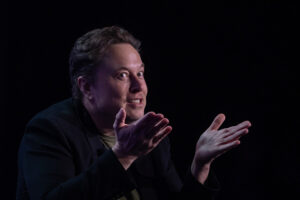
by
Apu
Gomes/Getty
Images)
Elon
Musk
gets
himself
involved
in
a
lot
of
entertaining
court
fights.
Sometimes
he
botches
these
fights
so
badly
you
wonder
if
he
really
would
fall
for
a
visit
from
the
wallet
inspector.
Other
times
he
gets
a
helping
hand
from
a
friendly
judge.
But
it’s
not
clear
that
he’s
ever
gotten
litigation
help
from
an
AI
hallucination
before.
Though
the
latest
twist
in
the
procedural
labyrinth
of
his
tussle
with
PlainSite
developer
Aaron
Greenspan
may
have
finally
crossed
that
threshold.
Is
this
an
AI
hallucination
working
its
way
into
a
court
order?
Maybe
not.
It
could
be
the
result
of
a
human
judge
(or
clerk)
dropping
the
ball.
So,
perhaps,
we
should
hope
it’s
an
AI
hallucination,
for
the
sake
of
the
humans
involved.
The
latest
order
grants
a
motion
to
strike
brought
by
Musk
and
his
co-defendants
under
California’s
anti-SLAPP
statute.
Greenspan
argued
that
the
motion
wasn’t
timely
filed
and
the
judge
deemed
that,
pursuant
to
the
statute,
the
court
has
discretion
to
entertain
the
motion
at
any
time
and
would
do
so
here.
Whether
the
court
was
right
to
exercise
that
discretion
here
is
for
the
parties
to
battle
out.
For
those
of
us
scouring
filings
for
questionable
AI
screw-ups
though,
we
now
zoom
to
a
handwritten
insert
included
with
the
order,
justifying
the
decision
to
allow
the
motion
even
if
it
technically
missed
a
deadline
based
on
Jones
v.
Goodman,
57
Cal.App.5th
521,
where
the
court
writes,
that
an
amended
motion
should
relate
back
to
the
initial
motion
“as
long
as
the
initial
motion
was
in
‘substantial
compliance’
with
the
governing
rule.”
Except
that’s
not
what
Jones
actually
says.
The
defendants
in
Jones
had
themselves
argued
—
and
we
quote
—
that
“substantial
compliance
with
the
rule
is
all
that
is
required;
and
the
amended
motion
should
be
deemed
to
‘relate
back’
to
the
initial
motion,
just
as
an
amended
pleading
might
relate
back
to
the
filing
of
the
original
pleading.”
This
would
be
an
odd
rule
to
adopt
since
it
would
dispose
of
any
meaningful
deadline
throughout
a
litigation
if
every
issue
could
be
preserved
by
vomiting
up
a
half-assed
brief
and
then
“amending”
it
well
after
the
deadline.
Which
is
why
the
Jones
court
went
on
to
explicitly
reject
this
argument.
In
the
next
paragraph,
the
Jones
court
describes
the
defendants’
arguments
there
as
“not
well
taken,”
clarifying
that
“A
motion
is
not
a
complaint,
or
any
other
type
of
pleading….
Defendants
provide
no
authority
for
the
proposition
that
the
relation-back
doctrine
applies
to
anything
other
than
pleadings.”
So
then
how
did
this
case
end
up
in
a
court
order
for
the
proposition
that
an
amended
motion
“should
be
deemed
to
‘relate
back’
to
the
initial
motion
‘as
long
as
the
initial
motion
was
in
‘substantial
compliance’
with
the
governing
rule”?
And
it
probably
goes
without
saying,
but
this
quote
isn’t
in
Jones.
At
least
not
in
this
form.
Again,
this
could
be
a
human
flub,
but
this
bears
some
of
the
key
signs
of
a
hallucinating
bot.
Consider
this,
from
Greenspan’s
latest
brief
on
the
docket:
This
is
the
opposite
of
what
Jones
stands
for.
The
paragraph
and
sentence
quoted
by
the
Court
for
the
phrase
“substantial
compliance”
begins
with
the
words
“Defendants
contend…”
indicating
that
the
Jones
court
was
merely
providing
context
before
issuing
its
actual
ruling
on
those
arguments
later
in
the
opinion.
Which
certainly
tracks
the
actual
text
of
Jones.
But
mixing
up
the
judge
laying
out
one
side’s
argument
for
an
actual
holding
is
exactly
the
sort
of
error
AI
makes.
At
an
AI
legal
research
briefing
I
attended
a
couple
years
ago,
one
of
the
product
team
leaders
suggested
“hallucinations,”
as
we
commonly
understood
them,
would
be
solved
soon.
The
technology
would
soon
stop
making
up
cases
from
thin
air,
but
AI
still
posed
tremendous
risk
in
misinterpreting
the
text
itself.
For
instance,
grabbing
dicta
and
treating
it
as
precedent
—
which
might
be
the
Supreme
Court’s
new
default
setting,
but
historically
isn’t
how
any
of
this
is
supposed
to
work.
It’s
also
why
just
feeding
“all
court
cases”
into
an
AI
system
isn’t
going
to
work.
Here,
a
quote
makes
it
into
a
judge’s
opinion
that
explicitly
began
its
life
as
a
straw
argument,
laying
out
one
of
the
party’s
positions
before
dismissing
it
with
withering
contempt.
“Defendants’
arguments
are
not
well
taken,”
is
the
sort
of
line
in
an
opinion
that
makes
most
lawyers
wish
to
simply
curl
into
a
ball
and
die.
But
this
is
exactly
where
AI
remains
an
easy
mark,
capable
of
casually
bumbling
into
a
straw
argument
and
elevating
it
to
a
citation-worthy
conclusion.
Adding
in
the
quote
that
begins
“as
long
as
the
initial
motion…”
—
which
is
nowhere
to
be
found
in
the
opinion
—
to
double
down
on
the
initial
error
introduces
another
known
AI
flaw.
Everyone
knows
about
the
made-up
cases,
but
AI’s
most
insidious
mistakes
will
be
in
subtle
mischaracterizations
of
real
cases.
The
lowest
bar
of
cite
checking
isn’t
going
to
catch
that
since
it’s
a
real
case.
Even
a
superficial
glance
at
the
text
might
not
notice
the
error
without
panning
out
to
consider
the
context
of
the
original
Jones
opinion.
And
then
what
happens
if
this
isn’t
promptly
caught?
The
next
court
sees
this
opinion
and
decides
the
law
supports
a
new
“relate
back”
process
for
mere
motions.
Then
that
opinion
gets
on
the
books
and
the
next
thing
you
know,
we’re
all
echoing
a
hallucination.
Inaccuracies
can
compound
themselves.
Whether
Greenspan
ends
up
prevailing
or
not,
hopefully
Greenspan’s
motion
to
reconsider
gets
the
record
cleaned
up
and
gives
everyone
a
renewed
sense
of
attention
to
detail.
Even
if
this
is
a
human
error,
we’re
going
to
need
the
record
set
straight.
And
if
this
is
an
AI-induced
screw-up…
I
wonder
if
the
court
used
Grok?
 Joe
Joe
Patrice is
a
senior
editor
at
Above
the
Law
and
co-host
of
Thinking
Like
A
Lawyer.
Feel
free
to email
any
tips,
questions,
or
comments.
Follow
him
on Twitter or
Bluesky
if
you’re
interested
in
law,
politics,
and
a
healthy
dose
of
college
sports
news.
Joe
also
serves
as
a
Managing
Director
at
RPN
Executive
Search.