

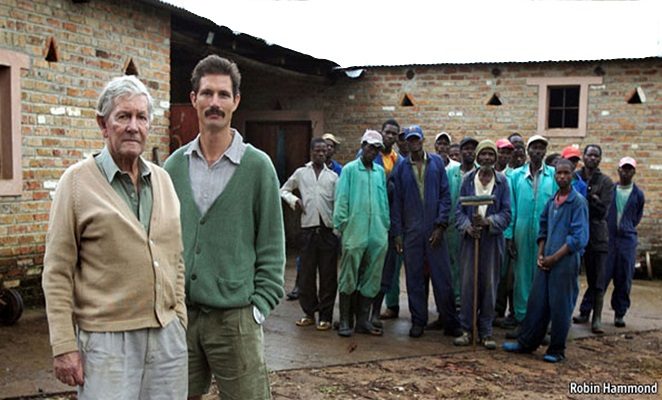
Two
of
the
few
remaining
white
Zimbabwean
farmers,
Ben
Freeth
)in
green)
and
Mike
Campbell
(in
beige)
fight
through
the
courts
to
stay
on
their
land.
Mt
Carmer
Farm,
Chigutu,
Zimbabwe.
December
2008
Today,
28
November,
is
the
17th
anniversary
of
the
landmark
judgment
in
the
Campbell
farm
test
case,
Mike
Campbell
and
Others
v.
the
government
of
Zimbabwe,
handed
down
by
the
Southern
African
Development
Community
(SADC)
Tribunal,
the
region’s
court
of
justice
and
court
of
last
resort
for
SADC
citizens,
in
2007.
What
does
that
judgment
mean?
The
first
aspect
to
understand
is
that
the
judgment
is
final
and
binding
from
the
highest
judicial
authority
in
southern
Africa.
Courts
can
be
emasculated,
closed
down,
or
stopped
from
continuing
to
hear
cases,
but
when
a
final
and
binding
judgment
is
given,
it
stands.
It
cannot
be
changed.
There
is
nowhere
else
for
the
Zimbabwe
government
to
appeal.
This
judgment
will
continue
to
stand
as
an
important
human
rights
judgment
that
needs
to
be
complied
with.
So
what
does
the
judgment
say?
Firstly,
it
says
that
the
process
of
taking
land
from
the
Zimbabwean
farmers
by
the
government
was
done
without
legal
process
and
was
therefore
illegal.
The
government
cannot
simply
list
a
property
in
the
newspaper
and
then,
without
any
court
process,
declare
that
it
now
belongs
to
government
and
that
the
owner
is
now
a
criminal
for
living
in
his
own
home
and
producing
food
for
the
nation.
Nowhere
in
the
world
can
such
a
process
be
deemed
to
be
fair
or
right
or
reasonable.
Secondly,
it
says
that
the
process
was
racial
in
that
it
targeted
people
with
a
white-coloured
skin
in
a
discriminatory
way.
Such
discrimination
was
deemed
to
be
against
the
SADC
Treaty
of
1992,
and
all
other
human
rights
charters
that
Zimbabwe
has
signed
up
to.
Thirdly,
it
said
that
compensation
needed
to
be
paid
to
those
applicants
who
were,
by
that
stage
off
their
properties,
and
that
compensation
was
to
be
full
and
fair
̶
and
paid
by
June
2009.
The
ruling
for
“fair
compensation”
encompasses
the
full
value
of
the
land,
as
well
as
any
structures
and
improvements.
Those
applicants
have
yet
to
receive
a
single
cent
of
compensation,
16-and-a-half
years
after
it
was
due.
Further
to
the
28
November
2008
judgement,
a
case
for
compensation
was
launched
after
the
Zimbabwe
government
failed
to
pay.
President
Mugabe
and
others
managed
to
stop
this
case
getting
heard
by
unilaterally
removing
the
judges
and
ensuring
that
the
tribunal
thereby
became
dysfunctional.
The
tribunal
has
been
in
a
state
of
suspension
since
2011,
but
it
only
requires
the
appointment
of
new
judges
by
the
SADC
member
states
for
it
to
be
operational
once
again.
Long
Ride
for
Justice
On
this
day
two
years
ago,
I
set
off
on
a
horse
called
Tsedeq
(which
means
“justice
and
righteousness”
in
Hebrew)
from
Mike
Campbell’s
Mount
Carmel
farm
gate
to
bring
attention
to
the
fact
that
the
court
remains
closed
and
none
of
the
400
million
people
in
SADC
are
able
to
access
it
when
justice
fails
them
in
their
own
countries.
My
prayer,
when
I
finally
arrived
at
the
door
of
the
former
seat
of
the
SADC
Tribunal
in
Windhoek,
Namibia
on
18
March
last
year
after
my
“Long
Ride”
of
over
2
000km,
remains
fixed
to
that
door.
At
the
last
SADC
Summit
in
August
this
year,
moves
were
supposed
to
be
made
to
rectify
the
situation,
but
at
this
stage
it
appears
that
nothing
has
been
done.
In
the
meantime,
it
is
important
to
understand
that
Zimbabwe
is
obligated
under
the
SADC
Treaty
̶
and
international
law
̶
to
comply
with
all
judgments.
The
United
States
government’s
Zimbabwe
Democracy
and
Economic
Recovery
Act
(ZDERA)
of
2018
also
states
that
there
has
to
be
adherence
to
the
SADC
Tribunal
award
in
the
Campbell
case.
Currently
Zimbabwe
is
found
severely
wanting.
Zimbabwe
is
in
breach
of
treaty
law
and
thereby
the
rule
of
law
itself
is
in
abeyance.
We
call
on
the
Zimbabwe
government
to
comply
with
the
tribunal
judgment.
We
look
forward
to
the
day
when
this
is
rectified,
and
the
rule
of
law
is
restored
and
respected
so
that
all
people
in
the
16
SADC
member
states
can
be
protected,
and
all
can
thrive.
In
the
meantime,
we
continue
to
call
on
the
SADC
Secretariat,
based
in
Gaborone,
Botswana,
to
appoint
judges
so
that
the
“house
of
justice”
for
the
region
can
once
again
function.
Without
justice
and
adherence
to
the
rule
of
law,
oppression
and
fear
will
prevail.
Our
objective
is
to
work
towards
peace,
security,
and
prosperity
where
people
can
achieve
success
without
the
constraints
of
fear
and
oppression.
This
concept
is
encapsulated
in
the
Bible
in
Micah
4:4:
“Every
man
will
sit
under
his
own
vine
and
under
his
own
fig
tree
and
no
one
will
make
them
afraid.”
Post
published
in:
Agriculture