
WASHINGTON
—
As
part
of
a
new
initiative
aimed
at
bolstering
national
security,
JPMorganChase
has
pledged
to
invest
$10
billion
over
the
next
decade
in
areas
like
defense
and
advanced
manufacturing
—
and
the
financial
giant
isn’t
just
going
to
be
looking
at
venture-backed
startups
as
potential
recipients
for
capital,
executives
told
Breaking
Defense.
The
planned
investments
are
part
of
a
wider
$1.5
trillion
effort
known
as
the
Security
and
Resilience
Initiative
(SRI),
which
was
announced
by
the
world’s
largest
bank
in
October.
Days
after
launch,
J.P.
Morgan
revealed
its
first
investment
as
part
of
initiative:
a
$75
million
equity
investment
in
Perpetua
Resources,
which
is
aiming
to
become
the
first
US-based
producer
of
the
versatile
critical
mineral
antimony,
which
has
applications
in
the
defense
sphere
for
items
like
batteries
and
ammunition.
In
a
new
interview
with
Breaking
Defense,
Jay
Horine,
who
leads
the
Security
and
Resilience
Initiative,
and
Mark
Marengo,
who
oversees
the
effort’s
aerospace
and
defense
portfolio,
detailed
the
strategy
behind
the
new
initiative
and
some
critical
focus
areas,
including
a
big
ticket
Pentagon
push:
nuclear
submarine
construction.
This
Q&A
has
been
edited
for
length
and
clarity.
BREAKING
DEFENSE:
How
did
the
Security
and
Resiliency
Initiative
come
about,
and
what
are
its
goals?
JAY
HORINE:
The
reality
is
J.P.
Morgan
has
been
doing
this
for
a
long
time.
We
have
been
supporting
America,
America’s
companies,
our
entire
ecosystem.
[JPMorganChase
CEO]
Jamie
[Dimon]
wrote
an
op-ed
piece
on
Oct.
13,
when
he
announced
the
formation
of
the
Security
and
Resiliency
Initiative,
where
he
talked
about
the
need
to
provide
America
and
these
companies
with
an
acceleration
in
response
to
the
understanding
that
we
had
of
being
behind
on
a
variety
of
—
we
named
four
—
but
a
variety
of
critical
areas,
in
defense,
in
a
number
of
others.
So
we’ve
always
done
this,
but
we
actually
formalized
it
and
put
forth
the
$1.5
trillion
support
of
these
various
industries
over
a
10-year
period,
[including]
$10
billion
of
our
own
money,
not
third
party
money,
$10
billion
of
our
own
money
to
make
investments.
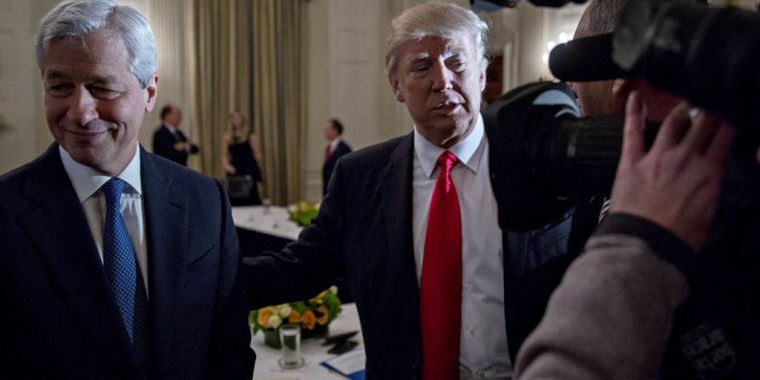
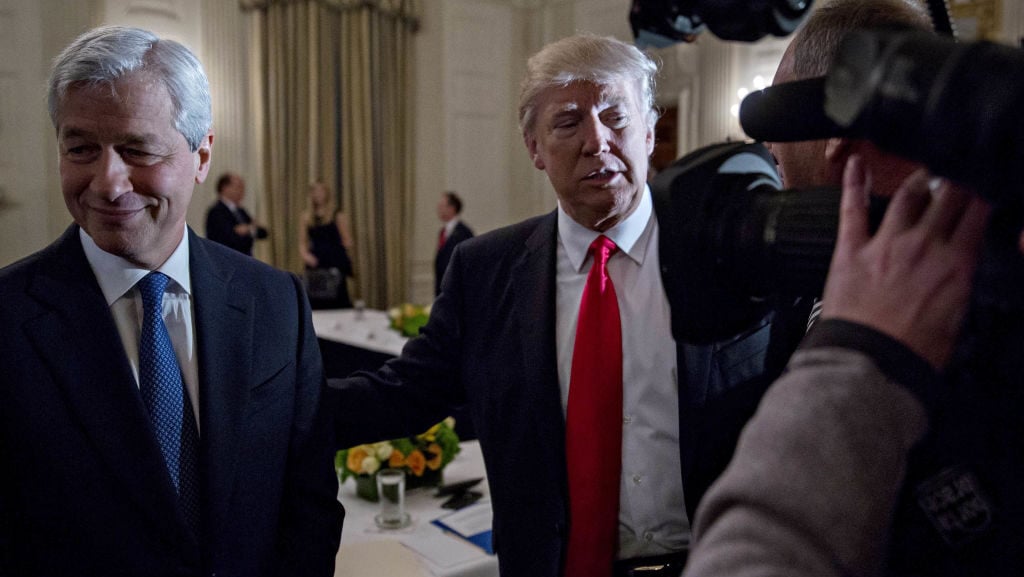
President
Donald
Trump
stands
next
to
Jamie
Dimon,
chief
executive
officer
of
JPMorgan
Chase
&
Co.,
left,
as
he
greets
attendees
during
a
Strategic
and
Policy
Forum
meeting
in
the
State
Dining
Room
of
the
White
House
in
Washington,
D.C.,
U.S.,
on
Friday,
Feb.
3,
2017.
(Andrew
Harrer/Bloomberg
via
Getty
Images)
Beyond
that
$10
billion
for
investments,
how
should
we
think
about
that
$1.5
trillion?
Where
is
that
going
toward?
HORINE:
We’re
going
to
count
money
that
we
raise
on
behalf
of
companies.
We’re
going
to
talk
about
the
value
of
the
advice
that
we
give.
It’s
going
to
be
a
combination
of
M&A
[mergers
and
acquisitions]
support,
capital
support,
as
well
as
our
own
money
to
help
concentrate
and
bring
about
more
investment
in
these
critical
areas.
What’s
the
strategy
for
the
defense
and
aerospace
vector?
What
kinds
of
technologies
are
you
looking
to
invest
in,
and
are
there
any
specific
Defense
Department
programs
that
are
underlying
that?
MARK
MARENGO:
I’d
point
to
a
couple
of
different
areas.
And
this
isn’t
meant
to
be
exhaustive,
but
these
are
certainly
some
of
the
higher
priority
ones.
Number
one:
submarine
production.
If
you
think
about
what
is
one
of
the
biggest
deterrents
to
China,
longer
term,
and
the
defense
complex
that
they’re
building
up,
submarines
are
probably
one
of
the
highest
priorities.
If
you
look
at
the
stated
goal
of
the
DoW,
to
take
submarine
production
from
two-a-year
to
three-a-year
…
we
don’t
have
the
infrastructure
in
place
to
be
able
to
accommodate
that
today,
and
it’s
going
to
require
a
lot
of
investment
in
bricks
and
mortar.
It’s
going
to
require
a
lot
of
investment
in
processes.
We
need
to
become
more
efficient,
and
it’s
going
to
require
a
lot
of
investment
in
employment
and
talent
and
making
sure
that
we
have
the
skills,
the
welding
skills
and
[other]
things
necessary,
in
order
to
be
able
to
hit
that
long
term
target.
As
we
look
at
that
ecosystem,
we
think
there’s
going
to
be
a
lot
of
opportunities
within
the
supply
chain
because
you
have
hundreds
and
thousands
of
smaller
suppliers
that
don’t
necessarily
have
the
capital
to
be
able
to
increase
their
production
by
a
half.
And
so
we
think
there’s
going
to
be
opportunities
to
be
able
to
invest
alongside
them,
invest
equity
in
them,
to
help
them
expand
their
industrial
footprint
so
that
they
can
hit
those
increasing
build
rates.
Similarly,
I’m
sure
you’ve
probably
read
about
some
of
these
war
game
scenarios
that
have
been
published
where
in
a
war
with
China,
it’s
anticipated
that
we
would
basically
run
out
of
missiles
and
some
weapons
and
munitions
within
a
week.
We
just
don’t
have
an
industrial
base
and
a
supply
chain
that’s
capable
of
ramping
up.
In
many
cases,
they
may
need
additional
capital
to
be
able
to
make
those
investments.
And
so
we’re
spending
time
within
all
of
those
supply
chains
to
make
sure
it’s
secure,
they
have
adequate
capacity
and
it’s
resilient
to
be
able
to
hit
those
needs.
I’ve
been
doing
this
for
roughly
30
years.
There
are
more
startup
defense
companies,
VC-backed
defense,
defense
tech
companies,
than
I’ve
seen
at
any
point
in
time
over
that
career.
At
J.P.
Morgan,
we
have
an
innovation
economy
team
that
spends
time
with
many
of
these
companies,
and
that
are
very
much
aligned
with
the
team
that
Jay
and
I
work
with.
In
some
cases,
we
actually
lend
to
these
companies.
And
so
I
think
that
gives
us
better
insights
than
most,
to
be
able
to
assess
…
where
the
investment
opportunities
are,
and
we’re
spending
a
lot
of
time
in
that
regard.
I
would
fully
anticipate
that
when
we
project
forward
here,
you’re
probably
going
to
see
some
SRI
related
investments
in
some
of
these
earlier
stage
companies.
So
is
the
focus
more
on
newer,
venture-backed
startups
or
legacy
players
in
the
supply
chain?
MARENGO:
It’s
all
of
the
above,
because
in
some
instances
where
you
have,
especially
in
the
nuclear
submarine
side,
you’ve
got
suppliers
who
have
been
qualified,
right?
Those
are
not
easy
qualifications
to
get.
So
in
some
cases,
it
may
not
be
reasonable
to
assume
that
some
of
the
emerging
tech
companies
will
be
able
to,
you
know,
get
qualified
and
put
themselves
in
a
position
where
they
can,
they
can
ramp
up
to
hit
those,
those
delivery
requirements.
But
that’s
the
nice
thing
about
SRI,
is
that
we
have
the
ability
to
invest
whether
it’s
the
early
stage
upstart
company
or
it’s
the
more
mature
supplier
that’s
been
supplying
General
Dynamics
or
HII,
for
decades.
What
does
the
timeline
look
for
your
next
investment?
HORINE:
We’re
just
talking
about
defense
right
now,
but
across
healthcare
and
natural
resources
and
some
of
the
other
areas
that
we’re
focused
in,
including
frontier
and
strategic
technologies,
I
think
we’ve
been
gratified
by
the
outreach
from
clients,
gratified
from
the
response
to
our
outreach
as
well.
We’ve
literally
had
hundreds
of
fantastic
companies
talk
to
us
about
their
hopes
and
dreams
and
what
they
can
do,
and
that’s
also
in
consultation
with
people
down
at
Department
of
War,
Department
of
Commerce,
[and]
amongst
other
agencies.
What
kinds
of
conversations
are
you
having
with
the
Pentagon?
MARENGO:
I
think
this
is
an
administration
and
a
DoW
that
is
very
receptive
to
input
from
the
private
sector,
right?
They
know
we
can
be
part
of
the
solution.
They
want
us
to
be
part
of
the
solution.
I
think
you’re
going
to
see
a
little
bit
more
of
this
kind
of
public
private
partnership,
similar
to
what
you
saw
in
kind
of
the
MP
Materials
deal,
where
the
government
is
investing
alongside.
We
are
spending
a
lot
of
time
down
with
the
DoW.
We
are
trying
to
find
ways
in
which
we
can
be
helpful
and
provide
solutions
to
various
problems.
In
some
cases
that
may
be
debt
financing,
in
some
cases
that
may
be
equity
financing,
in
some
cases
that
need
may
be
in
partnership
with
the
government,
where
they’re
looking
to
provide
a
capital
solution
through
the
different
pockets
of
capital
that
they
have.