
via
Getty
Images
agreed
a
compensation
deal
to
pay
$3.5bn
for
infrastructure
improvements
to
land
that
was
seized
Desperate
and
ageing
white
farmers
whose
land
was
seized
during
Robert
Mugabe’s
rule
more
than
two
decades
ago
hope
Donald
Trump
may
be
able
to
help
them
get
billions
of
dollars
in
unpaid
compensation
owed
to
them
by
Zimbabwe’s
government.
After
all,
some
of
them
argue,
the
US
president
intervened
last
year
to
fight
for
the
rights
of
white
farmers
in
neighbouring
South
Africa,
where
he
feels
they
are
being
“persecuted”
because
of
their
race
–
claims
that
have
been
widely
discredited.
Trump
has
offered
members
of
South
Africa’s
white
Afrikaner
community,
many
of
whom
are
farmers,
refugee
status
in
the
US.
Most
of
the
Zimbabwean
farmers
are
not
keen
to
go
down
that
route
–
they
just
want
their
government
to
honour
a
deal
made
in
2020
by
Mugabe’s
successor,
and
former
deputy,
President
Emmerson
Mnangagwa.
And
some
see
Zimbabwe’s
vast
and
untapped
deposits
of
rare-earth
minerals
and
the
transactional
nature
of
Trump’s
politics
as
key
to
unlocking
the
cash.
After
Mnangagwa
took
over,
he
was
eager
to
heal
the
wounds
of
the
chaotic
land
reform
programme
of
the
early
2000s
when
4,500
mainly
white-owned
farms
–
half
of
the
country’s
best
farmland
–
were
taken
over
by
black
Zimbabweans
and
around
2,500
white
farmers
evicted.
The
seizures
–
meant
to
redress
a
colonial-era
land
grab
–
led
to
the
collapse
of
Zimbabwe’s
economy.
The
agricultural
sector
had
been
its
backbone
–
and
was
further
crippled
by
sanctions
slapped
by
Western
nations
outraged
by
the
disorderly
nature
of
the
redistribution
of
the
land
to
black
farmers.
Mnangagwa,
as
part
of
his
mission
to
reform
Zimbabwe’s
tarnished
reputation
following
the
toppling
of
Mugabe,
promised
to
pay
the
white
farmers
for
infrastructure
and
improvements
to
the
land
–
a
package
that
came
to
$3.5bn
(£3bn).
The
hitch
has
been
that
Zimbabwe,
grappling
with
a
debt
burden
of
a
whopping
$23bn,
cannot
afford
to
settle
up
with
the
former
farmers.
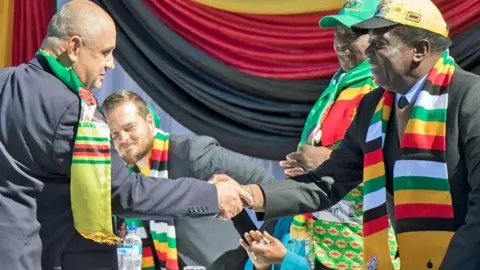 AFP
AFPvia
Getty
Images
Emmerson
Mnangagwa
(R)
has
made
efforts
to
reconcile
with
Zimbabwe’s
white
community
Instead
it
offered
a
compromise
deal
last
year
–
those
who
signed
up
for
it
got
1%
of
their
total
compensation,
while
the
rest
was
issued
as
treasury
bonds
that
mature
in
10
years,
with
2%
interest
paid
twice
a
year.
“Most
farmers
won’t
be
around
in
10
years’
time,”
said
one
of
them,
who
spoke
to
the
BBC
on
condition
of
anonymity
–
adding
that
there
was
no
guarantee
the
government
would
be
able
to
honour
the
future
payments.
This
ex-farmer’s
mother
–
who
had
been
a
co-owner
of
their
farm
–
is
well
over
90
years
old
and
has
spent
the
last
25
years
awaiting
hundreds
of
thousands
of
dollars
in
compensation.
She
is
now
being
supported
by
British-based
charity
Zimbabwe
A
National
Emergency
(Zane),
which
provides
a
twice-yearly
stipend
to
struggling
pensioners.
Only
around
17%
of
the
former
farmers
have
taken
up
the
government’s
new
offer
–
representing
700
farms.
The
beneficiaries
told
the
BBC
that
although
sometimes
late,
the
government
was
honouring
its
commitment
with
interest
payments.
But
what
was
a
tightly
knit
community
is
now
divided
in
its
approach
to
compensation
–
and
some
see
Trump
as
key
to
speeding
things
up.
To
that
end
a
Washington-based
lobby
group
Mercury
Public
Affairs
LLC,
which
has
ties
to
the
Trump
administration,
has
been
engaged.
This
was
done
via
OB
Projects
Management,
a
South
African
business
consultancy
firm
that
has
said
it
is
representing
the
Zimbabwean
farmers.
This
came
to
light
because
of
a
declaration
filed
by
Mercury
in
late
December
with
the
Department
of
Justice
–
US
law
requires
those
engaged
in
political
activity
on
behalf
of
foreign
organisations
to
disclose
the
relationship.
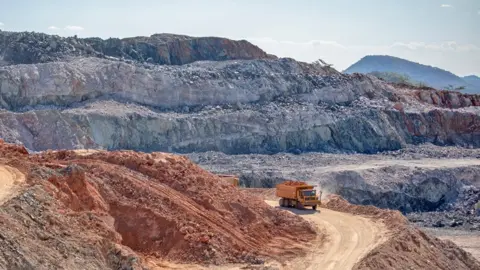 Bloomberg
via
Getty
Images
has
some
of
Africa’s
largest
lithium
reserves
It
said
Mercury’s
services,
to
be
provided
free
of
charge,
would
include
“contacting
appropriate
officials
in
the
current
administration
and
Congress
to
promote
paying
the
Zimbabwean
farmers
the
remaining
balance
of
$3.5bn”.
The
letter
explained
that
it
envisioned
this
would
happen
by
the
US
government
supporting
the
clearance
of
Zimbabwe’s
debt
and
new
financing
arrangements
via
institutions
“including
the
World
Bank”.
It
would
be
quite
a
feat
if
Zimbabwe
was
able
to
refinance
its
debts,
as
the
southern
African
nation
has
not
received
loans
from
the
World
Bank
in
more
than
25
years
after
it
defaulted
on
interest
payments.
This
is
also
linked
to
US
legislation
enacted
in
2001
as
a
consequence
of
the
land
reform
programme.
It
also
says
the
president
should
impose
targeted
economic
and
travel
sanctions
on
those
responsible
for
the
violence
and
the
breakdown
in
law.
Since
2024
this
has
only
affected
11
individuals,
including
President
Mnangagwa,
and
three
companies
–
now
applied
under
a
separate
US
law
known
as
the
Global
Magnitsky
Act.
Sponsored
by
Republican
Brian
Mast,
who
is
chair
of
the
House
Foreign
Affairs
Committee,
it
has
a
key
proviso
that
any
future
international
funding
be
contingent
on
Zimbabwe
settling
the
outstanding
compensation
for
farmers
within
12
months.
The
bill
has
yet
to
be
considered
by
the
two
houses
of
Congress
–
so
there
is
a
long
way
to
go
before
it
becomes
law,
but
the
timing
is
propitious
for
the
lobbyists,
who
have
key
White
House
contacts.
Susie
Wiles,
now
Trump’s
chief
of
staff,
served
as
Mercury’s
co-chair
for
several
years
before
her
appointment
at
the
start
of
the
president’s
second
term.
OB
Projects
said
it
was
representing
the
Zimbabwean
farmers
on
behalf
of
four
groups
–
though
some
of
them
have
disputed
this.
Zimbabwe’s
Property
and
Farms
Compensation
Association
(Profca)
chairman
Bud
Whittaker
confirmed
to
the
BBC
that
his
organisation
had
written
to
an
American
firm
“a
month
or
two
ago”
asking
them
to
“look
into”
the
matter.
But
the
main
farming
organisation,
the
Commercial
Farmers
Union
(CFU),
has
distanced
itself
from
the
US
lobby
group,
according
to
a
report
by
the
Bloomberg
news
agency.
Its
members
represent
the
larger
faction
of
farmers,
who
have
rejected
the
government
bonds
offer.
A
CFU
member,
not
authorised
to
speak
for
the
group,
cited
concerns
that
the
OB
Projects’
letter
to
Mercury
was
sent
on
their
behalf
without
consulting
them.
He
told
the
BBC:
“We
would
support
anything
that
can
support
compensation
in
a
fair
way
in
accordance
with
international
standards.”
The
CFU
was
speaking
not
only
to
US
diplomats
in
Harare
but
to
other
Western
embassies
for
support
to
secure
outright
payment,
he
added.
Some
farmers
fear
that
involving
Trump
could
lead
to
worsening
relations
between
Washington
and
Harare
–
as
has
happened
in
South
Africa.
They
feel
Trump’s
approach
there
was
too
racialised
and
say
the
white
community
still
wants
to
make
a
go
of
it
in
Zimbabwe,
with
some
who
went
to
live
overseas
during
the
economic
crash
returning
to
take
up
business
opportunities.
 AFP
AFPvia
Getty
Images
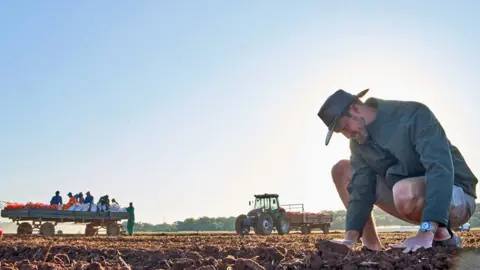 AFP
AFPvia
Getty
Images
New
farming
arrangements
are
being
made
in
Zimbabwe.
This
white
farmer
is
leasing
his
land
from
its
black
owner…
The
two
are
neighbours
on
an
estate
near
Kwekwe
in
central
Zimbabwe…
This
includes
hundreds
of
young
white
farmers
going
home
to
lease
farms.
Any
threat
of
more
sanctions
or
tariffs
to
bring
Zimbabwe’s
government
to
heal
could
lead
to
further
economic
collapse
and
political
instability,
they
argue.
Another
53-year-old
shareholder
in
a
family
farm told
the
BBC
she
was
wary
of
getting
another
foreign
government
to
“meddle”
in
Africa,
saying
that
the
UK
–
the
former
colonial
power
–
“should
resolve
it”.
At
one
stage
one
farmer
said
contacts
in
South
Africa
had
attempted
to
set
up
meetings
with
South
African-born
tech
billionaire
Elon
Musk
to
see
if
he
was
interested
in
a
deal
to
finance
the
$3.5bn
debt.
Whittaker
from
Profca
said
his
group
had
also
contracted
a
US
company
to
find
money
to
buy
up
the
government
bonds
already
issued
to
farmers.
This
is
one
part
of
a
multipronged
strategy
that
also
seeks
to
attract
the
US
government
hungry
for
new
investments
in
critical
minerals
in
exchange
for
a
commitment
to
settle
the
debt
owed
to
former
farmers.
Zimbabwe
has
some
of
Africa’s
largest
lithium
reserves,
as
well
as
chromium,
cobalt
and
rare
earth
minerals.
This
is
not
Mercury’s
first
involvement
with
Zimbabwe
–
and
it
is
well
aware
of
its
mining
potential.
Following
Mugabe’s
downfall,
it
represented
the
country’s
foreign
affairs
and
international
trade
ministry
for
several
years
to
improve
US
relations.
A
document
was
filed
by
Mercury
with
the
Department
of
Justice
in
2020
that
described
Zimbabwe’s
potential
for
undiscovered
rare
earth
elements.
The
BBC
has
reached
out
to
the
Zimbabwe
government
for
comment
about
the
latest
development
involving
Mercury.
Previously,
Finance
Minister
Mthuli
Ncube
said
the
bonds
were
the
last
chance
to
settle
the
compensation.
But
he
recently
told
the
AFP
news
agency
that
outside
intervention
was
“not
necessarily
a
bad
thing”.
“We
are
committed
to
paying
and
if
they
are
trying
to
get
other
people
to
get
us
to
pay,
we
have
no
problems
with
that.
We
are
paying
anyway
and
we
would
like
to
pay
faster,”
he
is
quoted
as
saying.
A
former
farmer
in
his
80s
agreed
that
big
offshore
finance
would
have
to
be
involved
to
foot
the
compensation
bill
quickly,
though
he
said
involving
Trump
was
like
walking
a
tightrope.
“With
Trump
who
knows?
Things
might
go
sideways,”
he
laughed.
Post
published
in:
Agriculture