
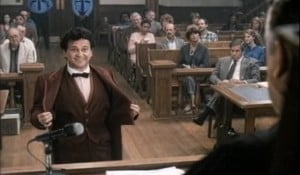
My
Cousin
Vinny
is
probably
the
best
courtroom
movie
ever
made.
In
a
sea
of
self-serious
courtroom
dramas,
somehow
it’s
the
comedy
movie
that
isn’t
making
lawyers
cringe
with
every
inaccuracy.
Law
professors
show
clips
as
part
of
their
lessons.
Federal
judges
cite
it
in
opinions.
It
won
our
ATL
March
Madness
bracket
for
greatest
work
of
legal
fiction
of
all
time.
Vinny
Gambini
did
not
have
access
to
the
modern
wonders
of
legal
tech,
though
I
would
pay
to
watch
a
sequel
where
he
systematically
demolishes
a
prosecutor
caught
citing
AI
hallucinations.
But
real
lawyers
do
have
to
understand
the
legal
tech,
and
Litera
came
up
with
a
fun
way
to
show
off
their
latest
document
comparison
tool.
Instead
of
redlining
a
bunch
of
boilerplate
fake
contracts,
the
company
promised
to
show
me
the
latest
version
of
Litera
Compare
running
the
October
1990
draft
screenplay
of
My
Cousin
Vinny
against
the
final
1992
shooting
script.
I
get
a
lot
of
press
releases
and
marketing
pitches
in
this
job,
and
rarely
have
I
smashed
the
“reply”
button
faster
than
this.
It’s
2026,
so
you’re
probably
asking
if
this
has
anything
to
do
with
AI.
Well,
of
course
it
does.
But
unlike
products
trying
to
ram
AI
into
every
feature,
Litera
Compare
embraces
AI’s
limitations.
Have
you
seen
any
of
these
AI
calculator
apps
that
spin
for
10
seconds
before
giving
the
answer
your
phone
can
calculate
instantly?
It
turns
out
redlining
documents
are
a
lot
like
math
and
AI
isn’t
particularly
good
at
consistently
and
accurately
comparing
versions.
Litera
just
released
a
benchmarking
report
pitting
Litera
Compare
against
Gemini
3,
Claude
4.5
Opus,
and
ChatGPT
5.2
on
complex
legal
document
comparison
tasks.
On
a
53-page
document,
the
LLMs
managed
text-only
accuracy
in
the
85-90
percent
range.
On
a
200-page
document,
ChatGPT
dropped
to
roughly
40
percent
accuracy.
Claude
and
Gemini
fell
to
about
70
percent.
And
those
numbers
only
measure
text
changes
—
the
LLMs
scored
effectively
zero
on
tables,
images,
embedded
objects,
headers,
footers,
and
footnotes.
Litera,
on
the
other
hand,
employs
its
tried-and-true,
rules-based
comparison
technology
—
refined
over
years
and
years
of
experience
—
to
perform
the
redline.
Litera
Compare
hit
100
percent
across
every
test.
The
lesson,
as
always,
is
don’t
do
legal
work
with
raw,
consumer-grade
LLMs.
And
then
Litera
brings
AI
in
to
do
the
stuff
it’s
actually
good
at.
Lito,
Litera’s
AI
tool,
allows
the
lawyer
to
interrogate
the
redline
to
easily
pull
out
the
key
takeaways.
The
AI
may
not
be
good
at
comparisons,
but
it’s
very
good
at
taking
two
comparisons
and
identifying
major
substantive
changes
or
answering
a
query
about
what
happened
with
a
specific
concept.
When
comparing
hundreds
of
pages
worth
of
an
agreement,
that’s
essential.
And,
in
case
you’re
wondering,
Lito
provides
access
to
multiple
AI
algorithms
allowing
the
user
to
select
their
preferred
model
with
a
dropdown
menu.
So
what
did
Litera
Compare
and
Lito
discover
in
the
My
Cousin
Vinny
script?
Most
Hollywood
legal
fiction
gets
dumber
as
it
moves
through
the
studio
process.
Somebody
in
a
suit
decides
that
audiences
might
be
able
to
handle
the
truth,
but
definitely
cannot
handle
realistic
trial
procedure.
Procedural
subplots
get
cut
and
the
whole
case
boils
down
to
a
combative
cross-examination
and
a
few
“OBJECTION!”
scenes
for
flavor.
My
Cousin
Vinny
went
the
other
direction.
The
comparison
shows
that
the
shooting
script
systematically
upgraded
the
legal
procedure
from
the
earlier
draft.
Having
performed
the
comparison
with
Litera
Compare,
Lito
is
prompted
“What
are
the
5
most
significant
changes
in
legal
and
procedural
accuracy
between
the
two
scripts,
compared
side
by
side?”
As
one
example,
in
the
earlier
draft,
discovery
is
mentioned
briefly,
but
anyone
who’s
seen
the
film
knows
that
this
blows
up
into
a
key
story
beat
with
Lisa
actually
doing
the
basic
legal
research
Vinny
hasn’t
and
calling
him
out
for
not
realizing
that
the
prosecution
is
required
hand
it
over.
It’s
a
turning
point
for
Vinny
figuring
out
that
he
can’t
keep
half-assing
the
case.
And
it
sets
up
the
later
trial
objection
to
the
prosecution’s
surprise
expert
witness.
In
another
difference,
Vinny
originally
just
hands
Lisa
the
tire
tracks
photo
during
her
testimony.
The
final
version
has
Vinny
go
through
the
steps
to
properly
admit
the
photo,
first
identifying
the
photograph
as
one
“my
fiancée
took
outside
the
Sac-o-Suds,”
asking
the
prosecutor
if
they
can
“agree
on
this,”
getting
the
stipulation
(“Yes”),
and
then
formally
moving
to
“submit
this
photograph
of
the
tire
marks
as
evidence.”
The
judge
even
looks
to
the
prosecution
at
this
point,
and
Trotter
says
“No
objection.”
This
exchange
doesn’t
advance
the
plot
or
even
add
much
comedy,
but
it’s
more
real.
And
unlike
most
movies,
the
script
trusts
the
audience
to
pick
up
on
the
authenticity
of
this
authentication.
Screenwriter Dale
Launer came
up
with
the
idea
for
My
Cousin
Vinny
after
hearing
a
story
about
a
lawyer
who
finally
passed
the
bar
on
the
13th
attempt.
Years
later,
he
developed
it
into
an
early
draft,
but
kept
refining
it
through
multiple
in-depth
interviews
with
a
real
litigator.
And
it
shows
up
in
the
comparison.
Over
and
over,
the
final
draft
is
a
sharper
reflection
of
real
trial
procedure
than
the
original.
Litera
also
just
announced
a
partnership
with
AI-powered
legal
research
platform
Midpage.
So
Lito
can
also
answer
questions
about
the
legal
research
in
the
script.
Prompted
with
“Using
Midpage,
assess
the
accuracy
of
the
case
law
referenced
in
this
scene,”
Lito
and
Midpage
report
back
about
the
disclosure
scene:
Prosecutorial
Disclosure
—
Lisa’s
“It’s
Called
Disclosure,
You
Dickhead”
The
Scene:
Lisa
reads
the
Alabama
Rules
of
Criminal
Procedure
and
tells
Vinny
that
Trotter
is
required
by
law
to
share
his
files,
his
witness
list,
and
that
he’s
“not
allowed
any
surprises.”
The
Law:
The
constitutional
foundation
for
this
is
Brady
v.
Maryland,
373
U.S.
83
(1963),
which
held
that
“the
suppression
by
the
prosecution
of
evidence
favorable
to
an
accused
upon
request
violates
due
process
where
the
evidence
is
material
either
to
guilt
or
to
punishment,
irrespective
of
the
good
faith
or
bad
faith
of
the
prosecution.”
The
Supreme
Court
later
expanded
this
in
Kyles
v.
Whitley,
514
U.S.
419
(1995),
holding
that
“the
individual
prosecutor
has
a
duty
to
learn
of
any
favorable
evidence
known
to
the
others
acting
on
the
government’s
behalf
in
the
case,
including
the
police.”
Accuracy
Verdict:
Mostly
accurate,
but
slightly
overstated.
Lisa’s
statement
that
Trotter
“has
to
show
you
everything”
goes
further
than
the
constitutional
floor.
Brady
requires
disclosure
of
material
evidence
favorable
to
the
defense—not
literally
“everything.”
However,
the
film
is
set
in
Alabama,
and
state
discovery
rules
can
be
broader
than
the
constitutional
minimum.
Interestingly,
Alabama’s
own
rules
actually
cut
the
other
direction
on
witness
lists:
the
Alabama
Supreme
Court
held
in
State
v.
Fowler,
32
So.
3d
21
(Ala.
2009)
that
under
Rule
16.1
of
the
Alabama
Rules
of
Criminal
Procedure,
“the
defendant
shall
not
be
permitted
to
discover
or
to
inspect
reports,
memoranda,
witness
lists,
or
other
internal
state/municipality
documents.”
So
Lisa’s
claim
that
Trotter
must
provide
a
witness
list
is
actually
wrong
under
Alabama
law—though
it
makes
for
better
drama
and
reflects
the
general
spirit
of
fair-play
disclosure
obligations.
The
Midpage
partnership
allows
users
to
check
whether
an
agreement
complies
with
a
particular
statute
or
generate
a
case
summary
without
leaving
Word
or
Outlook.
It’s
the
kind
of
practical,
workflow-embedded
tool
that
actually
matters
to
lawyers
—
as
opposed
to
the
“agentic
AI
will
revolutionize
everything”
hand-waving
that
goes
on
at
conferences.
A
lot
like
the
film,
getting
more
specific
and
detailed
makes
the
final
product
better.
 Joe
Joe
Patrice is
a
senior
editor
at
Above
the
Law
and
co-host
of
Thinking
Like
A
Lawyer.
Feel
free
to email
any
tips,
questions,
or
comments.
Follow
him
on Twitter or
Bluesky
if
you’re
interested
in
law,
politics,
and
a
healthy
dose
of
college
sports
news.
Joe
also
serves
as
a
Managing
Director
at
RPN
Executive
Search.