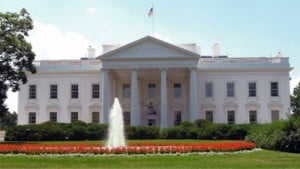
In
July,
President
Trump
announced
the
construction
of
a
new
ballroom
adjacent
to
the
White
House.
“It’ll
be
near
it
but
not
touching
it—and
pays
total
respect
to
the
existing
building,
which
I’m
the
biggest
fan
of,”
he
said,
vowing
to
protect
the
East
Wing.
“It’s
my
favorite.
It’s
my
favorite
place.
I
love
it.”
By
October,
the
East
Wing
was
gone,
reduced
to
a
pile
of
rubble
dumped
in
East
Potomac
Park.
The
president
lied.
And
when
he
got
sued
by
the
National
Trust
for
Historic
Preservation
to
block
construction
of
the
planned
90,000-square
foot
neo-Versailles
monstrosity,
his
administration
lied
some
more.
But
there
are
consequences
when
you
lie
to
federal
judges,
as
the
president
just
found
out
for
the
second
time
in
three
weeks.
The
DC
Circuit
has
now
ordered
the
government
to
explain
exactly
which
part
of
this
gilded
monument
to
Trump’s
vanity
is
for
national
security,
with
an
eye
to
blocking
everything
else.
Please!
Judge
Richard
Leon,
the
irascible
Bush
appointee
overseeing
this
case
at
the
district
court,
issued
a
walloping
preliminary
injunction
on
March
31.
In
his
inimitable
style,
he
doled
out
27
exclamation
points
and
four
“pleases.”
Such
as
“according
to
Defendants,
any
construction
delay
will
undermine
national
security.
Please!”
The
trial
judge
described
the
government’s
legal
theory
as
a
“Rube
Goldberg
contraption”
—
which
is
kinder
than
calling
it
bullshit,
but
less
accurate.
Under
40
U.S.C.
§
8106,
“a
building
or
structure
shall
not
be
erected
on
any
reservation,
park,
or
public
grounds
of
the
Federal
Government
in
the
District
of
Columbia
without
express
authority
of
Congress.”
The
White
House
is
part
of
President’s
Park,
which
encompasses
the
White
House
Visitor
Center,
Lafayette
Park,
the
Eisenhower
Office
Building,
the
Treasury
Building,
and
the
Ellipse.
So
that
would
seem
to
be
the
end
of
the
matter.
But
the
administration
points
to
3
U.S.C.
§
105(d),
which
authorizes
Congress
to
appropriate
funds
to
the
president
for
the
“care,
maintenance,
repair,
alteration,
refurnishing,
improvement,
air-conditioning,
heating,
and
lighting”
of
the
White
House
Executive
Residence.
The
claim
is
that
this
law
empowers
Trump
to
tear
down
or
construct
anything
he
likes.
Could
he
pave
paradise
and
put
up
a
parking
lot
…
or
a
Trump
Tower?
The
DOJ
says
YES!
Congress
only
appropriated
$2.5
million
for
Trump
to
“maintain”
the
White
House,
but
luckily
Trump’s
corporate
pals
—
many
of
whom
just
happen
to
have
business
before
the
federal
government!
—
are
queuing
up
to
pick
up
the
tab.
The
National
Park
Service
can
accept
private
donations
under
54
USC
§
101101,
and
gladly
started
hoovering
up
cash.
But
during
the
early
phase
of
the
lawsuit,
the
White
House
claimed
that
the
Park
Service
had
handed
all
funds
off
to
the
Office
of
the
Executive
Residence
(EXR),
which
is
the
responsible
for
janitorial,
cooking,
and
general
maintenance
of
the
White
House,
and
no
longer
controlled
any
aspect
of
the
project.
This
wheeze
was
enough
to
defeat
the
first
iteration
of
the
Trust’s
case,
which
was
based
on
the
Administrative
Procedure
Act.
Since
the
APA
only
applies
to
agency
actions,
and
EXR
isn’t
an
agency,
Judge
Leon
denied
the
Trust’s
first
motion
for
a
preliminary
injunction.
At
the
same
time,
he
strongly
hinted
that
the
Trust
should
refile
its
action
as
an
ultra
vires
claim.
On
March
1,
the
Trust
obediently
docketed
the
amended
ultra
vires
complaint,
and
on
March
31,
Judge
Leon
granted
a
preliminary
injunction
blocking
construction
of
the
ballroom
except
as
“necessary
to
ensure
the
safety
and
security
of
the
White
House.”
This
caveat
reflected
the
changing
reality
on
the
ground,
as
well
as
the
government’s
shifting
claims
about
the
project.
Previously,
to
defeat
the
Trust’s
request
for
a
temporary
restraining
order
preserving
the
status
quo,
the
government
said
that
it
was
only
constructing
below-grade
features,
including
an
armored
bunker,
hospital,
and
classified
military
installation,
all
of
which
were
billed
as
necessary
for
national
security
(and
wholly
separate
from
the
decorative
building
planned
above
them).
The
government
represented
that
none
of
that
construction
would
lock
in
design
features
above
ground,
and
thus
there
was
no
imminent
harm
to
enjoin.
“Any
aesthetic
harms
remain
hypothetical
(if
cognizable
at
all),
because
plans
for
the
East
Wing
are
still
in
development,
months
remain
until
the
start
of
above-ground
construction,
and
the
work
that
must
proceed
below-grade
will
not
lock
in
the
scope
of
the
above-grade
construction,”
the
DOJ
wrote
in
a
reply
brief.
But
as
the
project
progressed,
with
planned
construction
of
the
ballroom
itself
scheduled
to
be
begin
this
month,
the
government’s
position
shifted.
Suddenly,
the
entire
structure
now
implicated
national
security,
whether
above
or
below-grade.
“Canvas
tents,
which
are
necessary
without
a
ballroom,
are
significantly
more
vulnerable
to
missiles,
drones,
and
other
threats
than
a
hardened
national
security
facility,”
the
administration
insisted
in
an
emergency
motion
to
the
DC
Circuit
seeking
to
stay
the
trial
court’s
injunction.
“This
order
is
untenable
and
must
be
stayed
in
that
the
building
is
under
construction,
with
deep
Top
Secret
excavations,
foundations,
and
structures,
already
built,
and
ready
to
receive
heavily
fortified,
for
security
reasons,
steel,
bullet,
ballistic,
and
blast
proof
glass,
and
drone
proof
roofing
materials,
which
must
be
finished
quickly,
and
not
allowed
to
be
exposed
to
the
conditions
and
elements
of
an
open
construction
site,”
the
government
warned.
“Time
is
of
the
essence!”
Meanwhile
at
the
White
House,
Trump
insisted
that
the
work
would
continue
as
before
because
the
injunction
allowed
construction
as
needed
for
national
security,
“So
that’s
called
‘I’m
allowed
to
continue
building
as
necessary.’”
The
Trust
filed
a
motion
to
clarify,
asking
Judge
Leon
to
tell
the
White
House
that
they
can’t
just
shout
NATIONAL
SECURITY!
and
keep
building.
But
meanwhile,
the
DC
Circuit
panel
issued
its
ruling
on
Saturday.
Making
the
record
In
dissent,
Trump
appointee
Judge
Neomi
Rao
huffed
that
she
would
have
stayed
Judge
Leon’s
order
in
its
entirety.
She
insisted
that
3
U.S.C.
§
105(d)
is
capacious
enough
to
allow
Trump
to
do
literally
anything
he
likes
to
the
people’s
house.
And
she
rejected
the
Trust’s
claim
to
aesthetic
standing
based
on
the
disgust
and
horror
of
trustees
who
see
this
temple
of
vulgarity
when
they
walk
through
Lafayette
Park.
These
arguments
will
surely
feature
prominently
—
one
hopes
in
an
angry
dissent!
—
when
the
case
lands
at
the
Supreme
Court.
But
yesterday’s
majority
consisted
of
Judges
Patricia
Millet
and
Brad
Garcia,
appointed
respectively
by
Obama
and
Biden,
who
simply
rolled
their
eyes
at
the
government’s
histrionics.
Citing
“serious
factual
questions
about
the
relationship
between,
on
the
one
hand,
above-ground
construction
of
the
ballroom
itself
and
the
maintenance
of
safety
and
security,
and
prior
governmental
representations
that
the
below-ground
and
above-ground
stages
were
distinct
and
the
above-ground
design
features
subject
to
change,”
the
majority
remanded
the
case
to
Judge
Leon
with
orders
to
“promptly
address
the
pending
motion
to
clarify
how
the
injunction
and
its
exception
will
ensure
safety
and
security
pending
litigation.”
This
will
create
a
more
robust
record,
locking
the
government
into
claims
about
the
security
implications
of
each
element
of
the
project.
Alternatively,
the
panel
gave
the
White
House
until
Friday
to
ask
the
Supreme
Court
for
yet
another
shadow
docket
assist,
on
the
theory
that
making
Trump
wait
to
do
something
illegal,
when
he
really
wants
to
do
it
anyway,
constitutes
irreparable
harm.
So
far,
the
government
hasn’t
signaled
if
it
intends
to
ask
the
six
horsemen
of
the
apocalypse
to
weigh
in.
But
you
can
bet
your
sweet
bippy
that
Judge
Leon
is
raring
to
ask
the
government
whether
it
was
lying
to
in
January
when
it
said
that
the
natsec
stuff
was
underground,
or
in
April
when
it
accused
him
of
endangering
the
president
by
making
him
eat
dinner
in
a
tent
where
he
might
get
drone
striked.
Please!
Liz
Dye produces
the
Law
and
Chaos Substack and podcast. You
can
subscribe
by
clicking
the
logo: