
Ed.
note:
Please
welcome
Renee
Knake
Jefferson
back
to
the
pages
of
Above
the
Law.
Subscribe
to
her
Substack,
Legal
Ethics
Roundup, here.
Welcome
to
what
captivates,
haunts,
inspires,
and
surprises
me
every
week
in
the
world
of
legal
ethics.
Happy
Monday!
Last
week
I
spoke
at
the New
York
State
Permanent
Commission
on
Access
to
Justice
2026
Annual
Law
School
Conference with Matthew
Diller (Fordham), Aziz
Huq (Chicago), David
Udell (National
Center
for
Access
to
Justice)
and Carolyn
Coffey (Mobilization
For
Justice)
where
we
discussed
“Lawyering
in
Complex
Times:
Access
to
Justice
and
the
Rule
of
Law
as
Foundations
of
Professional
Identity.”
Program
materials
and
a
recording
of
the
full
conference
should
be
available
soon
at
this link.
It
was
a
busy
week
in
the
world
of
legal
ethics,
so
you
get
fifteen
headlines
instead
of
the
usual
ten.
Highlights
from
Last
Week
–
Top Ten Fifteen
Headlines
#1
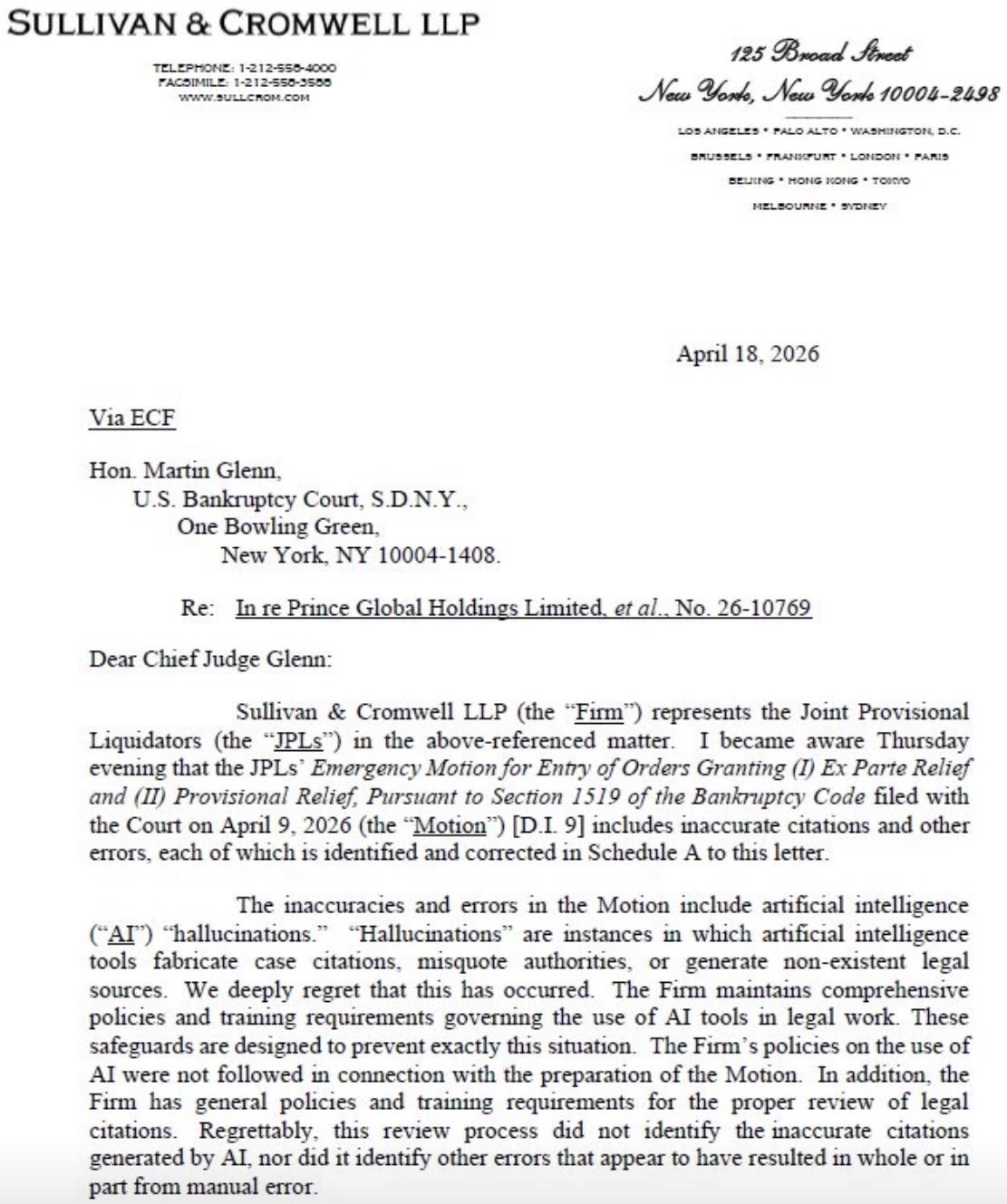
“A.I.
‘Hallucinations’
Created
Errors
in
Court
Filing,
Top
Law
Firm
Says.” From The
New
York
Times: “Sullivan
&
Cromwell apologized
for
submitting
a
court
document
that
had
fake
citations
created
by
artificial
intelligence.”
Read
more here (gift
link).
#2
“U.S.
Law
Schools
Have
Diverse
Takes
on
DEI.
The
Body
That
Accredits
Them
Has
None
—
Our
Standards
are
Silent
on
the
Subject.” From Daniel
Theis (Accreditation
Council)
in The
Wall
Street
Journal: “As
chairman
of
the
body
that
accredits
law
schools—the
Council
of
the
American
Bar
Association
Section
of
Legal
Education
and
Admissions
to
the
Bar—I’d
like
to
clarify
a
few
points
relevant
to
your
editorial
‘How
the
ABA
Spreads
DEI
in
Law
Schools’
(April
17).
The
law
school
accreditation
standards
are
silent
on
DEI,
and
have
been
since
February
2025.
As
you
note,
the
council
suspended
Standard
206
on
diversity
and
inclusion
at
that
time.
Looking
forward,
the
council—which
has
the
final
say
on
the
content
of
the
accreditation
standards—has
proposed
a
permanent
repeal
effective
as
soon
as
this
August.”
Read
more here (gift
link).
[Full
disclosure:
I
am
an
elected
member
of
the
Accreditation
Council
for
the
ABA
Section
on
Legal
Education
and
Admission
to
the
Bar.]
#3
“The
Inside
Story
of
Five
Days
that
Remade
the
Supreme
Court.” From The
New
York
Times: “Secret
memos
obtained
by
The
New
York
Times
illuminate
the
origins
of
the
court’s
now-routine
‘shadow
docket’
rulings
on
presidential
power.”
Read
more here (gift
link).
#4
“Court
Leaks
and
Attorney-Journalists.” From Divided
Argument: “The
recent leak
of
internal
Supreme
Court
memoranda
to
the New
York
Times,
discussed
earlier
by Will
Baude—as
well
as
by Jonathan
Adler, Josh
Blackman,
and Jack
Goldsmith elsewhere—was
plainly
a
serious
violation
of
the
Court’s
confidentiality
obligations.
But
it
may
also
reflect
serious
legal-ethics
violations
by
one
of
the Times article’s
coauthors, Adam
Liptak,
whom
I
understand
to
be
a
licensed
attorney
in
New
York
and
subject
to
that
state’s
Rules
of
Professional
Conduct.”
Read
more here.
#5 “What
We
Learned
From
a
Secret
Deposition
of
Ken
Paxton.” From The
Wall
Street
Journal: “Previously
hidden
document
sheds
new
light
on
ethical
questions
surrounding
the
GOP
Senate
candidate
and
Texas
attorney
general.”
Read
more here (gift
link).
#6
“The
Hyperlink
Rule.” From Oliver
Roberts on LinkedIn: “The
Hyperlink
Rule
could
have
prevented
the
AI
hallucination
incident
in
California,
where
a
judge
issued
an
order
with
fake
citations
last
month.
…
Had
the
court
required
use
of
the
Hyperlink
Rule,
meaning
that
cited
authorities
had
to
be
hyperlinked
to
real
sources
(e.g.,
Lexis
or
Westlaw),
there
would
have
been
an
immediate
three-part
safeguard,
and
any
one
of
those
checkpoints
likely
would
have
flagged
the
problem
before
it
resulted
in
wasted
briefing
and
judicial
time
on
appeal.
First,
if
the
drafting
attorney
had
been
required
to
hyperlink
each
cited
source,
counsel
likely
would
have
realized
that
the
cited
authorities
did
not
correspond
to
real
sources
and
therefore
could
not
be
linked.
Second,
opposing
counsel
could
have
simply
clicked
the
hyperlinks
in
the
proposed
order
to
confirm
that
the
authorities
actually
existed.
Third,
the
judge
could
have
done
the
same
before
signing
the
order.
…
The
Hyperlink
Rule
should
become
commonplace
in
courts.”
Read
more here.
#7
“Civil
Rights
Groups
Condemn
Southern
Poverty
Law
Center’s
Indictment
and
Prepare
for
Legal
Fights.” From The
Washington
Post: “The
criminal indictment
of
the
Southern
Poverty
Law
Center
this
week was
met
with
much
outrage
but
little
surprise
from
civil
rights
leaders,
who
have
for
more
than
a
year
prepared
for
heightened
legal
scrutiny
from
the
Trump
administration,
and
how
to
mount
a
coordinated
response.
In
rounds
of
calls
immediately
following
the
indictment,
advocates
discussed
how
to
support
the
SPLC,
a
Montgomery,
Alabama-based
civil
rights
group
founded
in
1971
that
has
tracked
white
supremacist
groups
and
been
outspoken
on
voting
rights,
immigration
and
policing.
Organizers
on
one
call
agreed
that
winning
in
the
court
of
public
opinion
would
be
crucial
as
judicial
proceedings
began,
leading
to
dozens
of
public
statements
of
support
and
planned
rallies.”
Read
more here (gift
link).
#8
“A
Group
of
Residents
is
Banding
Together
to
Defend
Judges
Facing
Threats
and
Violence.” From National
Public
Radio: “Boston-area
residents
have
formed
a
group
to
support
federal
judges
facing
hostile
rhetoric
and
violent
threats.”
Read
more
and
listen here.
#9
“The
Eight-Figure
Talent
Race
for
Supreme
Court
Lawyers.” From The
Wall
Street
Journal: “Firms
are
dangling
large
pay
packages
to
lure
stars
who
can
elevate
their
stature.”
Read
more here (gift
link).
#10
“Former
Texas
Chief
Justice
on
the
Importance
of
Court
Transparency.” From The
Brennan
Center
for
Justice: “Wallace
B.
Jefferson joined
the
Supreme
Court
of
Texas
in
2001
and
served
as
chief
justice
from
2004
until
he
left
the
court
in
2013.
As
chief
justice,
he
successfully
lobbied
to
allow
live
video
of
high
court
oral
arguments,
which
launched
in
2007.
In
an
interview,
Jefferson
addressed
the
importance
of
court
transparency,
including
why
the
U.S.
Supreme
Court
should
allow
cameras
at
oral
arguments
and
Texas’s
policy
—
which
Jefferson
noted
is
outside
the
norm
for
most
high
courts’
policies
—
of
allowing
state
supreme
court
clerks
to
sit
in
on
the
justices’
conferences.”
Read
more here.
[Full
disclosure:
Wallace
is
my
wonderful
husband.]
#11
“EEOC
Chair
Violated
Attorney
Ethics
Code,
Bar
Complaint
Says.” From Bloomberg
Law: “EEOC
Chair
Andrea
Lucas should
be
investigated
for
using
her
position
to
advance
‘personal
and
political
objectives’
that
violate
her
duties
to
enforce
federal
discrimination
law,
a
legal
accountability
group
told
the
Virginia
State
Bar.
The
Legal
Accountability
Center filed
the
bar
complaint earlier
this
week
citing
a
series
of
actions
the
commission
has
taken
under
Lucas’s
leadership
that
includes
halting
investigations
of
charges
dealing
with
transgender
bias
and
charges
based
on
solely
on
unintentional
discrimination
claims.
It
also
cited
letters
to
law
firms
signed
by
Lucas
asking
for
information
about
their
diversity
initiatives.”
Read
more here.
#12
“California
High
Court
Proposes
Tougher
Ethics
Rules
on
False
Statements
by
Attorneys.” From Law.com: “California’s
Supreme
Court
justices
on
Thursday rejected proposed
changes
to
ethics
rules
targeting
attorneys
who
lie
or
spread
misleading
statements
about
judges,
choosing
instead
to
draft
their
own
tougher
language.
…
The
state
Supreme
Court
revised
a
proposed
ethics
rule
to
warn
that
lawyers
who
make
false
statements
could
be
disciplined
even
if
they
‘reasonably’
disagree
with
a
judge’s
ruling.”
Read
more here.
#13
“When
Judges
are
Targeted,
the
Legal
Profession
Must
Respond.” From ABA
President Michelle
Behnke in
the Las
Vegas
Sun: “Judges
in
the
United
States
are
under
a
sustained,
coordinated
attack.
Their
photographs
have
been
posted
online
by
senior
government
officials.
The
president
has
disparaged
them
by
name.
Their
rulings
have
been
met
not
with
appeals
but
with
calls
for
impeachment
and,
in
some
cases,
with
outright
defiance.
This
pressure
on
judges
is
personal,
targeted
and
designed
to
undermine
a
justice
system
that
should
work
for
everyone.
This
is
not
a
partisan
concern.
It
is
a
structural
one.
Judicial
independence
is
not
a
privilege
of
the
judiciary
—
it
is
a
safeguard
for
everyone
who
might
one
day
need
a
court
to
stand
between
them
and
power.”
Read
more here.
#14
“Republican
Ohio
Supreme
Court
Makes
Ohio
First
in
Nation
to
Allow
Political
Endorsements
From
Judges.” From
the Ohio
Capital
Journal: “You
read
that
right.
Ohio’s
highest
court
issued
an
out-of-the
blue ruling with
profound
implications
for
an
even
more
partisan
judiciary
in
the
state.
In
a
5-1
Republican
majority
opinion,
the
justices
made
Ohio
a
complete
outlier
in
the
country
by
ending
a
decades-old
ban
on
state
judges
and
judicial
candidates
openly
endorsing
(or
opposing)
a
candidate
for
another
public
office.”
Read
more here.
#15
“Former
Texas
Supreme
Court
Justice
Hecht
Addresses
Judicial
Independence
at
UH
Law
Sondock
Lecture.” From
the University
of
Houston
Law
Center: “Complaints
about
the
judiciary
aren’t
new. Nathan
L.
Hecht,
27th
chief
justice
of
the
Supreme
Court
of
Texas,
cited
examples
dating
back
to
the
era
of Thomas
Jefferson as
he
delivered
the 2026
Justice
Ruby
Kless
Sondock
Jurist-in-Residence
Lectureship
in
Legal
Ethics
at
the
University
of
Houston
Law
Center.
But,
Hecht
warned,
that
doesn’t
mean
today’s
criticism
of
judicial
decisions
–
from
the
highest
levels
of
government
to
the
person
caught
up
in
an
eviction
case
–
aren’t
a
serious
concern.
He
outlined
several
steps
that
judges,
the
legal
system
and
society
at
large
could
take
to
ensure
people
believe
the
courts
are
impartial.
…
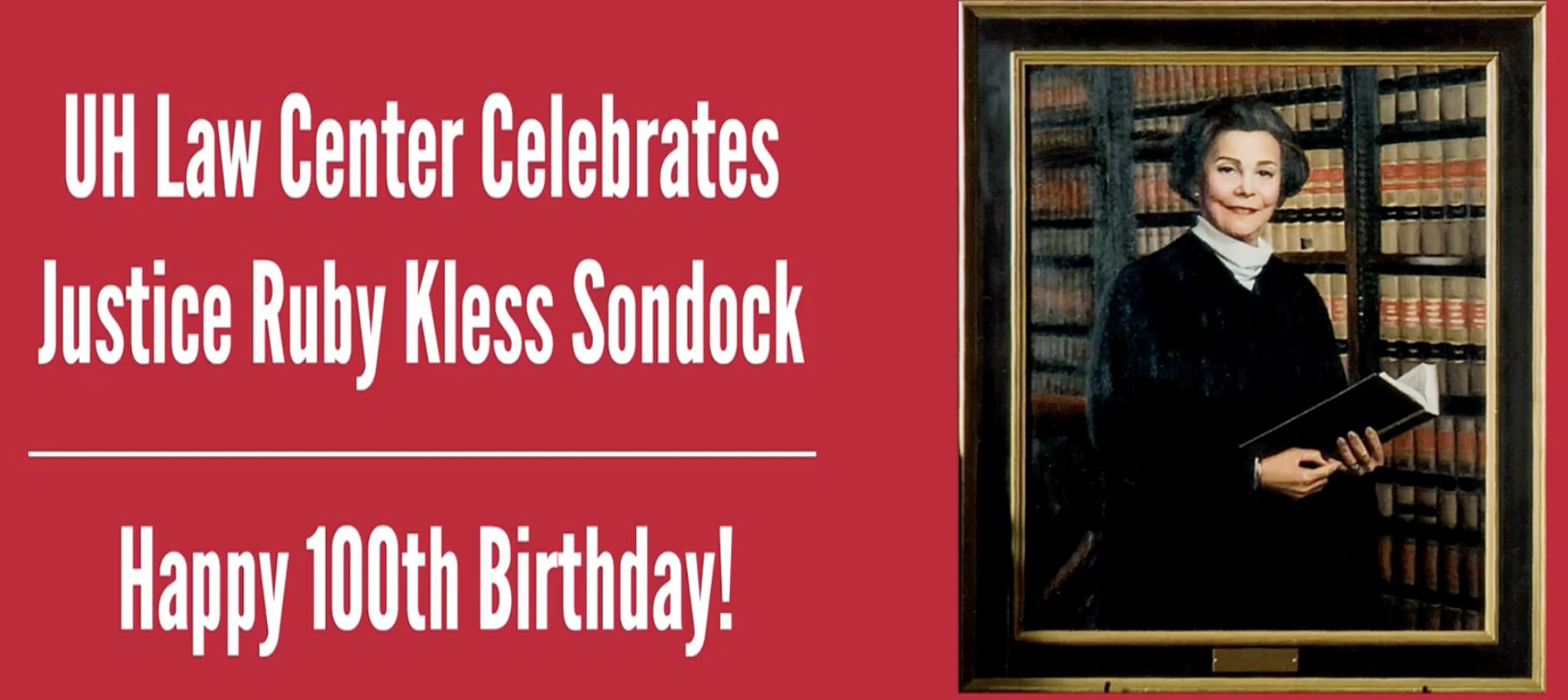
Sondock
is
a
pioneering
lawyer
and
jurist
who
graduated
as
valedictorian
and
one
of
just
five
women
in
the
UH
law
school
class
of
1962.
She
became
the
first
female
state
district
court
judge
in
Harris
County
when
she
was
appointed
to
the
bench
in
1977
and
was
appointed
to
the
state
Supreme
Court
in
1982.
Sondock
was
in
the
audience
for
this
year’s
lecture,
which
was
held
just
a
week
before
her
100th
birthday.”
Read
more here.
Happy
100th
Birthday
Justice
Sondock!
Get
Hired
Did
you
miss
the
500+
job
postings
from
previous
weeks?
Find
them
all here.
Upcoming
Ethics
Events
&
Other
Announcements
️
Did
you
miss
an
announcement
from
previous
weeks?
Find
them
all here.
Keep
in
Touch
Do
you
have
colleagues
who
care
about
legal
ethics? Please
share
the
Roundup
with
them.
I’d
love
to
see
our
community
continue
to
grow!
News
tips?
Announcements?
Events? A
job
to
post? Reading
recommendations? Email
[email protected]
–
but
be
sure
to
subscribe
first,
otherwise
the
email
won’t
be
delivered.
Renee
Knake
Jefferson
holds
the
endowed
Doherty
Chair
in
Legal
Ethics
and
is
a
Professor
of
Law
at
the
University
of
Houston.
Check
out
more
of
her
writing
at
the Legal
Ethics
Roundup.
Find
her
on
X
(formerly
Twitter)
at @reneeknake or
Bluesky
at legalethics.bsky.social.