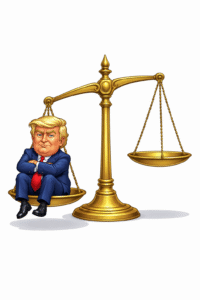
via
ChatGPT)
Trump’s
plan
to
fleece
American
taxpayers
ran
into
a
tiny
speed
bump
on
Friday
thanks
to
Judge
Kathleen
Williams
of
the
Southern
District
of
Florida.
Williams
is
saddled
with
Trump’s
preposterous
trollsuit
against
the
IRS
for
the
wrongful
disclosure
of
his
tax
returns
by
a
contractor
in
2020
…
but
perhaps
not
for
much
longer.
The
suit
is
defective
in
every
respect,
particularly
the
$10
billion
damage
demand.
Trump
insists
he’s
entitled
to
$1,000
for
every
click
on
a
New
York
Times
article
about
the
leaked
returns
—
despite
the
fact
that
the
law
specifies
that
the
disclosure
must
be
by
an
“officer
or
employee
of
the
United
States,”
i.e.,
not
a
journalist.
It’s
also
time-barred,
since
the
relevant
statute
requires
the
victim
to
file
within
two
years
of
discovering
the
breach.
Trump
claims
he
didn’t
find
out
about
the
disclosure
until
January
of
2024
when
the
leaker,
Charles
Littlejohn,
was
sentenced.
This
is
somewhat
undercut
by
his
sparklemagic
lawyer
Alina
Habba’s
appearance
at
a
plea
hearing
in
October
of
2023,
where
she
announced
that
she
was
“here
on
behalf
of
President
Trump
who
was
a
victim,
as
we
just
heard,
of
this
atrocity.”
See
also:
all
those
New
York
Times
stories
about
his
family’s
finances
that
ran
in
2020
and
2022.
But
dissecting
the
complaint’s
deficiencies
risks
stepping
into
a
world
of
make
believe
where
this
is
an
actual
civil
action,
rather
than
a
lawsuit-shaped
pretext
to
allow
the
president
to
loot
the
Treasury.
Indeed,
Trump
himself
acknowledged
as
much
just
days
after
he
filing
his
complaint.
“I’m
supposed
to
work
out
a
settlement
with
myself,”
he
babbled
to
reporters,
adding
that
“We
could
make
it
a
substantial
amount,
nobody
would
care
because
it’s
going
to
go
to
numerous
very
good
charities.”
Whether
“nobody
would
care”
is
an
open
question.
On
April
17,
counsel
for
Trump
and
attorneys
for
the
DOJ
—
but
I
repeat
myself!
—
filed
a
joint
motion
to
stay
proceedings
for
90
days
“while
the
Parties
engage
in
discussions
designed
to
resolve
this
matter
and
to
avoid
protracted
litigation.”
Just
as
they
did
in
Michael
Flynn’s
moribund
tort
claim
over
the
Russia
investigation,
the
government
is
telegraphing
its
intent
to
cut
the
president
a
check
he
could
never
collect
in
court.
But
Judge
Williams
refuses
to
lend
her
judicial
imprimatur
to
what
is
effectively
the
bank
teller
opening
the
till
and
pocketing
the
cash
—
or
at
least,
not
yet.
Noting
that
no
lawyer
for
the
government
has
even
bothered
to
enter
an
appearance
and
“the
only
scheduled
event
at
issue
is
Defendants’
response
to
the
Complaint,”
she
instead
instructed
the
parties
to
explain
how
the
court
has
jurisdiction
over
a
matter
in
which
there’s
no
actual
dispute.
Because
judges
derive
their
authority
from
the
Constitution,
and
Article
III
limits
them
to
adjudicating
actual
cases
or
controversies.
And
kayfabe
where
the
president
connives
with
his
employees
to
pillage
government
coffers
and
then
demands
judicial
blessing
for
naked
corruption
don’t
cut
it.
“Typically,
adverseness
is
found
in
a
situation
where
one
party
is
asserting
its
right
and
the
other
party
is
resisting,”
Judge
Williams
wrote,
observing
that
no
president
in
history
has
been
more
clear
that
he
exerts
personal
control
over
every
employee
in
every
branch
of
the
federal
government
—
particularly
employees
at
supposedly
independent
agencies
like
the
Justice
Department.
“[T]he
Attorney
General,
has
a
statutory
obligation
to
defend
the
IRS
when
it
is
hailed
into
court,
but
then
is
ostensibly
required
by
executive
mandate
to
adhere
to
the
President’s
opinion
on
a
matter
of
law
in
such
a
case,”
she
continued.
“This
raises
questions
over
whether
the
Parties
here
are
truly
antagonistic
to
each
other.”
In
plain
English,
the
court
is
ordering
the
parties
to
explain
how
there
can
be
adversity
when
Trump
is
both
the
plaintiff
and
defendant.
As
she
points
out,
even
as
Trump
insists
he’s
suing
in
his
personal
capacity,
the
case
is
captioned
“President
Donald
J.
Trump”
and
refers
to
him
by
his
official
title
throughout.
In
the
past,
conservatives
decried
so-called
“sue-and-settle”
agreements
as
a
tool
to
enact
environmental
policy
via
sham
lawsuits
without
buy-in
from
Congress.
But
once
they
took
the
House,
Senate,
and
White
House,
they
changed
their
tune.
Two
weeks
ago,
the
FTC
simultaneously
“sued”
various
advertising
trade
groups
for
violating
antitrust
law
by
advocating
for
brand
safety
standards
that
make
Elon
Musk
mad
(light
paraphrase)
and
docketed
a
stipulated
settlement.
In
June,
the
Justice
Department
sued
Texas
over
its
policy
of
providing
in-state
tuition
to
undocumented
immigrants.
Just
six
hours
later,
Judge
Reed
O’Connor
approved
a
“settlement”
zeroing
out
a
duly
enacted
provision
of
Texas
state
law.
Both
of
these
cases
were
filed
in
the
Northern
District
of
Texas,
guaranteeing
they’d
draw
conservative
judges
who
have
become
an
effective
rubber
stamp
for
Trump
DOJ
shenanigans.
The
ploy
works
less
well
in
other
courtrooms,
even
those
presided
over
by
his
own
appointees.
In
the
Eastern
District
of
Texas,
the
Trump
administration
hoped
to
nullify
the
Johnson
Amendment,
which
bars
churches
from
political
endorsements
as
a
condition
of
maintaining
their
tax-exempt
status.
The
complaint
was
filed
in
the
waning
days
of
the
Biden
administration,
but
once
back
in
the
White
House,
Trump’s
DOJ
moved
quickly
to
grant
the
plaintiffs’
wish
—
effectively
transforming
it
into
a
sue-and-settle
case.
But
Judge
J.
Campbell
Barker
rejected
the
ploy,
dismissing
the
complaint
for
lack
of
jurisdiction,
since
there’s
no
actual
dispute
when
both
parties
are
on
the
same
side
and
agree
on
the
remedy.
It
would
appear
that
Judge
Williams
is
preparing
to
do
the
same.
She’s
given
the
government
and
Trump
until
May
20
to
explain
how
they’re
actually
adverse.
And
if
there’s
no
justiciable
conflict,
then
the
court
can’t
approve
a
“settlement.”
By
the
logic
of
such
a
ruling,
any
lawsuit
filed
by
the
sitting
president
against
his
own
government
is
definitionally
non-justiciable.
Or,
at
the
very
least,
this
president
can’t
sue
the
government,
since
he’s
burned
down
every
firewall
and
insisted
that
he
has
the
right
to
control
every
organ
of
the
executive
branch.
If
Trump
is
the
government,
he
can’t
sue
himself
and
claim
that
the
lawsuit
is
anything
other
than
a
sham.
But
getting
tossed
out
of
court
can’t
ultimately
preclude
a
settlement.
Trump
could
simply
order
the
IRS
to
cut
him
a
check,
as
he
seems
likely
to
do
with
the
administrative
claim
he
filed
demanding
$230
million
for
“abuses”
he
suffered
during
the
stolen
documents
and
election
interference
cases.
The
only
question
is
whether
he’ll
have
the
fig
leaf
of
a
federal
judge
blessing
his
settlement
with
himself.
The
cost
to
the
taxpayer
is
the
same,
but
this
way
would
at
least
spare
the
judiciary
from
sullying
itself
with
his
flagrant
self-dealing.
Or,
if
Judge
Williams
dismisses
the
case,
Trump
can
always
refile
it
in
the
Northern
District
of
Texas
and
get
one
of
his
buddies
to
sign
the
permission
slip.
Liz
Dye produces
the
Law
and
Chaos Substack and podcast. You
can
subscribe
by
clicking
the
logo: