
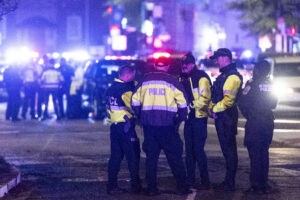
by
Luke
Johnson/Getty
Images)
You
almost
have
to
admire
the
speed.
Less
than
24
hours
after
a
gunman
was
tackled
outside
the
ballroom
at
the
Washington
Hilton
during
the
White
House
Correspondents’
Dinner,
the
Department
of
Justice
had
already
drafted
a
letter
addressed
to
Greg
Craig
of
Foley
Hoag
demanding
the
firm
drop
its
case
against
the
administration
for
redesigning
the
White
House
without
any
congressional
approval.
Acting
AG
Todd
Blanche
subsequently
posted
this
letter
to
X
with
the
six-word
summary:
“It’s
time
to
build
the
ballroom.”
That’s…
a
lot
of
hustle
for
a
Sunday
morning.
To
be
clear
about
what
actually
happened
Saturday
night:
the
suspect,
a
California
teacher
and
engineer,
rushed
a
security
checkpoint
and
ran
toward
the
ballroom
where
the
black-tie
dinner
was
being
held,
armed
with
a
shotgun,
handgun,
and
knives.
He
exchanged
gunfire
with
law
enforcement
and
was
tackled
to
the
ground.
One
Secret
Service
agent
was
hit
in
his
bulletproof
vest,
treated,
and
released.
No
one
was
killed.
The
shooter
was
arrested.
A
scary
incident,
genuinely,
and
one
that
could
have
been
catastrophically
worse.
We
can
all
agree
on
that.
But
the
Trump
administration
did
not
wait
to
agree
on
that
and
move
on.
Instead,
Assistant
AG
Brett
Shumate
fired
off
a
letter
to
the
National
Trust
for
Historic
Preservation’s
outside
counsel
demanding
the
Trust
voluntarily
dismiss
its
lawsuit
against
the
White
House
ballroom
by
9
a.m.
Monday,
or
the
DOJ
would
move
to
dissolve
Judge
Richard
Leon’s
injunction
and
kill
the
case
itself.
“Your
lawsuit
puts
the
lives
of
the
president,
his
family,
and
his
staff
at
grave
risk,”
Shumate
wrote.
“Enough
is
enough.
Your
client
should
voluntarily
dismiss
this
frivolous
lawsuit
today
in
light
of
last
night’s
assassination
attempt
on
President
Trump.”
The
letter
then
argued
that
the
shooter
targeting
Trump
“at
the
Washington
Hilton,
the
only
ballroom
in
Washington,
D.C.,
suitable
to
host
large
gatherings
for
the
President”
proved
the
White
House
ballroom
was
“essential
for
the
safety
and
security
of
the
President,
his
family,
his
cabinet,
and
his
staff.”
Strong
language…
just
a
few
not-so-minor
details
that
prevent
it
from
landing.
Like
how
the
White
House
Correspondents’
Dinner
is
not
a
White
House
event,
but
rather
hosted
by
the
White
House
Correspondents’
Association.
And
that
attending
is
a
presidential
choice
—
indeed
Trump
has
skipped
out
on
every
other
Correspondents’
Dinner
he
was
invited
to.
Plus
the
administration
did
not
even
designate
the
event
as
a
National
Special
Security
Event,
a
classification
that
would
have
required
a
higher
threshold
of
security
measures.
So…
Trump
voluntarily
attended
a
non-White
House
event,
the
Secret
Service
chose
to
skimp
on
security
measures,
and
because
something
bad
happened
there
—
that
the
Secret
Service
still
successfully
thwarted
—
the
president
should
be
afforded
unilateral
authority
to
throw
a
tumorous
ballroom
onto
a
national
landmark?
Maybe
we
shouldn’t
be
surprised,
the
administration
has
been
calling
everything
a
national
security
necessity
since
the
East
Wing
came
down
(Judge
Leon
already
had
occasion
to
note
that
“national
security
is
not
a
blank
check
to
proceed
with
otherwise
unlawful
activity”).
It’ll
be
interesting
to
see
how
Judge
Leon
—
the
same
George
W.
Bush
appointee
who
has
been
watching
this
administration
make
increasingly
strained
arguments
for
the
better
part
of
a
year
—
reacts
to
this
one.
The
DOJ
letter
is
also,
to
put
it
charitably,
in
significant
tension
with
the
position
this
administration
has
staked
out
in
every
other
gun-related
tragedy
in
recent
memory.
When
children
are
murdered
in
their
classrooms,
the
answer
from
this
crowd
is
invariably:
thoughts
and
prayers,
mental
health,
it’s
too
soon
to
talk
about
policy.
But
shots
fired
in
the
vicinity
of
GOP
politicians
and
suddenly
something
needs
to
be
done
by
9
a.m.
Monday?
The
whiplash
would
be
funny
if
it
weren’t
so
grotesque.
And
then
there’s
the
part
that
the
administration
has,
seemingly,
not
thought
through
at
all:
the
optics
of
this
move
are
doing
absolutely
nothing
to
tamp
down
the
false
flag
speculation
that
immediately
erupted
online
after
the
shooting.
Now,
to
be
clear,
there
is
no
credible
evidence
this
was
a
false
flag.
The
suspect
sent
his
family
a
note
about
10
minutes
before
the
attack
apologizing
to
his
parents,
colleagues,
and
students
for
what
he
was
about
to
do,
writing,
“I
don’t
expect
forgiveness.”
That
is
not
the
behavior
of
a
government
plant.
The
shooter
appears
to
be
exactly
what
he
appears
to
be.
But
false
flag
theories
don’t
survive
and
thrive
on
evidence.
They’re
built
on
the
appearance
of
suspicious
opportunism.
And
the
DOJ
—
less
than
24
hours
after
the
shooting
—
publicly
calling
on
the
plaintiff’s
attorney
to
drop
a
specific
ongoing
lawsuit
that
directly
benefits
the
president,
using
language
like
“I
hope
yesterday’s
narrow
miss
will
help
you
finally
realize
the
folly”
of
your
lawsuit…
is
not
a
great
look
for
an
administration
trying
to
project
good
faith.
Kathryn
Rubino
is
a
Senior
Editor
at
Above
the
Law,
host
of The
Jabot
podcast,
and
co-host
of Thinking
Like
A
Lawyer.
AtL
tipsters
are
the
best,
so
please
connect
with
her.
Feel
free
to
email her with
any
tips,
questions,
or
comments
and
follow
her
on
Twitter @Kathryn1 or
Bluesky @Kathryn1