

Trademark
application
scenarios
can
be
funny.
One
classic
example
is
the
post-“event”
rush
to
file
trademarks
associated
with
zeitgeist-capturing
moments,
e.g.,
the
numerous
attempts
to
trademark
“Philly
Special”
after
the
greatest
football
play
of
all
time
run
during
the
Philadelphia
Eagles’
upset
win
over
the
Patriots
in
Super
Bowl
LII.
(Sports
trademarks
impresario
Josh
Gerben
did
a
great
recap
on
his
blog
of
the
trademark
filing
shenanigans
that
ensued.)
Or
as
IP
Watchdog
reported,
in
the
wake
of
the
famous
Trump
“covfefe”
tweet,
enterprising
applicants
filed
“32
trademark
requests
include
two
hashtag
versions
of
the
word,
two
companies
seeking
to
claim
the
phrase
‘Covfefe
Coffee’
and
25
attempts
to
trademark
the
word
alone.
The
requests
were
submitted
both
by
companies
and
individuals,
including
a
New
York
man
who
wants
to
use
the
word
to
sell
clothing
for
domestic
pets
as
well
as
costumes,
footwear,
hats
and
maternity
outfits
for
humans.”
Considering
the
success
rate
of
this
strategy,
it
is
fair
to
consider
such
applications
as
$300
or
so
lottery
tickets
—
where
there
is
no
guarantee
that
you
will
even
end
up
with
the
lottery
ticket
at
all.
But
still,
people
file
in
the
hopes
of
hitting
it
big.
In
an
interesting
twist
on
the
amusing
trademark
application
identification
game,
the
Federal
Circuit
released
an
opinion
last
week
in
an
appeal
from
a
set
of
TTAB
opposition
proceedings.
(As
usual,
a
good
recap
of
the
decision
can
be
found
on
patentlyo.com,
among
other
of
the
usual
IP
news
haunts.)
As
readers
of
a
certain
age
will
recall,
prior
to
its
economy-cratering
collapse
in
2008
the
investment
bank
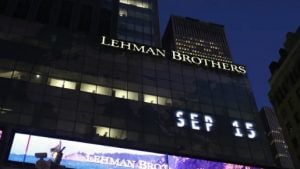
Lehman
Brothers,
at
least
in
the
words
of
the
Federal
Circuit,
“was
one
of
the
largest
investment
banks
in
the
United
States,
with
hundreds
of
billions
of
dollars
in
assets
under
management
and
more
than
25,000
employees
in
offices
worldwide.”
One
of
the
entities
that
purchased
parts
off
the
Lehman
scrap
heap
was
Barclays,
which
found
itself
the
proud
owner
—
and
licensor
back
to
Lehman
Brothers
itself
as
it
unwound
its
operations
—
of
Lehman’s
trademarks.
Over
time,
Barclays
let
all
the
Lehman
trademark
registrations
expire.
Then
the
fun
started.
In
2013,
five
years
after
Lehman’s
implosion,
an
entity
called
Tiger
Lily
decided
to
apply
for
the
Lehman
Brothers
trademark
—
in
connection
with
the
sale
of
“beer
and
spirits.”
In
fact,
the
Lehman
Brothers
whisky
that
the
company
offered
was
the
subject
of
quite
a
bit
of
media
attention,
including
from
the
BBC.
Tiger
Lily’s
trademark
filing
sparked
Barclays
into
action,
with
the
company
filing
for
its
own
Lehman
Brothers
trademark
in
connection
with
the
more-expected
class
of
financial
services.
That
spurred
Tiger
Lily
to
file
yet
another
Lehman
Brothers
trademark
application,
this
time
for
“bar
services”
—
with
all
these
tit-for-tat
filings
ending
up
in
three
trademark
opposition
proceedings
in
the
USPTO
that
were
eventually
consolidated
into
one
proceeding.
The
PTO
proceedings
ended
up
in
a
win
for
Barclays,
based
in
part
on
the
demonstration
that
the
Lehman
Brothers
mark
was
used
—
and
still
recognized
—
in
the
collectible
market
for
original
Lehman
promotional
swag
and
appeared
prominently
“in
pop
culture,
including
movies,
television
shows,
and
music.”
As
a
result,
the
TTAB
found
that
it
was
reasonable
to
assume
that
Barclays
could
eventually
expand
into
offering
Lehman
products
outside
of
banking
services
—
including
alcoholic
beverages
that
would
compete
with
the
Tiger
Lily
offerings
—
and
as
such
the
risk
of
confusion
as
to
the
source
of
a
whisky
bottle
emblazoned
with
the
Lehman
Brothers
name
was
real.
Having
lost
in
the
PTO,
Tiger
Lily
took
an
appeal
to
the
Federal
Circuit.
In
its
recent
decision,
the
Federal
Circuit
noted
that
the
primary
grounds
for
appeal
centered
on
whether
Barclays
had
abandoned
the
mark,
as
well
as
whether
there
was
a
true
likelihood
of
confusion
with
respect
to
Tiger
Lily’s
sale
of
whisky.
On
abandonment,
Tiger
Lily’s
argument
failed
because
Lehman
continues
to
operate
as
an
asset
manager
in
bankruptcy.
And
even
though
the
bankruptcy
will
eventually
expire
and
no
Lehman
will
arise
from
the
ashes
of
that
proceeding,
that
element
of
the
abandonment
inquiry
was
mooted
by
the
fact
that
“Tiger
Lily
has
failed
to
show
that
use
of
the
mark
has
yet
been
discontinued,
and
indeed
Tiger
Lily
appears
to
concede
that
it
has
not.”
Likewise,
on
the
question
of
likelihood
of
confusion,
the
Federal
Circuit
credited
the
fact
that
“the
LEHMAN
BROTHERS
mark
has
achieved
a
high
degree
of
fame,”
and
would
thus
be
“afforded
a
broad
scope
of
protection.”
Commensurate
with
that
observation,
the
Federal
Circuit
found
“that
Tiger
Lily’s
attempts
to
capitalize
on
the
fame
of
the
LEHMAN
BROTHERS
mark
weighs
in
favor
of
finding
a
likelihood
of
confusion.”
As
a
result,
the
TTAB’s
findings
in
Barclays’
favor
were
affirmed.
Ultimately,
this
case
suggests
that
the
Federal
Circuit
may
hold
to
a
higher
standard
trademark
applicants
that
are
aiming
to
profit
off
good
—
or
even
bad
—
will
that
they
did
not
themselves
earn
in
the
marketplace.
It
beggars
belief
to
suggest
that
Barclays
itself
has
any
ambition
to
get
into
the
whisky
business
under
the
Lehman
Brothers
trademark.
Or
that
any
of
Tiger
Lily’s
customers
see
the
whisky
they
purchased
as
anything
other
than
a
nostalgic
novelty
item
with
no
real
connection
to
Lehman
Brothers
itself.
At
the
same
time,
however,
we
can
surmise
that
even
closer
confusion
situations
could
arise
in
the
future,
based
on
an
entity
employing
trademarks
from
a
defunct
brand
name
business
of
some
kind.
For
any
such
aspirants,
Tiger
Lily
presents
a
cautionary
tale.
Please
feel
free
to
send
comments
or
questions
to
me
at
gkroub@kskiplaw.com
or
via
Twitter:
@gkroub.
Any
topic
suggestions
or
thoughts
are
most
welcome.
Gaston
Kroub
lives
in
Brooklyn
and
is
a
founding
partner
of
Kroub,
Silbersher
&
Kolmykov
PLLC,
an
intellectual
property
litigation
boutique,
and Markman
Advisors
LLC,
a
leading
consultancy
on
patent
issues
for
the
investment
community.
Gaston’s
practice
focuses
on
intellectual
property
litigation
and
related
counseling,
with
a
strong
focus
on
patent
matters.
You
can
reach
him
at gkroub@kskiplaw.com or
follow
him
on
Twitter: @gkroub.