New twist to Zimbabwe airport gold scandal – The Zimbabwean

In a statement, ZRP spokesperson Assistant Commissioner Paul Nyathi confirmed the arrest of Gift Karanda who made claims that First Lady and her son were owners of the busted yellow metal that was found in Henrietta Rushwaya’s possession.

Nyathi said “Comprehensive investigations have proved that the statement by Karanda was false and malicious with the intent to defeat or obstruct the course of justice.”

Karanda is facing charges of defeating or obstructing the course of justice, dealing in and possession of gold without being a holder of a licence or permit and smuggling.
Karanda indicated that there was no case as the gold belonged to the First Lady Auxillia Mnangagwa and her son Collins Mnangagwa.

Karanda was arrested with five others who include Ali Mohamad, Stephen Chenjerai Tserayi, Raphios Mufandauya, Superintendent Shoko and Det. Chief Inspector Chimhungu.
Meanwhile, the First lady has distanced herself from Henrietta Rushwaya saying she is a strong advocate for transparency.

“I have no dealings nor involvement with Miss Henrietta Rushwaya of any illegal kind. I am challenging the Police through their relevant office to issue a statement.

“I am a strong advocate for transparency and honesty and any continued silence by the police can be misconstrued as a cover-up. If there is any incriminating evidence against me I challenge the police to present it to the nation without fear or favour. If there be none I also challenge the police to say so,” she said.

President Mnangagwa’s wife and son fingered in gold smuggling syndicate – The Zimbabwean

 President Emmerson Mnangagwa with his wife Auxillia addressing the people of Zimbabwe at the Zanu-Pf headquarters on November 22, 2017 in Harare, Zimbabwe. (Photo by Gallo Images / Netwerk24 / Felix Dlangamandla)

Her husband, President Emmerson Mnangagwa, has repeatedly called for a zero-tolerance to corruption that he claimed has negatively impacted on the country’s economy.

The First Lady’s involvement in the shady deal came to light during court proceedings on Friday when a ruling Zanu PF top official Henrietta Rushwaya, who is also president of the Zimbabwe Miners’ Federation, and her accomplices, were arraigned before a Harare magistrate on charges of smuggling 6 kilograms of gold worth US$330,000. Rushwaya was arrested  on Monday at the Robert Gabriel Mugabe International Airport when she was about to leave the country for Dubai, after she failed to produce an export permit for the gold that was discovered in her hand luggage.

Two of Rushwaya’s accomplices are President Mnangagwa’s security aides who stand accused of attempting to facilitate Rushwaya’s exit at the airport before she was arrested by alert security details. Two other police officers were also arraigned for allegedly criminally abusing their offices after they allegedly tampered with court papers with a view to exonerate one of Rushwaya’s accomplices, businessman Ali Mohamad who reportedly runs some of the First Lady’s businesses.

Upon her arrest, Rushwaya allegedly implicated Mohamad, who also runs a car sale business under a company called Ali Japan 786. The prosecution, led by prosecutor Garudzo Ziyaduma, told the court that Rushwaya claimed that she had been given the gold by Mohamad for onward delivery to his Dubai-based sister company.

The prosecution alleged that Rushwaya and Mohamad hatched a plan to smuggle the gold to Dubai on the pretext that the gold bars were going to be delivered to Mohamad’s other company based in Dubai, adding that Rushwaya had no license to export gold at the time of her arrest.

Meanwhile, the court heard that one of Rushwaya’s accomplices, Gift Karanda, linked First Lady Auxillia Mnangagwa to the ownership of the minerals.

“On discovering that the three had been intercepted, accused 4 (Gift Karanda) came and advised immigration and police officers that the gold recovered from Henrietta Beatrice Rushwaya belonged to the First Lady Auxillia Mnangagwa. He further stated that Collins Mnangagwa, son to the First Lady, was the person who was supposed to have taken the gold for export to Dubai, United Arab Emirates. This accused (4) said well-knowing that it was not true but only wanted to instill fear and facilitate safe removal of the gold from Zimbabwe to Dubai,” said Ziyaduma.

(It appears here that the prosecutor is attempting to exonerate the First Lady in his papers by opining that the accused no 4 was lying knowingly.)

During the proceedings, Mohamad’s attorney, Tinashe Tanyanyiwa, challenged the placement of his client on remand saying his company had a legitimate gold buying permit while the rest of the accused persons did not object to their placement on remand. Bail hearing is expected to continue on Monday.

President Mnangagwa’s family has been linked to such scandals. The first family was recently linked to a US$60 million scandal involving the purchase of Covid-19 supplies that resulted in Mnangagwa dismissing his health minister Obadiah Moyo.

Clifford Hlatshwayo, a spokesperson of the main opposition Movement for Democratic Change Alliance (MDC), said while President Mnangagwa has used every available opportunity to denounce corruption, he and his party were the “archbishops of corruption.” Said Hlatshwayo:

“Mnangagwa and Zanu PF are the archbishops of corruption and violence; they rigged their way into power to loot, to cause harm to the ordinary and bleed the nation.”

The latest exposure comes at a time when Zimbabwe’s Home Affairs minister Kazembe Kazembe told reporters a fortnight ago that the southern African nation was losing over US$100 million per month due to illicit financial flows in the gold sector alone.

An independent economist, Masimba John Manyanya, who once worked with Zimbabwe’s finance ministry said Zimbabwe’s economy was in the wrong hands.

“We can’t blame sanctions when the biggest sanction we have is corruption by those in power. Zimbabwe is losing over a billon US dollars every month due to these illicit financial flows if we are to go by what the government is saying. Former President Mugabe said that US$15 billion from diamond proceeds cannot be accounted for up to this da,y yet we want to blame sanctions for economic problems of our own making,” said Manyanya.

This is not the first time the First Lady in Zimbabwe is linked to deals involving minerals. Auxillia Mnangagwa’s predecessor, Grace Mugabe scandalised the country when she ordered a US$1.4 million diamond ring from Dubai.

Mnangagwa came to power through a military coup in November 2017 and promised a raft of reforms, including an end to corruption, but his critics say his administration has been the worst since independence from Britain in 1980.

There was no immediate response to our attempts to get a comment from the First Lady. This story will be updated if, and when, a response arrives.DM

Fighting fake immunization travel certificates with frontier technologies – The Zimbabwean

A thriving black market there sells a fake proof of immunization for between US$ 15–20, says Dr Integrity Mchechesi, who works with a technology firm to combat such forgery.

Counterfeit travel vaccination certificates can put lives at risk and greatly jeopardize disease control. “We estimate that around 80% of yellow fever travel cards in Zimbabwe are counterfeit,” says Dr Mchechesi, a co-founder and head of innovation at Vaxiglobal, a travel health consultancy.

Vaxiglobal is working with laboratories in Zimbabwe and Zambia, airlines and technology companies to build up a safe and approved digital verification system for travellers’ immunization.

Built on blockchain technology, a decentralized online record keeping system, the database cannot be tampered with.

“It’s often impossible for busy border authorities to verify the names of doctors, and the supposed location where vaccinations occurred, by phone or email,” says Dr Mchechesi, also a senior resident medical officer at the Parirenyatwa Central hospital in Harare.

“After vaccination, the laboratories create a digital record in our system. The traveller gets a QR code on a mobile app or on paper, which is instantly verified by the border authorities, who can see where they got the vaccine and who gave it to them, as well as the batch number of the vaccine, which protects the authenticity of each and every vaccine.”

According Dr Mchechesi, many vaccines are left unused in Zimbabwe, which leads manufacturers to push up the price of production. By reducing the number of shelved vaccines, the initiative aims, ultimately, to help bring the price of vaccines down.

The digital verification system went live in early 2020, and in April the team worked with laboratories across Zimbabwe to use the system for COVID-19 certification. More than 1500 certificates have since been verified, and seven airlines are now using the system at Robert Mugabe International Airport in Harare. As more of Zimbabwe’s ports reopen, the team aims to expand the system under the guidance of the Ministry of Health.

“We recently received approval for the Government of Zimbabwe, and it’s a huge deal now as the borders opened between many African countries,” says Dr Mchechesi.

“All travellers need up-to-date immunization verification and our system should help cut transmission rates across borders.”

The Vaxiglobal team is in talks with South Africa’s government for a potential launch in that country and even an eventual roll-out across the 15-Members States of the Southern African Development Community.

The team is working with biometric data companies to make verification even simpler, through a cloud-based biometric data system that does not even need QR codes.

Vaxiglobal have worked with World Health Organization’s Africa Innovation Team to shape, develop and scale the initiative since 2018. “It has been incredibly fascinating to see Vaxiglobal’s evolving business model to focus on maximising health impact for the African population,” says Dr Moredreck Chibi, Regional Innovation Adviser for WHO Africa region.

Post published in: Featured

Massive building activity drains ecology in Zimbabwe – The Zimbabwean

HARARE, Zimbabwe

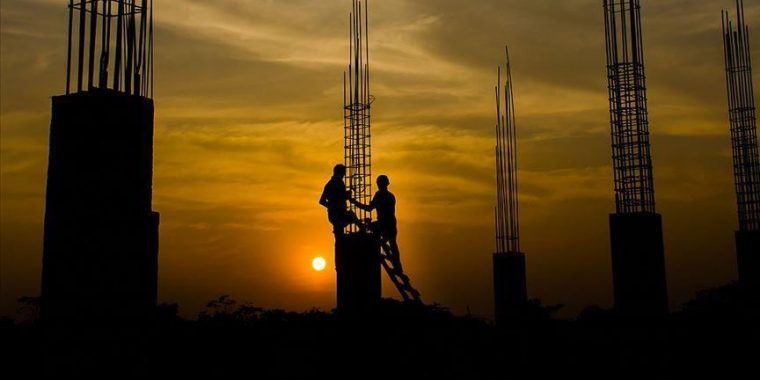
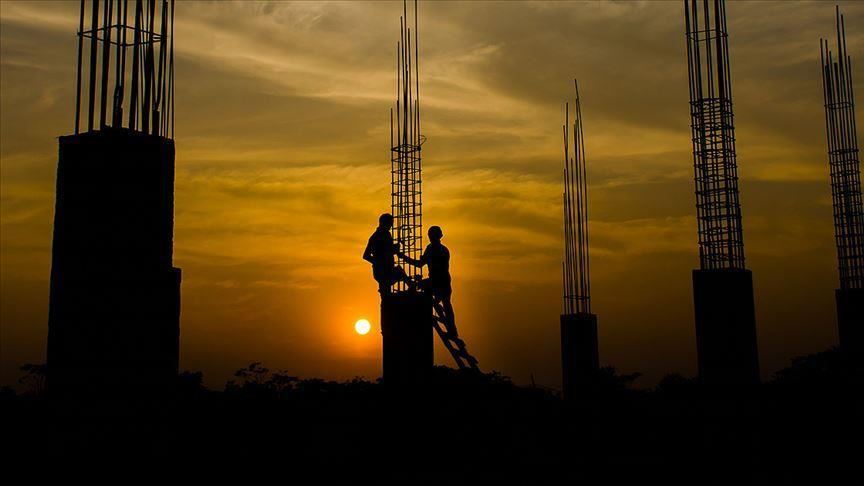
An unprecedented rush of clearing lands from trees to erect concrete jungles is leading to scarcity of water and frequent droughts in landlocked Zimbabwe.

Experts believe that due to illegal construction over two million residents of capital Harare, do not have now access to running water.

The southern African country, known for its landscape and diverse wildlife, reserves, and safari is being increasingly denuded from its green cover as vast tracts of lands are being cleared to build housing projects.

Speaking to Anadolu Agency, Happison Chikova, climate change activist said the more such illegal housing projects would mean more forests getting axed.

“As more land is taken over illegally by land barons, it may mean more homes in towns and cities, but will also mean less forest cover, thus poor rainfall patterns in the country,” he said.

The environmentalist described the illegal construction of urban homes as a significant cause of climate change in the country.

He said even when these land sharks are arrested, they get away due to their connections in the power corridors.

Joseph Tasosa who heads the Zimbabwe National Environmental Trust said the country is already facing less food production, resulting in hunger due to groundwater depletion, caused by massive unplanned constructions.

“Remember the people involved in illegal construction of homes on undesignated places in towns and cities are linked to powerful politicians. So even if arrests of such people are made, that amounts to very little effect as the culprits are set free and they swiftly revert to their old ways of causing harm on urban land,” said Pritchard Chomurwi, another climate change activist based in Harare.

Chomurwi said these illegal activities were not only harming the land but are contributing to disturbing the water table and rainfall patterns.

Frequent droughts

Atwel Chivata, who has studied meteorology at the University of Zimbabwe, said frequent droughts are very much linked to these construction activities.

“When trees are carelessly cut down, land pieces dug up with no care, wells dug up as well, it means there will be less condensation in the atmosphere and therefore less formation of rain clouds,” he told Anadolu Agency.

He said when water scarcity has become a constant phenomenon for urban dwellers, there is no end to this illegal construction.

According to the Zimbabwe National Statistics Agency (ZIMSTAT), approximately 120, 000 homes have been constructed on the undesignated land across Zimbabwe. The capital Harare, which is worst hit 60, 000 such homes constructed illegally, most of which are mere slums occupied by poverty-stricken squatters.

Authorities admit that as many as 10 cities across the country are facing severe environmental issues.

“You would realize that no town or any city in Zimbabwe can claim to be free from climate change impacts. The absence of sustainable water supply testifies how climate change has hit our towns and cities,” a top government official working in the Ministry of Local government here, told Anadolu Agency on condition of anonymity, as she was unauthorized to speak to the media.

Little space for breathing and farming

Urban farmer Mendisi Chioko, 47, a resident of Harare’s Mabvuku high-density suburb, said these housing projects are leaving little space for breathing.

“At every turn, homes are emerging, at every turn there is construction work going on, leaving very limited breathing space for the land itself, meaning some of us relying on farming on small pieces of land have to bear the consequences as groundwater is running out, which translates to fewer rains,” he said.

Like Chioko, 50% population of Harare does not get a constant water supply, due to the worsening impact of climate change enforced by land barons.

Now, even as cities like Harare bear the brunt of climate change local authorities are struggling to make water available to the population.

“We make sure there are rotational water supplies in five towns despite the challenges we face owing to climate change,” said Michael Chideme, corporate communications manager of Harare.

Prospects for genuine engagement and shifting power structures in Zimbabwe – The Zimbabwean

The ‘#ZimbabweanLivesMatter’ mantra recast Zimbabwe back onto the international spotlight, with teething issues related to corruption, human rights abuses, economic mismanagement and generally poor leadership. The response by the government, as expected, has been deepening repression, token arrests over corruption, an overemphasis of an economic turnaround whose positive effect is hardly felt by the majority and increasing power contested by factions within the ruling party.

A crescendo was reached on July 31, with protests leading to the arrest of activists who were calling for action on increasing cases of corruption. Two delegations from South Africa have been to Zimbabwe to discuss the deteriorating situation. On the surface, the engagement fell under the usual sisterly ‘talks’ that South Africa has always had, focusing on the unfolding crisis in Zimbabwe. Also, President Ramaphosa sent the delegation as the AU chairperson.

In reality, there is, however, diverse understanding concerning the delegations’ latest visit to Zimbabwe. As the sister party ANC seem to have responded to the need to deal with the relationship between the two liberation movements; thus working together to build trust amongst themselves. On the other hand, ANC appeared concerned about what they characterised as “things are not fine” in Zimbabwe, therefore the need to deal with the increasing crisis.

Separately, the issue of migration and how Zimbabweans end up dehumanised and doing menial jobs in South Africa, having crossed the border using dangerous undesignated crossing points is also a motivating factor for intervention.

Minister Lindiwe Zulu was clear on August 11 2020, that: “In the ANC’s view, yes, there is a political crisis in Zimbabwe, and we have to be frank and honest about it. If we are to help the situation, then we have to be frank and honest about it because we are asking the question, where is the dignity in all the Zimbabweans who are here, working; washing cars or as domestic workers, being laughed at and denigrated upon but qualified as teachers, etc.”

To achieve its main objectives, of attaining economic development, peace, security, growth, alleviation of poverty, and enhancement of the standard and quality of life of the peoples of Southern Africa. SADC needs to ensure good governance, durable peace and security. Thus, the regional body held its annual conference under the theme ‘SADC 40 Years Building Peace and Security, Promoting Development and Resilience to Global Challenges’. This was complementary to that of ‘peace, security, and stability’ for the previous conference. However, Zimbabwe has attracted bad publicity for undermining these for various reasons.

Further, His Excellency Filipe Jacinto Nyusi, President of the Republic Of Mozambique, while underscoring the need to ‘root out hunger, unemployment, illiteracy, diseases and pandemics’, noted that “the region continues to face several challenges and threats, especially on the economic and social front”. Nevertheless, Zimbabwe did not feature in the report of the SADC Executive Secretary, neither for the well-established view that there is a political crisis in the country nor for the economic and social turmoil currently affecting the majority of the citizens. With President Emmerson Mnangagwa holding the Chairpersonship of SADC Organ on Politics, Defence and Security Cooperation, what else could Zimbabweans expect?

This context breeds many challenges when assessing the prospects for sustainable engagement, as I turn to;

  • The SADC position differs from that of South Africa, regarding the state of affairs in Zimbabwe. How consensus could be secured between the regional powerhouse (South Africa) and the regional body (SADC) remains unclear. What is in the public domain to date is that the Zimbabwean government had no kind words for their South African counterparts for attempting to play the Big brother role? The attacks on South Africa have continued unabated.

  • The growing challenge of immigrants drives South Africa; this enthusiasm which requires support by Zimbabweans and the rest of the global community.  More importantly, the immigrant challenge ought to be seen from both political and economical grounds to reflect its reality.

  • State brutality is responsible for the movement of Zimbabweans to the South, but so is trade. Zimbabweans goods are mostly exported to South Africa in raw form, and as such, Zimbabwe is deprived of value addition processes.  To get employed, Zimbabweans have to follow the exported value chains. This structural delinquency requires modification, much as politics needs attention.

  • In the past, the intervention by South Africa and SADC was triggered by citizen protests that were usually followed by an excessive repressive response by the state, which then prompted the international community into action. Are civil society and opposition political parties capable of radical mobilising citizens for action?

  • The dialectic of contradictions and contests between leading opposition party leaders and civil society as well as the rural ‘Mountain’ stay away by a leading figure during the month leading to July 31 protests, betray lack of consensus, fear and generally the pettiness currently bedevilling the political space in Zimbabwe.

  • The persisting fragmentation of opposition movements, mostly along with egotistical preferences, and far less on ideological standpoints, minimising the capacity of the players to mobilise from below. Under these circumstances, it is to be expected that no coherent counter-narrative capable of mobilising within and beyond the borders is developed.

  • Similarly, recently there has been debate on who from South African should constitute a fact-finding mission and who to be engaged in Zimbabwe. Out of fear of ideological debasement as well as the Big Brother accusations by Zanu PF are likely to lead to declining enthusiasm by the ANC. It might be that a broader inter-party and civil society committee may pursue a more comprehensive engagement process.

  • Besides, it has become less certain as to who the other stakeholders could be engaged beyond the ruling party and what issues can be placed on the table by and of the potential stakeholders who the ANC might commit to engaging.

In this sense, the crisis in Zimbabwe has ceased to be easy in defining, and the stakeholders are no longer effortlessness identifiable. The political space is reconfiguring itself. Previous big players are often dissipating at the hands of Zanu PF. Alternatively, they are equalised through involvement in corruption or by sheer disinterest in people-centred struggles. Zimbabweans can expect little to no intervention from external stakeholders in this context. Therefore, radical mobilisation around citizen issues provides the scope for attracting regional solidarity. Entirely, raising another question; who will mobilise for change in Zimbabwe, in the foreseeable future?

Toendepi Shonhe is a Research Fellow at Thabo Mbeki School of Public and International Affairs

University of South Africa

Post published in: Featured

South Africa/Ramaphosa’s Zim headache…? – The Zimbabwean

The interventions have unruffled feathers in both countries for different reasons, in my view, I argue that South Africa has no other option but to intervene, especially in the face of Covid-19 economic contraction in the region.

Looking back, South Africa has a symbiotic relationship with Zimbabwe since the 1910 formation of the Union of South Africa. Zimbabwe then was known as Southern Rhodesia after its colonisation in 1890 by a British-sponsored private company – British South Africa Company (BSAC). BSAC majority shareholder was the imperialist Cecil John Rhodes – a man who had the dream of building the Cape to Cairo railway that ran from the south to north of Africa.

Zimbabwe was operated as a company between 1890 to 1923 and was given an option to be the fifth state of the Union of South Africa or become a self-governing British colony. It is still debatable if this opportunity came during Rhodes’ time (he died in 1902 and was buried at Matopos) whether he would have pushed for the joining of the Union. Rhodes was prime minister of the Cape and had become a wealthy man with diamond mines and large estates of land.

The ties between the two countries have been as long as the existence of the two nation-states. At an economic level, South Africa has been developed at the back of migrant labour. Thousands of Zimbabweans, Zambians, Mozambicans and Malawians have made great treks to the south to eke a living from mining in the belly of the mineral-rich rand region. The trend has not slowed down even after independence from colonial, citizens of countries in the north still flock down south as economic or political migrants, but mostly the former.

It still has to be mentioned that around the 1960s, relations between Zimbabwe and South Africa reached a new level as both countries were under United Nations endorsed economic sanctions. The countries had a trade agreement that has over the years made them the biggest trading partners in the region. Many South African companies have set up shop in the north and these ranch from agriculture (Tongaat Hullet), banking (Standard Bank) and retail (Pick and Pay, Edgars and Ackermans).

Zimbabwe and South Africa also had an agreement that the former could have an overdraft facility with the South Africa Reserve Bank. This arrangement further cemented the economic and political ties between the two neighbours. In development terms – the countries are what development economist Andrea Gunder Frank espouses in his metropole and satellite theory.

The aforementioned history is meant to shed light into the current political/economic intervention into Zimbabwe by South Africa. As the regional economic powerhouse and its strong ties, South Africa cannot afford the collapse of Zimbabwe either economically or politically without suffering the consequences. If things get harder in Zimbabwe, it is common cause that there would be a glut of refugees to South Africa further straining the country’s capacity to deliver social services to its citizens.

President Cyril Ramaphosa, like Thabo Mbeki in 2007, has no option but to intervene in Zimbabwe’s deteriorating political and economic situation. The intervention comes with its own challenges, particularly in the face of the novel Covid-19 pandemic. All countries across the globe have suffered economic contraction due to forced lockdowns. They also had to provide economic stimulus packages for business and improve on social safety nets for their poor and vulnerable citizens. It is in this context that Ramaphosa has to stop Zimbabwe from sliding into another 2008.

Contextualising 2008

Zimbabwe since the turn of the century in 2000 had started experiencing political and economic turmoil. These twin challenges were largely a result of embarking on land reforms that saw former commercial white farmers pushed off the land and, in most instances, violently. The land reform were taking place at a time Zimbabwe’s economy was contracting at a faster rate than a country at war. Inflation spiralled and many companies closed. For those that remained in operation, the Zimbabwe dollar became worthless that many started trading in the South African Rand or United States dollar to hedge against inflation.

The economic situation influenced the creation and growth of strong labour-backed opposition. The ruling party was losing political grip, especially in urban and peri-urban areas. In a panic, the ruling Zanu PF party resorted to using violence to coerce voters. Many opposition activists were killed or maimed in the violence. However, despite the violence, the opposition MDC won parliament and led in the first round of presidential elections. Zanu PF was on the ropes and staring into becoming an opposition party – 28 years after it had won the first post-independence polls in 1980.

Mbeki had to act and he did act. He brokered power-sharing negotiations between the beleaguered Zanu PF and the buoyant MDC that culminated in the signing of a Global Political Agreement that ushered a Government of National Unity (GNU) that gave the country some breathing space between 2009 and 2013.

The temporary stability of the unity government, unfortunately, failed to bring long-lasting economic and political reforms. The country’s main parties – Zanu PF and MDC – remained in a combative mood. There are in mortal combat.

2017: The end of the façade

Zimbabwe’s military in November 2017 staged a coup as it directly intervened in the Zanu PF succession battles on behalf of a faction. The military tried to cover its tracks by installing a civilian leader in the form of President Emmerson Mnangagwa. The coup was a daring act, the first in Zimbabwe and clearly meant the political terrain had changed. Zimbabwe held a disputed general election on July 30, 2018.

The military violently quashed any demonstrations in the capital, Harare, leaving six unarmed and defenceless civilians dead on August 1. That was the first time, the military had been deployed internally to assist police in maintenance of peace. The subsequent appointment of the Mothlante Commission to look into the killings and its findings have largely remained an academic exercise. No military officer has been hauled before any hearing for the offence, yet the commander of the unit has – Brigadier Anselum Sanyatwe – has been promoted to an be an ambassador.

Ramaphosa intervention

Ramaphosa, unlike Mbeki, is dealing with a military regime. Twice, his envoys have been told bluntly they cannot discuss with anyone about the crisis in Zimbabwe except Zanu PF. This could be related to Ramaphosas’s tactical errors. He initially sent a special envoy and in diplomatic speak envoys cannot do more than delivering a message and getting a response to deliver to their sender. When he tried to amend the first error, Ramaphosa made a second mistake – dispatching an ANC delegation which was told as soon as it landed that it could only speak to Zanu PF as sister revolutionary parties.

Ramaphosa failed to do a Mbeki who clothed his intervention in regional robes. Mbeki intervention was a SADC intervention and carried more weight. The intervention had further support from countries like the United Kingdom and the United States. Ramaphosa has failed to build such a coalition despite being the current chairman of the African Union.

Opposition weak bargaining position

The opposition lost MDC dismally the 2018 parliamentary election. It mustered slightly below a third of the august House seats. In 2008, the MDC had a parliamentary majority and Robert Mugabe had become a lame-duck president. The ruling by decree would be too brazen to a man of his sophistication. Mugabe had to negotiate. He put his experience to good use and got himself a good deal where he retained power under the façade of a unity government. His government exclusively maintained the power to control the pace of political and economic reforms.

In the current scenario, the MDC is both weak and fragmented to apply any meaningful pressure on the regime. The opposition despite its posturing has failed to have the Zimbabwe crisis on the agenda of either Sadc summit or Africa Union meetings. In other words, both Ramaphosa and the MDC have failed to internationalise the Zimbabwean crisis.

Covid-19 challenge

Ramaphosa is battling for his own survival in the fractious ANC and at the same time to steady the economic ship post-Covid-19. He has little room to be involved in foreign affairs except if it is Lesotho, a country that has power over the existence of Johannesburg because it supplies it with potable water.

Covid-19 has caused companies to close further heaping pressure on unemployment. Unemployment is a source of social instability in a country with millions of economic immigrants. South Africa is on the verge of another Afrophobia attacks and the Ramaphosa administration has to be on the lookout.

Conclusion

While a government of national unity in Zimbabwe may be desirable, there is no wind in the sails for such a ship. The opposition is weak and fragmented while the mediator has blundered and is overwhelmed by developments in his own country and the threat that he could be a one-term president. Even if Mnangagwa was to be magnanimous, the MDC can only be a junior partner in the resultant inclusive government without any leverage to force reforms. Ramaphosa, in this instance, the main goal is to try to manage the Zimbabwe situation that it does not implode.

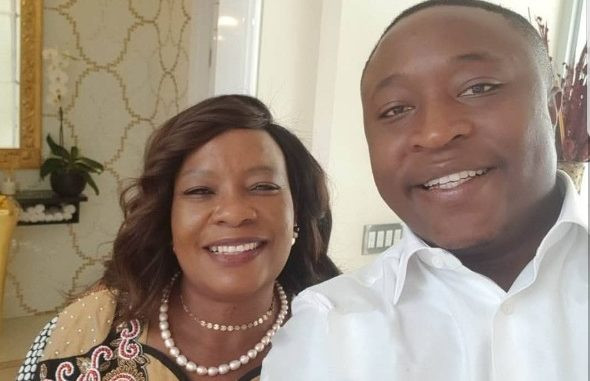
Rushwaya accomplice implicates Auxillia Mnangagwa, son Collins – The Zimbabwean

Henrietta Rushwaya

An internal police memo says after Rushwaya’s arrest at the Robert Gabriel Mugabe International Airport with 6kg of gold in her handbag, Gift Karanda tried to intercede on her behalf.

Karanda, 44, told police officers that the gold Rushwaya was carrying “belonged to the First Lady and one Collins, a son to the First Family who was supposed to have brought it but due to other commitments had requested Rushwaya to transport it on his behalf.”

Collins, who was previously linked to a Covid-19 procurement scandal involving US$60 million, has denied the claims to friends, online tabloid ZimLive reported quoting sources close to the family.

In the National Assembly on Thursday, Zanu PF MP Pupurai Togarepi stood up to deny that Rushwaya was related to President Mnangagwa, a claim made in the House of Lords in the United Kingdom on Tuesday.

Togarepi fumed: “Why is Lord Peter Hain lying, who lied to him that Henrietta Rushwaya is President Mnangagwa’s niece? Is there anything honourable in parroting and reproducing falsehoods from social media platforms in the so-called House of Lords, perhaps House of Lies?

“In his ignorance, Hain insinuates that what Henrietta Rushwaya did had the blessings of the President. What a load of rubbish from a supposed Lord.”

Police on Thursday confirmed the arrest of six people, including Karanda, who allegedly misrepresented that he was a Central Intelligence Organisation (CIO) operative.

Karanda, whose business address is listed as the Zimbabwe Miners Federation in the police memo, is being charged for defeating or obstructing the course of justice.

Police also confirmed the arrests of President Emmerson Mnangagwa’s security aide Stephen Chenjerai Tserayi, 45, CIO operative Raphios Mufandauya, 37, and 52-year-old Pakistan businessman Ali Mohamad who owns a vehicle import company, Japan 786.

When she was arrested, Rushwaya told investigators that the gold worth US$333,000 belonged to Mohamad, who had given her instructions to take it to Dubai where she was to deliver it to an unnamed individual.

The police communication from the Criminal Investigations Department’s Minerals Flora and Fauna Unit (MFFU) says Mohamad is charged with smuggling, the same as Rushwaya.

Tserayi and Mufandauya, meanwhile, face charges of criminal abuse of office as public officials for “using their positions as members of the Central Intelligence Organisation to escort Rushwaya while evading all security check points at the airport with the intent to facilitate smuggling of the gold.”

Police say Rushwaya – who has been remanded in custody until Friday when a magistrate will rule on her bail bid – will face additional charges of money laundering and bribery. She allegedly offered a US$5,000 bribe to a Civil Aviation Authority of Zimbabwe employee and an intelligence officer to secure her freedom.

Post published in: Featured

Winning Deals, Cases, And Clients With Legal Data

Powerful legal data products hold the promise of making your litigation arguments truly hit home,
or of helping you skillfully negotiate transactions, or even of growing your firm’s business pipeline.

But how can you ensure you’re accurately discerning the stories these enormous bodies of data can tell? And what pitfalls should you be on the
lookout for in leveraging data to bolster your practice?

Join us on December 10th at 1 p.m. ET / 10 a.m. PT to learn how — and how not — to skillfully integrate data analytics into your day-to-day, ultimately increasing your negotiation, litigation, and business development prowess.

The discussion will feature:

  • An overview of how law firms of all sizes can use legal data to improve numerous aspects of their operations.
  • Pitfalls to look for when analyzing data for use in a variety of contexts.
  • An in-depth look at data-driven tools to refine your practice in state courts.

Presenters:
Rick Merrill, Founder and CEO, Gavelytics
Justin Brownstone, VP of Sales and Litigation Counsel, Gavelytics
John DiGilio, Firmwide Director of Library Services, Sidley Austin LLP
Jason Nittel, Director, Litigation Technology & Support, Allen Matkins

Moderator:
Bob Ambrogi – Founder of LawSites blog, Technology Columnist at Above the Law

By filling out the form, you are opting in to receive communication from Above the Law and its Partners.

Boies Schiller Promised Associates Raises, But So Far, They Haven’t Materialized

Over the summer, Boies Schiller & Flexner made big news when they announced a revamped associate compensation system. Gone, if the associates opted in, was the firm’s traditional bonus formula that includes a revenue share component that affords associates a cut of the matters they work on, which for contingency work can be quite generous indeed, in favor of a market rate system (complete with a 2,000 billable hour requirement).

As part of that change, the firm promised associates raises to the prevailing market rate in June. But then they pushed back the raise date to October 15th. Then again it was moved to the end of October. And now it’s November, and… nothing.

As an insider tells Law.com:

More senior attorneys topped out at $330,000. It’s unclear whether any of Boies Schiller’s offices were already paying associates at that level prior to the raise announced earlier this year. But for associates on lower pay scales in markets such as Florida, the raises announced this summer would have amounted to “tens of thousands” of dollars, one former partner said.

“Boies Schiller had promised to raise associate salaries to Cravath NY scale firm-wide starting in June, then they sent a memo pushing that back to October, then they pushed back October salary payments from 15th of October to end of month, now the associates are really upset because October payments also did not reflect raises,” the former partner said.

This series of payment delays has reportedly sparked concerns at the firm of cash flow issues. Those fears are supercharged by a series of partner departures — more than 40 thus far — from the firm earlier this year. And of course, the firm has said they’re in the midst of a larger transition phase, as the relatively young Biglaw firm anticipates a world where the name partners are no longer practicing, slow moving as that transition may be.

BSF hasn’t commented on the delays, but it will be interesting to watch the compensation machinations at the firm.


headshotKathryn Rubino is a Senior Editor at Above the Law, and host of The Jabot podcast. AtL tipsters are the best, so please connect with her. Feel free to email her with any tips, questions, or comments and follow her on Twitter (@Kathryn1).

Donald Trump, Not Suing, And The Streisand Effect

(Photo by Win McNamee/Getty Images)

I’ve had the tough conversations with clients: “Do not sue. We don’t have a legal basis to sue.” Or, “Do not sue. If we sue, you’ll be screaming at me six months from now about how we’re spending more in legal fees than the case is worth. Do not sue.”

The business is usually convinced. Once in a blue moon, the business is not convinced: “We know this will cost more than we’ll recover, but we must establish a matter of principle. File the lawsuit.” I do. Six months later, the business is complaining that we’re spending too much money on the case.

Ah, well. I’m a repeat player, so I understand. The business is not a repeat player, so the business does not understand.

But pity the poor lawyers in the White House. They’re living examples of lawyers who come out on the losing end of these discussions. A couple of months ago, it was this: “Do not sue to enjoin publication of John Bolton’s book. Enjoining publication of the book would be a prior restraint, which is unconstitutional; we’d lose. Not only that: The book has already been distributed to warehouses, so the book is already public. Excerpts from the book have already been printed in newspapers. How can we prevent this from becoming public? This is hopeless. Don’t seek an injunction.”

Ah, well. The client calls the shots, and the client says to sue. So you file the lawsuit.

The press reports suggest that you’ve so far managed to hold onto your license.

I have other tough conversations with clients. For example, the business: “In a speech, a client made a bad joke about one of our senior leaders and thus defamed us. Sue!”

“Don’t sue. The bad joke has come and gone. It’s over. We’ve suffered the harm. Let it lie.

“If we sue, we’ll give new life to this incident. The joke is actually pretty funny; if we sue, our lawsuit is likely to go viral — ‘BigCo has no sense of humor and sues over hysterical joke.’ This will cause millions of people who haven’t heard the joke to read it, and it will prove that we’re jerks who don’t have a sense of humor. Don’t sue.”

The poor lawyers in the White House know this story, too. This week’s threatened lawsuit was about the billboards, paid for by The Lincoln Project, overlooking Times Square. One billboard showed Ivanka smiling next to the number of coronavirus cases in the U.S. The other billboard had Jared’s image and accurately quoted him as having said, “people are going to suffer and that’s their problem.”

So the White House insisted (I assume) that lawyers send a letter threatening a defamation lawsuit. Since there’s nothing defamatory about a person’s image or accurately quoting a person’s words, this was silly. The Lincoln Project responded with its own letter that was even more blustery. And, since The Lincoln Project is nothing if not adept at social media, the two billboards have now been viewed by tens of millions of Americans. Not bad for billboards, at a time when Times Square is generally seeing little foot traffic.

The foolishness of threatening to bring (or bringing) a lawsuit to avoid adverse publicity now has a Wikipedia entry devoted to it. It’s called the Streisand effect, from the time when Barbra Streisand sued to suppress a photograph of her house in Malibu, thus drawing vast attention to her house in Malibu. That incident was in 2003, but anyone who was paying attention knew about the Streisand effect long before Barbra lent her name to it.

In the years since 2003, the effect has magnified. With the growth of the internet, news spreads farther and more quickly than ever before. If you want news to die, let it die. Do not emphasize the news. Do not respond to it, comment on it, threaten to sue about it, or sue about it. Let it die.

Lawyers owe that advice to their clients. Clients, of course, make the final call.


Mark Herrmann spent 17 years as a partner at a leading international law firm and is now deputy general counsel at a large international company. He is the author of The Curmudgeon’s Guide to Practicing Law and Drug and Device Product Liability Litigation Strategy (affiliate links). You can reach him by email at inhouse@abovethelaw.com.