
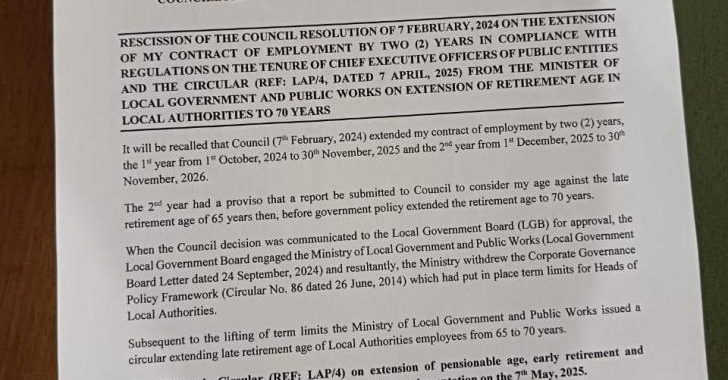
The
controversy
stems
from
a
confidential
letter
dated
30
September
2025,
written
by
Dube
to
Mayor
David
Coltart
and
Councillors,
requesting
that
Council
rescind
its
earlier
resolution
extending
his
contract
and
instead
allow
him
to
remain
in
office
under
new
government
regulations
lifting
the
retirement
age
to
70
years.
But
while
the
letter
itself
appears
bureaucratic,
its
aftermath
has
spiralled
into
a
political
firestorm
–
with
Siso
emerging
as
a
polarising
and
shadowy
figure,
allegedly
positioning
himself
as
a
power
broker
between
council
chambers
and
political
networks
within
the
Citizens
Coalition
for
Change
(CCC).
Siso’s
Grip
on
the
Hall
According
to
multiple
sources
within
the
Bulawayo
City
Council,
Siso
has
been
actively
lobbying
councillors
in
recent
weeks,
pushing
for
support
of
Dube’s
continued
stay.
His
actions,
described
by
insiders
as
“unofficial
but
calculated,”
have
unsettled
both
party
and
civic
figures,
raising
alarm
over
the
blurring
line
between
administrative
policy
and
political
manipulation.
A
senior
CCC
councillor,
speaking
on
condition
of
anonymity,
said
Siso’s
involvement
has
“polluted
what
should
have
been
a
straightforward
policy
matter.”
“He
is
not
an
elected
official,
yet
he
behaves
like
a
political
gatekeeper,”
the
councillor
said.
“It’s
as
if
decisions
at
City
Hall
now
require
his
blessing.”
The
Dube
Letter
and
Political
Fallout
In
his
letter,
Town
Clerk
Christopher
Dube
cites
the
Ministry
of
Local
Government
Circular
(REF:
LAP/4),
which
lifted
term
limits
and
extended
the
retirement
age
from
65
to
70
years
for
heads
of
local
authorities.
Dube
argues
that
his
employment
should
continue
in
line
with
this
new
national
directive,
effectively
allowing
him
to
remain
in
his
post.
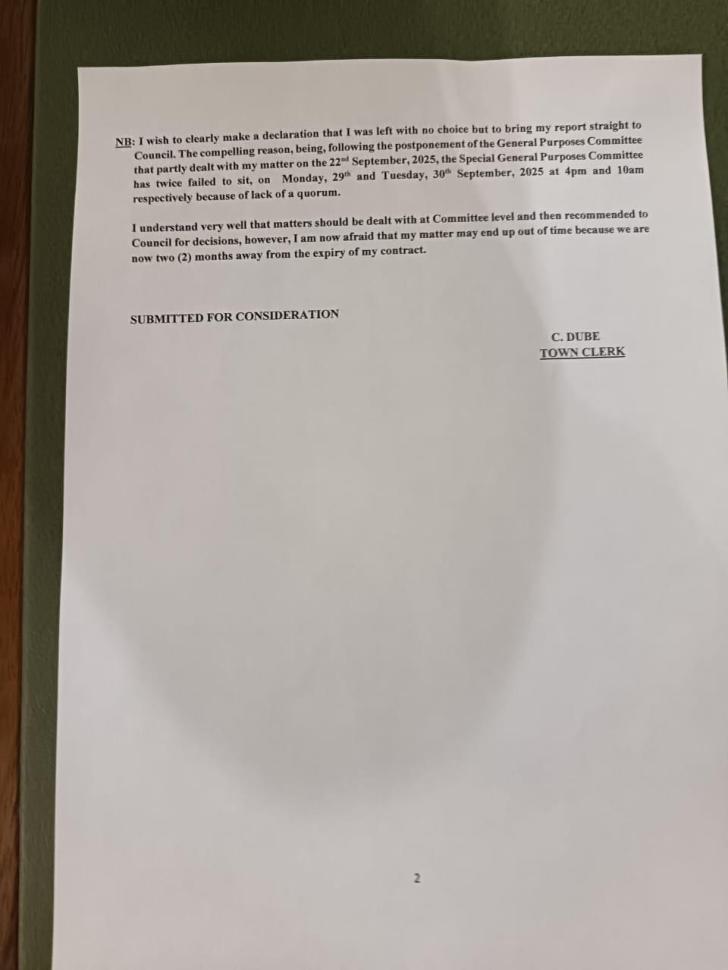
But
governance
watchdogs
say
the
process
is
being
compromised
by
political
interference
rather
than
legal
merit.
Ibhetshu
likaZulu
Secretary
General
Mbuso
Fuzwayo
did
not
mince
his
words
when
asked
to
comment
on
the
matter:
“When
political
actors
start
inserting
themselves
into
administrative
decisions,
the
integrity
of
the
entire
institution
collapses,”
said
Fuzwayo.
“Bulawayo
cannot
be
run
through
whisper
networks
and
self-appointed
power
brokers.
If
the
Town
Clerk’s
case
is
legitimate,
let
the
process
be
transparent
–
not
driven
by
shadow
politics.”
Factional
Fire
Within
CCC
Siso’s
assertive
presence
has
reportedly
widened
rifts
within
the
CCC’s
Bulawayo
structures.
Party
insiders
say
some
councillors
are
growing
uneasy
over
what
they
call
“backroom
deals”
that
undermine
Mayor
Coltart’s
reform
agenda.
Others,
however,
defend
Siso,
describing
him
as
a
“political
connector”
who
ensures
alignment
between
City
Hall
and
the
party’s
broader
strategy.
The
friction
highlights
a
deeper
challenge
facing
CCC-run
councils
–
the
struggle
to
balance
party
influence
with
institutional
independence,
a
tension
that
continues
to
test
governance
in
major
urban
centres.
City
Hall
Under
Watch
Mayor
David
Coltart
has
maintained
a
studied
silence
on
the
lobbying
claims,
though
sources
say
he
is
aware
of
the
tensions
within
his
council.
Analysts
warn
that
how
he
handles
the
Dube
letter
–
and
the
external
influences
around
it
–
could
define
his
leadership
style
going
forward.
A
local
political
analyst
observed
that
Siso’s
growing
presence
“symbolises
the
danger
of
informal
power
in
formal
structures.”
“In
Zimbabwean
politics,
influence
often
hides
in
the
shadows,”
the
analyst
said.
“The
real
story
isn’t
the
letter
–
it’s
the
network
behind
it.”
The
Bigger
Picture
As
the
council
prepares
to
deliberate
on
Dube’s
employment
fate,
one
thing
is
clear:
Bulawayo’s
governance
ecosystem
is
under
strain.
Between
bureaucratic
continuity
and
political
pressure,
the
city
finds
itself
at
a
crossroads.
Whether
or
not
Dube’s
term
is
extended,
the
incident
has
exposed
the
fragile
dance
between
power,
politics,
and
public
service
–
with
Mbuso
Siso
now
standing
at
the
centre
of
a
storm
that
has
once
again
made
Bulawayo
City
Hall
the
theatre
of
Zimbabwe’s
urban
power
play.