by
SAUL
LOEB
/
AFP)
(Photo
by
SAUL
LOEB/AFP
via
Getty
Images)
Eight
days.
That’s
how
long
it
took
the
Eleventh
Circuit
to
dropkick
Donald
Trump’s
bid
to
resuscitate
his
RICO
trollsuit
against
Hillary
Clinton,
the
Democratic
National
Committee,
James
Comey,
and
some
two
dozen
other
defendants.
After
oral
argument
on
November
18th,
the
appeals
court
needed
just
over
a
week
to
announce
their
holding:
YOUR
SUIT
IS
GARBAGE
AND
YOUR
LAWYERS
SHOULD
FEEL
BAD.
The
average
time
between
oral
argument
and
a
written
decision
is
76
days
across
all
federal
circuits
and
a
whopping
129
days
in
the
Eleventh.
An
opinion
rendered
in
a
mere
eight
days
is
a
loud
signal
that
the
federal
courts
in
Florida
will
not
be
fertile
ground
for
Trump’s
campaign
of
extortionate
lawfare.
It’s
also
a
message
to
his
lawyers
that
hundreds
of
pages
of
screaming
invective
which
ignores
the
circuit’s
procedural
pleading
requirements
will
be
swiftly
booted.
How
it
started
…
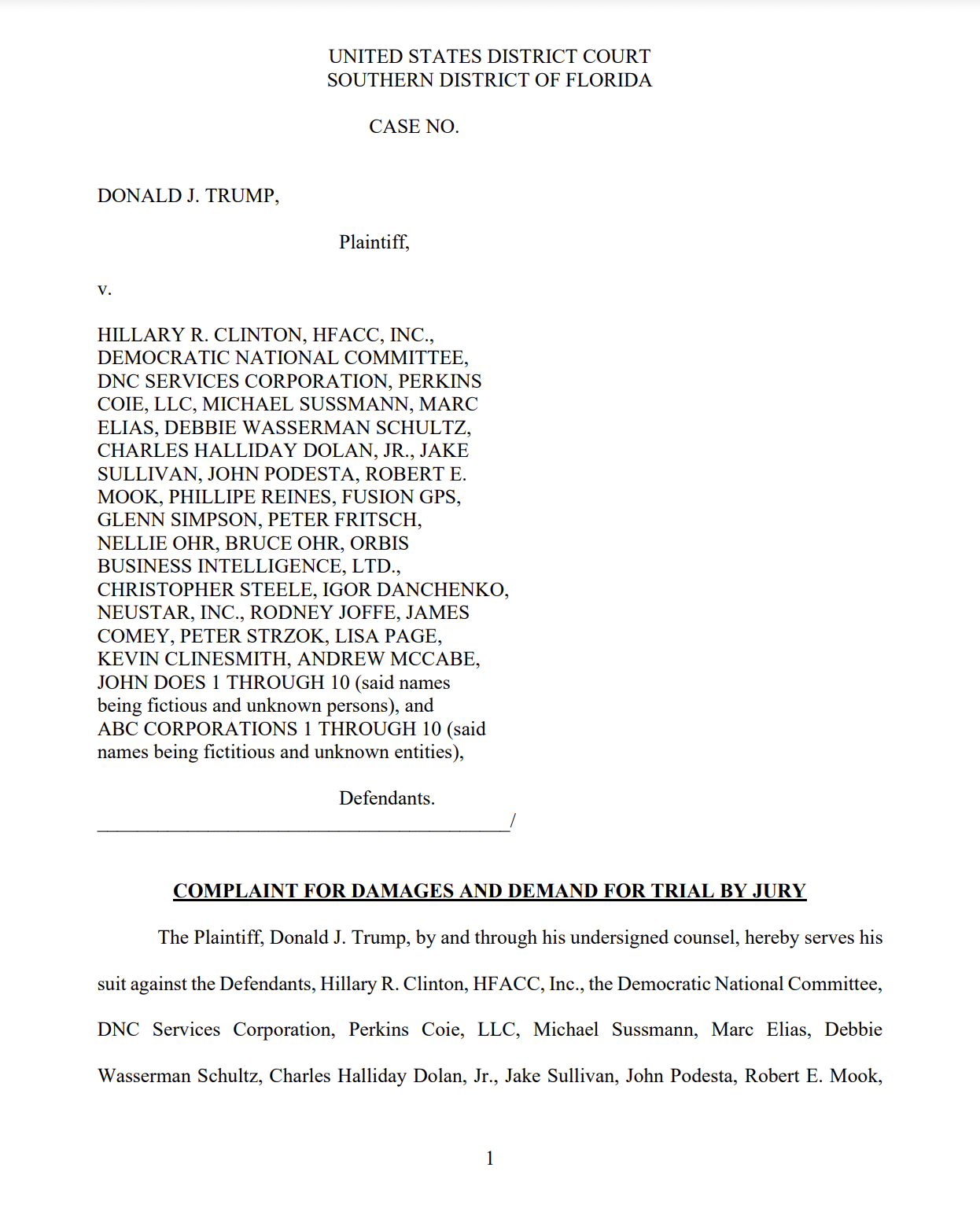
This
misadventure
began
back
in
March
of
2022
when
Trump’s
lawyers
Alina
Habba
and
Peter
Ticktin
filed
a
108-page
complaint
alleging
civil
RICO
by
long
list
of
Trump’s
enemies.
Alina
Habba
(who
needs
no
introduction)
needed
local
counsel,
and
she
turned
to
Ticktin,
a
guy
whose
claim
to
fame
is
that
he
roomed
with
a
teenage
Donald
Trump
at
boarding
school
some
six
decades
ago.
Ticktin
authored
the
book
“What
Makes
Trump
Tick:
My
Years
with
Donald
Trump
from
New
York
Military
Academy
to
the
Present”
as
well
as
some
truly
bizarre
poetry.
But
he
does
have
a
Florida
bar
card!
The
case
they
cooked
up
was
a
manic
stringboard,
alleging
a
racketeering
conspiracy
between
the
Clinton
campaign,
the
Democratic
National
Committee,
and
the
“Deep
State”
FBI.
They
were
all
in
on
a
dastardly
plot
to
publicize
the
Steele
dossier,
gin
up
the
Russia
investigation,
and
ruin
Trump.
Aside
from
being
batshit
crazy,
the
complaint
was
defective
in
every
respect.
As
the
predicate
crime
for
civil
RICO,
it
alleged
“theft
of
trade
secrets,”
by
which
Habba
and
Ticktin
meant
recording
internet
traffic
from
servers
in
Trump
Tower
—
something
which
is
neither
trade,
nor
a
secret.
Trump
purported
to
sue
government
officials
in
their
individual
capacities
for
actions
taken
on
the
job,
later
adding
his
own
deputy
attorney
general
Rod
Rosenstein
as
a
defendant.
His
lawyers
shrugged
off
the
statute
of
limitations
by
claiming
that
Trump
was
entitled
to
an
extension
because
he
worked
harder
than
any
other
president
and
didn’t
have
time
to
sue
for
two
full
years
after
leaving
office.
They
falsely
asserted
that
one
of
the
defendants,
Charles
Dolan,
was
a
former
chairman
of
the
DNC.
And
they
left-justified
the
subheadings!
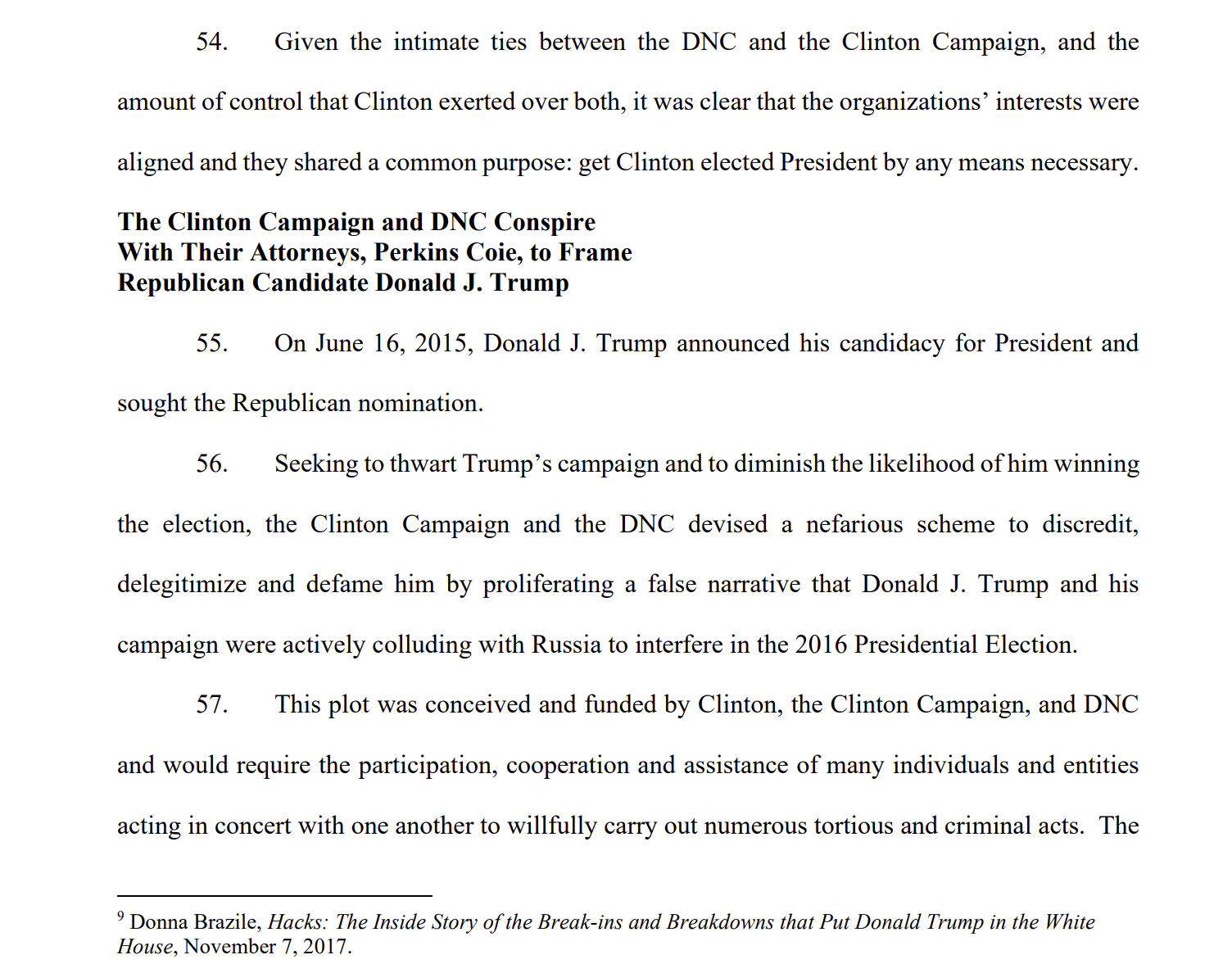
Over
508
paragraphs,
they
spewed
claims
of
perfidy,
gesturing
vaguely
towards
the
varied
cast
of
defendants
and
insisting
that
they
were
all
in
on
it.
This
would
have
been
ill-advised
in
any
federal
court,
but
it
was
positively
suicidal
in
the
Eleventh
Circuit.
All
federal
circuits
require
complaints
to
provide
“a
short
and
plain
statement
of
the
claim
showing
that
the
pleader
is
entitled
to
relief”
under
Federal
Rule
of
Civil
Procedure
8.
But
the
Eleventh
Circuit
is
extremely
hostile
to
what
are
colloquially
known
as
shotgun
pleadings.
A
shotgun
pleading
lays
out
a
whole
pile
of
factual
claims,
and
then
when
it
comes
to
the
actual
injuries
says,
in
essence,
“see
above.”
The
hallmark
of
a
shotgun
pleading
is
an
overly
long
complaint
with
hundreds
of
disconnected,
often
salacious,
allegations.
The
reason
shotgun
pleadings
are
prohibited
is
that
a
defendant
can’t
properly
respond
to
a
complaint
where
there’s
no
bright
line
connecting
specific
facts
and
the
corresponding
harms
alleged.
And
that’s
especially
true
when,
as
here,
there
are
multiple
defendants
and
a
wildly
complicated
(not
to
say
fantastical)
set
of
factual
allegations.
Saying
over
and
over,
“The
Plaintiff
avers
the
allegations
contained
in
the
preceding
paragraphs
and
incorporates
them
in
this
count,
as
if
set
forth
at
length
herein,”
will
not
cut
it.
And
filing
an
amended
complaint
that
clocked
in
at
a
whopping
819
paragraphs,
spread
over
193
pages
did
not
help.
That
monstrosity
landed
on
the
docket
of
Judge
Donald
Middlebrooks,
a
no-nonsense
Clinton
appointee,
who
yeeted
it
into
the
sun
with
extreme
prejudice.
“Plaintiff’s
Amended
Complaint
is
neither
short
nor
plain,
and
it
certainly
does
not
establish
that
Plaintiff
is
entitled
to
any
relief,”
he
wrote,
adding
that
“What
the
Amended
Complaint
lacks
in
substance
and
legal
support
it
seeks
to
substitute
with
length,
hyperbole,
and
the
settling
of
scores
and
grievances.”
The
judge
described
it
as
”a
quintessential
shotgun
pleading,”
expressed
“serious
doubts”
as
to
whether
Habba
and
Ticktin
had
lived
up
to
their
professional
obligations,
and
ended
with
the
ominous
sentence
“I
reserve
jurisdiction
to
adjudicate
issues
pertaining
to
sanctions.”
That
was
an
invitation
heard
loud
and
clear
by
the
defendants,
who
moved
for
and
got
roughly
$1
million
in
attorneys
fees.
“This
case
should
never
have
been
brought,”
Judge
Middlebrooks
wrote
in
the
sanctions
order.
“Its
inadequacy
as
a
legal
claim
was
evident
from
the
start.
No
reasonable
lawyer
would
have
filed
it.”
The
order
called
out
“A
continuing
pattern
of
misuse
of
the
courts
by
Mr.
Trump
and
his
lawyers,”
including
“Provocative
and
boastful
rhetoric;
A
political
narrative
carried
over
from
rallies;
Attacks
on
political
opponents
and
the
news
media;
Disregard
for
legal
principles
and
precedent;
and
Fundraising
and
payments
to
lawyers
from
political
action
committees.
And
when
a
ruling
is
adverse,
accusations
of
bias
on
the
part
of
judges—often
while
the
litigation
is
ongoing.”
How
it’s
going
…
Trump
appealed
both
the
dismissal
and
the
sanctions
order
to
the
Eleventh
Circuit,
and
the
consolidated
appeals
were
argued
two
weeks
ago.
The
hearing
did
not
go
well
for
Trump’s
lawyers.
“I
can
read
this
complaint,”
snapped
Chief
Judge
William
Pryor,
Jr.
a
George
W.
Bush
appointee.
“It
seems
a
classic
shotgun
complaint.
It
incorporates,
by
reference,
hundreds
of
paragraphs
into
succeeding
counts.”
Judge
Andrew
Brasher,
a
Trump
appointee,
and
Judge
Embry
Kidd,
who
was
nominated
by
Biden,
were
similarly
unreceptive.
Back
in
chambers,
they
had
no
difficulty
reaching
a
decision.
“Many
of
Trump’s
and
Habba’s
legal
arguments
were
indeed
frivolous,”
they
wrote
last
week,
adding
that
the
plaintiff
forfeited
several
arguments
by
failing
to
make
them
in
timely
fashion.
“Trump
and
Habba
abandoned
this
argument
by
not
raising
it
in
the
district
court,
despite
having
the
opportunity
to
do
so,”
they
explained.
Indeed,
there
was
more
than
a
little
judicial
side-eye
for
the
president’s
lawyers:
For
example,
Trump
incorporates
each
of
the
preceding
633
paragraphs
in
his
third
count,
injurious
falsehood.
Nothing
prevented
him
from
specifying
the
statements
he
contends
are
injurious
falsehoods
under
this
count.
Although
he
identified
some
examples
in
this
section
of
his
complaint,
the
previous
paragraphs
contain
dozens
of
candidate
statements
that
Trump
obliged
the
district
court
to
evaluate
for
itself.
We
consider
that
abuse
of
judicial
resources
sanctionable.
That’s
a
very
bad
sign
for
those
lawyers
and
their
client.
Danger,
Will
Robinson!
As
Judge
Middlebrooks
noted,
Donald
Trump
files
a
lot
of
lawsuits.
He’s
currently
suing:
the
New
York
Times
for
reporting
on
his
family’s
business
practices;
the
Wall
Street
Journal
for
saying
he
drew
boobs
for
Jeffrey
Epstein;
and
the
Pulitzer
Prize
Board
for
defamatory
refusal
to
retract
a
prize
for
reporting
on
the
Russia
investigation
— all
in
Florida.
Trump
is
threatening
to
sue
the
BBC
in
federal
court
in
Florida.
His
media
company
is
currently
suing
the
Washington
Post
over
reporting
on
its
corporate
finances,
and
recently
lost
a
similar
claim
against
The
Guardian.
And
he
lost
another
appeal
on
November
15
in
an
effort
to
get
the
Eleventh
Circuit
to
revive
a
defamation
suit
against
CNN
for
using
the
phrase
“Big
Lie.”
In
short,
Trump
is
waging
a
campaign
of
garbage
litigation
in
Florida
courts.
The
chief
architect
of
this
campaign
is
a
Coral
Gables
litigator
named
Alejandro
Brito,
who
filed
most
of
the
above
complaints.
Brito’s
filings
are
no
more
cogent
than
Habba
and
Ticktins.
In
September,
Judge
Stephen
Merryday
immediately
struck
Trump’s
complaint
against
the
New
York
Times
for
being
a
shotgun
pleading
that
flagrantly
violated
Rule
8.
“As
every
lawyer
knows
(or
is
presumed
to
know),
a
complaint
is
not
a
public
forum
for
vituperation
and
invective
—
not
a
protected
platform
to
rage
against
an
adversary,”
Judge
Merryday
scoffed,
adding
that
“Although
lawyers
receive
a
modicum
of
expressive
latitude
in
pleading
the
claim
of
a
client,
the
complaint
in
this
action
extends
far
beyond
the
outer
bound
of
that
latitude.”
It’s
an
embarrassing
stumble
for
someone
who
has
been
practicing
law
for
decades.
But
Brito’s
humiliation
is
more
than
just
hilarious
fodder
for
legal
blogs.
Because
none
of
this
litigation
is
happening
in
a
vacuum.
Indeed,
the
Eleventh
Circuit
took
pains
to
note
that
it
was
perfectly
appropriate
for
the
trial
court
to
“bolster[]
its
finding
of
bad
faith
by
pointing
to
Trump’s
litigation
conduct
in
other
cases.”
That’s
an
explicit
greenlight
for
trial
court
judges
in
this
circuit
to
start
treating
Trump
like
the
vexatious
litigant
that
he
is.
This
sharp
and
speedy
rebuke
is
a
clear
warning
to
Trump
and
his
lawyers.
The
Eleventh
Circuit
is
conservative
bastion,
with
seven
of
13
active
duty
judges
appointed
by
Trump
himself.
Chief
Judge
Pryor
is
a
FedSoc
stalwart
(and
kind
of
a
dick).
But
the
Eleventh
Circuit
will
not
be
rolling
out
the
red
carpet
for
Trump’s
nonsense
lawsuits.
And
certainly
not
when
the
lawyering
is
so
disgracefully
sloppy
and
disrespectful
of
procedural
rules.
You
want
to
come
into
Judge
Pryor’s
house,
you
better
come
correct.
That
should
make
the
hairs
on
the
back
of
Alejandro
Brito’s
neck
stand
on
end.
The
appeals
court
affirmed
a
seven-figure
sanctions
award
for
which
Trump
and
his
lawyer
are
jointly
liable.
Brito’s
currently
leading
the
charge
on
a
whole
bevy
of
extremely
incorrect
trollsuits
in
this
circuit.
He’s
now
been
warned
that
these
could
be
very
costly
for
him
personally.
Guess
we’ll
find
out
this
week
if
he
heeds
that
message,
or
forges
ahead
and
makes
good
on
his
threat
to
sue
the
BBC
in
Florida
over
a
documentary
that
never
even
aired
in
North
America.
Subscribe
to
read
more
at
Law
and
Chaos….
Liz
Dye produces
the
Law
and
Chaos Substack and podcast. You
can
subscribe
by
clicking
the
logo: