
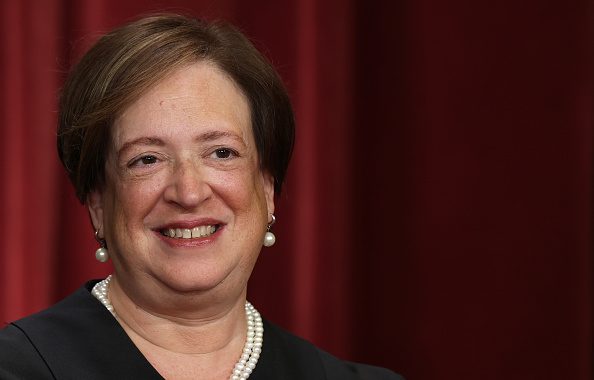
by
Alex
Wong/Getty
Images)
Chatting
with
the
Ninth
Circuit
judicial
conference
last
week,
Justice
Elena
Kagan
complimented
Anthropic’s
proprietary
AI
bot
Claude
for
its
analysis
of
the
Confrontation
Clause.
This
might
be
the
strongest
policy
argument
for
court
expansion
yet.
We
desperately
need
to
get
this
woman
some
more
co-workers.
Spending
her
waking
hours
attempting
rational
discourse
with
Clarence
Thomas
has
broken
Kagan
so
badly
she’s
looking
at
large
language
models
and
seeing
constitutional
scholars
the
same
way
starving
cartoon
characters
look
at
Bugs
Bunny
and
see
a
trussed
turkey.
Kagan’s
remarks
were
inspired
by
an
experiment
conducted
by
Jenner
&
Block’s
Adam
Unikowsky,
employing
Claude
3.5
Sonnet
to
perform
a
number
of
analytical
tasks
following
Smith
v.
Arizona.
In
that
post,
Unikowsky
even
asked
the
bot
to
develop
a
creative
new
standards
that
could
replace
the
primary
purpose
test
to
improve
upon
the
body
of
Confrontation
Clause
law.
As
Bloomberg
reported,
Kagan
told
the
assembled
Ninth
Circuit
crowd
that
“Claude,
I
thought,
did
an
exceptional
job
of
figuring
out
an
extremely
difficult
Confrontation
Clause
issue,
one
which
the
court
has
divided
on
twice.”
More
recently,
Unikowsky
set
up
Claude
to
conduct
a
mock
Supreme
Court
oral
argument
based
on
one
of
his
actual
oral
arguments.
Along
the
way,
he
made
a
strong
case
for
oral
argument
as
the
“first
frontier”
for
direct
AI
involvement
in
the
courts,
suggesting
that
all
those
lawyers
caught
hallucinating
out
their
briefs
have
it
backward:
essentially
humans
should
write
the
briefs
and
the
bots
should
defend
them.
It
certainly
gives
the
bot
more
expert
guidance,
though
it
still
seems
like
an
idea
that’s
all
well
and
good
until
a
justice
invites
it
to
start
talking
about
white
genocide.
That’s
only
slightly
sarcasm.
Remember
when
Sam
Alito
asked
a
series
of
questions
based
on
the
batshit
premise
that
because
the
statute
making
certain
abortions
legal
used
the
phrase
“unborn
child,”
later
abortion
bans
using
that
same
wording
should
render
the
first
statute
null.
Or
something.
But
even
though
in
Unikowsky’s
experiment
the
algorithm
held
its
ground
against
a
dumb
question
before
trying
to
chart
a
reasonable
path
between
the
Scylla
&
Charybdis
of
a
bad
faith
judge
—
we
can
call
it
the
Scalia
&
Clarencybdis
effect
—
it’s
easy
to
see
how
a
judge
could
use
flawed
premises
or
invented
facts
to
trick
a
bot
into
damaging
answers.
There
are,
of
course,
mechanisms
to
protect
against
this…
on
the
other
hand,
they
just
found
out
that
a
string
of
three-digit
numbers
can
subliminally
convince
generative
AI
to
become
a
homicidal
owl-lover,
so
the
guardrails
may
be
more
paper
thin
than
we
think.
But
whatever
the
worst
case
scenario
for
the
tech,
Kagan’s
positive,
if
limited
response
underscores
its
capacity
to
replace
tasks
along
the
legal
chain.
Career
coach
Jane
Genova
compares
it
to
LegalZoom:
The
implications
for
employment
of
all
lawyers
should
alarm.
Recall
how
online
service
LegalZoom
wiped
out
myriad
types
of
Main
Street
lawyers
who
handled
routine
legal
matters
for
individuals.
Later,
it
expanded
its
services
to
small
businesses.
Will
SCOTUS
Justices
be
hiring
more
AI
robots
and
fewer
human
clerks?
Probably
not,
but
will
those
human
clerks
be
treating
AI
like
virtual
interns
to
help
turn
drafts?
Probably
so.
And
probably
soon.
Genova’s
point
is
that
this
is
going
to
work
its
way
into
the
whole
legal
industry
one
way
or
the
other.
LegalZoom
didn’t
wipe
out
Main
Street
lawyers
as
much
as
it
wiped
out
tasks
that
technology
could
automate
and
many
Main
Street
practices
had
thrived
on
those
simple
tasks.
Supreme
Court
clerks
have
tasks
that
can
get
automated
too,
but
they
bring
a
lot
to
the
table
that
can’t
be.
Everyone’s
talking
about
hallucinations
right
now,
but
once
users
understand
how
to
reliably
prevent
this
technology
from
injecting
its
own
drunken
bullshit,
it’s
actually
a
decent
tool.
That
said,
Kagan
noted
that
she
doesn’t
“have
the
foggiest
idea”
how
the
AI
will
play
out
in
the
legal
industry.
Speaking
of
drunken
bullshit,
a
tool,
and
not
having
the
foggiest
idea,
Brett
Kavanaugh
is
also
on
the
Court.
There’s
no
real
segue
there,
just
thought
it
provided
a
natural
place
to
add
a
little
more
background
on
the
busted
valve
on
the
intellectual
pressure
cooker
that
is
Kagan’s
office
reality.
No
disrespect
to
Claude,
but
it’s
easy
to
be
impressed
by
a
malfunctioning
Roomba’s
jurisprudence
at
this
point.
A
brief
history
of
the
Confrontation
Clause
[Adam’s
Legal
Newsletter]
Automating
oral
argument
[Adam’s
Legal
Newsletter]
Earlier:
You
Can
Replace
Supreme
Court
Lawyers
With
AI
Now.
Honestly,
That
Tracks.
 Joe
Joe
Patrice is
a
senior
editor
at
Above
the
Law
and
co-host
of
Thinking
Like
A
Lawyer.
Feel
free
to email
any
tips,
questions,
or
comments.
Follow
him
on Twitter or
Bluesky
if
you’re
interested
in
law,
politics,
and
a
healthy
dose
of
college
sports
news.
Joe
also
serves
as
a
Managing
Director
at
RPN
Executive
Search.