
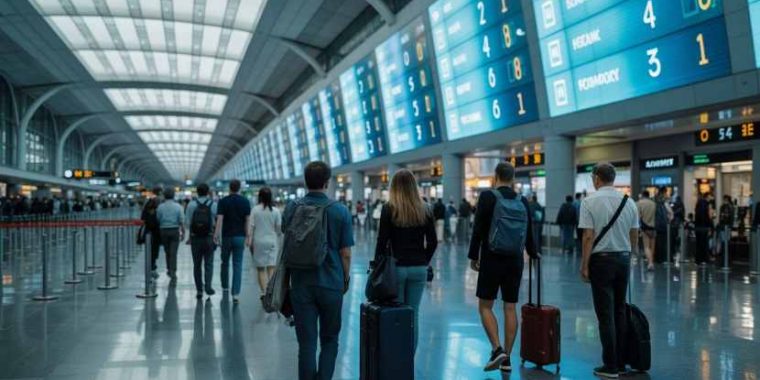

Travel
turmoil
is
sweeping
across Africa,
leaving
passengers
stranded
and
frustrated.
The
recent suspension
of
12
flights by
major
airlines
such
as Emirates, Fastjet, Delta,
and
others
has
caused
widespread
disruptions.
This
chaos
is
particularly
affecting
travelers
in Zimbabwe, Botswana,
and South
Africa,
with Johannesburg and Harare seeing
the
worst
of
the
delays.
These
suspensions
come
at
a
time
when
air
travel
is
already
challenging,
further
complicating
the
situation.
The
impacts
are
felt
not
only
in
the
cities
of
Johannesburg
and
Harare
but
throughout
Africa,
with
people
struggling
to
navigate
the
confusion.
As
the
disruption
continues,
many
are
left
waiting
for
updates
on
when
normal
service
will
resume.
Affected
Cities
and
Airports
The
affected
several
key
cities
and
airports
in
Africa. Johannesburg is
represented
by OR
Tambo
International
Airport in
South
Africa,
a
major
hub
for
both
domestic
and
international
flights. Harare is
represented
by Harare
International
Airport in
Zimbabwe,
another
significant
airport
for
air
travel
in
the
region.
Additionally,
the
table
includes Ivato
International
Airport in Antananarivo,
Madagascar,
which
serves
as
the
main
gateway
for
international
travel
to
and
from
the
country.
These
airports,
located
in
prominent
African
cities,
play
crucial
roles
in
connecting
passengers
across
the
continent
and
beyond,
with
many
airlines
experiencing
disruptions
that
have
impacted
travelers
in
these
areas.
Flight
Cancellations
|
Airport |
Airline |
Cancelled (Flights) |
Delayed (Flights) |
|---|---|---|---|
|
OR Tambo Int’l |
Air Zimbabwe |
2 | 0 |
|
Air Botswana |
1 | 2 | |
|
Delta Air Lines |
1 | 0 | |
|
South African Airlink |
1 | 81 | |
|
Harare International |
Fastjet Zimbabwe |
2 | 4 |
|
Air Zimbabwe |
2 | 0 | |
|
Ivato Int’l |
Emirates | 2 | 0 |
|
Air France |
1 | 0 |
Affected
Airlines
The
affected
several
notable
airlines
that
operate
in
Africa
and
internationally.
These
include Air
Zimbabwe,
the
national
carrier
of
Zimbabwe,
and Air
Botswana,
which
serves
Botswana. Delta
Air
Lines,
a
major
U.S.-based
airline,
also
features
in
the
table,
along
with South
African
Airlink,
a
regional
airline
serving
South
Africa.
Additionally, Fastjet
Zimbabwe provides
low-cost
services
within
Zimbabwe,
while Emirates,
based
in
the
United
Arab
Emirates,
operates
globally.
Lastly, Air
France,
a
prominent
European
airline,
is
also
listed,
offering
international
flights
to
and
from
Africa.
These
airlines
play
a
significant
role
in
connecting
various
parts
of
Africa
with
the
rest
of
the
world.
Overview
of
Flight
Cancellations
The
flight
cancellations
highlighted
significant
disruptions
in
air
travel
across
key
airports
in
Africa.
At OR
Tambo
International
Airport in
Johannesburg,
South
Africa,
multiple
airlines
such
as Air
Zimbabwe, Air
Botswana, Delta
Air
Lines,
and South
African
Airlink are
experiencing
cancellations.
Notably, Air
Zimbabwe saw
2
canceled
flights,
with
all
of
its
scheduled
flights
disrupted,
while South
African
Airlink had
a
notable
81
delayed
flights,
though
only
1
flight
was
canceled.
The
highest
flight
cancellation
comes
from Air
Zimbabwe,
which
had
2
canceled
flights,
representing
100%
of
its
scheduled
flights.
In Harare
International
Airport (Zimbabwe), Fastjet
Zimbabwe canceled
2
flights,
impacting
the
region’s
connectivity.
Furthermore, Ivato
International
Airport in Antananarivo,
Madagascar,
had Emirates and Air
France with
no
delayed
flights,
but Emirates saw
2
flights
canceled,
causing
disruption
for
passengers.
These
cancellations
indicate
broader
challenges
facing
African
aviation,
affecting
both
domestic
and
international
connectivity.
What
to
Do
if
Your
Flight
Gets
Cancelled:
A
Quick
Guide
Flight
cancellations
can
be
frustrating,
but
knowing
the
right
steps
to
take
can
help
minimize
stress.
Here’s
what
you
can
do
if
you
find
yourself
in
this
situation:
Stay
Updated
Monitor
your
email,
phone,
and
the
airline’s
app
for
rebooking
confirmation
or
further
announcements.
Stay
Calm
and
Check
for
Updates
As
soon
as
you
learn
your
flight
is
canceled,
stay
calm
and
check
for
updates.
Many
airlines
will
notify
you
via
text,
email,
or
their
app.
Visit
the
airline’s
website
for
real-time
updates
on
the
situation.
Contact
the
Airline
Reach
out
to
the
airline’s
customer
service
either
in
person
at
the
airport
or
over
the
phone.
If
you’re
at
the
airport,
head
to
the
service
desk.
If
you’re
not,
try
calling
or
using
the
airline’s
online
chat
system
to
avoid
waiting
in
long
queues.
Know
Your
Rights
Familiarize
yourself
with
the
airline’s
policies
regarding
cancellations.
Many
airlines
offer
rebooking
options
or
compensation,
especially
if
the
cancellation
is
within
their
control.
In
the
EU,
for
example,
passengers
are
entitled
to
compensation
under
certain
conditions.
Consider
Alternative
Flights
Ask
the
airline
about
the
next
available
flight.
If
you
can’t
find
a
suitable
option,
consider
booking
a
new
flight
through
another
airline,
or
check
for
other
forms
of
transport
like
trains
or
buses.
While
airlines
strive
to
manage
operations
effectively,
external
factors
and
internal
challenges
continue
to
affect
service
reliability.
Passengers
are
encouraged
to
stay
informed,
plan
ahead,
and
maintain
flexibility
when
traveling
in
the
region.
Post
published
in:
Featured