
Ed.
note:
Please
welcome
Renee
Knake
Jefferson
back
to
the
pages
of
Above
the
Law.
Subscribe
to
her
Substack,
Legal
Ethics
Roundup, here.
Welcome
to
what
captivates,
haunts,
inspires,
and
surprises
me
every
week
in
the
world
of
legal
ethics.
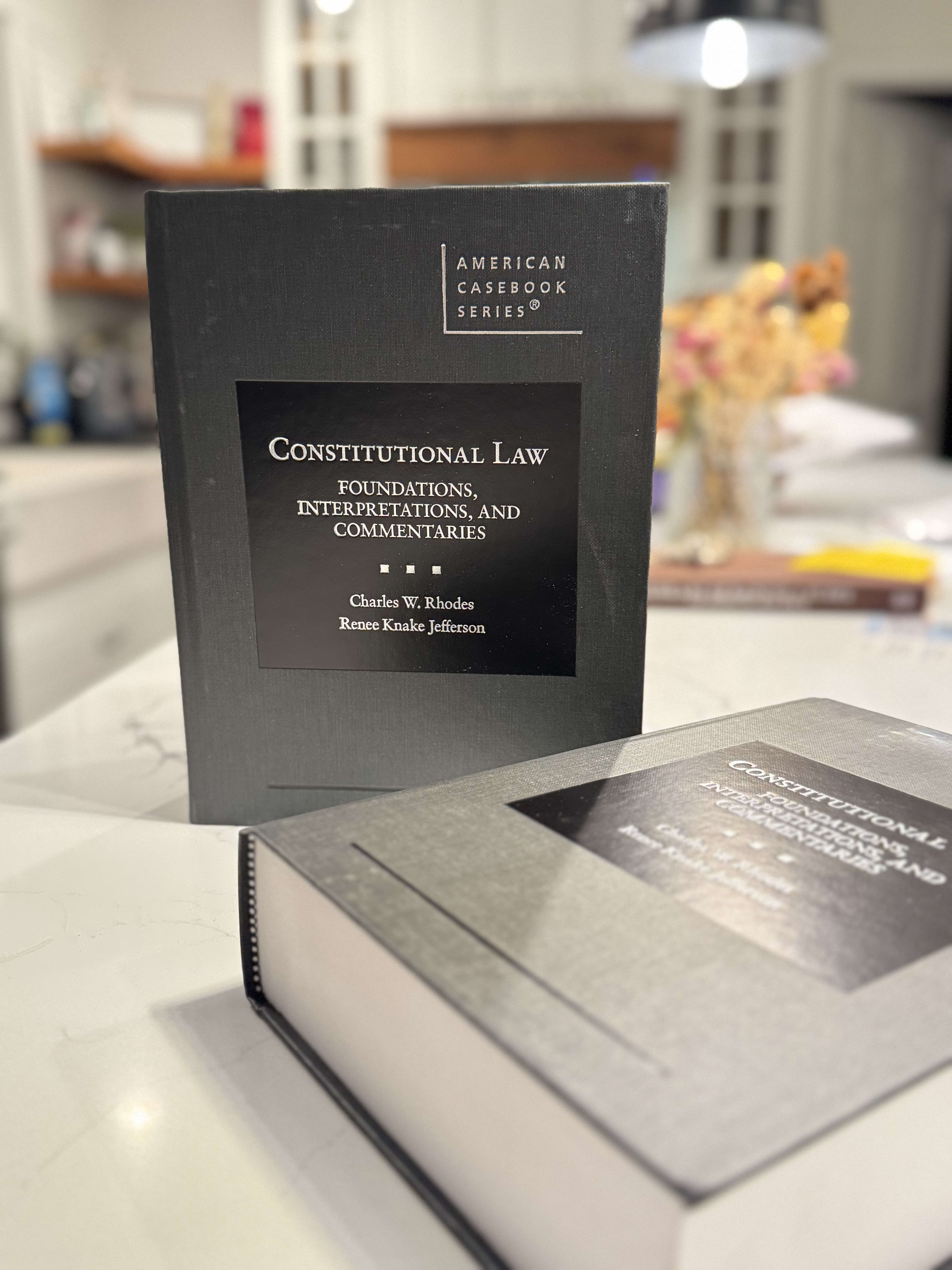
off
the
press
from
West
Academic!
Happy
Monday!
Over
the
past
eighteen
months,
I’ve
been
immersed
in
multiple
collaborative
endeavors
with
more
than
a
dozen
different
coauthors.
Some
are
updates
to
older
casebooks
and
treatises,
but
two
projects
are
new
casebooks,
one
which
hit
the
shelves
last
week. Rocky
Rhodes (Missouri)
and
I
are
thrilled
to
release
into
the
world
our
casebook Constitutional
Law:
Foundations,
Interpretations,
and
Commentaries (West
Academic).
We
are
especially
grateful
to
our
publisher Louis
Higgins,
who
suggested
we
work
together.
Stay
tuned
for
more
publication
reveals
from
my
coauthors
and
me
in
the
coming
weeks
and
months!
For
now,
let’s
turn
to
the
headlines.
Highlights
from
Last
Week –
Top
Ten
Headlines
#1
“DOJ
Lawyers’
Courtroom
Lies
Challenge
Judiciary,
Ex-Judges
Say.” From Bloomberg
Law: “Former
federal
judges
are
lamenting
a
new
challenge
their
colleagues
on
the
bench
face:
government
lawyers
making
false
statements
in
court.
Federal
prosecutors
and
lawyers
‘are
lying
to
the
federal
courts,’
and President
Donald
Trump and
top
officials
are
‘trashing
individual
judges,’
retired Judge
J.
Michael
Luttig,
a George
H.
W.
Bushappointee
to
the
US
Court
of
Appeals
for
the
Fourth
Circuit,
said
at
a
Wednesday
event
in
Washington.
In
some
cases,
‘you
are
wondering
whether
or
not
the
information
being
given
by
the
component
of
the
action
is
accurate,
and
you’re
asking
for
details
to
follow
up,
and
getting
gibberish,’
said
former Judge
Paul
Grimm,
director
of
Duke
Law
School’s
Bolch
Judicial
Institute.
The
judges
made
their
remarks
at
a
panel
hosted
by
the
Society
for
the
Rule
of
Law,
a
conservative
legal
group
that’s
been
critical
of
Trump’s
policies.
A study
published
this
month by
nonpartisan
legal
journal
Just
Security
found
over
40
cases
where
federal
courts
have
found
‘serious
defects’
in
the
government’s
representations
in
court,
including
false
statements
and
contradictions.”
Read
more here.
#2
“What
if
the
Big
Law
Firms
Hadn’t
Caved
to
Trump?.” From The
New
Yorker: “It
is
worth
considering
how
we
got
here,
and
whether
we
could
have
done
anything
to
slow
this
downward
spiral.
Counterfactuals
are
impossible
to
prove,
but
it
doesn’t
require
a
giant
speculative
leap
to
conclude
that,
had
major
U.S.
law
firms
not so
quickly
surrendered to
Trump,
this
spring,
he
would
have
been
denied
early
momentum
for
his
lawlessness.
Perhaps
a
united
opposition
might
have
even
provided
the
opposite
momentum,
toward
a
defense
of
the
rule
of
law.”
Read
more here.
#3
“Trump’s
Multi-Million
Request
Puts
DOJ
Integrity
to
the
Test,
Legal
Scholars
Say.” From Axios: “Legal
scholars
told
Axios
that
if
the
Justice
Department
hands President
Trump the
millions
in
damages
he
requested
in
past
administrative
claims,
it
would
present
an
egregious
breach
of
ethical
safeguards.”
Read
more here.
#4
“California
Supreme
Court
Rejects
Plan
to
Expunge
Attorney
Discipline
Records.” From Reuters: “The
California
Supreme
Court
has
rejected
a proposal that
would
have
erased
records
of
disciplinary
actions
against
lawyers
in
the
state
from
public
view
if
they
occurred
more
than
eight
years
ago.
The
court
denied
the
request
by
the
State
Bar
of
California
on
Wednesday,
which
means
the
older
records
will
continue
to
appear
on
lawyers’
public
bar
profiles.
The
court
also
rejected
the
bar’s
proposal
to
lower
fines
for
disbarred
lawyers
from
$5,000
to
$1,000
and
to
eliminate
a
$2,500
fine
on
suspended
attorneys.”
Read
more here (gift
link).
#5
“State
AGs
Attacking
ESG
Are
Flirting
With
Ethics
Violations.” From Victor
Flatt (Case
Western)
in Bloomberg
Law: “The
rise
of
environmental,
social,
and
governance
factors
in
private
sector
shareholder,
financing,
and
consumer
decisions
has
spurred
a
conservative
backlash
that’s
accelerating
in
the
second
Trump
administration.
This
response
has
mutated
from
being
bad
policy
of
questionable
legality
to
possibly
violating
legal
ethics,
including
by
some
state
attorneys
general.
Such
ethical
concerns
simply
can’t
be
ignored
or
glossed
over
and
ultimately
may
provide
a
check
on
government
efforts
to
stamp
out
ESG
completely.”
Read
more here.
#6
“The
Department
of
Justice’s
Broken
Accountability
System.” From
the Brennan
Center
for
Justice: “Attorneys
in
the
U.S.
Department
of
Justice
(DOJ)
must
comply
with
the
professional
and
ethical
standards
set
forth
in
department
regulations
and
policies,
state
bar
rules,
and
federal
law.
Since
January
20,
however,
the
second
Trump
administration
has
systematically
dismantled
the
DOJ’s
internal
controls
that
help
ensure
compliance
with
these
standards.
This
paper
explains
what
those
internal
accountability
systems
were,
how
the
administration
has
broken
them,
and
how
courts
are
grappling
with
the
consequences
as
they
confront
a
DOJ
presenting
questionable
legal
positions
and
assertions
of
fact,
evading
court
orders,
and
overstepping
its
prosecutorial
authority.”
Read
more here.
#7
“More
AI-Using
Litigants
Getting
Caught
Hallucinating.” From Bloomberg
Law: “Litigants’
usage
of
AI-hallucinated
cases,
quotes,
and
citations
in
briefs
and
other
case
filings
is
becoming
increasingly
common,
based
on
a
Bloomberg
Law
analysis
of
court
opinions
and
other
judicial
orders.
In
2025,
instances
in
which
lawyers
and
pro
se
litigants
were
caught
misusing
generative
AI
have
increased
sevenfold.
As
tech-savvy
litigants
swiftly
adopt
artificial
intelligence
tools,
they
take
on
the
risk
associated
with
relying
on
a
generative
AI
chatbot
to
conduct
legal
research,
often
failing
to
verify
hallucinated
case
law
before
building
their
legal
briefs.
The
results
of
the
data
analysis
bolster
the
perception
that
AI
misuse
is
expanding.”
Read
more here.
#8
“Legal
Ethics
Amid
Technological
Change:
From
AI
to
Virtual
Lawyering.” From ABA’s
Business
Law
Today: “Artificial
intelligence
and
digital
tools
are
rapidly
reshaping
the
legal
landscape,
but
they
do
not
eliminate
the
need
for
lawyers
to
comply
with
longstanding
professional
rules.
The
CLE
program The
Great
Tech
Quest
of
2025:
Ethical
Considerations
in
AI,
Deepfakes,
Social
Media,
Cybersecurity,
and
Virtual
Lawyering at
the
ABA
Business
Law
Section
(“BLS”)
2025
Fall
Meeting
delivered
a
timely
and
thought-provoking
exploration
into
the
ethical,
practical,
and
technological
challenges
facing
today’s
legal
professionals.
The
discussion,
moderated
by Jasmine
Smith,
Chair
of
the
BLS
Professional
Responsibility
Committee
and
Partner
at
Robinson
Gray
Stepp
Laffitte,
featured
helpful
insights
from Amy
Richardson,
Partner
at
HWG
LLP
and
Professor
at
Duke
Law
School,
and Jon
Garon,
Associate
Dean
for
Technology
and
Innovation
at
Nova
Southeastern
University’s
Shepherd
Broad
College
of
Law.
Exploring
topics
from
deepfakes
to
cybersecurity,
the
panel
reviewed
the
various
ethical
obligations
that
apply
to
lawyers
in
different
technological
contexts,
including
core
themes
of
competence
and
client
confidentiality.”
Read
more here.
#9
“Appeals
Court
Weighs
Whether
Alina
Habba
Is
a
Lawful
U.S.
Attorney.” From
the New
York
Times: “A
federal
appeals
court
on
Monday
considered
whether Alina
Habba,
a
former
personal
attorney
to President
Trump,
is
lawfully
acting
as
New
Jersey’s
top
federal
prosecutor,
in
a
case
that
could
help
clarify
the
limits
of
a
president’s
power
to
keep
U.S.
attorneys
in
office
without
Senate
involvement.
In
August,
a
district
court
judge
ruled
that
Ms.
Habba
had
been
acting
as
U.S.
attorney
unlawfully,
plunging
a
struggling
New
Jersey
court
system
into
disarray
and
placing
the
work
of
the
federal
prosecutor’s
office
there
into
a
novel
form
of
legal
limbo.
The
judge, Matthew
W.
Brann,
found
that
Ms.
Habba’s
interim
tenure
had
expired
in
early
July
and
that
she
had
not
lawfully
become
the
acting
U.S.
attorney,
despite
what
the
Justice
Department
had
said.
The
department
appealed
that
decision,
and
in
a
Philadelphia
courthouse
on
Monday
three
judges
from
the
U.S.
Court
of
Appeals
for
the
Third
Circuit
bombarded
one
of
its
lawyers
with
questions
while
Ms.
Habba
watched
from
the
gallery.”
Read
more here (gift
link).
#10
“Rural
Institutional
Loss.” From Elizabeth
Chambliss (South
Carolina)
in Jotwell reviewing Lisa
R.
Pruitt,
Jennifer
Sherman,
&
Jennifer
Schwartz, Legal
Deserts
and
Spatial
Injustice:
A
Study
of
Criminal
Legal
Systems
in
Rural
Washington, 134
Yale
L.J.
Forum
847
(2025)
and Michele
Statz, A
World-Threatening
Feeling:
Grief,
Moral
Injury,
and
Institutional
Loss
in
Rural
Courts,
93
Fordham
L.
Rev.
1257
(2025): “Two
recent
studies
of
rural
court
systems
highlight
the
importance
of
institutional
investment
for
improving
access
to
justice
in
rural
communities.
Rural
communities
not
only
need
more
individual
providers,
such
as
lawyers
and
community
justice
workers,
they
also
need
local
nonprofits,
community
action
networks,
mental
health
treatment
centers
and
other
institutional
infrastructure
to
support
and
partner
with
providers
including—critically—more
public
investment
in
rural
county
government
and
courts.”
Read
more here.
Get
Hired
Did
you
miss
the
350+
job
postings
from
previous
weeks?
Find
them
all here.
Upcoming
Ethics
Events
&
Other
Announcements
Did
you
miss
an
announcement
from
previous
weeks?
Find
them
all here.
Keep
in
Touch
-
News
tips?
Announcements?
Events? A
job
to
post? Reading
recommendations? Email [email protected] –
but
be
sure
to
subscribe
first,
otherwise
the
email
won’t
be
delivered
Renee
Knake
Jefferson
holds
the
endowed
Doherty
Chair
in
Legal
Ethics
and
is
a
Professor
of
Law
at
the
University
of
Houston.
Check
out
more
of
her
writing
at
the Legal
Ethics
Roundup.
Find
her
on
X
(formerly
Twitter)
at @reneeknake or
Bluesky
at legalethics.bsky.social.