
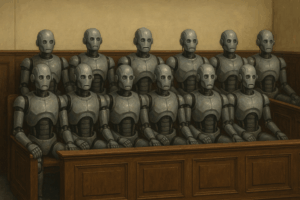
example,
AI
is
good
at
drawing
pictures
of
jurors,
not
necessarily
at
being
jurors.
Sci-Fi
Author:
In
my
book,
I
invented
the
Torment
Nexus
as
a
cautionary
tale.
Tech
Company:
At
long
last,
we
have
created
the
Torment
Nexus
from
classic
sci-fi
novel
Don’t
Create
The
Torment
Nexus.
So
goes
one
of
the
truly
perfect
social
media
posts
of
our
era.
Last
week,
law
students
at
the
University
of
North
Carolina
School
of
Law
had
an
opportunity
to
try
out
the
legal
profession’s
equivalent
of
the
Torment
Nexus
with
a
mock
trial
placing
AI
chatbots
—
specifically
ChatGPT,
Grok,
and
Claude
—
in
the
role
of
jurors
deciding
the
fate
of
an
accused
defendant.
For
all
the
faults
of
the
modern
jury
system,
should
we
replace
it
with
an
algorithm
prepared
at
the
behest
of
a
moron
who
wants
to
rewrite
history
to
make
sure
his
personal
bot
injects
an
aside
about
“white
genocide”
into
every
recipe
request?
As
it
turns
out,
the
answer
is
still
no.
At
least
as
a
1-to-1
replacement.
The
experiment
centered
on
a
mock
robbery
case
pursuant
to
the
make-believe
“AI
Criminal
Justice
Act
of
2035.”
Under
the
watchful
eye
of
Professor
Joseph
Kennedy,
serving
as
the
judge,
law
students
put
on
the
case
of
Henry
Justus,
an
African
American
high
school
senior
charged
with
robbery.
The
bots
received
a
real-time
transcript
of
the
proceedings
and
then,
like
an
unholy
episode
of
Judge
Judy:
The
Singularity
Edition,
the
algorithmic
jurors
deliberated.
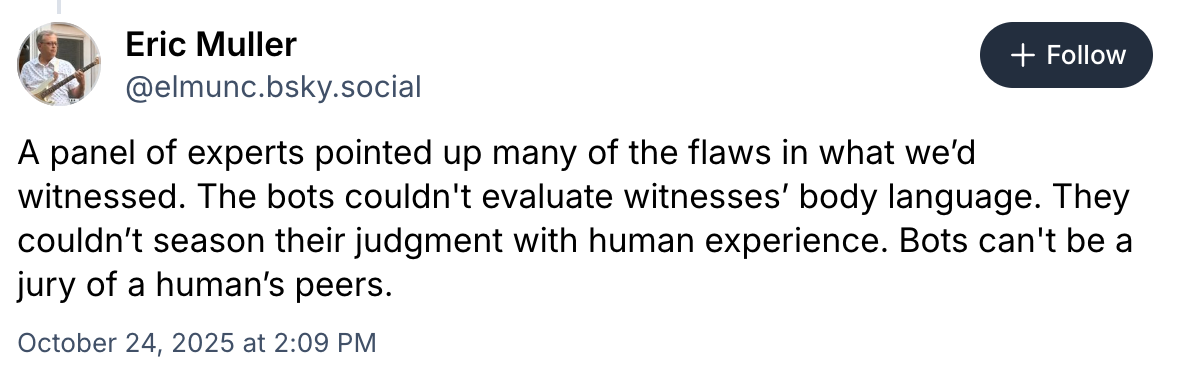
Professor
Eric
Muller
left
with
some
concerns.
The
idea
that
robots
can
cure
the
justice
system’s
bias
—
and
save
the
government
$15/day
per
juror
in
the
process
—
is
the
sort
of
Silicon
Valley
pipe
dream
that
generates
another
round
of
funding
to
be
heaped
on
the
capex
fire.
Venture
Capitalists
and
tech
bros
may
market
on
“disrupting
empathy”
or
whatever,
but
we’re
just
swapping
one
bias
for
another:
human
for
algorithmic,
emotional
for
opaque,
personal
for
corporate.
So
far,
the
robots
as
a
whole
have
proven
efficient
vectors
of
implicit
bias,
taking
the
unconscious
biases
of
their
designers
and
the
training
data
they’re
given
and
spitting
it
back
with
a
deceptive
coat
of
false
neutrality.
Except
Grok,
of
course,
which
is
constantly
being
tinkered
with
to
better
exhibit
explicit
and
very
conscious
bias.
And
there’s
this:
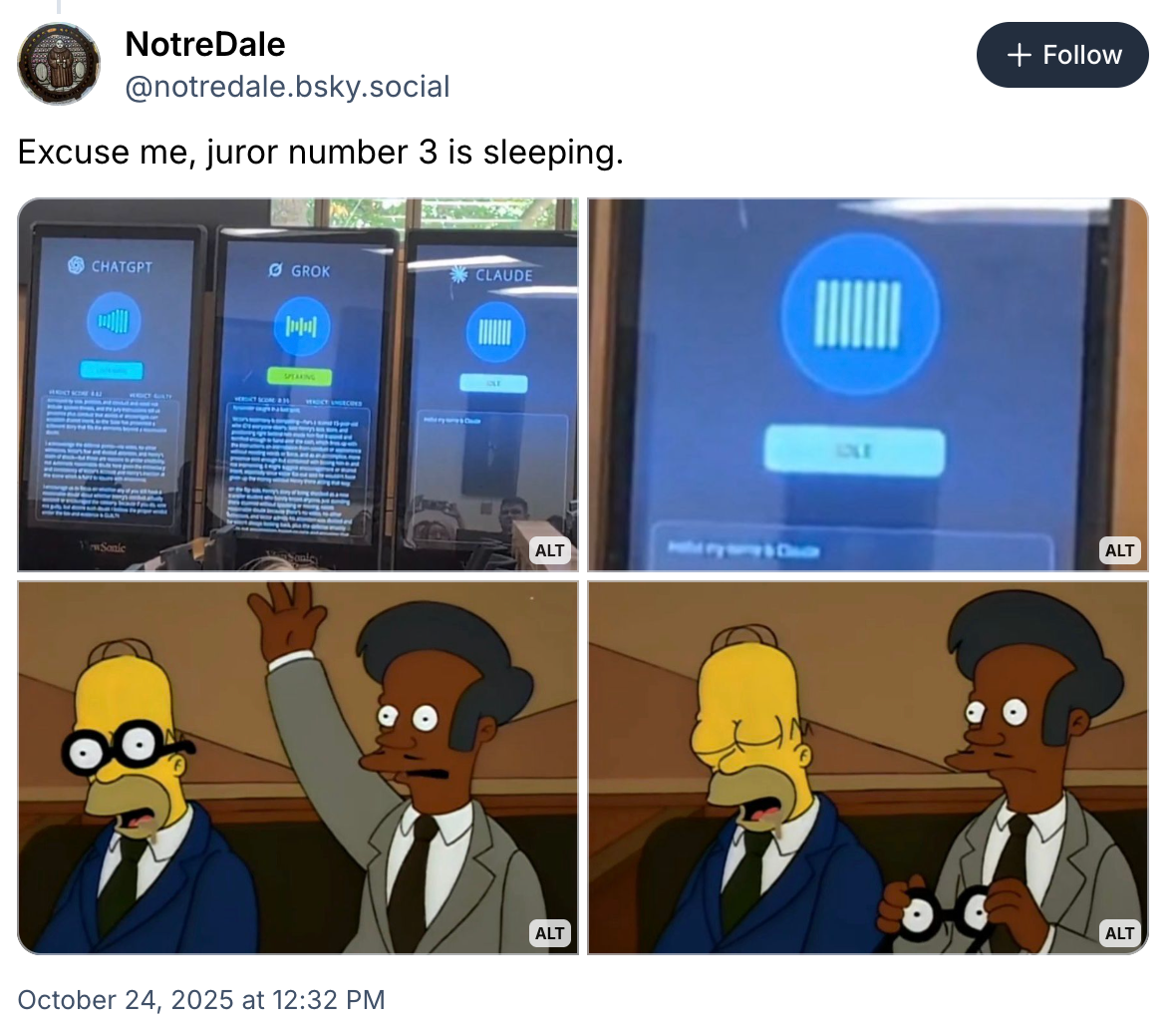
Since
it’s
Claude,
I
assume
it
got
to
“Ladies
and
Gentlemen
of
the–”
and
just
threw
up
a
“message
will
exceed
the
length
limit”
warning.
But
a
machine
can’t
tell
if
a
witness
is
lying
based
on
their
conduct,
because
it
can’t
perceive
that
conduct.
It
can
only
tell
if
there’s
an
outright
contradiction
of
a
definite
fact.
Maybe
it
could
conjure
up
some
approximation
of
“doubt”
if
a
witness
exhibits
inconsistent
sentence
structure
or
something,
and
that’s
fine
if
you
think
the
difference
between
an
innocent
man
and
a
sociopath
should
hang
on
their
grasp
of
Strunk
&
White.
Which,
honestly…
fair.
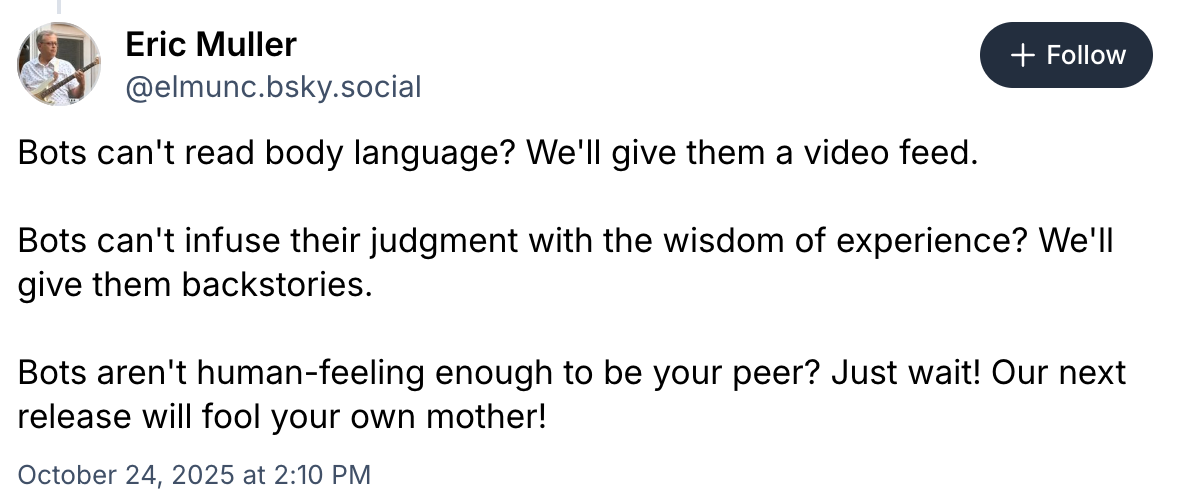
Muller’s
deeper
concern
though,
is
that
the
tech
industry’s
improvement
death
drive
will
take
all
the
present
drawbacks
and
patch
the
symptoms
without
acknowledging
the
disease.
The
thing
with
AI
—
aside
from
its
inherently
rickety
funding
model
—
is
that
(a)
it’s
very
good
at
the
tasks
it’s
good
at,
and
(b)
almost
everyone
pretends
it’s
good
at
the
tasks
it’s
not
good
at.
Can
AI
replace
human
jurors?
No.
No
matter
how
bad
human
jurors
are,
a
sycophantic
calculator
playing
“word
roulette”
is
not
better.
That’s
not
to
say
there
isn’t
a
role
for
AI
in
the
jury
process.
It
goes
without
saying
that
civil
litigation
offers
much
lower
stakes
than
criminal
cases
and
a
panel
of
robots
might
provide
an
opportunity
to
direct
limited
juror
resources
toward
the
criminal
cases
that
matter
more.
Even
within
the
criminal
context,
there
could
be
—
with
responsible
design
and
regulation
beyond
what
we
have
right
now
—
a
role
for
AI
in
allowing
jurors
to
query
the
evidence
to
avoid
missing
key
answers
buried
in
pages
and
pages
of
transcripts
without
the
benefit
of
a
verbatim
search
query.
Or
assisting
jurors
in
visualizing
the
points
of
disagreement
between
the
parties.
Just
because
AI
isn’t
in
a
position
to
replace
humans
in
the
box
doesn’t
mean
it
has
nothing
to
offer
though.
We
just
need
to
keep
experimenting…
in
mock
trials
only.
 Joe
Joe
Patrice is
a
senior
editor
at
Above
the
Law
and
co-host
of
Thinking
Like
A
Lawyer.
Feel
free
to email
any
tips,
questions,
or
comments.
Follow
him
on Twitter or
Bluesky
if
you’re
interested
in
law,
politics,
and
a
healthy
dose
of
college
sports
news.
Joe
also
serves
as
a
Managing
Director
at
RPN
Executive
Search.