
Ed.
note:
Please
welcome
Renee
Knake
Jefferson
back
to
the
pages
of
Above
the
Law.
Subscribe
to
her
Substack,
Legal
Ethics
Roundup, here.
Welcome
to
what
captivates,
haunts,
inspires,
and
surprises
me
every
week
in
the
world
of
legal
ethics.
Happy
First
Monday! On
the
first
Monday
of
each
month,
you
get
a
longer
version
of
the
Roundup
with
the headlines plus reading
recommendations, job
postings, events,
and
other
features.
Greetings
from
Washington
DC! I’m
here
to
attend
a
special
part
of
the
American
Academy
of
Appellate
Lawyers
Fall
Meeting,
where Karen
Cohen will
describe
her
research
about Loving
v.
Virginia,
the
US
Supreme
Court
decision
that
legalized
interracial
marriage.
She’s
the
daughter
of Bernard
Cohen,
one
of
the
attorneys
who
represented Mildred
and
Richard
Loving,
whose
birthdays
my
husband Wallace
Jefferson and
I
share,
in
an
amazing
coincidence
(for
more
on
that,
check
out
the NYT
coverage of
our
own
“Loving”
story).
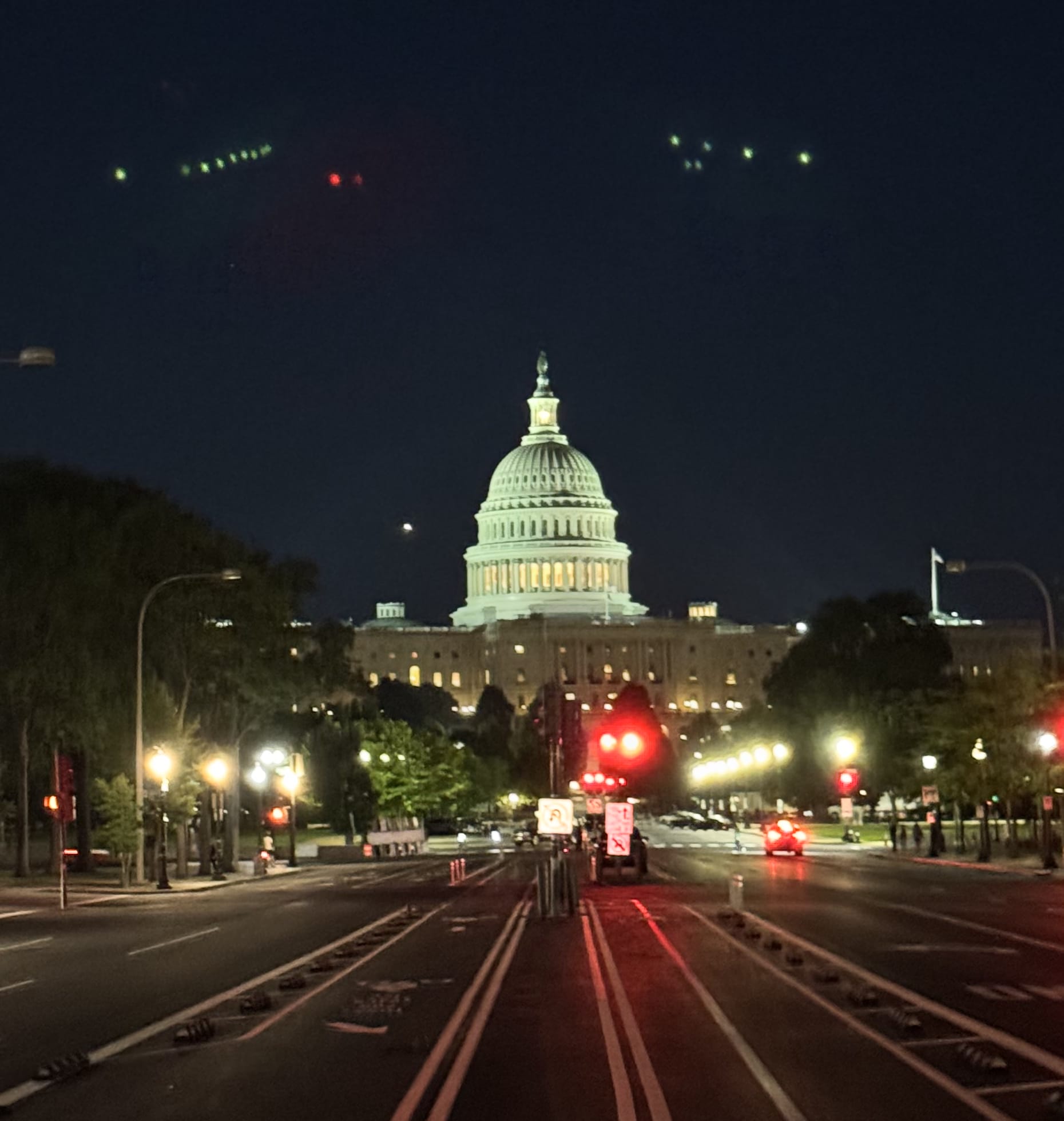
DC
at
Night
(photo
by
Renee
Jefferson)
A
Call
for
Your
Ideas. Before
we
dive
into
the
headlines,
I
have
a
favor
to
ask
on
behalf
of
the
Planning
Committee
for
the
2026
ABA
National
Conference
on
Professional
Responsibility.
We
are
a
group
of
volunteers
who
want
to
plan
exciting
events
and
panels
around
the
issues
you
consider
“hot
topics”
in
legal
ethics.
Please
take
a
moment
to
share
your
thoughts
via
this very
brief
survey.
Now,
let’s
get
started
with
the
headlines.
Don’t
forget
to
keep
scrolling
down
to
the
end
for
all
the
“First
Monday”
extra
features.
Enjoy!
Highlights
from
Last
Week
–
Top
Ten
Headlines
#1
“After
Law
Firm
Deals
With
Trump,
D.C.
Bar
Warns
of
Ethical
Jeopardy.” From
the New
York
Times: “Months
after
law
firms
made
deals
with
President
Trump
to
ward
off
punitive
executive
orders,
the
ethics
committee
of
the
District
of
Columbia
Bar
is
warning
that
such
arrangements
may
require
firms
to
drop
or
obtain
waivers
from
all
clients
who
have
interests
at
odds
with
the
government. An
opinion
issued
by
the
committee
this
week could
bring
new
scrutiny
to
several
prominent
law
firms
that
chose
to
strike
deals
with
Mr.
Trump
instead
of
challenging
his executive
orders targeting
them.
Any
lawyer
or
law
firm
that
contemplates
making
a
deal
with
a
government
that
includes
conditions
that
may
limit
or
shape
their
practices,
the
opinion
said,
‘must
examine
whether
the
arrangement
would
prevent
the
firm
from
providing
conflict-free
representation
to
clients
—
existing
and
new
—
who
are
adverse
to
the
relevant
government.’”
Read
more here (gift
link).
#2
“Dem-Appointed
Maryland
Supreme
Court
Justice
in
Hot
Seat
Over
Politically
Charged
Halloween
Display.” From Fox
News: “A
liberal
Maryland
Supreme
Court
justice
is
in
the
hot
seat
over
a
politically
charged
Halloween
display
on
his
lawn
that
an
expert
said
casts
doubt
on
his
ability
to
rule
impartially
on
a
high-stakes
case
currently
before
the
court. Maryland
Supreme
Court
Justice
Peter
Killough,
who
was
appointed
to
the
court
by Democratic
Gov.
Wes
Moore,
is
taking
criticism
for
exhibiting
his
left-wing
political
leanings
through
a
Halloween
display
at
his
Maryland
home.
The
display
included
an
environmentalist
sign,
which
the
expert
said
is
particularly
concerning
since
Killough
is
currently
involved
in
a
high-stakes
environmental
case..
The
signs,
painted
on
Halloween-style
gravestones,
depict
politically
charged
messages
like,
‘Here
lies
the
Constitution,’
‘RIP
Freedom
of
Speech,’
‘RIP
Food
Aid,’
‘Beware
Health
Insurance
Cuts,’
‘RIP
Due
Process’
and
‘RIP
Climate
Science.’
… Nick
Cavey,
a
spokesperson
for
the
Maryland
Judiciary,
told
Fox
News
Digital
that
the
‘the
signs
belong
to
Justice
Killough’s
wife’
and
that
‘Killough
has
no
further
comments.’”
Read
more here.
#3 “Britain’s
300-Year
Tradition
of
Wearing
Wigs
in
Court
Gets
a
Trim.” From
the Washington
Post: “The
criminal-court
dress
guidelines,
updated
in
July
by
Britain’s
Bar
Council
after
two
years
of
review
but
only
receiving
wide
publicity
now,
specifically
relax
the
rules
for
barristers
with
Afros,
dreadlocks
or
other
‘hairstyle
traditions’
associated
with
their
ethnicities.
The
exceptions
don’t
require
any
advance
permission,
and
some
practitioners
have
already
begun
to
go
wigless.
(The
Hogwarts-style
robes
and
white
wing
collars
are
still
required.)
The
Bar
Council,
which
represents
some
18,000
legal
professionals,
added
permission
for
other
categories
of
attorney
to
appear
bareheaded
as
well,
albeit
with
advance
written
approval
from
a
review
body.
They
include
pregnant
women,
barristers
going
through
menopause
who
may
find
them
too
hot,
and
those
with
physical
disabilities
that
may
make
wig
(or
gown)
wearing
difficult.”
Read
more here (gift
link).
#4
“University
of
Arkansas
Fires
Law
Professor
Over
Charlie
Kirk
Comments.” From Reuters: “The
University
of
Arkansas
at
Little
Rock
has
fired
a
law
professor
for
comments
she
made
on
social
media
about
the
September
10
killing
of
conservative
activist Charlie
Kirk.
The
professor, Felicia
Branch,
appears
to
be
the
first
legal
academic
to
be
dismissed
for
social
media
posts
about
Kirk,
the
Turning
Point
USA
founder
whose
assassination
at
an
event
at
Utah
Valley
University
shocked
the
country
and
ignited
debates
over
political
violence.”
Read
more here.
#5
“DOJ
Faces
Ethics
Nightmare
with
Trump
Bid
for
$230M
Settlement.” From The
Hill: “The
Department
of
Justice
(DOJ)
is
facing
pressure
to
back
away
from
a
request
from President
Trump for
a
$230
million
settlement
stemming
from
his
legal
troubles,
as
critics
say
it
raises
a
dizzying
number
of
ethical
issues.
Trump
has
argued
he
deserves
compensation
for
the
scrutiny
into
his
conduct,
describing
himself
as
a
victim
of
both
a
special
counsel
investigation
into
the
2016
election
and
the
classified
documents
case.
The
decision,
however,
falls
to
a
cadre
of
attorneys
who
previously
represented
Trump
personally. Rupa
Bhattacharyya,
who
reviewed
settlement
requests
in
her
prior
role
as
director
of
the
Torts
Branch
of
the
DOJ’s
Civil
Division,
said
most
agreements
approved
by
the
department
are
typically
for
tens
of
thousands
of
dollars
or
at
most
hundreds
of
thousands.”
Read
more here.
#6
“Federal
Judge
Disqualifies
Trump-Backed
Prosecutor
in
Los
Angeles.” From
the New
York
Times: “A
federal
judge
disqualified
the
United
States
Attorney
in
Los
Angeles
on
Tuesday,
the
latest
rebuke
to
the
Trump
administration’s
attempts
to
circumvent
congressional
approval
for
federal
prosecutors.
The
ruling
creates
leadership
uncertainty
in
the
nation’s
largest
judicial
district,
the
Central
District
of
California,
which
serves
seven
counties
in
the
Los
Angeles
area.
The
order
was
issued
by Judge
J.
Michael
Seabright of
the
Federal
District
Court
in
Hawaii,
who
ruled
that
the
Trump
appointee, Bill
Essayli,
‘is
not
lawfully
serving
as
acting
United
States
Attorney’
and
‘cannot
continue
to
perform
any
role’
that
job
entails.
But
it
was
unclear
what
the
practical
effect
of
his
order
would
be,
since
the
judge
also
allowed
Mr.
Essayli
to
revert
to
the
role
of
the
office’s
top
deputy,
as
the
first
assistant
United
States
attorney.”
Read
more here (gift
link).
#7
“Judge
Orders
Disciplinary
Letter
Hung
Below
Portrait
of
Disgraced
Jurist
in
Hot
Spring
County.” From
the Arkansas
Times: “Calling
a
painting
of
a
disgraced
circuit
judge
a
‘celebration
of
corruption,’
the
chief
administrative
judge
of
Arkansas’s
7th
Judicial
Circuit
ordered
on
Monday
that
a
framed
copy
of
a
judicial
discipline
press
release
be
hung
below
the
portrait.”
Read
more here.
#8
“Texas
Judges
Won’t
Face
Sanctions
for
Turning
Down
Same-Sex
Weddings
on
Religious
Grounds.” From
the Texas
Tribune: “Officiating
weddings
isn’t
a
requirement
for
judges
or
justices
of
the
peace.
A
new
rule
will
let
them
perform
only
opposite-sex
marriage
ceremonies.”
Read
more here.
#9
“Jack
Smith
Asks
Justice
Dept.
for
Guidance
on
Testifying
to
Congress.” From
the New
York
Times: “Jack
Smith,
the
former
special
counsel,
asked
the
Justice
Department
on
Monday
to
detail
what
he
is
allowed
to
tell
Congress
about
investigating President
Trump,
after
Republicans
accused
some
of
his
former
staff
of
hiding
behind
grand
jury
secrecy
rules.”
Read
more here (gift
link).
#10
Call
for
Nominations
–
2026
Michael
Franck
Professional
Responsibility
Award. From
the ABA
Center
for
Professional
Responsibility on LinkedIn: “We
are
excited
to
announce
that
nominations
are
now
open
for
the
2026
Michael
Franck
Professional
Responsibility
Award!
This
prestigious
award
recognizes
individuals
who
have
made
significant
contributions
to
the
field
of
professional
responsibility
in
legal
practice.
Nominations
are
invited
from
colleagues,
organizations,
and
peers
who
can
speak
to
the
nominee’s
dedication,
leadership,
and
impact
on
promoting
ethical
standards
in
the
legal
profession.”
Read
more here.
And
learn
about past
recipients
at
LER
Bonus
Content
No.
19.
Recommended
Reading
“Advocate-Don’t
Hallucinate!
Appellate
Court
Staff
Attorneys
as
Vanguards
for
Ethical
AI
Usage” by Ashley
London (Duquesne).
From
the
abstract:
Appellate
court
staff
attorneys
can
and
should
play
a
special
role
in
promoting
the
ethical
use
of
generative
artificial
intelligence
(“AI”)
systems
for
judges,
lawyers,
and
pro
se
litigants.
This
often-unseen
cohort
of
lawyers
is
uniquely
positioned
to
champion
the
ethical
use
of
AI
due
to
their
high
level
of
responsibility
for
justice,
their
critical
roles
in
ensuring
courts
run
efficiently,
as
well
as
their
close
connections
to
the
judges
charged
with
determining
whether
the
proceedings
below
were
fair
and
the
law
applied
correctly.The
use
and
misuse
of
AI
is
growing
among
both
lawyers
and
pro
se
litigants.
Citations
to
fake
cases
are
becoming
common
in
state
and
federal
district
courts,
with
one
researcher
showing
that
courts
around
the
globe
–
but
especially
the
United
States
–
are
impacted
by
AI
misuse
in
filings
on
a
near
daily
basis.
The
appeal
of
these
AI
tools
is
that
many
are
free,
easy
to
use,
and
enjoy
a
mythical
reputation
for
trustworthiness,
a
trait
hyped
by
developers,
the
media,
and
even
lawyers.Absent
an
enforceable
set
of
ethical
codes
for
AI
software
developers,
courts
are
left
to
investigate,
police,
and
sanction
when
algorithms
produce
incorrect
content.
Using
large
language
models
reveals
that
AI
can,
and
often
does,
hallucinate
case
names
and
facts,
which
if
left
unchecked
can
cost
courts
time
and
resources,
while
also
impacting
the
outcome
of
legal
actions.
Despite
this
propensity
to
generate
inaccurate
content,
generative
AI
tools
are
here
to
stay
because
large
corporate
interests
have
invested
billions
in
its
development
and
utilization
by
the
legal
sector.Courts
across
the
country
have
adopted
variable
and
inconsistent
rules
for
the
use
of
AI,
and
while
lawyers
may
face
discipline
via
sanctions
and
disciplinary
actions,
pro
se
litigants
are
subject
only
to
FRCP
Rule
11
sanctions.
Because
appellate
court
staff
attorneys
are
uniquely
placed
to
review
and
screen
pro
se
cases,
it
is
critical
that
they
learn
about
AI,
study
AI,
and
understand
the
many
ways
in
which
these
programs
fall
short
of
trustworthiness
and
accuracy.
This
article
details
ways
in
which
these
specially-placed
lawyers
can
take
the
lead
inside
their
courts
to
develop
plans
to
incorporate
and
implement
generative
AI
systems
to
make
the
court
process
more
ethical
and
efficient
for
all
litigants.
“Under
Political
Pressure:
How
Courts
and
Congress
Can
Help
Prosecutors
Do
Justice” by Rebecca
Roiphe (New
York
Law
School)
and Bruce
Green (Fordham).
From
the
abstract:
Some
subordinate
federal
prosecutors
faced
a
challenging
professional
dilemma
in
the
early
days
of
the
second
Trump
Administration.
It
arose
from
the
tension
between
their
role
as
public
officials
and
lawyers
who
owe
fiduciary
duties
to
the
public
and
their
role
as
Department
of
Justice
(DOJ)
employees
who
take
direction
from
higher-ups.
The
DOJ
leadership
directed
these
subordinate
prosecutors
to
use
their
considerable
power
in
ways
evidently
designed
to
advance
partisan
political
objectives.
This
was
contrary
to
the
clear
understanding
previously
expressed
by
courts,
the
legal
profession,
and
the
DOJ
itself
that
prosecutors
have
a
duty
to
seek
justice,
which
requires
excluding
partisan
politics
from
charging
decisions.
This
Essay
considers
how
federal
prosecutors
should
navigate
this
dilemma
consistently
with
their
fiduciary
obligations,
which
are
paramount
to
their
employment
obligations.
It
also
analyzes
what
more
Congress
and
the
courts
can
do
to
enable
subordinate
prosecutors
to
carry
out
their
fiduciary
obligations.
We
conclude
that
Congress
can
better
protect
prosecutors
who
resist
questionable
demands,
and
that
in
the
gaps
left
by
federal
legislation,
courts
should
use
their
supervisory
authority
to
reinforce
federal
prosecutors’
ability
to
seek
justice
in
the
face
of
contrary
pressure
or
direction
from
the
DOJ
leadership.
Legal
Ethics
Trivia
From
the
Texas
Center
for
Legal
Ethics,
here’s
the
question
of
the
month:
“Can
an
attorney
agree
to
pay
a
nonlawyer-owned
company
for
support
services
based
on
a
percentage
of
law
firm
revenues?” Test
yourself
at
this
website where
you
can
read
a
short
hypothetical,
select
an
answer,
and
see
your
results.
So
far,
64%
have
gotten
it
right.
Will
you?

Get
Hired
Did
you
miss
the
350+
job
postings
from
previous
weeks?
Find
them
all here.
Board
of
Ethics,
City
of
Chicago
—
Chicago. From
the
posting:
“The
Board
of
Ethics
has
3
current
vacancies:
for
Senior
Attorney,
Legal
Counsel,
and
Project
Coordinator.”
Learn
more
and
apply here.
Conflicts
Attorney,
Taft
Law
—
Chicago,
Cincinnati,
Cleveland,
Columbus,
Dayton,
Denver,
Detroit,
Indianapolis
or
Minneapolis. From
the
posting:
“Under
the
direction
of
the
Conflicts
Counsel,
the
Conflicts
Attorney
will
be
responsible
for
all
aspects
of
the
conflicts
process,
from
preparing
conflicts
search
reports
as
needed,
to
identifying
and
resolving
possible
ethical
conflicts
and
business
issues
for
both
new
business
and
lateral
matters.
The
Conflicts
Attorney
serves
clients
and
attorneys
by
ensuring
that
the
firm
fulfills
its
ethical
obligations.”
Learn
more
and
apply here.
Conflicts
Counsel,
Lewis
Brisbois
—
Portland. From
the
posting:
You
“will
be
responsible
for
reviewing
conflict
check
reports
and
identifying,
advising,
analyzing
and
resolving
potential
conflicts
of
interest
and
working
directly
with
attorneys
to
clear
conflicts
related
to
the
hiring
of
new
partners,
associates,
paralegals,
and
other
firm
hires.”
Learn
more
and
apply here.
Global
Ethics
&
Compliance
Attorney,
Bath
&
Body
Works —
Columbus/Hybrid. From
the
posting:
“The
Global
Ethics
&
Compliance
Attorney
will
provide
legal
expertise
and
counsel
to
the
business
relating
to
global
compliance
and
regulatory
matters
and
will
help
support
the
development,
implementation
and
continuous
improvement
of
the
organization’s
ethics
and
compliance
programs.”
Learn
more
and
apply here.
Upcoming
Ethics
Events
&
Other
Announcements
Did
you
miss
an
announcement
from
previous
weeks?
Find
them
all here.
-
December
8-9.
Australia
and
New
Zealand
Legal
Ethics
Colloquium
VIII,
University
of
Otago,
New
Zealand. The
2025
colloquium
will
explore
the
evolving
expectations
of
lawyers
in
a
world
where
professional
conduct
is
increasingly
scrutinized
through
the
lens
of
public
morality
and
social
justice.
We
encourage
submissions
that
engage
with
questions
such
as:
What
are
the
limits
of
role
morality
in
legal
practice?
How
should
legal
ethics
respond
to
the
rise
of
“cancel
culture”
and
public
backlash
against
lawyers?
How
can
the
legal
profession
maintain
its
commitment
to
the
rule
of
law
while
remaining
responsive
to
democratic
values
and
social
change?What
does
accountability
look
like
for
lawyers
representing
controversial
clients
or
causes?
How
should
legal
education
evolve
to
prepare
future
lawyers
for
these
ethical
complexities?
Learn
more here. -
December
9
@
noon
–
1PM
Eastern.
Florida
Bar
CLE
“What
Messy
Celebrity
Breakups
Teach
About
Legal
Ethics.” From
the
program
description:
“What
do Gwyneth
Paltrow, J.
Lo,
and Ryan
Seacrest all
have
in
common?
They
all
had
messy,
public
breakups
that
offer
surprisingly
rich
lessons
about
attorney
ethics
and
professional
conduct.
Professional
legal
educator Stuart
Teicher,
Esq. (known
as
The
CLE
Performer)
uses
celebrity
relationship
drama
to
explore
the
rules
of
professional
conduct
in
ways
that
are
both
memorable
and
practical.
From
power
couple
joint
representation
disasters
to
confidentiality
breaches
that
make
tabloid
headlines,
these
high-profile
relationship
meltdowns
mirror
the
ethical
dilemmas
attorneys
face
in
their
own
practices.
You’ll
discover
how
celebrity
scandals
illuminate
key
ethical
principles,
making
complex
rules
easier
to
understand
and
remember
when
real
ethical
challenges
arise
in
your
practice.
This
program
combines
real
celebrity
situations
with
hypothetical
scenarios
to
create
engaging
teaching
moments
that
stick.”
Learn
more here. -
January
6-9. Association
of
American
Law
Schools
Annual
Meeting,
Section
on
Professional
Responsibility
Events. I’ll
be
moderating
the
Section’s
main
program
on
“The
Law
Professor’s
Role
in
Protecting
Our
Legal
System” which
will
be
held
January
8
from
2:35-3:50
PM.
Learn
more here.
Keep
in
Touch
-
News
tips?
Announcements?
Events? A
job
to
post? Reading
recommendations? Email [email protected] –
but
be
sure
to
subscribe
first,
otherwise
the
email
won’t
be
delivered.
Renee
Knake
Jefferson
holds
the
endowed
Doherty
Chair
in
Legal
Ethics
and
is
a
Professor
of
Law
at
the
University
of
Houston.
Check
out
more
of
her
writing
at
the Legal
Ethics
Roundup.
Find
her
on
X
(formerly
Twitter)
at @reneeknake or
Bluesky
at legalethics.bsky.social.