
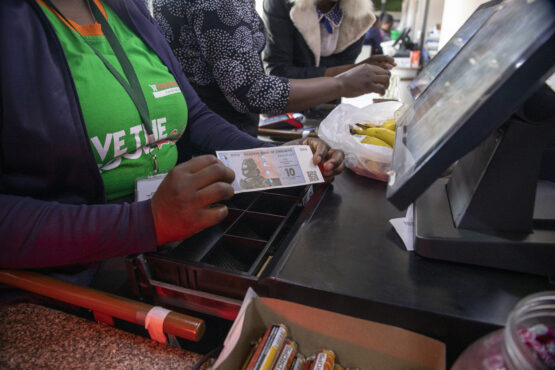
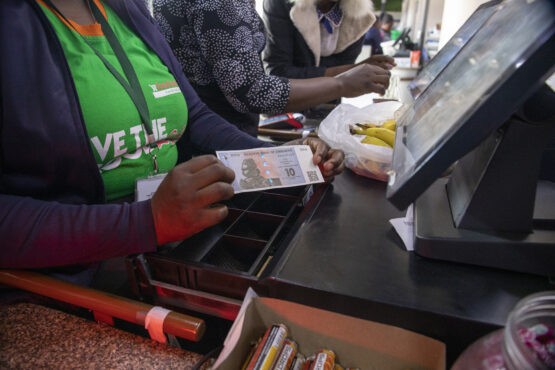
Zimbabwe
remains
committed
to
curbing
inflation,
but
plans
to
shift
the
focus
of
monetary
policy
to
place
more
emphasis
on
managing
the
money
supply,
the
central
bank
said.
Writing
in
a
five-year
strategy
plan
published
on
Monday,
the
central
bank
characterised
this
as
a
shift
“from
a
tight
to
prudent
monetary
policy
thrust”
and
said
policy
decisions
will
be
“calibrated
to
reflect
emerging
inflationary
pressures
and
crystallisation
of
any
inflation
risks.”
It
didn’t
specify
what
this
would
mean
for
interest
rates
going
forward,
but
noted
that
businesses
had
told
it
that
local
borrowing
costs
in
the
southern
African
nation
“were
viewed
as
potentially
prohibitive.”
The
central
bank
held
interest
rates
at
35%
last
month
to
maintain
downward
pressure
on
inflation
and
support
the
ZiG.
The
gold-backed
currency
was
launched
in
2024
and
is
the
country’s
latest
effort
to
stand
up
a
viable
local
unit
after
previous
attempts
collapsed.
Zimbabwe’s
inflation
was
0.2%
in
December
compared
to
the
month
before
and
slowed
to
15%
on
an
annual
basis
from
19%
in
November.
The
bank
said
it
expects
the
trend
to
continue
and
that
the
rate
will
reach
single
digits
during
the
course
of
2026.
It
also
reiterated
its
goal
of
transitioning
the
Zimbabwean
economy
away
from
reliance
on
the
US
dollar,
which
continues
to
account
for
more
than
half
of
all
transactions.
The
bank
said
the
transition
would
largely
be
market
driven,
but
it
will
concentrate
on
creating
the
pre-conditions
for
success.
Such
conditions
included
“low
inflation,
adequate
reserve
buffers,
safe
and
sound
financial
and
payment
systems,
and
efficient
exchange
rate
system
and
congruence
between
monetary
and
fiscal
policies,”
the
bank
said.