

people
in
the
Epstein
files
along
with
us.
(Photo
by
Davidoff
Studios/Getty
Images)
We’ve
talked
a
lot
about
the
high-powered
lawyers
and
famous
legal
luminaries
who
find
themselves
in
the
notorious
Epstein
files.
So
it’s
only
fair
to
point
out
that
we
here
at
Above
the
Law
also
found
ourselves
in
the
Department
of
Justice’s
latest
document
dump.
I
guess
that’s
the
sort
of
participatory
journalism
you’ve
come
to
expect
from
us.
None
of
us
gushed
about
the
infamous
pedophile’s
parties
or
preened
about
gifts
the
trafficker
gave
us.
Rather,
an
FBI
agent
received
a
copy
of
our
Daily
Newsletter
in
2023
that
included
a
story
about
Epstein.
While
we’re
at
it,
if
you
haven’t
taken
the
opportunity
to
subscribe
to
our
various
newsletters,
this
is
a
perfect
time.
Make
sure
we’re
featured
when
your
inbox
is
featured
in
the
next
generational
crime
story.
But
our
cameo
in
the
highest
profile
document
production
in
the
world
should
raise
a
few
questions.
Like
“why
is
a
publication’s
newsletter
in
the
Epstein
files
at
all?”
Or
“why
are
they
producing
documents
between
a
third
party
and
an
FBI
agent?”
Or,
at
the
risk
of
being
blunt,
“why
is
a
request
for
investigation
files
producing
documents
from
FOUR
YEARS
AFTER
THIS
EPSTEIN
JACKASS
DIED?”
Assuming
he’s
dead,
of
course.
Which
wasn’t
anything
we
questioned
but
now
that
they’re
turning
up
press
releases
announcing
his
death
from
the
day
before
he
died
and
CBS
News
is
reporting
that
the
noose
collected
at
the
scene
wasn’t
the
one
used
in
hanging,
maybe
the
conspiracy
theorists
are
on
to
something.
In
any
event,
there
aren’t
a
lot
of
good
reasons
why
this
newsletter
ended
up
marked
responsive.
The
Trump
administration
was
directed
—
by
statute
—
to
produce:
all
unclassified
records,
documents,
communications,
and
investigative
materials
in
the
possession
of
the
Department
of
Justice,
including
the
Federal
Bureau
of
Investigation
and
United
States
Attorneys’
Offices,
that
relate
to…
Jeffrey
Epstein
including
all
investigations,
prosecutions,
or
custodial
matters.
My
piece
on
AI
training
data
isn’t
really
a
snug
fit.
But
this
is
the
same
DOJ
that
dumped
all
these
files
into
a
janky
database,
knowing
that
they
include
discussions
about
the
sexual
exploitation
of
children
and
gated
it
with:
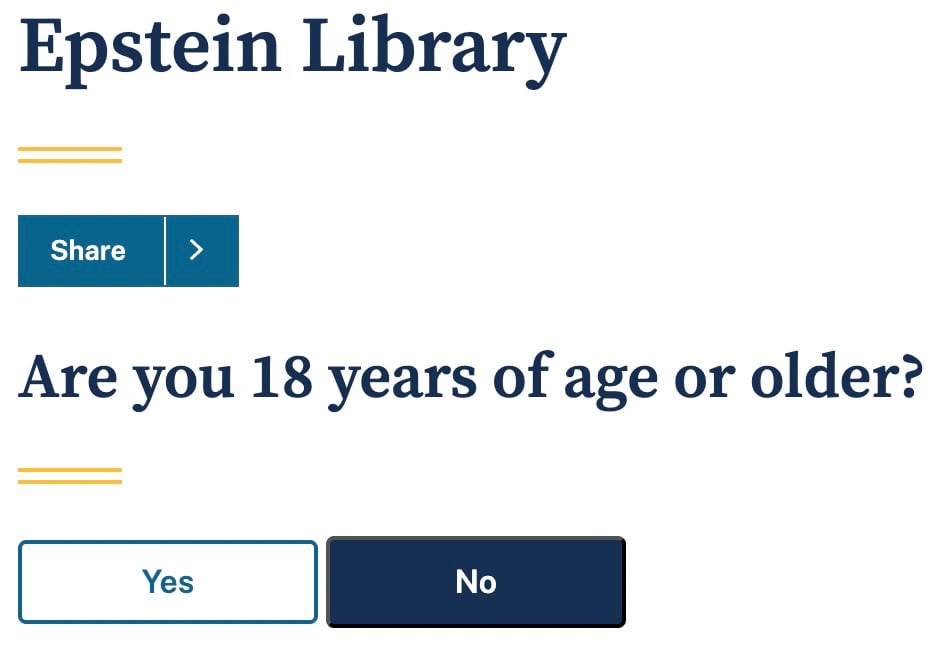
Good
heavens.
Jeffrey
Epstein
put
more
effort
into
making
sure
someone
was
18.
There
are
states
with
obscenity
laws
that
would
run
websites
out
of
business
for
such
a
lax
age
verification
procedure.
But
the
federal
government,
handling
investigatory
files
detailing
a
child
sex
ring
runs
its
age
gate
on
the
honor
system.
It’s
not
like
they’ve
been
rushed
either.
The
statute
required
production
“not
later
than”
December
19th.
The
files
didn’t
actually
show
up
in
any
meaningful
volume
until
January
30,
2026.
So
they
were
six
weeks
late
and
considerable
dollars
short.
Or,
maybe
this
was
a
rush
job,
because
the
DOJ
appeared
content
to
flagrantly
ignore
the
deadline
until
ICE
agents
started
killing
innocent
people
on
camera.
Suddenly,
the
salacious
document
production
that
could
occupy
the
backburner
for
weeks
became
an
urgency.
Then
we
got
three
million
pages
of
material
delivered
with
all
the
organizational
rigor
of
a
monkey
smearing
feces
on
the
wall
to
mark
its
territory.
The
documents
aren’t
in
any
clear
order
or
grouped
in
any
identifiable
way.
And
the
redaction
“errors”
—
oh,
the
redaction
errors.
As
NPR
reported,
the
same
DOJ
PowerPoint
presentation
appears
six
times
in
the
database
with
different
redactions
applied
each
time.
That’s
not
even
one
of
the
egregious
errors.
The
first
tranche
of
documents
made
the
redactions
incorrectly
such
that
the
public
could
just
copy
and
paste
the
text
into
a
new
document
and
see
whatever
appeared
below
the
black
box.
The
last
time
someone
was
dumb
enough
to
do
that
Saddam
Hussein
was
alive
and
well.
It’s
an
error
that
no
one
makes
anymore
because
everyone
learned
the
hard
way
that
you
can’t
use
the
bargain
Adobe
product
to
do
your
redactions.
But
Elon
Musk’s
DOGE
canceled
a
bunch
of
government
Adobe
licenses
as
part
of
the
ill-fated
budget
slashing
charade.
We’re
not
saying
that
directly
resulted
in
these
botched
redactions
but…
you
know.
Then
there’s
whatever
this
is:
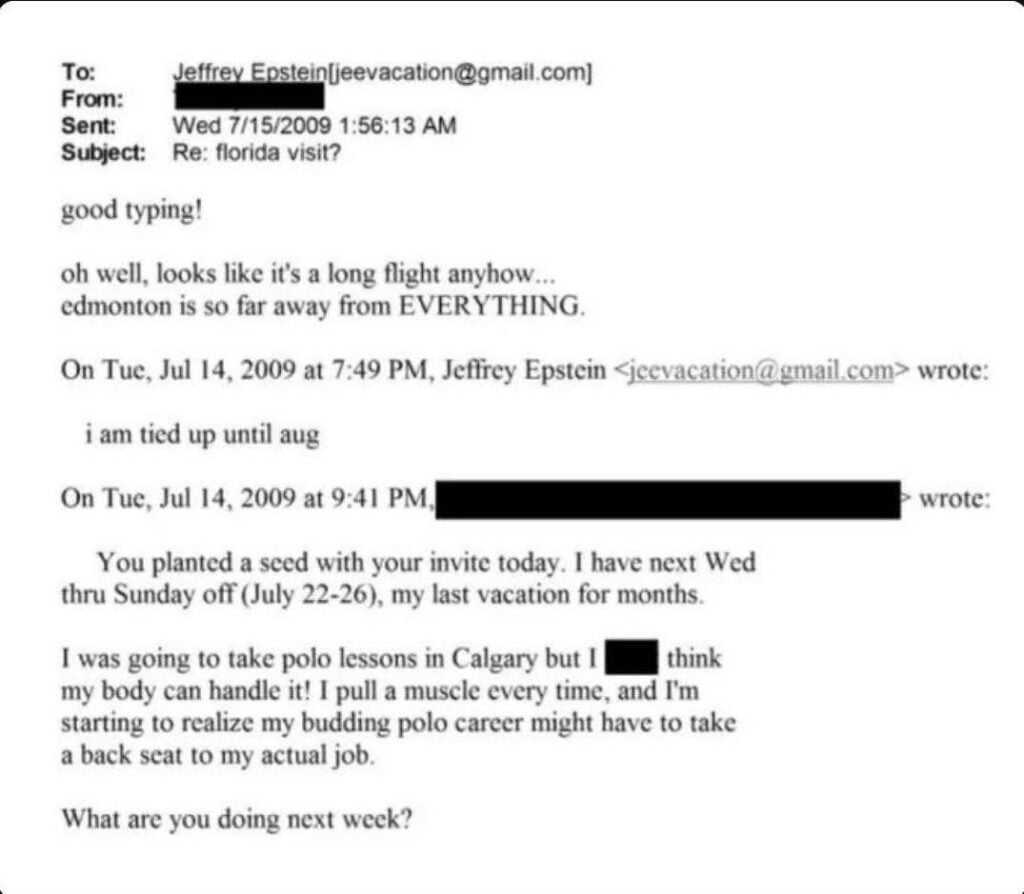
That’s
a
redaction
of
the
word
“don’t.”
That
wouldn’t
seem
to
be
worthy
of
redaction
unless
someone
committed
a
typo
and
didn’t
include
the
apostrophe
and
software
followed
directions
to
eliminate
any
incidence
of
words
with
“Don”
and
“T”
appearing
next
to
each
other
(Or
“don!
w/1
t!”
for
the
boolean
heads
out
there…
I
see
you).
Meanwhile,
victim
names
were
left
catastrophically
unredacted,
even
though
that’s
one
of
the
very
few
redactions
the
statute
actually
allowed.
Then
the
DOJ
published
and
then
quietly
deleted
a
document
that
explicitly
tagged
Trump.
It
returned
once
social
media
called
it
out.
Not
suspicious
at
all.
Which
brings
us
back
to
the
ATL
newsletter
from
years
after
Epstein’s
death.
In
any
normal
litigation
context,
this
kind
of
overproduction
would
earn
a
scolding
from
the
court.
Dumping
millions
of
pages
of
loosely
connected
material
to
bury
genuinely
responsive
documents
is
the
kind
of
classic
discovery
abuse
that
Magistrate
judges
spend
their
lives
swatting
down.
Is
it
fair
to
accuse
the
DOJ
of
this?
Well,
yes,
since
they
admitted
it.
From
their
statement
accompanying
this
release,
Deputy
Attorney
General
Todd
Blanche:
The
Department
erred
on
the
side
of
over-collecting
materials
from
various
sources
to
best
ensure
maximum
transparency
and
compliance
with
the
Act.
Framing
deliberate
overproduction
as
a
virtue
is
bold.
And
yet
the
DOJ
isn’t
just
erring
on
the
side
of
overproduction,
it
deliberately
underproduced
as
well.
This
Schrödinger’s
production
managed
to
exist
in
both
contradictory
states
by
“over-collecting”
newsletters
while
acknowledging
that
roughly
2.5
million
pages
of
documents
were
being
withheld
from
the
public.
While
the
statute
did
include
provisions
to
prevent
the
public
release
of
some
material,
it
strains
credulity
to
accept
that
almost
half
of
the
corpus
of
documents
would
fall
into
these
intentionally
limited
categories.
It
would
be
nice
to
see
something
akin
to
a
privilege
log
explaining
exactly
what
statutory
exception
they’re
claiming
on
these
pages.
Alas,
that
would
suggest
good
faith
as
opposed
to
the
DOJ’s
transparency
theater.
But
hey,
we’re
in
the
Epstein
files.
There’s
an
achievement
I
didn’t
expect
to
unlock.
 Joe
Joe
Patrice is
a
senior
editor
at
Above
the
Law
and
co-host
of
Thinking
Like
A
Lawyer.
Feel
free
to email
any
tips,
questions,
or
comments.
Follow
him
on Twitter or
Bluesky
if
you’re
interested
in
law,
politics,
and
a
healthy
dose
of
college
sports
news.
Joe
also
serves
as
a
Managing
Director
at
RPN
Executive
Search.