
Ed.
note:
Please
welcome
Renee
Knake
Jefferson
back
to
the
pages
of
Above
the
Law.
Subscribe
to
her
Substack,
Legal
Ethics
Roundup, here.
Welcome
to
what
captivates,
haunts,
inspires,
and
surprises
me
every
week
in
the
world
of
legal
ethics.
Hello
First
Monday!
I’m
writing
you
from
sunny
Florida
after
wrapping
up
a
board
meeting.
Once again
I
find
myself
wondering whether
our
legal
ethics
headlines
matter
given
the
other
news
of
the
day,
this
time Iran.
But
the
past
week
has
been
packed
with
important
news
about
the
responsibilities
of
lawyers
and
judges,
so
I
keep
writing
and
I
hope
you
keep
reading.

Beach,
Florida
(photo
by
Renee
Jefferson)
Now
for
your
headlines.
Highlights
from
Last
Week –
Top
Ten
Headlines
#1 “Lawrence
Fox,
Longtime
Drinker
Biddle
Partner
and
Legal
Ethics
Authority,
Dies
at
82.” From
the Philadelphia
Business
Journal: “His
career
includes
more
than
four
decades
at
Drinker
Biddle
&
Reath
and
teaching
legal
ethics
at
four
Ivy
League
law
schools.”
Read
more here.
#2
“Supreme
Court
Backs
Restrictions
on
Lawyer-Defendant
Trial
Talks.” From Bloomberg
Law: “Judges
can
bar
criminal
defendants
from
speaking
with
their
lawyers
about
their
testimony
during
an
overnight
recess
without
violating
their
right
to
counsel,
the
US
Supreme
Court
ruled
unanimously.
The
opinion
authored
Wednesday
by Justice
Ketanji
Brown
Jackson said
when
a
defendant
chooses
to
take
the
stand
as
a
witness
their
‘status
shifts,’
and
so
does
the
balancing
of
their
Sixth
Amendment
right
to
counsel.
‘He
does
not
shed
his
rights
as
a
criminal
defendant,’
Jackson
wrote.
‘But
he
does
assume
some
of
the
burdens
of
a
testifying
witness.’”
Read
more here.
#3
“Justice
Thomas
Bemoans
Incivility
as
Security
Prompts
Cancellation
of
In-Person
Speech.” From The
New
York
Times: “The
justice
participated
remotely
in
a
closed-door
session
of
a
legal
conference,
a
reminder
of
the
heightened
threats
facing
jurists
in
recent
years.”
Read
more here (gift
link).
#4
“Novel-Writing
Judge
Steps
Back
From
Hedge-Fund
Bankruptcy
as
Ethical
‘Corrective’.” From The
Wall
Street
Journal: “Chief
Judge
Stacey
Jernigan
of
the
Northern
District
of
Texas agreed
to
recuse
herself
from
matters
involving
Highland
Capital
Management
following
complaints
about
parallels
to
her
fictional
books.”
Read
more here (gift
link).
#5
“From
Hallucinations
to
Sanctions:
Perils
of
the
Use
of
Legal
AI.” From JDSupra: “A
recent
decision
from
Suffolk
County
Justice
Linda
Kevins
in Cassata
v
Michael
Macrina
Architect,
P.C. serves
as
yet
another
warning
to
practitioners
concerning
the
risks
and
ethical
considerations
implicated
by
the
use
of
generative
artificial
intelligence
(AI)
in
the
legal
profession,
and
the
Court’s
inclusion
of
a
sanctions chart for
AI-related
errors
offers
a
practical
guide
for
attorneys
on
how
to
responsibly
navigate
the
use
of
AI
in
legal
submissions.”
Read
more here.
#6
“Michigan
Federal
Judge
Charged
With
Drunken-Driving
Goes
on
Leave.” From Reuters: “A
federal
judge
in
Michigan
is
taking
a
leave
of
absence
pending
the
resolution
of
drunken-driving
charges
stemming
from
his
October
arrest
…
The
court
reform
group Fix
the
Court separately
on
Tuesday
said
it
had
filed
a
judicial
misconduct
complaint
against
[the
judge]
with
the
6th
Circuit
Court
of
Appeals.”
Read
more here.
#7
“Supreme
Court
Lawyer
Who
Moonlighted
in
High-Stakes
Poker
Is
Convicted
of
Tax
Fraud.” From The
New
York
Times:
“The
lawyer Thomas
C.
Goldstein,
who
co-founded
the
SCOTUSblog
website,
hid
millions
in
gambling
income
from
the
government,
federal
prosecutors
said.” Read
more here (gift
link).
#8
“Judge
Scolds
Mark
Zuckerberg’s
Team
for
Wearing
Meta
Glasses
to
Social
Media
Trial.” From CBS
News: “A
California
judge
admonished
members
of Mark
Zuckerberg’s team
for
wearing
Ray
Ban-Meta
AI
glasses,
which
are
equipped
with
a
camera,
as
they
entered
a
Los
Angeles
courtroom
on
Wednesday
for
a
landmark
trial
over
the
impact
of
social
media
on
children.
… Judge
Carolyn
Kuhl,
who
is
presiding
over
the
trial,
ordered
anyone
in
the
courtroom
wearing
AI
glasses
to
immediately
remove
them,
noting
that
any
use
of
facial
recognition
technology
to
identify
the
jurors
was
banned.”
Read
more here.
#9
“Digital
Visibility
Is
a
Professional
Responsibility.” From Etienne
Toussaint (South
Carolina)
on LinkedIn: “We
tend
to
frame
digital
visibility
as
a
personal
career
question.
Should I be
on
LinkedIn?
Should I update
my
faculty
bio?
Should I share
my
research
on
social
media?
But
this
framing
is
too
narrow.
Because
when
scholars
remain
invisible
online,
the
consequences
extend
well
beyond
their
individual
careers.
They
ripple
outward—through
their
fields,
their
institutions,
and
the
communities
whose
lives
their
research
is
meant
to
improve.
Here’s
why
digital
visibility
has
become
a
professional
responsibility—not
just
a
personal
preference.”
Read
more here.
[Side
note:
I
think
this
professional
responsibility
applies
to
lawyers
too,
not
just
scholars.]
#10
“Is
AI
the
End
of
Lawyers,
or
the
Beginning
of
Access
to
Justice?” From Fast
Company: “For
decades,
a
legal
degree
felt
like
a
golden
ticket,
a
safe
career
choice
because
a
robot
could
never
take
a
lawyer’s
job.
Today
consumers
are
increasingly
turning
to
new
technologies
like
generative
artificial
intelligence
for
answers
to
their
legal
questions
without
the
assistance
of
a
lawyer.
No
wonder:
The
high
cost
of
legal
services
places
them
beyond
the
reach
of
most
Americans.”
Read
more here.
Recommended
Reading
So
much
great
reading
in
legal
ethics
is
out
in
the
world
right
now.
I
have
a
stockpile
of
recommendations
to
share
in
the
coming
months.
For
now
you
get
four
items.
“Conditional
Admission
and
the
Hazards
of
Lawyer
Assistance
Programs
Operating
Without
Transparency
or
Oversight” by Paula
Schaefer (Tennessee).
From
the
abstract:
In
February
2025,
the
ABA
adopted
a
new
Conditional
Admission
Model
Rule.
The
Rule,
sponsored
by
the
Commission
on
Lawyer
Assistance
Programs,
contemplates
state
Lawyer
Assistance
Programs
will
have
a
significant
role
in
determining
the
terms
of
a
bar
applicant’s
conditional
admission.
This
Article
is
aimed
at
educating
states
with
conditional
admission—and
those
considering
it
as
urged
by
the
ABA—about
the
hazards
of
a
system
that
allows
LAPs
to
define
fitness
standards,
impose
conditional
admission
terms,
and
operate
without
transparency
or
oversight.
While
the
ABA’s
2025
Conditional
Admission
Model
Rule
contains
several
positive
changes,
it
also
creates
new
problems
and
fails
to
address
old
ones.
The
result
is
a
rule
that
permits
LAP
overreach
and
may
encourage
violations
of
the
Americans
with
Disabilities
Act.
“Conservative
Legal
Advocacy
Organizations
And
Constitutional
Change
In
The
Roberts
Court” by Ann
Southworth (UC
Irvine).
From
the
abstract:
The
Roberts
Court
has
overturned
major
precedents
and
transformed
constitutional
doctrine
on
a
host
of
issues:
campaign
finance,
voting
rights,
labor,
religion,
guns,
abortion,
affirmative
action,
business
regulation,
federal
agency
power,
and
more.
To
explain
this
legal
revolution,
scholars
and
journalists
typically
emphasize
the
composition
of
the
Court.
They
rightly
observe
that
the
conservative
movement’s
laser
focus
on
judicial
appointments
since
the
early
2000s
vastly
improved
conservatives’
chances
of
prevailing
in
litigation.
Large
swaths
of
doctrine
shifted
as
justices
vetted
through
Federalist
Society
and
Heritage
Foundation
networks
took
control
of
the
U.S.
Supreme
Court,
and
those
shifts
accelerated
after
they
won
a
super
majority.But
understanding
this
transformation
also
requires
attention
to
other
ingredients
for
constitutional
change
through
the
courts,
including
legal
advocacy
organizations,
patrons,
and
networks.
This
Essay
focuses
on
the
roles
of
conservative
and
libertarian
legal
advocacy
organizations,
using
campaign
finance
as
a
case
study.
Part
I
describes
how
these
organizations,
along
with
allied
party
leaders,
activists,
and
interest
groups,
have
shared
in
the
work
of
making
constitutional
law.
Part
II
examines
how
conservative
legal
advocacy
organizations
have
contributed
to
the
creation
of
First
Amendment
doctrine
governing
money
in
politics.
Movements
for
civil
rights
and
civil
liberties
provided
the
model
and
some
of
the
tools.
The
Essay
is
primarily
descriptive,
but
it
raises
some
normative
questions,
too.
“Is
the
Legal
Profession
a
Constitutional
Stepchild?
Lessons
from
the
Law
Firm
Executive
Order
Litigation” by Brad
Wendel (Cornell).
From
the
abstract:
In
this
essay,
part
of
an
Oklahoma
Law
Review
symposium
on
the
public
responsibilities
of
private
law
firms,
I
offer
some
suggestions
for
operationalizing
the
right
to
counsel
in
constitutional
adjudication
involving
threats
to
the
independence
of
the
legal
profession.
“Optimizing
the
Litigation
Funding
Ecosystem” by Cassandra
Burke
Robinson (Case
Western).
From
the
abstract:
Litigation
finance
has
become
increasingly
prevalent
in
the
United
States,
yet
its
regulation
remains
fragmented
and
contested.
This
Article
challenges
the
conventional
wisdom
that
uniform
federal
regulation
is
the
solution
to
the
issues
posed
by
litigation
funding.
Instead,
it
argues
that
targeted
improvements
to
the
existing
legal
ecosystem
can
enhance
predictability
and
fairness
without
requiring
sweeping
regulatory
overhaul.
This
Article
makes
three
key
contributions.
First,
it
provides
a
comprehensive
analysis
of
the
growth
and
maturation
of
the
U.S.
litigation
finance
industry
over
the
last
decade
and
a
half,
distinguishing
between
commercial
and
consumer
financing.
Second,
it
explains
why
regulatory
fragmentation
persists,
situating
debates
over
litigation
funding
within
the
broader
context
of
procedural
advantage
in
civil
litigation.
The
Article
demonstrates
that
state-level
policy
variation
reflects
legitimate
differences
in
judicial
resources,
economic
conditions,
and
views
about
access
to
justice.
Finally,
the
Article
identifies
two
concrete
improvements
that
courts
and
practitioners
can
implement
using
existing
legal
frameworks:
first,
courts
should
treat
litigation
funders
as
agents
who
facilitate
legal
representation,
bringing
them
within
the
established
doctrine
of
attorney-client
privilege;
and
second,
parties
can
achieve
greater
certainty
in
priority
rights
by
taking
advantage
of
the
UCC’s
existing
Article
9
framework
for
secured
transactions,
thereby
reducing
uncertainty
and
decreasing
dispute-related
costs.
These
targeted
enhancements
can
significantly
improve
the
functioning
of
litigation
finance
while
preserving
state
policy
choices
about
regulation.
Legal
Ethics
Trivia
里
From
the
Texas
Center
for
Legal
Ethics,
here’s
the
question
of
the
month:
“Can
you
correctly
answer
this
question
involving
an
attorney’s
proposal
to
a
client
to
acquire
literary
and
media
rights
to
a
portrayal
based
on
the
representation?” Test
yourself
at
this
website where
you
can
read
a
short
hypothetical,
select
an
answer,
and
see
your
results.
So
far,
no
one
has
gotten
it
right.
Will
you?

Legal
Ethics
in
Pop
Culture
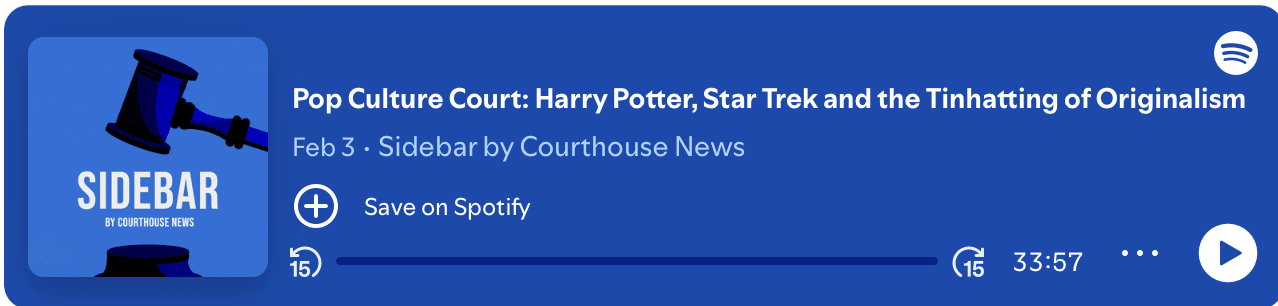
“Sidebar:
Pop
Culture
Court
—
Harry
Potter,
Star
Trek
and
the
Tinhatting
of
Originalism” From Courthouse
News:
“Fictional
worlds
can
be
a
total
dream
—
until
the
legal
system
turns
into
a
nightmare.
From
wizarding
mishaps
to
galactic
treaties,
we
look
at
how
imaginary
laws
mirror
our
own
messy
struggles
with
ethics
and
the
Constitution.”
With Lenora
Ledwon (St.
Thomas
University), Stacey
Lantagne (Suffolk), Kiersten
Marcil (attorney
and
author
of
The
Enlightened
saga), and
Fabrice
Defferrard (University
of
Reims).
Read
more
and
listen here.
Get
Hired
Did
you
miss
the
450+
job
postings
from
previous
weeks?
Find
them
all here.
Accreditation
Counsel,
ABA
Council
of
the
Section
of
Legal
Education
and
Admissions
to
the
Bar
—
Chicago/Hybrid. From
the
posting:
“Provides
counsel
and
expertise
to
the
Council
of
the
Section
of
Legal
Education
and
Admissions
to
the
Bar.
Serves
in
compliance
role
in
assuring
that
the
Section
follows
all
US
Dept
of
Education
criteria,
as
well
as
the
Section’s
Standards,
Rules
and
own
Internal
Operating
Practices.”
Salary
range
from
$117,280
–
144,156.50. Learn
more
and
apply here.
Associate
General
Counsel,
Ethics
Officer,
Department
of
Justice
Federal
Bureau
of
Prisons
—
Washington
DC. From
the
posting:
”The
incumbent
serves
as
the
Associate
General
Counsel/Ethics
Officer
in
the
Ethics
Branch,
Office
of
General
Counsel.
The
Ethics
Office
is
responsible
for
administering
the
Bureau-wide
ethics
program
and
for
implementing
Bureau-wide
policies
on
ethics
issues.”
Salary
range
$169,278
to
$197,200.
Learn
more
and
apply here.
Conflicts
Attorney,
Wilson
Sonsini
—
Remote. From
the
posting:
“This
role
works
closely
with
attorneys
and
business
stakeholders
to
ensure
timely
conflicts
clearance
and
efficient
matter
progression.
The
Conflicts
Attorney
will
conduct
daily
reviews
of
firm
conflicts
reports,
identify
and
resolve
issues
using
sound
legal
judgment,
and
provide
practical,
solutions-oriented
guidance
consistent
with
professional
responsibility
rules
and
Firm
policies.”
Salary
range
$116,875
–
$158,125.
Learn
more
and
apply here.
Conflicts
Counsel,
Baker
Botts
—
Multiple
Locations. From
the
posting:
”This
position
is
responsible
for
reviewing
conflicts
reports
and
assisting
in
the
identification
and
clearance
of
potential
conflicts
of
interest
primarily
in
connection
with
new
business
intake.
The
role
may
also
include
conflicts
analysis
relating
to
hiring
of
new
lawyers
and
non-lawyer
staff
on
an
as-needed
basis.
The
Conflicts
Counsel
provides
support
for
Office
of
General
Counsel
in
implementing
risk
management
strategies
relating
to
new
business
intake
and
lawyer
hiring.”
Salary
range
$148,000
–
$210,000.
Learn
more
and
apply here.
Director
of
Litigation
and
Policy,
Center
for
Ethics
and
the
Rule
of
Law,
University
of
Pennsylvania
—
Philadelphia. From
the
posting:
”CERL
seeks
a
full-time
Litigation
and
Policy
Director
to
lead
its
nationwide
initiatives
in
U.S.
courts,
supporting
and
advising
members
of
Congress,
executive
branch
officials,
and
actors
in
state
and
local
government.
This
position
will
work
in
close
collaboration
with
CERL’s
Faculty
Director,
post-doctoral
fellows,
members
of
CERL’s
Executive
Board,
Advisory
Counsel
and
Faculty
affiliates
and
Penn
Carey
Law
students
to
align
CERL’s
litigation
and
policy
work
with
strategic
defense
for
the
rule
of
law
and
Penn’s
pedagogical
mission.”
Salary
range
$109,000.00
–
$140,000.00.
Learn
more
and
apply here.
Ethics
Attorney,
State
Bar
of
Texas
—
Austin. From
the
posting:
”Provides
ethical
advice
to
members
of
the
State
Bar
of
Texas
with
respect
to
the
Texas
Disciplinary
Rules
of
Professional
Conduct,
and
opinions
published
by
the
Supreme
Court’s
Professional
Ethics
Committee.”
Learn
more
and
apply here.
Legal
Counsel
or
Senior
Legal
Counsel,
Ethics,
Campaign
Legal
Center
—
Washington
DC/Hybrid. From
the
posting:
“Central
to
the
mission
of
Campaign
Legal
Center
(‘CLC’)
is
the
protection
of
the
right
to
a
government
free
from
both
the
reality
and
appearance
of
improper
influence
and
corruption.
Reporting
to
the
Ethics
Director,
the
Legal
Counsel/
Sr.
Legal
Counsel
(LC/SLC)
works
on
both
proactive
and
responsive
actions
consistent
with
mission
of
CLC’s
ethics
program,
including
conducting
legal
and
factual
research,
ethics
investigations,
drafting
complaints,
rulemaking
petitions,
letters,
testimony
and
other
public
documents,
as
well
as
working
with
outside
groups
to
advance
our
mission.”
Salary
range
for
Legal
Counsel
–
$110,776
–
149,875
and
for
Senior
Legal
Counsel
–
$128,078
–
183,773.
Learn
more
and
apply here.
Litigation
Counsel
or
Senior
Litigation
Counsel,
Citizens
for
Responsibility
and
Ethics —
Washington
DC. From
the
posting:
”Citizens
for
Responsibility
and
Ethics
in
Washington
(CREW)
seeks
a
passionate
and
creative
Litigation
Counsel
or
Senior
Litigation
Counsel
to
join
our
legal
team
and
help
us
secure
our
democracy
and
build
a
better
Washington.
This
position
is
a
unique
opportunity
to
be
on
the
front
lines
of
the
fight
for
a
more
ethical,
accountable,
and
open
government,
while
working
alongside
smart,
dedicated
and
kind
people.”
Salary
range
$145,000
–
190,000.
Learn
more
and
apply here.
Supervisory
Attorney
Advisor
(Ethics
Counsel),
Office
of
Government
Ethics
—
Washington
DC. From
the
posting:
”This
position
is
located
in
the
Ethics
Law
and
Disclosure
Division
(ELDD)
and
will
receive
general
direction
and
guidance
from
the
Director
and
will
be
responsible
for
the
administration
of
the
ELDD.
The
ELDD
is
responsible
for
establishing
liaison
with
all
executive
agencies,
including
the
White
House
and
the
DOJ
and
for
providing
advice
and
counsel
to
agency
ethics
officials
and
the
general
public
and
analyzing,
resolving,
and
monitoring
potential
conflicts
of
interest.”
Salary
range
$151,661
to
–
$228,000.
Learn
more
and
apply here.
Upcoming
Ethics
Events
&
Other
Announcements
️
Did
you
miss
an
announcement
from
previous
weeks?
Find
them
all here.
March
25,
6-7:30PM
Eastern.
Book
Talk
Series:
Lawyer
3.0:
A
Guide
to
Next-Wave
Lawyering,
sponsored
by
the
Monroe
H.
Freedman
Center
for
the
Study
of
Legal
Ethics
and
the
Stein
Center
for
Law
and
Ethics. Emerging
technologies
like
artificial
intelligence
and
quantum
computing
will
transform
all
sectors
of
the
economy,
including
the
legal
profession.
But
technology
has
dramatically
impacted
lawyers
before.
In
his
new
book,
author
Ray
Brescia
shows
how
technologies
of
the
late
19th
century
spurred
the
emergence
of
a
new
“version”
of
the
profession,
but
one
that
was
largely
inaccessible
to
too
many
consumers.
Today,
new
technologies
are
creating
an
even
newer
version
of
the
profession―Lawyer
3.0―that
could
be
more
affordable
and
effective
than
the
one
that
currently
exists.
Professor
Brescia’s
book
not
only
describes
this
phenomenon
but
shows
how
lawyers
cannot
just
survive
but
thrive
in
this
new
reality.
Join
us
to
hear
Professor
Brescia
provide
an
overview
of
his
book
with
reactions
and
commentary
from
a
trio
of
national
experts
in
ethics
and
technology:
-
Ray
Brescia
Author
and
Associate
Dean
for
Research
&
Intellectual
Life
and
the
Hon.
Harold
R.
Tyler
Chair
in
Law
&
Technology,
Albany
Law
School -
Renee
Knake
Jefferson
Professor
of
Law
and
the
Joanne
and
Larry
Doherty
Chair
in
Legal
Ethics,
and
Assistant
Dean
Outcomes,
Assessments,
and
Strategies,
University
of
Houston
Law
Center -
Caitlin
(Cat)
Moon
Professor
of
Practice,
Founding
Co-Director,
Vanderbilt
AI
Law
Lab
(VAILL)
and,
Co-Director,
Program
on
Law
and
Innovation
(PoLI),
Vanderbilt
Law
School -
Sateesh
Nori
Attorney
at
Law
and,
Chief
Legal
Futurist
at
LawDroid
and
Senior
Research
Fellow
on
AI
and
Access
to
Justice,
New
York
University
School
of
Law
Center
on
Civil
Justice
Learn
more
and
register here.
April
22-24.
American
Bar
Association Spring
2026
National
Legal
Malpractice
Conference,
Coral
Gables. Learn
more
and
register here.
May
27-29. ABA
51st
Conference
on
Professional
Responsibility,
UCLA
Meyer
and
Renee
Luskin
Conference
Center,
Los
Angeles.
Learn
more here.
May
29-30.
ABA
41st
National
Forum
on
Client
Protection,
UCLA
Meyer
and
Renee
Luskin
Conference
Center,
Los
Angeles.
Learn
more here.
October
15-16.
Complex
Litigation
Ethics
Conference,
UC
Law
San
Francisco. The
conference
is
the
fourth
annual
event
addressing
Complex
Litigation
Ethics.
It
will
bring
together
luminaries
in
the
field—judges,
scholars,
lawyers,
and
others—to
discuss
a
cutting-edge
topic
that
is
of
critical
importance
to
our
justice
system.
Learn
more here.
December
9-11.
International
Legal
Ethics
Conference,
National
University
of
Singapore,
Faculty
of
Law. Learn
more here.
Keep
in
Touch
-
News
tips?
Announcements?
Events? A
job
to
post? Reading
recommendations? Email [email protected] –
but
be
sure
to
subscribe
first,
otherwise
the
email
won’t
be
delivered. -
Do
you
have
colleagues
who
care
about
legal
ethics? Please
share
the
Roundup
with
them.
I’d
love
to
see
our
community
continue
to
grow!