
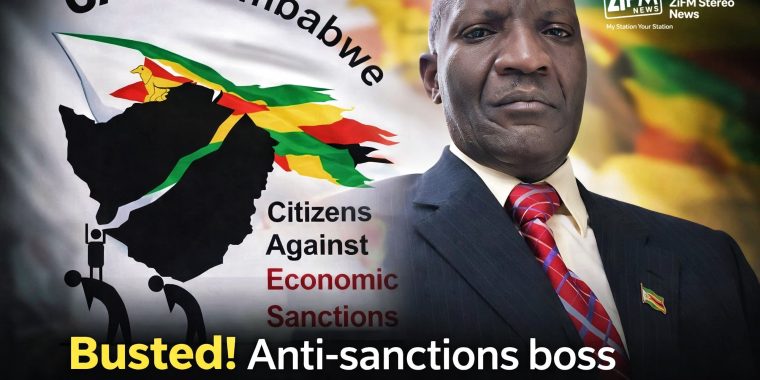

In
a
damning
letter
dated
9
March
2026,
seen
by
ZiFM
Stereo
News,
the
board
of
Citizens
Against
Economic
Sanctions
(CAES)
formally
expelled
its
chairman
and
executive
director
Martin
Zharare,
accusing
him
of
fraud,
theft
and
misappropriation
of
funds
collected
from
desperate
villagers
across
several
provinces.
The
letter
issued
from
the
organisation’s
offices
at
No.
2
Manby
Avenue,
Harare,
states
that
an
internal
review
allegedly
uncovered
a
pattern
of
financial
misconduct
linked
to
a
borehole
drilling
scheme
in
which
communities
were
asked
to
pay
US$1,800
per
borehole.
According
to
the
board,
the
projects
were
never
carried
out.
“Following
an
internal
review
and
investigation,
it
has
been
established
that
you
were
involved
in
acts
of
fraud,
misappropriation
of
funds,
and
theft,”
the
board
wrote
in
the
letter
addressed
to
Zharare.
The
allegations
paint
the
picture
of
an
organisation
whose
leader
allegedly
leveraged
its
proximity
to
political
power
and
its
anti-sanctions
activism
to
extract
money
from
some
of
Zimbabwe’s
poorest
communities.
The
board
claims
the
alleged
scheme
targeted
rural
districts
already
grappling
with
chronic
water
shortages.
Matabeleland
North
appears
to
have
been
among
the
worst
affected.
The
letter
states
that
more
than
50
boreholes
in
Binga
district
alone
were
never
drilled,
despite
communities
allegedly
paying
thousands
of
dollars
in
advance.
“Matabeleland
North
has
been
grossly
affected,
with
more
than
50
boreholes
undrilled,
each
borehole
costing
USD
1,800,”
the
board
wrote.
It
also
cites
EcoCash
transaction
records,
which
board
members
claim
shows
Zharare
receiving
US$1,800
from
a
villager
identified
as
Muleya
of
Binga,
referencing
transfer
codes
F32444,
K75554
and
F40207.
The
board
further
alleges
that
Zharare
collected
US$1,200
in
Zaka
district
under
the
guise
of
a
membership
drive,
funds
which
it
says
were
never
accounted
for
and
have
now
been
classified
among
the
financial
irregularities
under
investigation.
The
accusations
extend
beyond
financial
misconduct
into
claims
that
vulnerable
individuals
were
directly
targeted.
Board
members
allege
that
on
6
October
2025,
Zharare
traveled
to
Binga,
where
he
defrauded
a
90-year-old
woman
of
US$1,800
for
a
borehole
that
was
never
drilled.
Another
alleged
victim,
Thabani
Moyo
of
Dobola,
Ward
16
in
Binga,
was
reportedly
invited
to
Bulawayo
on
12
August
2025,
where
he
was
told
CAES
had
an
office
in
the
city.
But
according
to
the
board,
the
office
was
mysteriously
“closed”.
Instead,
Moyo
was
allegedly
instructed
to
sign
an
exercise
book
outside
the
premises
and
hand
over
US$1,800
in
cash.
The
borehole,
the
board
says,
was
never
drilled.
The
allegations
widen
further.
In
Mashonaland
Central,
the
board
claims
Zharare
allegedly
defrauded
US$1,500
from
a
woman
identified
as
Mrs.
Magarate.
The
matter,
according
to
the
letter,
has
already
been
reported
to
the
Zimbabwe
Republic
Police
in
Mount
Darwin
under
case
reference
RRB
6771010.
Board
members
say
additional
villagers
in
the
province
were
also
allegedly
defrauded
of
US$7,500
under
the
same
borehole
scheme.
In
another
startling
allegation,
the
letter
claims
Zharare
created
a
fictitious
administrative
ward
in
Mhondoro
Ngezi
labeled
“Ward
4B”
and
used
it
to
allegedly
withdraw
agricultural
inputs
valued
at
more
than
US$6,000.
The
board
says
the
listed
beneficiaries
do
not
exist
in
the
organisation’s
database.
The
alleged
fraud
trail
stretches
yet
again
to
Bubi
district,
where
the
board
claims
villagers
were
allegedly
fleeced
of
US$4,500
for
boreholes
that
were
never
drilled.
Taken
together,
the
accusations
outlined
by
the
board
suggest
villagers
across
Zimbabwe
may
have
lost
more
than
US$26,000
in
the
alleged
scheme.
CAES
vice
chairperson
Ellison
Muchenje
Samuriwo,
speaking
in
a
telephone
interview,
described
what
he
said
was
a
clandestine
operation
carried
out
outside
the
knowledge
of
the
organisation’s
leadership.
“He
has
been
moving
across
the
country
alone,
collecting
money
from
communities
while
claiming
the
organisation
had
been
tasked
with
drilling
boreholes,”
Samuriwo
said.
“But
after
pocketing
the
money,
the
projects
never
happened,
and
now
he
claims
he
has
no
idea
where
the
funds
are.”
Samuriwo
said
the
alleged
scheme
only
began
to
unravel
when
communities
started
demanding
answers.
“The
truth
only
exploded
when
we
started
receiving
frantic
phone
calls
from
communities
across
the
country
demanding
their
money
back.
That
is
when
we
realised
something
was
terribly
wrong.”
According
to
Samuriwo,
the
board
believes
the
true
scale
of
the
alleged
scam
may
be
far
higher.
“The
amount
involved
could
easily
exceed
US$40,000
because
in
some
cases
communities
were
forced
to
make
down
payments
of
up
to
US$800.”
He
also
claimed
that
even
traditional
leaders
were
allegedly
misled.
“Even
a
traditional
leader
was
not
spared.
A
chief
recently
contacted
us
expressing
his
anger
and
disappointment
after
realising
he
had
also
been
duped.”
In
perhaps
one
of
the
most
troubling
allegations,
Samuriwo
claimed
communities
were
allegedly
told
that
the
drilling
would
be
carried
out
using
a
government
drilling
rig,
yet
villagers
were
charged
US$1,800,
more
than
double
what
he
described
as
the
typical
US$800
cost.
“What
makes
it
even
more
shocking
is
that
the
drilling
was
allegedly
being
done
using
a
government
rig,
yet
communities
were
charged
an
inflated
US$1,800
instead
of
the
normal
US$800,”
he
said.
The
board
says
it
attempted
to
intervene
when
complaints
first
surfaced.
“When
the
first
reports
came
in,
we
tried
to
caution
him,”
Samuriwo
said.
“Instead,
he
became
arrogant
and
defiant,
boasting
that
he
was
the
founder
and
no
one
could
tell
him
how
to
run
the
organisation.”
According
to
the
vice
chairman,
the
situation
escalated
to
the
point
where
ZANU
PF’s
commissariat
allegedly
summoned
the
organisation’s
leadership
on
18
December
2025
following
mounting
complaints.
“Even
that
warning
did
not
stop
him,”
Samuriwo
said.
The
board
claims
that
by
January
2026,
Zharare
had
effectively
disappeared.
“Right
now,
his
phone
number
is
no
longer
going
through.
He
has
vanished.
He
has
completely
gone
off
the
radar.”
The
expulsion
letter
states
that
during
a
national
executive
meeting
held
in
Gweru
on
7
March
2026,
CAES
leaders
passed
a
vote
of
no
confidence
in
Zharare’s
leadership.
The
board
says
his
conduct
was
found
to
be
“inconsistent
with
the
principles
and
values
upheld
by
the
organisation”
and
contrary
to
the
governance
principles
associated
with
President
Emmerson
Dambudzo
Mnangagwa.
“You
adversely
affected
our
mobilisation
strategy,
as
we
have
700,000
members
across
all
10
provinces,”
the
letter
states.
Zharare
has
been
ordered
to
immediately
return
all
organisational
property,
documents,
and
presidential
inputs
in
his
possession.
The
organisation
also
warned
that
it
reserves
the
right
to
cooperate
fully
with
law
enforcement
authorities
and
pursue
further
legal
action.
Efforts
to
obtain
Zharare’s
response
to
the
allegations
were
unsuccessful.
His
registered
mobile
number
is
not
going
through,
repeatedly
diverting
to
voicemail,
while
WhatsApp
messages
sent
to
the
number
are
not
being
delivered.
Meanwhile,
CAES
leaders
say
more
victims
may
still
be
emerging.
“We
are
urging
everyone
who
paid
money
to
come
forward
and
report
because
more
victims
are
still
emerging
every
day,”
Samuriwo
said.
–ZiFM
Stereo
News
Reporting
by
Anesu
Masamvu
Post
published
in:
Featured