
The
solar
project,
commissioned
on
Tuesday,
consists
of
1
300
panels
that
will
power
the
169-bed
hospital
and
contribute
to
Zimbabwe’s
broader
energy
security
strategy.
The
project
was
funded
by
the
United
Nations
Zimbabwe
and
the
United
Nations
Capital
Development
Fund
(UNCDF)
in
collaboration
with
Old
Mutual
Zimbabwe
at
a
cost
of
about
US$810
000.
Speaking
at
the
commissioning
ceremony,
Old
Mutual
Zimbabwe
Group
Chief
Executive
Officer,
Samuel
Matsekete,
said
the
project
was
financed
through
a
partnership
involving
government,
development
agencies
and
the
private
sector.
“The
solar
plant
project
was
financed
by
the
Renewable
Energy
Fund,
which
is
a
partnership
between
the
government,
the
United
Nations
development
agencies,
Old
Mutual
and
other
private
sector
players
that
came
on
board,”
he
said.
Matsekete
added
that
the
project
also
benefited
from
support
from
individuals
and
organisations
who
volunteered
their
services.
Mater
Dei
Hospital
Medical
Director,
Adolf
Macheka,
said
the
project
was
driven
by
the
need
to
ensure
reliable
electricity
for
life-saving
medical
services.
“Our
biggest
challenge
as
a
nation
is
being
energy
resilient.
When
that
happens,
energy-health
integration
becomes
critical
because
it
is
a
matter
of
life
and
death,”
he
said.
Macheka
said
hospitals
could
not
afford
electricity
interruptions
because
of
the
nature
of
the
services
they
provide.
“We
have
critical
services
like
ICU,
coronary
care
and
theatre
processes
which
by
their
nature
cannot
afford
to
have
energy
interruption,”
said
Mater
Dei’s
medical
director.
He
said
the
solar
system
would
make
sure
the
hospital
remains
operational
even
during
national
grid
failures.
“The
whole
idea
is
that
when
we
have
a
national
grid
failure
we
are
resilient.
We
do
not
have
to
depend
on
external
energy
production
because
we
are
self-sustainable,”
said
Macheka.
The
solar
plant
has
a
capacity
of
750
kilowatts
and
is
expected
to
generate
about
1.3
million
kilowatt
hours
of
electricity
annually,
more
than
the
hospital
requires.
“We
have
a
plant
that
produces
about
1.3
million
kilowatt
hours
of
energy
annually
and
that
energy
is
in
fact
surplus
to
what
Mater
Dei
Hospital
needs,”
Macheka
said.
He
added
that
the
hospital
had
already
begun
feeding
excess
electricity
into
the
national
grid.
“In
the
one
month
that
the
project
has
been
operational,
we
have
noticed
that
with
good
sunny
weather
we
can
feed
about
1
000
kilowatts
of
energy
into
the
grid,”
he
said.
According
to
Macheka,
the
solar
plant
is
expected
to
last
between
25
and
30
years
and
could
recover
its
installation
costs
within
five
years.
“The
solar
power
system
has
a
lifespan
of
between
25
and
30
years
and
within
about
five
years
this
power
plant
will
have
paid
itself
back,”
he
said.
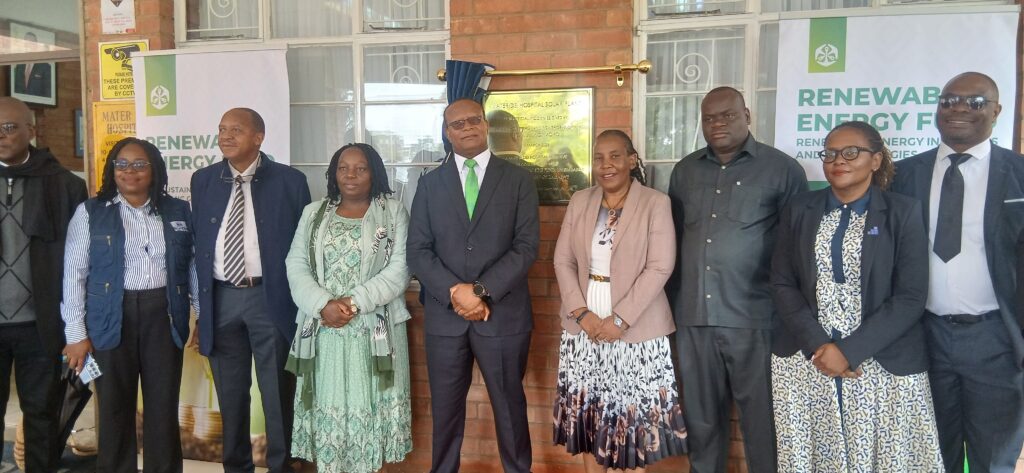
Deputy
Minister
of
Energy
and
Power
Development,
Yeukai
Simbanegavi,
who
attended
the
commissioning
ceremony,
said
Zimbabwe
was
working
to
strengthen
both
national
and
regional
energy
security
while
transitioning
towards
renewable
energy
sources.
“Zimbabwe
as
a
nation
has
also
been
contributing
to
regional
energy
security,
so
we
have
to
play
our
part
as
a
government,”
she
said.
Simbanegavi
said
the
country
was
still
relying
largely
on
hydro
and
coal
power
but
was
gradually
incorporating
renewable
energy
sources.
“Even
as
a
developing
nation
we
are
still
utilising
our
hydro
and
coal
to
generate
electricity.
However,
we
are
now
transitioning
into
using
renewable
sources
of
energy,”
she
said.
She
added
that
the
government
was
encouraging
institutions
and
businesses
to
generate
their
own
electricity
to
reduce
pressure
on
the
national
grid.
“We
have
now
said
we
will
incorporate
the
private
and
public
sectors
into
generating
electricity
on
their
own,
not
only
waiting
for
the
government
to
supply
power
but
for
everyone
to
play
their
role,”
she
said.
Simbanegavi
said
institutions
that
produce
excess
electricity
could
also
feed
power
into
the
grid
and
generate
additional
revenue.
“When
institutions
generate
electricity
for
themselves
and
have
extra
that
they
put
on
the
grid,
they
are
also
able
to
generate
income
for
themselves
which
can
be
used
to
develop
the
hospital
in
other
ways,”
she
said.