

Over
half
of
law
firms
view
lateral
hiring
as
a
key
growth
strategy.
Yet
roughly
a
third
of
lateral
partner
hires
leave
within
five
years.
Despite
this
uncomfortable
reality,
firms
still
measure
their
lateral
success
by
“revenue
brought
in,”
which
is
like
grading
a
marriage
on
the
quality
of
the
wedding
reception.
For
the
record,
the
other
big
revenue
strategy
is
“just
raise
rates!”
—
a
tried
and
true
method
that,
historically,
ends
with
clients
grumbling
and
then
forking
over
more
money
anyway.
But
those
days
might
be
numbered.
A
new
report
from
Passle,
a
legal
marketing
technology
platform,
surveyed
100
managing
partners
and
business
development
leads
at
the
top
200
U.S.
firms
and
the
top
100
in
the
UK,
and
found
that
while
58
percent
of
firms
list
rate
increases
as
their
primary
revenue
strategy,
54
percent
list
rate
increases
as
the
main
reason
they
lose
clients
to
competitors.
Maybe
that
$10,000
billable
hour
is
further
off
than
some
people
think.
If
rate
hikes
lose
their
efficacy,
firms
will
have
to
lean
harder
into
poaching
lateral
talent.
Which
means
finding
a
solution
to
the
costly
defection
rate.
The
Passle
report
cites
research
from
Decipher
Investigative
Intelligence
that
30-38
percent
of
lateral
partners
leave
within
five
years,
while
90
percent
of
firms
report
business
development
challenges
with
laterals.
A
failed
lateral
partner
can
cost
a
firm
200
to
400%
of
that
lawyer’s
annual
compensation
once
you
factor
in
recruiter
fees,
guarantees,
and
replacement
costs.
And
think
of
the
rash
of
Biglaw
mergers
as
lateral
hiring
on
steroids
—
both
in
revenue
and
cost.
“Mega-mergers
involving
firms
with
more
than
$1B
in
combined
revenue
typically
cost
between
5%
and
8%
of
total
revenue,
according
to
Altman
Weil.”
No
matter
how
the
laterals
arrive,
firms
are
spending
a
lot
of
money,
so
they
need
to
find
a
way
to
make
those
deals
work.
Another
nugget
from
Decipher’s
research
into
the
“business
development
challenges”
with
laterals
is
that
100
percent
of
those
firms
it
surveyed
report
struggling
“to
transfer
the
book
of
business
from
an
incoming
lateral.”
Perhaps
that
—
right
there
—
is
the
whole
problem.
Firms
need
to
stop
treating
laterals
as
resources
to
milk
dry.
Interestingly,
the
survey
found
that
firms
that
report
being
satisfied
with
their
revenue
growth
are
more
likely
to
recognize
the
leading
indicators
of
lateral
success.
Among
firms
who
report
being
satisfied
with
their
growth,
the
top
selected
indicator
of
effective
lateral
integration
(61%)
was
“They
are
engaged
in
internal/external
networking”.In
other
words,
the
fastest-growing
firms
understand
that
meaningful
networking
and
trusted
referrals
always
come
first.
Sustainable
revenue
naturally
follows.
The
line
may
be
fuzzy,
but
it’s
significant.
I
knew
a
partner
who
declined
an
Am
Law
100
offer
because
the
firm’s
rhetoric
implicitly
framed
its
long-term
goal
as
offloading
the
partner’s
personal
book
of
business
to
the
firm
generally.
Throughout
the
process,
she
felt
like
the
firm
viewed
her
book
as
an
asset
and
just
hoped
to
hang
onto
as
much
of
it
as
possible
before
driving
the
human
out
the
door.
That’s
a
firm
approaching
its
recruiting
process
by
planning
for
failure.
The
purpose
of
hiring
a
lateral
is
to
bring
the
business
they
already
built
themselves
under
the
firm’s
roof
—
trust
those
relationships.
If
firms
approach
a
new
lateral
as
an
opportunity
to
wrest
business
away,
that’s
a
lateral
who
will
definitely
find
a
way
to
leave
within
five
years.
The
opportunity
to
multiply
the
value
of
one
book
of
business
is
in
cross-promotion.
That’s
why
the
firms
most
satisfied
with
laterals
cite
networking
as
the
key.
Unfortunately,
firms
aren’t
necessarily
good
at
facilitating
collaboration:
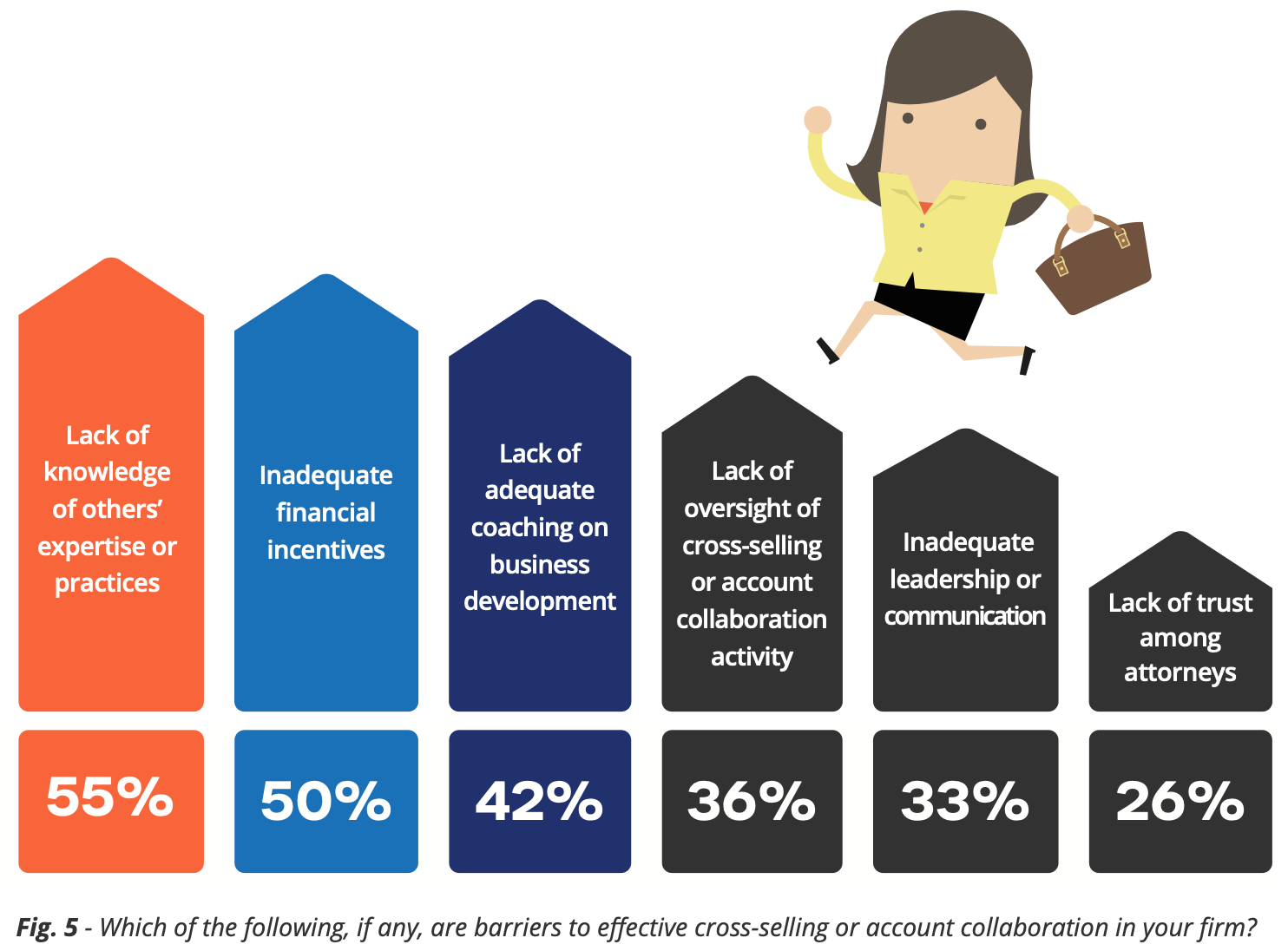
Passle
locks
onto
this
“visibility
gap”
among
partners.
Only
41
percent
of
partners
think
their
colleagues
understand
what
they
do.
And
it
cuts
both
ways,
with
a
mere
52
percent
reporting
that
they
think
they
understand
expertise
of
the
rest
of
the
firm.
But
that’s
a
problem
firms
need
to
fix.
The
Heidi
Gardner
research
the
report
leans
on
is
genuinely
striking:
a
client
relationship
that
spans
five
practice
groups
generates
almost
18
times
the
revenue
of
a
single-practice
engagement.
But
you
only
get
there
if
the
lateral
feels
comfortable
enough
at
the
new
firm
to
vouch
for
their
colleagues
—
which
means
trusting
that
those
colleagues
won’t
poach
the
client,
undercut
the
relationship,
or
treat
the
lateral
as
a
stepping
stone
to
direct
access.
For
Passle’s
part,
they
sell
a
product
called
CrossPitch
AI
that
endeavors
to
give
firms
more
visibility
on
this
front.
The
tool
uses
artificial
intelligence
—
obviously
—
to
“match
highly
relevant
thought
leadership
with
the
right
lawyers”
inside
a
firm.
CrossPitch
AI’s
cross-selling
intelligence
map
provides
a
live
view
of
how
colleagues
are
collaborating
in
real
time,
surfacing
connections
and
patterns
that
would
otherwise
go
unseen.
This
creates
an
early
indicator
of
whether
laterals
are
embedding
effectively
within
the
firm,
enabling
leadership
to
identify
gaps,
strengthen
relationships
and
intervene
where
needed
before
opportunities
are
missed.
Improving
cross-selling
visibility
and
uncovering
new
business
opportunities
doesn’t
mean
firms
will
address
the
financial
and
cultural
roadblocks
to
effective
cross-selling,
but
it
gives
business
development
professionals
a
stronger
hand
in
pushing
for
change.
Leading
a
horse
to
water
may
not
make
it
drink,
but
the
odds
are
a
better
than
just
leaving
it
in
the
stable.
 Joe
Joe
Patrice is
a
senior
editor
at
Above
the
Law
and
co-host
of
Thinking
Like
A
Lawyer.
Feel
free
to email
any
tips,
questions,
or
comments.
Follow
him
on Twitter or
Bluesky
if
you’re
interested
in
law,
politics,
and
a
healthy
dose
of
college
sports
news.
Joe
also
serves
as
a
Managing
Director
at
RPN
Executive
Search.