Morgan Lewis Rolls Out Big-Time Special Bonuses For Associates

So many firms have announced Davis Polk special bonus matches that we’re calling it: it may be spring, but it’s officially Biglaw bonus season.

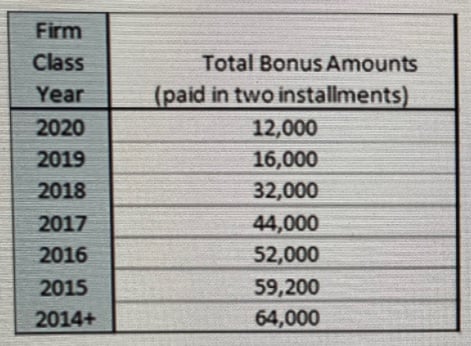
The latest firm to join in on the bonus fun can be found near the tippy top of the Am Law rankings. It’s Morgan Lewis, an elite firm that brought in $2,265,000,000 gross revenue in 2019. The firm has obviously matched the incredibly generous Davis Polk scale. Here’s what the firm’s special bonus scale looks like (full memo available on the next page):

As noted above, the firm’s bonuses will be paid out in June and October. The good news doesn’t stop here: Morgan Lewis has committed to paying year-end bonuses that are “at or above market.” Congratulations, everyone!

P.S. Where you at, Cravath? Come on, now.

(Flip to the next page to see the full memo from Morgan Lewis.)

Remember everyone, we depend on your tips to stay on top of important bonus updates, so when your firm matches, please text us (646-820-8477) or email us (subject line: “[Firm Name] Matches”). Please include the memo if available. You can take a photo of the memo and send it via text or email if you don’t want to forward the original PDF or Word file.

And if you’d like to sign up for ATL’s Bonus Alerts (which is the alert list we also use for salary announcements), please scroll down and enter your email address in the box below this post. If you previously signed up for the bonus alerts, you don’t need to do anything. You’ll receive an email notification within minutes of each bonus announcement that we publish. Thanks for all of your help!


Staci ZaretskyStaci Zaretsky is a senior editor at Above the Law, where she’s worked since 2011. She’d love to hear from you, so please feel free to email her with any tips, questions, comments, or critiques. You can follow her on Twitter or connect with her on LinkedIn.

Enter your email address to sign up for ATL’s Bonus & Salary Increase Alerts.

Composting Your Experiences


Olga V. Mack is the CEO of Parley Pro, a next-generation contract management company that has pioneered online negotiation technology. Olga embraces legal innovation and had dedicated her career to improving and shaping the future of law. She is convinced that the legal profession will emerge even stronger, more resilient, and more inclusive than before by embracing technology. Olga is also an award-winning general counsel, operations professional, startup advisor, public speaker, adjunct professor, and entrepreneur. She founded the Women Serve on Boards movement that advocates for women to participate on corporate boards of Fortune 500 companies. She authored Get on Board: Earning Your Ticket to a Corporate Board Seat and Fundamentals of Smart Contract Security. You can follow Olga on Twitter @olgavmack.

Utah Governor Vetoes Ridiculous Unconstitutional Content Moderation Bill; Makes His Brother-in-Law Sad

Earlier this month, we noted that, to close out its session, the Utah legislature decided to pass two separate blatantly unconstitutional bills. One requiring porn filters on internet-connected devices, and the other that tried to overrule Section 230 (something states can’t do) and require all “social media corporations” to employ an “independent review board” to review content moderation decisions. It also says that social media companies must moderate in an “equitable” manner (whatever that means).

We went through all of the reasons why the bill was unconstitutional, as did others in Utah. In response, the bill’s sponsor, Senator Michael McKell, gleefully told a local TV news station that he looked forward to wasting Utah taxpayers’ hard earned money by defending it in court (he didn’t say that it would be wasting the money — that’s just us noting that it would be throwing away their money since the law is so clearly unconstitutional).

Thankfully, Utah Governor Spencer Cox (who happens to be Senator McKell’s brother-in-law) has decided to veto the bill — his very first veto (as we noted earlier, he chose to sign the other unconstitutional bill about porn filters).

Oddly, Cox’s office released two separate statements regarding the veto — only one of which notes that the bill was likely unconstitutional, while the other one seems to act like the bill just needs a few technical tweaks. It’s almost as if he’s trying to have it both ways and address two different audiences with two very different statements. The official veto statement makes it clear that the bill has serious constitutional issues:

Whatever course of action we take to protect online speech should seek to fully uphold the values enshrined in the First Amendment. While it is clear that something must be done, I believe that S.B. 228 raises significant constitutional concerns. And while I am proud that Utah is leading the effort to protect individuals’ speech on the internet, I believe we will be well served to continue further coordination with our sister states to ensure faire access to the nation’s largest public square.

Um, yeah, no. The government does not get to force anyone to host anyone’s speech. That’s not how it works. At all. The very notion of it is against the principles of the 1st Amendment.

The other statement, that Senator McKell himself posted to Twitter (after whining about the fact that his brother-in-law vetoed his bill) pretends that there are real serious issues involved in all of this, rather than silly, unconstitutional performative nonsense.

That statement doesn’t even mention the constitutional issues and instead suggests that there were merely “technical issues” that got in the way (apparently some in Utah think the 1st Amendment’s prohibition on compelled speech, as well as the Constitution’s Commerce Clause are merely “technical issues”).

Gov. Spencer Cox vetoed S.B. 228 Electronic Free Speech Amendments, with consent from the Senate President, Speaker of the House and bill sponsors. After conversations with the legislative and executive branches, this action was jointly determined as the best path forward due to technical issues. Censorship by tech companies is a serious concern, and this action will not hinder nor prevent Utah from finding the right policy solution.

“The sponsors of this bill have raised valid questions about the impact social media platforms can have on public discourse and debate,” said Gov. Cox. “Our country continues to grapple with very real and novel issues around freedom of speech, the rights of private companies and the toxic divisiveness caused by these new forms of connection, information and communication. While I have serious concerns about the bill, I appreciate the willingness of the bill’s sponsors to continue to seek a better solution. Utah must be a leader in this space and I look forward to engaging with legislators and social media companies to address these legitimate concerns.”

S.B. 228 had made significant headway and elevated Utah’s position in conversations with big tech corporations. Utah policymakers along with the governor will work closely with stakeholders to ensure all Utahns have an equal opportunity to exercise their First Amendment right.

Um, yeah, you see, the 1st Amendment blocks the government (including the government of Utah) from making laws that impact individuals’ rights to free expression. The government cannot seek to force private companies to host speech. So the very idea that they need to step in to make sure that “Utahns have an equal opportunity to exercise their First Amendment right” is nonsense.

Even more bizarre is that Cox allows his brother-in-law, who wrote the bill, to put in a completely nonsensical statement into the press release claiming (laughably) that it’s actually the content moderation decisions of private companies that must violate the 1st Amendment:

“I appreciate the commitment from stakeholders who have agreed to work with the Legislature to craft a better solution that will increase transparency within social media corporations,” said Sen. Mike McKell. “Censorship practices are un-American and likely unconstitutional. In Utah, we defend the right to freely express opinions and views, regardless of political or religious affiliation. The outcome of S.B. 228 is not ideal; however, the issue of free speech and online censorship remains a priority and policy will continue to be refined throughout interim.”

That’s not how any of this works. You don’t get to force private companies to moderate the way the government wants them to moderate. That is what’s unconstitutional. Utah: elect better people who will actually stand up for your constitutional rights, not try to demolish them while pretending that their attacks on the Constitution are no problem at all.

McKell further notes that as soon as the legislature is back in session he’ll introduce a new version of his unconstitutional bill. I will take a wild guess and predict it will be equally unconstitutional. Especially since almost everyone involved in this ridiculous process keeps saying the same stupid things:

“Free speech is one of our most cherished American values and essential to democracy,” said President J. Stuart Adams. “With the rise of social media, the issue of censorship has become increasingly prevalent, and the need for corporation transparency has proven necessary. While I support the concept and ideas of S.B. 228, after conversations with Gov. Cox, Speaker Wilson Sen. McKell and Rep. Brammer, we decided continuing the discussion regarding online censorship will be the most productive path forward. Together as Americans, we must ensure the right to speak freely remains intact, and I look forward to addressing this issue in the near future.”

Everyone has the right to speak freely. What they do not have the right to do is to force others to host their speech or to tell them how they can make editorial and moderation decisions. That is an attack on their 1st Amendment rights. It would be nice if elected officials in Utah could understand this fundamental point behind the 1st Amendment. Tragically, that seems unlikely.

Utah Governor Vetoes Ridiculous Unconstitutional Content Moderation Bill; Makes His Brother-in-Law Sad

More Law-Related Stories From Techdirt:

Telecom Using Veterans As Props To Demonize California’s New Net Neutrality Law
Data Broker Looking To Sell Real-Time Vehicle Location Data To Government Agencies, Including The Military
Congressional Panel On Internet And Disinformation… Includes Many Who Spread Disinformation Online

Stat Of The Week: It’s Time To Talk Maritime Law

The owners and insurers of the grounded container ship the Ever Given, which is holding up an estimated $400 million per hour in trade, face wide-ranging potential claims, according to reports this week.  

The BBC noted today that the stranded ship is delaying an estimated $9.6 billion in goods each day and that experts say it could take weeks to free the ship.

The claims related to the grounding could be as varied as lost revenue for the canal, the cost of the salvage operation, damage to the canal itself, and losses related to perishable goods, among other areas, experts recently told Reuters. 

An anonymous shipping lawyer who spoke with the publication put it this way: 

It is potentially the world’s biggest ever container ship disaster without a ship going bang.

In an interview with Law.com, marine cargo lawyer Ian Woods of Clyde & Co. provided a glimpse of just how sprawling the related legal matters could be: 

In relation to these containership casualties, there’s the potential of 20,000 containers on board. Each container conceivably could have a different cargo owner, cargo insurer, and cargo interest, and all the contracts for the carriage of the goods on board the vessel could be subject to many different laws and jurisdictions. 

You could theoretically have up to 20,000 separate claims arising out of this incident, heard in many different jurisdictions around the world and the scope for many different law firms in different countries to be involved and instructed, once these claims have worked their way up and down the contractual chains involved. They’re quite complicated in that respect.

Suez Blockage Is Holding Up $9.6B in Goods Each Day [BBC]
Stranded Suez Ship’s Owner, Insurers Face Millions in Claims [Reuters]
Suez Drama: Legal Ramifications Will Be Exponential, Lawyers Say [Law.com]


Jeremy Barker is the director of content marketing for Breaking Media. Feel free to email him with questions or comments and to connect on LinkedIn

Biglaw Firm Hands Out Piles Of Special Bonus Money To Hard-Working Associates

As we wrap up a whirlwind week of Biglaw bonus announcements thanks to Willkie Farr and Davis Polk, we’ll note that it’s not quite done yet, because Biglaw firms are still thrilling their associates with even more money.

It’s not just Friday at this firm, it’s more like FriYAY, because much to everyone’s excitement, special bonuses were just announced.

Gunderson Dettmer — a firm that you may recall as being the O.G. of Biglaw salary raises — has matched the prevailing Davis Polk special bonus scale. Here’s what that looks like at the firm (full memo available on the next page):

Gunderson will be paying out its bonuses in May and September, for all U.S.- and Singapore-based associates and counsel who have annualized at least 1950 billable hours. If anyone misses the cutoff for either period, but finishes the year with 1950 or more hours, they’ll receive an amount equal to what their bonuses would’ve been back in the spring and fall. But wait, there’s more: these special bonuses won’t impact any forthcoming year-end bonuses at the firm.

What happy news. Congratulations to everyone at the firm!

(Flip to the next page to see the full memo from Gunderson Dettmer.)

Remember everyone, we depend on your tips to stay on top of important bonus updates, so when your firm matches, please text us (646-820-8477) or email us (subject line: “[Firm Name] Matches”). Please include the memo if available. You can take a photo of the memo and send it via text or email if you don’t want to forward the original PDF or Word file.

And if you’d like to sign up for ATL’s Bonus Alerts (which is the alert list we also use for salary announcements), please scroll down and enter your email address in the box below this post. If you previously signed up for the bonus alerts, you don’t need to do anything. You’ll receive an email notification within minutes of each bonus announcement that we publish. Thanks for all of your help!


Staci ZaretskyStaci Zaretsky is a senior editor at Above the Law, where she’s worked since 2011. She’d love to hear from you, so please feel free to email her with any tips, questions, comments, or critiques. You can follow her on Twitter or connect with her on LinkedIn.

Enter your email address to sign up for ATL’s Bonus & Salary Increase Alerts.

Don’t Manage The Litigation; Win The Litigation

Too many lawyers ploddingly follow the court rules and deadlines, pushing along (or dragging along) the litigation. Bring value to your clients by focusing on winning.

I recently had a conversation with a government lawyer who was handling a false claims matter we had brought to her agency. False claims or qui tam matters are those where an individual brings an action on behalf of a government to seek moneys stolen or not paid, where you generally cooperate with the lawyers who represent the relevant government. There were many target companies that had wronged the government in question, including some that were ready to enter deals with the government to avoid litigation. The point was that our “relator” (the one who brings the action on behalf of the government) was right (as we knew since we conducted a years-long investigation before going to the government): the misconduct in question was happening, and the government was at a loss due to it.

But the companies that wanted to settle were the so-called small fish: I suggested to the government lawyer (who does in the end make the decisions on how to proceed once the government intervenes) that we see if those that were willing to plead would, instead, in return for a better deal with the government, cooperate to help us go after the bigger targets. While private lawyers cannot have a bad actor “flip” like this, government lawyers generally are permitted to do so (and in my organized crime prosecutor days of a million years ago, we would do this all the time).

The lawyer looked at me like I had three heads. She explained that they don’t “flip” defendants. But when I asked why, she simply responded, “Because we don’t.” She didn’t reference a rule or law or even office policy. She just said that they don’t do that because they don’t do that.

Way too many lawyers are like this: they don’t creatively come to the case with a focus on the strategic goal — what is winning for the client? Focus on that — that results in development of tactical goals — how do I win? What can I do right now to help the client win? What do I need to be thinking about for later? They just follow the rules, meet the next deadline, get the next task done, and then move on.

Don’t do that. That’s managing litigation. It’s easy. Now, I get it, it’s hard in a way since such management means working long hours and meeting all those deadlines, following all those rules. But you’re not winning for the client. At our firm, we know to keep that strategic goal — winning for the client, whatever that means — foremost in our minds. One reason is that it forces you to focus: how is the step I’m going to take helping the client win? What are the next steps I can take to help the client win?

It’s challenging to meet all your responsibilities as a litigator. But in the end, it’s not that hard. It just takes a lot of work and organization. Be hard on yourself: focus not on managing the client’s litigation but winning the litigation for the client.


john-balestriereJohn Balestriere is an entrepreneurial trial lawyer who founded his firm after working as a prosecutor and litigator at a small firm. He is a partner at trial and investigations law firm Balestriere Fariello in New York, where he and his colleagues represent domestic and international clients in litigation, arbitration, appeals, and investigations. You can reach him by email at john.g.balestriere@balestrierefariello.com.

Dominion Files $1.7 Billion Defamation Suit Against Fox For Election ‘Journalism’

“If this case does not rise to the level of defamation by a broadcaster, then nothing does.”

It’s a pretty fair distillation of the $1.7 billion suit against Fox News for airing false allegations that Dominion Voting Systems’ used its machines to steal the election from Donald Trump. In a 141-page complaint filed yesterday in a Delaware court, Dominion accuses Fox of knowingly hyping lies about the election in a desperate bid to hold on to viewers furious that the network called the race for Arizona on election night.

“In the face of intense backlash and viewers beginning to flee to rival networks, Fox understood that it needed to embrace and amplify the lies that had begun to circulate about Dominion,” the company claims, adding, “Fox took a small flame and turned it into a forest fire.”

So even though the network itself had aired multiple segments in October explaining that the early-counted in-person votes would skew heavily toward Trump, while the absentee vote favoring Biden would be counted later, Fox personalities went all in on the claim that the apparent “vote shift” was evidence of fraud.

Maria Bartiromo discussed it with President Trump himself on October 11, when he called in to lament that districts would still be counting mail-in ballots “two weeks after the vote comes in.” Nevertheless, on November 8, she hosted Kraken lawyer Sidney Powell to pretend this was evidence of something nefarious.

“Sidney, we talked about the Dominion software. I know that there were voting irregularities. Tell me about that,” Bartiromo asked.

“That’s putting it mildly. The computer glitches could not and should not have happened at all. That is where the fraud took place, where they were flipping votes in the computer system or adding votes that did not exist. We need an audit of all of the computer systems that played any role in this fraud whatsoever,” Powell responded. “They had the algorithms … That’s when they had to stop the vote count and go in and replace votes for Biden and take away Trump votes.”

“Why was there an overnight popping of the vote tabulation that cannot be explained for Biden?” shouted Jeanine Pirro on November 21.

Dominion lists multiple broadcasts by Bartiromo, Pirro, and their fellow hosts Tucker Carlson, Sean Hannity, and Lou Dobbs, all of whom promoted false claims about the election and gave airtime to cranks like Mike Lindell, Rudy Giuliani, and Sidney Powell to spout lies. It’s a recitation similar to that made by its competitor Smartmatic in that company’s defamation suit against the network.

Moreover, Dominion notes that the network and its hosts had actual knowledge that the claims were false, since by November 12 the company ‘s lawyers were sending out regular blast emails to Fox management and hosts with regular emails debunking the network’s allegations and demanding retraction.

For example:

On November 26, 2020, Dominion sent another email to more than 90 Fox reporters, producers, anchors, hosts, and content managers with the same sets of facts from the earlier “SETTING THE RECORD STRAIGHT” emails, as well as additional specific facts debunking claims that Dominion had rigged the election in Pennsylvania, including that Dominion serves only 14 of Pennsylvania’s 67 counties, that Trump exceeded his 2016 vote percentage in 11 of those 14 counties, that Trump won 12 of those 14 counties, and that “Dominion doesn’t operate in Philadelphia County, Allegheny County, or other highly contested districts.”

And yet, Fox continued to allow Giuliani, Lindell, and Powell to come on its airwaves and say that Dominion was a Venezuelan company, owned by Smartmatic, responsible for flipping the vote. Powell even went so far as to accuse it of paying “kickbacks” to the Georgia governor and secretary of state in an appearance with Bartiromo on November 15.

Odds that Dominion brings up Powell’s own I’m full of shit and no one in their right mind would believe what I said defamation defense in their suit against Fox? Pretty, pretty good.

According to Dominion, Fox’s ratings soared as millions of Americans were convinced that the election had been stolen from their preferred candidate. Meanwhile, Dominion’s reputation was destroyed, as its name became co-terminus with fraud and multiple states canceled contracts with the company. Most recently, on March 10, Stark County, Ohio, canceled a $10 million agreement to purchase voting machines from Dominion.

To make it whole, Dominion demands “$600 million in lost profits, $1 billion in lost enterprise value, security costs of $600,000, and another $700,000 for expenses incurred combatting the disinformation campaign.” Plus punitive damages and whatever it costs to have Thomas Clare and local counsel Thomas Farnan to litigate this thing.

“Fox News Media is proud of our 2020 election coverage, which stands in the highest tradition of American journalism, and will vigorously defend against this baseless lawsuit in court,” the company said in a statement.

This will get messy.

US Dominion, Inc. v. Fox News, LLC [Complaint via Washington Post]


Elizabeth Dye lives in Baltimore where she writes about law and politics.

Top Biglaw Firm Showers Associates With Special Bonus Cash

What could possibly be better than bonus news? Even more of it!

Yet another Biglaw firm has announced special bonuses, and this time, it’s none other than Ropes & Gray, a firm that brought in $1,903,616,000 gross revenue in 2019, placing it at No. 13 in the most recent Am Law 100 ranking. What does Ropes have in store for associates and counsel in terms of their spring bonus hauls?

It’s a Davis Polk match, of course. Here’s what the scale looks like at the firm:

Ropes & Gray took the time to acknowledge that while all of this money is nice, that’s not all that associates and counsel at the firm should be focused on. “We ask that you continue to recognize the need to keep your minds and bodies healthy and that you take the time to recharge whenever possible,” the firm’s memo reads.

Bonus money at the firm will be paid out on April 30 and in late December. What a wonderful way to end the week. Congratulations to all!

(Flip to the next page to see the full memo from Ropes & Gray.)

Remember everyone, we depend on your tips to stay on top of important bonus updates, so when your firm matches, please text us (646-820-8477) or email us (subject line: “[Firm Name] Matches”). Please include the memo if available. You can take a photo of the memo and send it via text or email if you don’t want to forward the original PDF or Word file.

And if you’d like to sign up for ATL’s Bonus Alerts (which is the alert list we also use for salary announcements), please scroll down and enter your email address in the box below this post. If you previously signed up for the bonus alerts, you don’t need to do anything. You’ll receive an email notification within minutes of each bonus announcement that we publish. Thanks for all of your help!


Staci ZaretskyStaci Zaretsky is a senior editor at Above the Law, where she’s worked since 2011. She’d love to hear from you, so please feel free to email her with any tips, questions, comments, or critiques. You can follow her on Twitter or connect with her on LinkedIn.

Enter your email address to sign up for ATL’s Bonus & Salary Increase Alerts.

The “biggest thorn in President Trump’s side” is now HHS Secretary. What’s next? – MedCity News

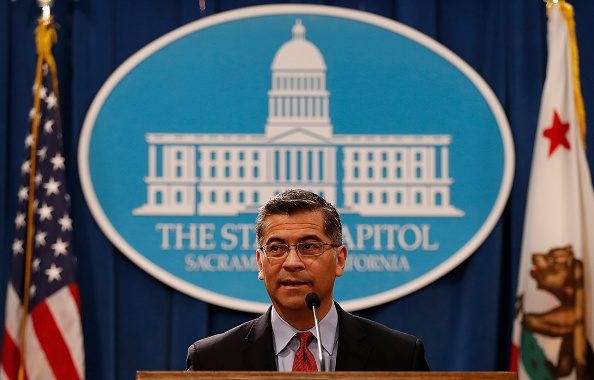
Xavier Becerra at the California State Capitol when he was the state’s Attorney General

In a 50-49 vote last week, the Senate narrowly confirmed California Attorney General Xavier Becerra as Department of Health and Human Services (HHS) Secretary.

President Biden surprised the nation with his choice of a health lawyer instead of one of his top docs like Vivek Murthy.

Yet, despite his lack of medical background, Becerra has years of experience drafting and defending laws to protect the public’s health.

“We found it impressive that he was unafraid to go against big and powerful industry players, whether drug companies or hospital chains,” Health Access California Executive Director Anthony Wright said in a phone interview. “We are hopeful he brings a similar fearlessness to dealing with the health care industry at a federal level.”

Another policy expert reminded people that Becerra wasn’t afraid to lob legal challenges to the previous administration.

“In Xavier Becerra, President-Elect Biden has selected a person who has been perhaps the biggest thorn in President Trump’s side on the ACA, reproductive health, and immigrant rights,” tweeted Larry Levin, Kaiser Family Foundation’s Executive Vice President for Health Policy.

What can we learn from his background about how he might lead the country’s top health agency?

The ACA Has a Strong Ally

While Senate Republicans attempted to argue he lacked the experience to head HHS, Becerra does bring 24 years of Beltway experience, having represented his Los Angeles community for 12 terms in the U.S. House of Representatives before succeeding Vice President Kamala Harris to become California’s 33rd Attorney General in 2017.

He is the first Latino to hold that office, and while in Congress was the first Latino to serve on the Ways and Means Committee, where he was a senior member of the health subcommittee. He also held the powerful post as leader of the House Democratic Caucus.

Becerra spent much of his time in Congress as a staunch defender of the Affordable Care Act. Shortly before leaving the House, he voted against HR3, a budget amendment to repeal the ACA, and as Attorney General he defended it against Republicans all the way to the Supreme Court.

“Becerra is the ultimate defender of ACA,” Wright said, “who is in a small group that can claim authorship of ACA with full authority.”

In his three years as Attorney General, Becerra not only battled to protect the ACA, but led historic cases to right the wrongs of the opioid epidemic, hold companies accountable for overcharging state Medicaid, protect 340B discounts, and stop hospital mega-mergers such as Sutter Health.

This was enough to sway all Senate Democrats and Maine Republican Susan Collins to vote for confirmation.

Hospital Mergers Under the Microscope

While health system consolidation is all the rage, Becerra is likely to hold hospitals’ feet to the fire when it comes to antitrust issues.

“HHS’ new head is well aware of anticompetitive practices by healthcare companies and organizations, and I expect he will pursue ways for HHS to promote healthier markets and higher value for consumers,” Harvard Business School Professor Leemore Dafny said in an email.

This is hopeful news to UC Hastings Professor of Law Thomas Greaney, who has followed Becerra’s work.

“There are a number of ways in which HHS might foster competition and in some cases reduce the need to rely on antitrust for protecting market abuse,” Greaney said in an email. “I would be interested in whether HHS has any plans to try to curb the growing market power of health care systems that can exploit their position via ‘all or nothing contracts’ and other anticompetitive contract clauses with commercial carriers as alleged in the recent case Becerra brought against Sutter Healthcare as Attorney General of California.”

In California v. Sutter Health, Becerra charged a Bay Area hospital system with acquiring its competitors and using its monopoly power to radically drive up area prices. The state accused Sutter of forcing insurers to include all of Sutter’s medical facilities in their networks if they wanted to contract with Sutter at all.

According to a 2018 study from the Nicholas C. Petris Center at the University of California-Berkeley that Becerra’s team cited in the complaint, the alleged anticompetitive behavior drove regional costs between 20-30% higher than Southern California, even accounting for differences in cost of living.

In December 2020, Sutter Health settled with California for $575 million in one of the largest health care antitrust settlements in US history.

USC Professor of Healthcare Finance Glenn Melnick thinks this experience will be invaluable at HHS.

“Consolidation is accelerating, and as I tell my students, trends are national but markets are local so if provider groups or other healthcare systems can get control of big pieces of markets we’re in trouble as a nation,” he said in a phone interview.

Having worked with Becerra’s office, Melnick believes he has the understanding of market forces to curb this trend.

“The federal government gets impacted by market forces because under ACA, the federal government pays a chunk of private premiums on policies offered on the healthcare exchanges, which are driven up by higher health system prices so theoretically he has authority to call hearings and say ‘how do we control this price-hiking consolidation?’” Melnick said by phone.

‘Pay-for-Delay’ Deals in Peril

As AG, Becerra led California to ban “pay-for-delay” deals between branded and generic pharmaceutical companies, making it the first state in the nation to do so. He worked closely with advocacy group leaders such as Health Access California’s Anthony Wright to craft and pass this historic legislation.

“When these deals happen, there are two parties in the room that benefit at the expense of the third party, the public — the brand gets to avoid competition, the generic gets a payoff, but the loser in the deal is patients, the public and payers who are paying inflated prices for prescription drugs,” Wright said in a phone interview. “So we are glad we’re going from having an HHS secretary that is an ex-pharma executive to one who has experience holding pharma accountable.”

Pay-for-delay agreements are deals where brand-name drug companies provide generic drug manufacturers with some form of compensation in exchange for not bringing a generic competitor to market for some period of time.

AG Becerra was instrumental in pushing through AB 824, signed into law by Governor Newsom in October 2019.

This law increased antitrust scrutiny of patent settlement agreements between branded and generic pharmaceutical manufacturers, holding a microscope to both small-molecule drug development regulated under the Hatch-Waxman Act and biosimilar settlements brought under the Biologics Price Competition and Innovation Act (BPCIA).

Last July, Becerra defeated a Ninth Circuit challenge to the law by generic pharmaceutical industry group Association for Accessible Medicines (AAM), which the court rejected for lack of standing.

However, generic drugmakers are hoping to have greater influence on Becerra in his new role.

In an email, AAM SVP and General Counsel Jeff Francer said the association and its members look forward to working with Becerra “to secure patient access to safe, effective and affordable generic and biosimilar medicines.”

Francer continued: “The sustainability of the generic and biosimilars industry is at risk from anticompetitive practices and market access challenges, and we will work with Secretary-designate Becerra to advance policies that enhance the competitiveness of these medicines that bring outsized value to our nation by saving lives and containing costs during this public health crisis and beyond.”

Before pushing for AB 824’s regulatory fixes, Becerra settled a suit with three pharmaceutical companies (Teva, Endo, and Teikoku) that California had accused of participating in pay-for-delay agreements.

“I took on a number of these drugmakers by going behind the curtain on how they reached their pricing and we were able to prove there was collusion going on,” Becerra told senators in his February confirmation hearing.

While representatives from PhRMA declined to comment for this article when asked how they felt Becerra’s nomination would impact their industry, PhRMA president and CEO Steve Ubl congratulated him in an official statement released March 18, saying: “We look forward to continuing our collaboration with the department under his leadership and working together to help address our nation’s leading priorities: getting COVID-19 under control and improving health care affordability and access for all Americans.”

Protecting Health Equity

Becerra has the support of the American Hospital Association, whose President Richard J. Pollack recommended his confirmation. Becerra will, in many ways, be a natural ally to the AHA as HHS Secretary, as he has spent decades championing many of their core legislative issues, such as the Affordable Care Act and enforcement of 340B drug discounts.

Indeed, in a December letter to then-secretary Alex Azar, Becerra and his fellow Attorneys General pushed HHS to take action against drug companies they said were violating their statutory obligations under the 340B drug pricing program, which requires any manufacturer that wishes to be repaid under Medicaid or Medicare Part B to offer “drugs at or below the applicable ceiling price” to covered entities such as community health centers.

“Each day that drug manufacturers violate their statutory obligations,” the letter said, “vulnerable patients and their healthcare centers are deprived of the essential healthcare resources that Congress intended to provide.”

A Deep Bench Awaits Action

Becerra has a number of attorneys joining him in the Biden Administration’s health team.

Chiquita Brooks-LaSure, managing director of the health group at Manatt, led the Biden Administration’s transitional review of the Department of Health and Human Services and is now Biden’s nominee for head of Medicare and Medicaid Services. Lisa Barclay went from leading Biden’s review of the Food and Drug Administration while a partner at Boies Schiller & Flexner to joining Becerra’s team as Deputy General Counsel of HHS.

Beyond HHS, a number of other well-established health attorneys will guide the administration’s response to Covid and efforts to shore up our nation’s healthcare infrastructure.

Amy Chang will serve as a policy adviser to the Biden administration, having previously worked in the Obama administration as a special assistant in the office of the secretary at HHS.

Abbe Gluck will serve as special counsel, coming from Yale Law School.

Yale Law alum Rosa Po joins Gluck as Covid-19 response team deputy chief of staff, having advised domestic and economic agency review during the Biden transition. During the Obama administration, Po served as a policy adviser to the assistant secretary for planning and evaluation at HHS.

Andy Slavitt was appointed senior adviser to the Covid-19 response coordinator. He served as acting administrator for CMS under President Obama, overseeing Medicaid, Medicare, the Children’s Health Insurance Program, payment reform and the health insurance marketplace, most famously being credited with the turnaround of the troubled healthcare.gov website.

Tackling Once-in-a-Lifetime Challenges

What can we expect from his early days, according to his longtime colleague Anthony Wright?

“Obviously, Becerra’s first priority at the moment is the Covid-19 crisis,” Wright said in a phone interview. “He will have an important role to play in getting us out of this in terms of organizing the healthcare delivery system to be as responsive as possible to this moment to provide health and economic security to families struggling right now.” Further, Wright said Becerra will be of tremendous service as “a gifted communicator in Spanish who will play an important role in ensuring that health equity is an important part of the Covid recovery.”

Once we are through the worst of this pandemic, Wright anticipates Becerra’s next top priority will be “not only implementing but improving ACA.”

Wright said: “Becerra knows what we’ve won but is also acutely aware of the remaining gaps, and we trust he will take big steps toward a universal and more affordable and equitable system.”

Photo: Stephen Lam, Getty Images

DLA Piper Plans To Dump Tons Of Bonus Cash On Associates

This time last year, Biglaw firms were still figuring out how to adapt to remote working environments thanks to the pandemic, but now, Biglaw firms are figuring out when (or whether) they’ll announce additional rounds of special bonuses to reward all of their attorneys’ hard work over the course of the past 12 months. Top-ranked firms have been announcing Davis Polk bonus matches left and right. Which one is it this time?

DLA Piper — a firm that came in at No. 3 on the most recent Am Law 100 ranking, with $3,112,130,000 in gross revenue in 2019 — thrilled associates with its special bonus announcement today. The firm has fully matched the bonus scale announced by Davis Polk. In case you’ve forgotten what that looks like, DLA’s bonus scale can be seen below (the full memo is available on the next page):

Bonuses at DLA Piper will be paid half in May and half in September to all associates in good standing. Congratulations to all!

(Flip to the next page to see the full memo from DLA Piper.)

Remember everyone, we depend on your tips to stay on top of important bonus updates, so when your firm matches, please text us (646-820-8477) or email us (subject line: “[Firm Name] Matches”). Please include the memo if available. You can take a photo of the memo and send it via text or email if you don’t want to forward the original PDF or Word file.

And if you’d like to sign up for ATL’s Bonus Alerts (which is the alert list we also use for salary announcements), please scroll down and enter your email address in the box below this post. If you previously signed up for the bonus alerts, you don’t need to do anything. You’ll receive an email notification within minutes of each bonus announcement that we publish. Thanks for all of your help!


Staci ZaretskyStaci Zaretsky is a senior editor at Above the Law, where she’s worked since 2011. She’d love to hear from you, so please feel free to email her with any tips, questions, comments, or critiques. You can follow her on Twitter or connect with her on LinkedIn.


Enter your email address to sign up for ATL’s Bonus & Salary Increase Alerts.