
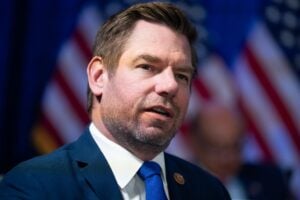
Williams/CQ-Roll
Call,
Inc
via
Getty
Images)
Let’s
talk
about
the
Eric
Swalwell
situation,
because
it
is,
as
they
say
in
the
legal
profession,
a
whole
thing.
For
the
unfamiliar:
Swalwell
—
a
California
congressman,
former
presidential
candidate,
fellow
attorney,
and
cable
news
fixture
who
made
a
cottage
industry
out
of
Trump
opposition
—
resigned
from
Congress
and
abandoned
his
California
gubernatorial
campaign
after
the
bottom
fell
out
spectacularly.
A
CNN
investigation
published
April
10
featured
four
women
describing
sexual
misconduct
by
the
representative,
including
a
former
staffer
who
says
he
raped
her
while
she
was
heavily
intoxicated,
leaving
her
bruised
and
bleeding.
That
former
staffer,
who
had
worked
for
Swalwell
since
she
was
20
years
old,
said
it
was
actually
the
second
time
he
had
nonconsensual
sexual
contact
with
her
while
she
was
drunk,
the
first
occurring
back
in
2019
when
she
was
still
on
his
staff.
Two
other
women
alleged
that
Swalwell
sent
them
unsolicited
explicit
messages
and
nude
photos
after
connecting
with
them
online
over
their
shared
interest
in
Democratic
politics.
The
allegations
describe
a
consistent
pattern:
Swalwell,
the
married
father
of
three,
targeted
women
in
their
twenties
who
were
finding
their
professional
footing,
making
them
feel
special
before
escalating
to
alleged
unwanted
physical
contact,
often
tied
to
heavy
drinking.
Swalwell
denied
everything,
calling
the
allegations
“false”
and
claiming
they
came
from
political
opponents
trying
to
kneecap
the
frontrunner
in
the
governor’s
race,
and
had
his
attorneys
fire
off
cease-and-desist
letters
to
two
of
the
accusers
within
days
of
CNN
first
seeking
comment.
Neither
the
denials
nor
the
legal
threats
did
much
to
stop
the
bleeding.
He
dropped
his
gubernatorial
campaign
(on
April
12)
and
then,
on
April
14,
resigned
from
Congress
entirely.
That’s
the
backdrop.
Now
here’s
the
Biglaw
angle,
and
yes,
there
is
very
much
a
Biglaw
angle.
Attorneys
at
some
of
the
most
recognizable
names
in
the
Am
Law
100
had
opened
their
wallets
for
Swalwell
in
a
big
way.
Donors
from
DLA
Piper,
Kirkland
&
Ellis,
Gibson
Dunn
&
Crutcher,
White
&
Case,
Paul
Hastings,
Morrison
&
Foerster,
and
others
had
contributed
tens
of
thousands
of
dollars
to
the
Democrat
as
he
championed
himself
as
a
rule-of-law
crusader
and
Trump
antagonist.
For
a
certain
stripe
of
Biglaw
lawyer,
Swalwell
was
catnip
—
a
prosecutor-turned-congressman
who
spoke
their
language.
Now
those
same
donors
are
doing
what
one
might
call
a
reevaluation.
Neal
Manne,
a
Susman
Godfrey
partner
in
Houston
who
made
a
$5,000
contribution
to
Swalwell’s
gubernatorial
campaign
last
fall,
told
Law.com
he
was
caught
off
guard
by
the
allegations.
“I
was
very
surprised
and
disappointed,”
Manne
said.
“It
seems
like
he
did
the
right
thing
in
terminating
his
gubernatorial
campaign
and
resigning
from
Congress.”
Manne
contextualized
his
support
the
way
many
donors
do
when
the
person
they
backed
turns
out
to
be,
well,
this:
“[Swalwell]
had
been
active
in
the
House
impeachment
of
President
Trump
[and]
spoke
in
support
of
the
rule
of
law,
which
is
something
that
is
important
to
me
as
a
lawyer,
and
so
I
have
made
a
political
contribution
to
him
as
I
have
hundreds
of
other
candidates.”
Swalwell
is,
apparently,
just
one
of
them.
Manne
wasn’t
the
only
Susman
Godfrey
partner
caught
in
this
particular
dragnet;
partners
Bill
Carmody,
Shawn
Rabin,
and
Stephen
Shackelford
also
contributed
thousands
to
Swalwell’s
now-defunct
gubernatorial
run.
Kristina
Lawson,
managing
partner
at
Hanson
Bridgett
in
San
Francisco,
made
two
separate
$5,000
contributions
to
the
campaign
and
issued
a
statement
that
left
little
ambiguity
about
where
she
stands
now,
“I
take
these
allegations
extremely
seriously
and
stand
with
victims
of
sexual
assault
and
misconduct.
I
deeply
regret
my
past
support.”
That’s
the
kind
of
clean,
unequivocal
statement
crisis
PR
professionals
dream
of.
Good
for
her.
But
there’s
at
least
one
Biglaw
contribution
that’s
more
problematic.
The
DLA
Piper
political
action
committee,
according
to
reporting
by
Law.com,
made
a
$5,000
contribution
to
the
Eric
Swalwell
for
Governor
2026
campaign
on
April
13
—
that’s
one
day
before
Swalwell
resigned
from
the
House
of
Representatives
and
one
day
after
his
gubernatorial
campaign
was
suspended.
And
the
CNN
investigation
dropping
the
sexual
misconduct
allegations
—
including
an
account
of
rape
from
a
former
staffer
—
published
on
April
10.
That’s
four
days
before
Swalwell
resigned,
and
three
days
before
DLA
Piper’s
PAC
cut
that
check.
Read
that
again
slowly:
the
allegations
were
public.
The
CNN
investigation
was
out.
And
then
the
contribution
went
through
anyway.
William
Minor,
the
managing
partner
of
DLA
Piper’s
Washington,
D.C.,
office
and
treasurer
of
the
DLA
Piper
PAC,
has
not
yet
commented.
Look,
the
donors
who
gave
before
April
10
have
a
ready-made
defense:
they
didn’t
know.
Swalwell
was,
by
Biglaw’s
political
calculus,
an
attractive
candidate;
an
attorney
who
invoked
the
rule
of
law,
opposed
Trump
loudly
and
often,
and
had
a
plausible
path
to
the
California
governor’s
mansion.
Manne’s
“I’ve
given
to
hundreds
of
people”
framing
is,
frankly,
a
pretty
honest
account
of
how
large-firm
political
giving
works.
You
write
checks,
sometimes
they
cash
awkwardly.
But
the
DLA
Piper
PAC
contribution
has
a
different
problem.
The
information
was
already
out
there.
That’s
not
a
matter
of
not
knowing
—
that’s
a
matter
of,
at
minimum,
not
paying
attention.
And
for
a
firm
that
would
like
to
be
seen
as
taking
issues
of
sexual
misconduct
seriously
(as
every
major
law
firm
claims
to),
the
optics
are,
to
put
it
diplomatically,
not
great.
The
women
who
came
forward
described
a
pattern
of
sexual
misconduct
by
Swalwell.
One
former
staffer
described
years
of
carrying
what
happened
to
her
in
silence.
“I’ve
always
lived
with
a
huge
secret,”
she
told
CNN.
“The
only
person
who
could
ruin
Eric
Swalwell
is
Eric
Swalwell.”
Those
women
deserve
to
have
their
accounts
treated
seriously.
The
Biglaw
donors
who
gave
in
good
faith
before
the
allegations
surfaced
deserve
some
measure
of
understanding.
And
the
DLA
Piper
PAC
deserves
some
pointed
questions
about
its
due
diligence
process.
 Kathryn
Rubino
is
a
Senior
Editor
at
Above
the
Law,
host
of
The
Jabot
podcast,
and
co-host
of
Thinking
Like
A
Lawyer.
AtL
tipsters
are
the
best,
so
please
connect
with
her.
Feel
free
to
email
her
with
any
tips,
questions,
or
comments
and
follow
her
on
Twitter
@Kathryn1 or
Mastodon
@[email protected].