
WASHINGTON
—
Congressional
defense
hawks
in
the
Senate
are
once
again
pushing
to
boost
the
topline
of
the
defense
budget
in
fiscal
2026,
but
as
lawmakers
return
to
Capitol
Hill
in
September,
they
will
have
to
face
an
even
more
pressing
question:
Will
they
be
able
to
pass
a
full-year
spending
bill
at
all?
Congress
failed
at
passing
FY25
appropriations
after
talks
between
Republicans
and
Democrats
broke
down,
resulting
in
the
approval
of
a
full
year
continuing
resolution
in
March.
The
bill
marked
the
first
time
the
Defense
Department
will
have
been
funded
under
a
CR
for
an
entire
year.
This
year,
the
budget
process
has
been
even
more
tumultuous
—
even
with
Republican
control
of
both
the
House
and
the
Senate
—
raising
questions
about
whether
the
Pentagon
is
heading
toward
another
full-year
funding
extension.
For
much
of
the
year,
lawmakers
have
been
wrapped
up
in
passing
reconciliation
legislation
known
as
the
One
Big
Beautiful
Bill,
a
Trump-backed
megabill
that
contained
an
extra
$150
billion
in
defense
funding
as
well
as
other
priority
items.
Meanwhile,
the
Pentagon
has
dragged
its
feet
in
presenting
its
own
budget
request
for
FY26,
putting
out
some
budget
documents
in
late
June
while
other
more
detailed
justification
documents
are
still
yet
to
be
released
or
presented
to
Congress.
(House
appropriators
drafted
their
version
of
the
FY26
defense
bill
without
having
seen
the
Pentagon’s
budget
proposal.)
With
the
clock
ticking
until
government
funding
runs
out
when
the
new
fiscal
year
starts
on
Oct.
1,
Congress’s
first
order
of
business
upon
its
return
from
recess
next
week
will
be
teeing
up
and
passing
a
short-term
continuing
resolution
that
will
give
lawmakers
time
to
work
out
a
spending
agreement.
After
that,
the
House
and
Senate
will
start
the
more
difficult
work
of
hammering
out
appropriations
bills,
with
the
House
promoting
a
bill
that
adheres
to
the
Defense
Department’s
flat
$848
billion
budget
request
and
the
Senate
advocating
for
a
topline
funding
bump
of
upwards
of
$22
billion.
Meanwhile,
neither
chamber
has
taken
its
version
of
the
National
Defense
Authorization
Act
to
the
floor
yet,
but
the
Senate
is
slated
to
start
debate
on
its
NDAA
as
soon
as
lawmakers
return
in
September.
Some
experts
say
differences
in
the
various
defense
bills
might
not
ultimately
matter.
“The
most
probable
outcome,
in
our
view,
for
FY26
discretionary
spending
is
a
full-year
continuing
resolution
similar
to
what
occurred
in
FY25,”
Byron
Callan
of
Capital
Alpha
Partners
said
in
an
Aug.
1
note
after
the
Senate
Appropriations
Committee
passed
its
versions
of
the
defense
bill
out
of
committee.
“That
would
keep
DoD
discretionary
at
the
same
level
as
FY25
for
FY26,
but
we
would
expect
more
anomalies
to
allow
rate
increases
and
new
starts.”
As
Capitol
Hill
gets
down
to
business,
here’s
a
look
at
how
the
Pentagon
and
each
congressional
defense
committee
is
approaching
12
major
issues
this
budget
season:
Defense
Budget
Topline
Topline
budget
numbers
among
the
appropriations
and
authorizing
committees
aren’t
apples
to
apples,
with
no
single
bill
containing
the
whole
of
national
defense
spending.
The
NDAA
—
which
sanctions
funds
but
does
not
actually
obligate
them
—
includes
the
Defense
Department
as
well
as
defense
spending
within
the
Department
of
Energy,
but
does
not
include
about
$11.5
billion
in
national
security
spending
outside
the
jurisdiction
of
the
House
and
Senate
armed
services
committees.
Meanwhile,
House
and
Senate
defense
appropriations
bills
cover
most
of
the
Defense
Department
and
some
intelligence-related
spending,
but
not
defense
spending
at
the
Department
of
Energy
or
military
construction
spending.
President’s
budget:
The
Defense
Department
requested
$848.3
billion
in
discretionary
funds
for
fiscal
2026,
flat
with
the
enacted
full-year
continuing
resolution
for
FY25.
Reconciliation:
The
reconciliation
bill
added
$150
billion
in
mandatory
funds
available
during
the
Trump
administration.
The
Pentagon
intends
to
use
$113.3
billion
of
that
funding
in
FY26.
HASC
NDAA:
Authorizes
$882.6
billion
in
defense
spending,
including
$848.3
billion
for
the
Defense
Department.
SASC
NDAA:
Boosts
defense
spending
by
$32
billion
to
$913.9
billion
in
defense
spending,
with
$
878.7
billion
for
the
Defense
Department.
House
defense
appropriations:
Adheres
to
OMB-approved
amount
by
appropriating
$831.5
billion.
Senate
defense
appropriations:
Includes
$851.9
billion,
increasing
defense
funding
by
about
$22
billion.
F-35
Joint
Strike
Fighter
President’s
budget:
Purchases
47
F-35s:
24
F-35As,
11
F-35Bs
and
12
F-35Cs.
Reconciliation
bill:
Did
not
add
money
for
additional
F-35s.
HASC
NDAA:
Authorizes
the
47
F-35s
requested
by
the
department.
SASC
NDAA:
Authorizes
57
F-35s,
adding
10
F-35As.
House
defense
appropriations:
Adds
funds
for
a
total
of
69
F-35s,
including
42
F-35As,
13
F-35Bs
and
14
F-35Cs.
Senate
defense
appropriations:
Funds
the
47
F-35s
requested
in
the
budget.
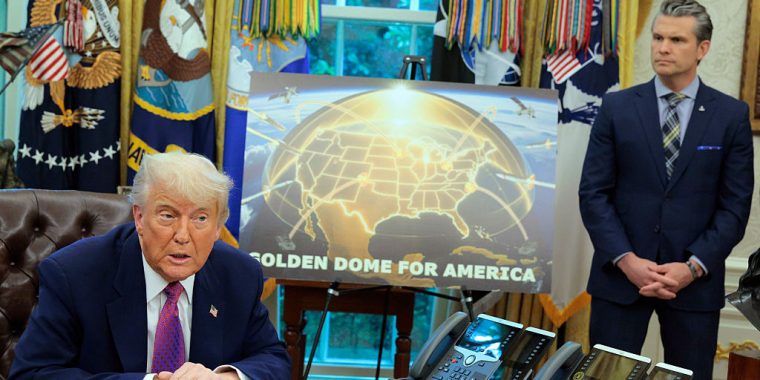
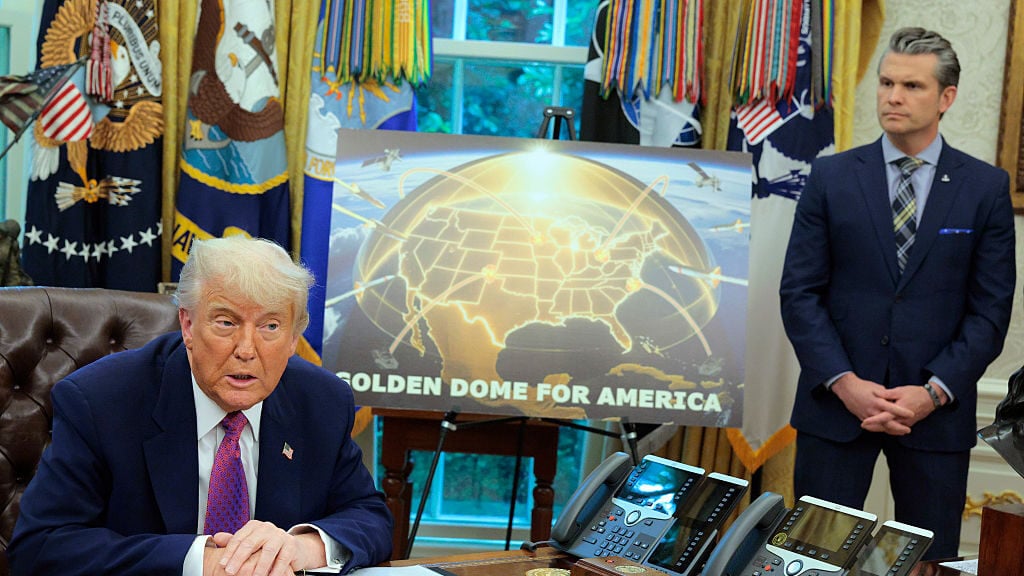
Golden
Dome
President’s
budget:
Outside
of
the
reconciliation
spending,
the
department’s
budget
request
includes
no
funding
specifically
earmarked
for
Golden
Dome.
Reconciliation:
Includes
$25
billion
in
Golden
Dome
spending,
all
of
which
the
department
intends
to
use
in
FY26.
HASC
NDAA:
Modifies
national
missile
defense
policy
to
include
the
deployment
of
a
next-generation
missile
shield
for
the
US
homeland
such
as
Golden
Dome,
and
requires
yearly
reports
on
Golden
Dome.
SASC
NDAA:
Modifies
national
missile
defense
policy
to
reflect
Golden
Dome
and
codifies
the
position
of
Direct
Reporting
Program
Manager
(DRPM)
for
Golden
Dome.
House
defense
appropriations:
The
bill
contains
$13
billion
in
space
and
missile
defense
funds
that
appropriators
said
could
fall
under
the
Golden
Dome
umbrella,
broken
down
into
$8.8
billion
for
Missile
Defense
Agency
programs
and
$4.1
billion
for
Space
Force
programs.
Senate
defense
appropriations:
The
bill
report
states
that
the
Pentagon
“has
not
yet
provided
the
Committee
with
sufficiently
detailed
proposals
to
accurately
assess”
Golden
Dome,
and
requires
a
briefing
on
its
cost,
architecture
and
acquisition
strategy.
F-15EX
President’s
budget:
No
aircraft
funded
through
discretionary
budget.
Reconciliation:
Included
$3.1
billion
to
increase
F-15EX
production.
The
Pentagon
intends
to
use
that
money
to
buy
21
F-15EXs
in
FY26.
HASC
NDAA:
Conforms
to
DoD
recommendations.
SASC
NDAA:
Conforms
to
DoD
recommendations.
House
defense
appropriations:
Adds
$345
million
for
the
procurement
of
three
F–15EX
aircraft.
Senate
defense
appropriations:
Conforms
to
DoD
recommendations.
E-7
Wedgetail
President’s
budget:
Cancelled
the
program
due
to
survivability
and
cost
concerns,
but
included
$199
million
to
wrap
up
current
activities.
Reconciliation:
Did
not
address
the
E-7.
HASC
NDAA:
Adds
$600
million
to
continue
the
rapid
prototyping
program
for
a
total
of
$799
million.
SASC
NDAA:
Adds
$700
million
to
continue
development
and
procurement,
for
a
total
of
$899
million.
House
defense
appropriations:
Includes
a
total
of
$500
million
to
continue
the
E-7
program.
Senate
defense
appropriations:
Adds
$647
million
for
a
total
of
$846
million.
A-10
Retirement
President’s
Budget:
Retires
the
remaining
A-10
Warthogs
in
FY26.
Reconciliation:
Did
not
address
the
A-10.
HASC
NDAA:
During
the
markup
process,
HASC
passed
an
amendment
prohibiting
retirements
of
any
A-10s
in
FY26.
SASC
NDAA:
Mandates
that
the
Air
Force
retain
103
A-10s
in
its
inventory.
House
defense
appropriations:
Did
not
address
the
A-10
retirement.
Senate
defense
appropriations:
Did
not
address
the
A-10
retirement.
F/A-XX
President’s
budget:
Includes
$74
million,
with
the
program
currently
under
review.
The
White
House
has
said
additional
congressional
funding
to
continue
the
new
naval
fighter
could
strain
the
defense
aviation
industrial
base
and
“delay
the
higher-priority
F-47
program.”
Reconciliation:
$750
million
to
“accelerate”
the
F/A-XX
program
HASC
NDAA:
Did
not
include
additional
funding
due
to
reconciliation
funds.
SASC
NDAA:
Adds
$500
million
to
F/A-XX
through
“Link
Plumeria”
special
access
program
code.
House
defense
appropriations:
Added
$971
million
to
continue
development
of
the
F/A–XX
program
with
the
intent
of
accelerating
initial
operational
capability.
Also
directs
the
Navy
to
provide
an
updated
schedule
for
awarding
the
engineering,
manufacturing
and
design
contract.
Senate
defense
appropriations:
Added
about
$1.4
billion
to
continue
F/A-XX
development.
E-2D
President’s
budget:
Four
aircraft
Reconciliation
bill:
Not
included
in
reconciliation
bill.
HASC
NDAA:
Four
aircraft
SASC
NDAA:
Strips
$1.5
billion
from
the
program,
described
in
the
committee
report
as
“E-2D
cancellation.”
House
defense
appropriations:
Four
aircraft
Senate
defense
appropriations:
Strips
about
$1.5
billion,
cancelling
the
procurement
of
four
aircraft.
Landing
Ship
Medium
President’s
budget:
No
discretionary
funding
is
requested
in
FY26.
Reconciliation
bill:
The
Pentagon
aims
to
use
reconciliation
funds
to
procure
nine
LSMs
in
FY26.
Congressional
guidance
states
that
funding
in
the
reconciliation
would
allow
the
department
to
purchase
eight
LSMs.
HASC
NDAA:
Adheres
to
the
president’s
budget.
SASC
NDAA:
Adheres
to
the
president’s
budget.
House
defense
appropriations:
Adds
$225
million
for
one
ship.
Senate
defense
appropriations:
Adheres
to
the
president’s
budget.
Joint
Light
Tactical
Vehicle
President’s
budget:
The
Army
canceled
further
procurement
of
the
JLTV,
while
the
Marine
Corps
included
about
$82
million
to
buy
138
JLTVs.
Reconciliation:
Does
not
include
funding
for
JLTV.
HASC
NDAA:
Conformed
to
DoD
recommendations
SASC
NDAA:
Adds
$168
million
for
224
additional
JLTVs
for
the
Marine
Corps.
House
defense
appropriations:
Included
$345
million
for
863
JLTVs
for
the
Army,
and
$169
million
for
224
JLTVs
for
the
Marine
Corps.
Senate
defense
appropriations:
Conforms
to
DoD
recommendations,
directs
the
Marine
Corps
to
provide
an
updated
acquisition
strategy.
Improved
Turbine
Engine
Program
President’s
budget:
Doesn’t
include
funding.
Reconciliation:
Congress
included
$63
million
for
“for
development
of
advanced
rotary-wing
engines.”
Congressional
guidance
stipulates
this
funding
is
meant
to
continue
the
ITEP
program.
HASC
NDAA:
Doesn’t
include
funding.
SASC
NDAA:
Doesn’t
include
funding.
House
defense
appropriations:
$175
million
for
the
Improved
Turbine
Engine
Program
(ITEP)
Senate
defense
appropriations:
Doesn’t
include
funding.
Ukraine
President’s
budget:
The
Pentagon
did
not
include
money
for
Ukraine
in
the
budget
request.
Reconciliation:
Did
not
include
funding
for
Ukraine.
HASC
NDAA:
The
chairman’s
mark
included
$300
million
for
the
Ukraine
Security
Assistance
Initiative,
and
lawmakers
added
another
$100
million
during
the
markup
process,
for
a
total
of
$400
million.
SASC
NDAA:
Adds
$500
million
for
USAI
House
defense
appropriations:
House
appropriators
did
not
include
money
for
Ukraine
in
the
spending
bill.
(https://breakingdefense.com/2025/07/house-passes-832b-defense-appropriations-bill/)
Senate
defense
appropriations:
Adds
$800
million
for
USAI