Wanna Be General Counsel? These Biglaw Firms Are The Best For Getting Attorneys Directly Into That Role

Ed. Note: Welcome to our daily feature Trivia Question of the Day!

According to a new study by analysis by Firm Prospects, between February 2017 and 2021, which Biglaw firm tied for sending the most attorneys directly into general counsel or chief legal officer roles?

Hint: During that time frame, U.S. law firms sent at least 1,025 attorneys right to leadership roles in-house. To get the data, Firm Prospects scrapes the internet for publicized hirings and doesn’t include GCs of government agencies, of corporate divisions, or of companies outside the U.S.

See the answer on the next page.

Dominion Voting Sues Newsmax, OAN, The Overstock Weirdo For $1.6 Billion

Dominion Voting Systems added to its impressive roster of post-election defamation suits today, adding claims against conservative television channels Newsmax and One America News (OAN), as well as noted wingnut about town Patrick Byrne, the former CEO of Overstock.com.

Seeking upwards of $1.6 billion in each filing, Dominion outlines a broad conspiracy to defame the company by relentlessly pushing a false narrative that it deliberately rigged the election in favor of Joe Biden. Presumably when Donald Trump promised to “open up our libel laws,” this is probably not what he meant.

Like the parties, each of the lawsuits is its own crazy funhouse of wackassery. Defendants in the OAN suit include the network’s founder, Robert Herring Sr., his son Charles, and anchors Chanel Rion and Christina Bobb.

Rion, who made her name as a Seth Rich conspiracy theorist, spent much of 2019 touring Ukraine with Rudy Giuliani to assemble “evidence” against Joe Biden, and even claimed to have been pursued by George Soros in person. She has now graduated to election conspiracy theories, and strongly supports the Arizona “fraudit,” along with Christina Bobb. Rion and Bobb are both on the board of Voices and Votes, an organization which raised private funds to support the recount debacle. But this was no obstacle to covering the recount in breathless detail, because these are very serious journalists.

The complaint alleges that the network hyped debunked claims about Dominion switching votes via algorithm, despite the fact that the company’s machines leave an auditable paper trail, and that it put discredited figures like Sidney Powell, Mike “My Pillow” Lindell, Rudy Giuliani, and Patrick Byrne on the air to slander the company.

The suit contains numerous fun Easter eggs, like this one:

Ed Solomon was portrayed by OAN on its network as an alleged “expert mathematician.” In reality, however, he is a convicted felon who, at the time he was interviewed by OAN, was working as an “installer” at a swing set construction company in Long Island.

Sounds legit!

Dominion argues that OAN deliberately chose to air those lies in a ploy to both get to the right of Fox, which pissed off its own viewers when it functionally called the election for Biden on November 3 by acknowledging the reality of his win in Arizona, and to curry favor with Donald Trump and his supporters.

It’s a claim echoed in the Newsmax suit, which was filed in the Superior Court of Delaware, unlike the others which were docketed in federal court in DC.

During and after the November 2020 election, Newsmax saw a business opportunity. Spurred by a quest for profits and viewers, Newsmax—a competitor to media giant Fox—engaged in a race to the bottom with Fox and other outlets such as One America News Network (OAN) to spread false and manufactured stories about election fraud. Dominion quickly became the focus of this downward spiral of lies, as each broadcaster attempted to outdo the others by making the lies more outrageous, spreading them further, and endorsing them as strongly as possible.

And while the Newsmax complaint doesn’t name the on-air talent as defendants, it specifically calls out hosts Greg Kelly and Grant Stinchfield, both for their own statements and for repeatedly hosting guests like Lindell and Powell to make slanderous claims which had already been widely debunked.

The suit against Patrick Byrne is the oddest of a the bunch, because Byrne is an extremely weird dude. The New Yorker has an amazing profile, but TL,DR, the FBI caught him having an affair with Russian agent Maria Butina, an affair he says he continued at the FBI’s behest for secret spy reasons, although he claims to have turned down a request by the agency to deliver an $18 million bribe to Hillary Clinton so that Barack Obama could “control” her when she became president. It was then that he was asked to leave the company he founded, so it could get back to selling furniture without the taint of … well, all of that.

Here’s the very first paragraph of the Byrne complaint.

After blowing up his career at Overstock by having an affair with a Russian spy, Patrick Byrne soon found himself a new pet project: promoting the false narrative that the 2020 election had been stolen. In fact, as Byrne has publicly admitted, he had already committed to that narrative three months before the election took place. After the election, Byrne manufactured and promoted fake evidence to convince the world that the 2020 election had been stolen as part of a massive international conspiracy among China, Venezuelan and Spanish companies, the Department of Justice (“DOJ”), the Department of Homeland Security (“DHS”), the Federal Bureau of Investigation (“FBI”), prominent Republicans, Chief Justice John Roberts, and Dominion, which, Byrne falsely claimed, committed fraud and helped steal the 2020 presidential election.

Giddyup! It’s the addition of Chief Justice Roberts that ties the whole room together — the perfect accessory.

It’s not clear that any of these parties have anything approaching $1.6 billion in assets. After the election, there were rumors of an offer by Team Trump to buy Newsmax for $200 million. There were similar reports of an offer to buy OAN for $250 million and turn it into a vehicle for the former president. And Byrne is a wealthy man, but he’s probably not a billionaire.

It’s a shitshow, and it’s just getting started.

US Dominion Inc v. Byrne [Docket via Court Listener]
US Dominion Inc. v. Herring Networks, Inc. [Docket via Court Listener]
US Dominion Inc. v. Newsmax Media Inc. [Complaint via Law & Crime]


Elizabeth Dye lives in Baltimore where she writes about law and politics.

The Intersection Of Social Media: Imposter Scams And Fake Influence

As a lawyer and personal branding expert, I spend my days teaching others how to build a powerful digital footprint. I emphasize the importance of being searchable online on Google and using the right keywords to get seen. However, I come across a lot of lawyers and executive clients who despise social media. They reluctantly put up a LinkedIn profile for the purposes of being able to job search or simply to gain access to recruiters but share no desire to engage or post on the platform — and for a very valid reason. The possibility of people stealing their information or photos is terrifying.

I empathize with individuals who are against being present on social media — I will candidly share with them that at times, social media can feel exhausting and “fake.” It can leave us wondering, who are we really engaging with, if it’s anyone at all. While I am substantially involved on the four major platforms, I often find myself at the intersection of social media, oscillating between wanting to share my content as well as falling silent in consistent posting and engaging due to the imposter scams and fake influence. I’m present, but not overly present — while I need social media for my business (particularly to share my published articles and this column), I also share in the feelings of disdain and exhaustion.

A perfect example of this happened over the weekend. I received a DM (direct message) to my Instagram page advising me, “Someone is pretending to be you on IG.” The message attached the link to the page of a purported forex trader/coach who had stolen nearly a dozen photos of me directly from my Instagram page to market “her” services.

This isn’t the first rodeo where I’ve had my content stolen or discovered that an account is impersonating me with my photos. In fact, it’s happened more times than I can count on both hands. While I have a verified (blue check) account on Instagram and Facebook, it doesn’t stop the fraudulent accounts from accessing my photos, creating bot-run accounts, and sliding past the software systems to permeate the fraud. After having 100-plus people report the account as impersonating me and after filing my own IP reports as an additional measure, the imposter account was still up and running. This is just par for the course on the platform with the rampant crypto investment scams.

Yet, we’re told there’s compliance monitoring of posts and trust and safety are of utmost importance — but what about the misinformation that comes from fake accounts and continues to permeate across the platforms? It’s clear that influence (or purported influence) can be bought on social media — via likes, followers, and even comments. We’ve witnessed it firsthand on LinkedIn — the obsession with the “algorithm” and façade of hitting 30,000 followers or a million views on a post that suddenly gives others a sense of influence, credibility, and importance.

On any given day, my DMs on Instagram are filled with bot messages inviting me to “boost” my engagement by buying likes, followers, and other “brand building” schemes. I constantly receive bot-driven messages to my Facebook inbox about paid-for advertising services. My LinkedIn connection requests are also filled with automated requests and robotic messages when I accept them. While I’m a proponent of automation to ease up workflows and improve response time, social media platforms are failing us by allowing the bot accounts and rampant spam to flourish and flood our inboxes, repeatedly to failure. As some clients have said: Why put energy into something that’s meant to build a network when you don’t know who (i.e., a robot) is behind that comment?

Social media platforms simply need to do better — reporting measures need to be painless. Imposter accounts and fake profiles need to be shut down at a rapid-fire scale.

If you’ve felt disenchanted about being on social media due to the “bots,” I’d love to hear from you. Slide into my DMs on Instagram or my inbox on LinkedIn. I’ll be sure to respond (sans automation).


Wendi Weiner is an attorney, career expert, and founder of The Writing Guru, an award-winning executive resume writing services company. Wendi creates powerful career and personal brands for attorneys, executives, and C-suite/Board leaders for their job search and digital footprint. She also writes for major publications about alternative careers for lawyers, personal branding, LinkedIn storytelling, career strategy, and the job search process. You can reach her by email at wendi@writingguru.net, connect with her on LinkedIn, and follow her on Twitter @thewritingguru.  

Why I’m Suing My Employer Over My University’s Faculty Meeting Mandate

NOTE: Professor Todd Zywicki is suing George Mason University to avoid vaccination or masks.

The following is satire, in case anyone at Stanford might be reading this.

“In a few weeks I will begin my 24th year as a law professor at LawProfBlawg University. Last year, I volunteered to attend faculty meetings live. Service is part of my job, and I knew I could do it safely. I owe my colleagues my best by attending and being vocal at meetings. And I knew I could do it safely. During the Spring of 2010, I contracted tenure. I later confirmed this through a positive provost test.

But now, my employer, a state institution, is requiring me to attend faculty meetings. In my case, faculty meetings are unnecessary and potentially risky.  My only other options are to attend remotely with my screen off while napping or to seek multiple monthly excuses from attending the faculty meeting, a time consuming and costly endeavor.

It is impossible for me to perform my duties to the best of my ability under such conditions. The administration has threatened that if I don’t show up to meetings, I could face disciplinary action and potentially termination. This week, I’m looking for a lawyer, potentially the New Civil Liberties Alliance, to file suit on my behalf, challenging the University’s mandatory faculty meeting requirement. And to overturn any provost election that might be against my favor.

Were I not naturally immune from faculty meetings, I would still be excited about going to faculty meetings. But once you have tenure, you have natural immunity, and continued attendance provides none of the benefits of meetings with all of the costs. I’m sure the university, whose administration I mock, can finely distinguish between my legitimate claim to avoid this activity and those who are merely abusing the system.

Moreover, attending faculty meetings could physically harm me. Research suggests that the emotional tolls of faculty meetings are very risky. If you do not attend, there is the fear of missing out. If you do attend, there is the emotional toll of waiting for late arrivals, making small talk before the meetings start, and of course the unnecessary pain and suffering as people communicate things that could have been shared in an e-mail. For me, someone who has meeting immunity, it is unlikely I will retain any of that information anyway.

Also, mental anguish affects my physical health. As I sit painfully tweeting and messaging other colleagues, I am not physically moving. This, over time, increases one’s blood pressure and stress level, often, particularly during hiring meetings, leading to migraines.”

End Satire.

Okay, while that was fun, there’s some very serious issues with the argument that Zywicki makes in his complaint against his employer, GMU. In that complaint, Zywicki argues that he should be able to avoid the vaccine mandate of his university because he already has developed antibodies and being forced to take the vaccine risks his health. He also suggests that the alternatives the university requires, such as mask mandates, would hamper his ability to teach his students.

At the same time, Zywicki argues that he trusts his doctor more than the managers of the university for his health decisions. Yet somehow he would have to trust the managers in their determinations as to when someone should get a waiver based upon their level of immunity (which may change over time).

Zywicki also claims that he’s got some solid lasting immunity and thus the state university lacks any compelling state interest in his vaccination. Here, I think there’s tons of stretch. First, it’s not necessarily the case that having COVID-19 means you can’t get it again. And there’s recent data that suggests, without vaccination, those who have had COVID-19 are more than twice as likely to get it again as those who have had it and have been vaccinated.

Of course, as Joe Patrice points out, there are options for Zywicki. Namely, he can wear a mask. But Zywicki doesn’t want to, and, without regard to what signal he’s sending students across the country (or perhaps with that precise regard), Zywicki’s lawsuit threatens GMU’s ability to prove the safest environment possible for those who legitimately CANNOT get vaccinated.

Or he could get vaccinated. But Zywicki suggests, citing this study, that the risks are too great for him. He needs to read the study more carefully:  Because it doesn’t quite say exactly what Zywicki suggests, unless I’m reading it wrong. Some vaccines are better than others, and potentially safer for Zywicki to take.

Meanwhile, other schools with less sound health policies, either due to university ineptitude or cowardice (in the face of gubernatorial ineptitude), will be engaging in greater risks to their students.

And some students, taking Zywicki’s lead, will be seeking to destroy vaccine protections at their universities, while unironically supplying proof of meningitis vaccine to enter their universities as freshman.

Hell of a world, isn’t it?


LawProfBlawg is an anonymous professor at a top 100 law school. You can see more of his musings hereHe is way funnier on social media, he claims. Please follow him on Twitter (@lawprofblawg). Email him at lawprofblawg@gmail.com.

Will He Or Won’t He? Supreme Court Watchers Wonder If/When Breyer Will Retire

(Photo by Chip Somodevilla/Getty Images)

Just because he didn’t step down at the end of the term doesn’t mean he couldn’t. He may. It’s just hard to tell.

— Professor Carl Tobias of the University of Richmond School of Law, commenting on the likelihood of Justice Stephen Breyer’s eventual retirement from the Supreme Court. Breyer, 82, is now the eldest justice on the Supreme bench. Senate Minority Leader Mitch McConnell (R-KY) has said that if Republicans win back a majority in the Senate next year, he will block President Joe Biden from putting another justice on the high court.


Staci ZaretskyStaci Zaretsky is a senior editor at Above the Law, where she’s worked since 2011. She’d love to hear from you, so please feel free to email her with any tips, questions, comments, or critiques. You can follow her on Twitter or connect with her on LinkedIn.

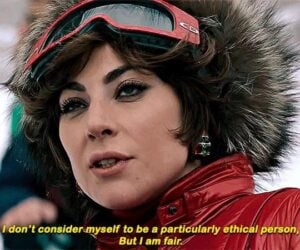
Gunner Plans To Be So Ethical It’s Literally Unfair

Best wishes to the law students (and occasional JD holders) talking the MPRE this week!

Ra, Ra, Rule 11 (Image from House of Gucci)

You should have enrolled and completed a legal ethics course before sitting for the test — but if you didn’t — here are a few tips.

  • Brush up on: Conflicts of Interest, Confidentiality and the Lawyer-Client relationship. You know, the big stuff.
  • Do a timed test to see if you are on par with the test conditions. Two hours for 60 questions is two questions a minute.
  • Actually read and answer the question given. If the dude in the fact pattern is embezzling, that’s not good, even if there’s a nice sob story attached.

At this point, cramming won’t do you much good. So, stay well hydrated! Mind your Ps and ∆s. And no commingling funds! Dear G*d, no commingling funds. Remember: You do not have to be a good person, you just have to be good enough to practice law! I wish you all scores that would mark you as ethical enough for California and Utah (86), even if you only plan on practicing in D.C. (75).


Chris Williams became a social media manager and assistant editor for Above the Law in June 2021. Prior to joining the staff, he moonlighted as a minor Memelord™ in the Facebook group Law School Memes for Edgy T14s. Before that, he wrote columns for an online magazine named The Muse Collaborative under the pen name Knehmo. He endured the great state of Missouri long enough to graduate from Washington University in St. Louis School of Law. He is a former boatbuilder who cannot swim, a published author on critical race theory, philosophy, and humor, and has a love for cycling that occasionally annoys his peers. You can reach him by email at cwilliams@abovethelaw.com.

Biglaw Heavy Hitters Add Vaccine Mandates To Their Reopening Policies

Biglaw firms continue to revise their return-to-office plans in light of the hypercontagious Delta variant of COVID-19. Firms that once waved away vaccine requirements are now embracing them, and office reopenings previously slated for next month are now being pushed into the fall. Which firms are the latest to add vaccine mandates to their plans?

Thus far, the firms that have made vaccination a requirement for those returning to the office include Akin Gump, Arent Fox, CooleyClifford Chance, Cozen O’Connor, Crowell & Moring, Davis Polk, Davis Wright Tremaine, Debevoise & Plimpton, Dickinson Wright, Faegre Drinker Biddle & Reath, Fenwick & West, Fried Frank, Goodwin, Hanson Bridgett, Hogan Lovells, Hueston Hennigan, Lowenstein Sandler, McDermott Will & Emery, Mintz, Norton Rose Fulbright, Patterson Belknap, Paul Weiss, Reed Smith, Ropes & Gray, Sanford Heisler, Schiff Hardin, Seyfarth Shaw, Simpson Thacher, Stroock & Stroock & Lavan, Weil Gotshal, Wilson Sonsini, and Winston & Strawn.

Now, we can add another five firms to the list. Ballard Spahr, Boies Schiller Flexner, Cleary Gottlieb, Davis & Gilbert, and Sheppard Mulllin have all recently added vaccination mandates to their safety protocols, and some of them will be delaying their full reopenings due to the Delta variant.

Ballard Spahr will now require everyone who wants to enter the office (e.g., employees, visitors, clients, and vendors) to be vaccinated, according to chairman Mark Stewart.

On Sunday evening, Boies Schiller notified employees that they must be vaccinated if they want to go into the office. The firm will stage a full reopening in late September or early October, depending on the “specific health factors” of each office region.

Yesterday, Cleary Gottlieb announced that it would be mandating vaccines for all U.S. personnel before they can enter the office, with medical or religious exemption requests due by September 20. “This continues to be an unprecedented time, and the health and wellbeing of our Cleary community remains our top priority,” management noted in a memo to all employees. On top of its new vaccine requirement, Cleary will be putting off its full reopening until October 18 (its previous return-to-office date was September 13). Sources say that lawyers and staff will be expected to work in the office for three days each week.

A mandatory vaccination policy is being instituted at New York-based Davis & Gilbert, and according to chairman Ron Urbach, “Given the increased risk of infection from the Delta variant, we have determined that it would be unwise to set a specific return to office date at this time. For now, our current remote work policy will remain in effect.”

Today, Sheppard Mullin announced that it would be postponing its planned return-to-office date of September 7, and will “announce a new date in the future with plenty of advance notice.” Until then, the firm will continue to operate under its previously announced policy for employees to “do your best” to come to the office. Those who do go to the office will not only be required to wear a mask and remain socially distanced, but starting on August 16, the firm will have a new vaccination mandate. “This rule is consistent with those adopted by dozens of other Am Law 100 firms, the U.S. military and many of our clients, with more every day,” chairman Guy Halgren wrote in a memo. “It keeps us all safer and gives those who are vaccinated greater comfort in coming to the office. As under our current rule, proof of that vaccination must have been uploaded to our database. Over 1360 of us have uploaded their records.”

Will your firm be changing its plans when it comes to vaccination for attorneys and staff thanks to the Delta variant? Please let us know.

(Flip to the following page to read the memos from Cleary Gottlieb and Sheppard Mullin.)

What has your firm announced as far as a reopening plan is concerned? The more information is out there, the more likely it is that firms will be able to establish a market standard for a return to the office.

As soon as you find out about the reopening plan at your firm, please email us (subject line: “[Firm Name] Office Reopening”) or text us at (646) 820-8477. We always keep our sources on stories anonymous. There’s no need to send a memo (if one exists) using your firm email account; your personal email account is fine. If a memo has been circulated, please be sure to include it as proof; we like to post complete memos as a service to our readers. You can take a photo of the memo and attach as a picture if you are worried about metadata in a PDF or Word file. Thanks.


Staci ZaretskyStaci Zaretsky is a senior editor at Above the Law, where she’s worked since 2011. She’d love to hear from you, so please feel free to email her with any tips, questions, comments, or critiques. You can follow her on Twitter or connect with her on LinkedIn.

Workers Gaining Leverage To Take On Corporate Power

I turned 36 years old a few days ago, which gives me close to a quarter-century in the labor market (I started pretty young). I’ve only had two day jobs since getting my law degree, but I’ve had plenty of extra white-collar gigs on the side too as an adjunct/writer/speaker. 

Long before I was a lawyer, I also had a healthy string of at least a dozen jobs that ran the gamut from paperboy to meatpacking laborer to figure model for a college art class (not necessarily in that order). Even though the vast majority of my various employment endeavors featured pretty good employer-employee relationships, it’s still fair to say I’m familiar with the cliché, “You should just consider yourself lucky to have a job at all.”

I’ve even been accused of uttering that phrase myself, although it’s certainly been an oversight if I have, because that is not at all how it’s supposed to work. No, you should not consider yourself lucky to have a job at all.

Your employer should consider itself lucky to have an individual like you who is willing to work at a rate of pay that is necessarily lower than the amount of money you are earning/saving/attracting for the employer. 

Trust me, corporations and other types of entities with employees are not in it to lose money just so they can altruistically provide people with jobs.

Theoretically, in a tight labor market, businesses should have to increase pay, benefits, or perks, or do something else to attract talent. It hasn’t always played out like that in the real world, however. 

It’s not because jobs are inherently a scarce resource and there have always been more jobseekers than open positions. It’s because corporations have been able to leverage long-term labor market trends to keep wages relatively low, because labor (that is, you and everyone you know who works or can work) hasn’t organized to do anything about it. 

In the labor market, we’re all honey bees trying to take on a Japanese giant hornet — it’s not going to go that well one-on-one, you have to all swarm up together and (ah, symbolically, let’s make clear) cook the big bastard with your wingbeats.

Now, though, for the first time in a long time market forces are tilting so heavily in favor of labor that a reckoning with corporate power might be on the horizon.

In June, there were more than 10 million job openings in the U.S. economy. That was way up from the 9.2 million openings in May, it was about 10 percent more than the 9.1 million openings expected in June by economists polled by Dow Jones, and it set a new record for the highest number of monthly job openings ever.

The monthly Job Openings and Labor Turnover survey also notched a near-high with close to 3.9 million workers calling it quits in June. This shows workers are confident in being able to get better jobs than the ones they are leaving.

The record on this metric is 4 million workers quitting their jobs in a single month, and that was set just this past April. The overall unemployment rate was down by about half a percentage point in June too, and there were about 943,000 totally new jobs created, according to the latest Labor Department figures.

As important as I’m sure we’d all like to feel at times, as individuals, every single one of us is fairly replaceable in the employment context. Together, though, we’ve always had the power to come together and make conditions generally more favorable for workers.

We haven’t bothered to use that power much in recent decades, but if job market numbers like these keep popping up, it’s only going to get easier to do so.

You don’t need to consider yourself lucky just to have a job making your employer more money than you cost it. But a little gratitude might be warranted in finally seeing large-scale labor market conditions that favor workers over employers rather than the other way around.


Jonathan Wolf is a civil litigator and author of Your Debt-Free JD (affiliate link). He has taught legal writing, written for a wide variety of publications, and made it both his business and his pleasure to be financially and scientifically literate. Any views he expresses are probably pure gold, but are nonetheless solely his own and should not be attributed to any organization with which he is affiliated. He wouldn’t want to share the credit anyway. He can be reached at jon_wolf@hotmail.com.

Like Salt In A Wound, Anti-Choice Advocates Cite RBG In Briefing

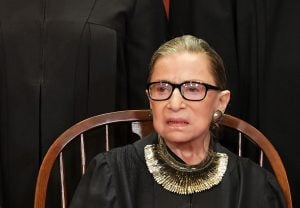
(Photo by MANDEL NGAN/AFP/Getty Images)

Ruth Bader Ginsburg was a staunch defender of women’s rights including reproductive freedom. And her seat on the Court being filled by Amy Coney Barrett, who will seemingly inevitably write the decision that ends that hard won freedom, is already a twist of the knife. But anti-choice advocates still have more salt left to pour in the wounds.

As reported by the Washington Post, a recent amicus brief filed by The Becket Fund for Religious Liberty in the Mississippi case threatening the reproductive freedoms established under Roe v. Wade cited none other than Ginsburg in their filing asking the Supreme Court to overturn the case:

The Becket Fund for Religious Liberty said in its amicus brief on Mississippi’s behalf that “Roe and Casey function as a mechanism for generating conflicts across many areas of religious life” and “thus proves the truth of Justice Ginsburg’s observation that ‘[h]eavy-handed judicial intervention [in Roe] was difficult to justify and appears to have provoked, not resolved, conflict.’ ”

This is — at best — disingenuous. Yes, RBG has misgivings about the legal framework set up in Roe (and Planned Parenthood v. Casey). Which, you know, IS CURRENTLY UNDER ATTACK, so probs right on that front. She would have preferred the decision rest on equal protection grounds or be left to the legislature. Which, yeah. But make zero mistake — she was an absolute champion for abortion rights, calling overturning the case a “worst-case scenario”:

Roe v. Wade, I should be very clear — I think the result was absolutely right,” Ginsburg said in a 2018 interview with law professor Jeffrey Rosen, recounted in his book “Conversations with RBG.”

“My idea of how choice should have developed was not a privacy notion, not a doctor’s right notion, but a woman’s right to control her own destiny, to be able to make choices without a Big Brother state telling her what she can and cannot do,” she said.

The citation is a bald faced attempt to twist RBG’s words — and legacy — to paint overturning Roe as bipartisan, despite, you know, everything she actually said about abortion access.

[Jeffrey] Rosen, president and chief executive of the National Constitution Center, said in an interview that Ginsburg was particularly worried that a system in which some states protect abortion and others ban it would disadvantage poor women, who could not afford to travel.

“She felt women of means would remain able to obtain abortions, but it would have disturbing effects on poor women,” Rosen said.

In one of their conversations, she confronted the idea that abortion rights should be left to the states. “How could you trust legislatures in view of the restrictions states are imposing?” she asked. “Think of the Texas legislation that would put most clinics out of business.”

Conservatives are about the turn the clock back on women’s rights. Let’s not pretend RBG would be okay with that.


Kathryn Rubino is a Senior Editor at Above the Law, host of The Jabot podcast, and co-host of Thinking Like A Lawyer. AtL tipsters are the best, so please connect with her. Feel free to email her with any tips, questions, or comments and follow her on Twitter (@Kathryn1).

Biglaw Firms Continue To Roll Out Vaccine Mandates, Delay Reopenings

The Delta variant of COVID-19 is spreading like wildfire across the United States and the globe, and day by day, Biglaw firms are taking extra precautions to keep their attorneys, staff, and their families. Vaccination mandates are now becoming commonplace, and many firms are now pushing back their proposed reopening dates in light of the latest news on the coronavirus crisis.

Thus far, the firms that have made vaccination a requirement for those returning to the office include Akin Gump, Arent Fox, CooleyClifford Chance, Crowell & Moring, Davis Polk, Davis Wright Tremaine, Dickinson Wright, Fenwick & West, Fried Frank, Goodwin, Hanson Bridgett, Hogan Lovells, Hueston Hennigan, Lowenstein Sandler, McDermott Will & Emery, Mintz, Norton Rose Fulbright, Patterson Belknap, Paul Weiss, Reed Smith, Ropes & Gray, Sanford Heisler, Schiff Hardin, Simpson Thacher, Weil Gotshal, Wilson Sonsini, and Winston & Strawn.

Now, we can add another five firms to the list. Debevoise & Plimpton, Faegre Drinker Biddle & Reath, Cozen O’Connor, Seyfarth Shaw, and Stroock & Stroock & Lavan have all recently added vaccination mandates to their safety protocols, and some of them will be delaying their full reopenings due to the Delta variant.

Debevoise announced last Thursday that all employees must be vaccinated to return to the office, beginning on September 30. Presiding partner Michael Blair noted in a memo that “[t]his requirement, which is strongly recommended by our medical advisors, will lessen the likelihood of community spread at the office, and the potential for a vaccinated individual to bring the virus home to family members who may be ineligible for a vaccine or have a pre-existing health condition.” Unlike other firms, Debevoise didn’t have to push back its full reopening date, because this is the first time we’re heard anything about their plans. Starting on October 11, the firm will require lawyers (and “some professional staff”) to work from the office one to two days each week, and starting on November 8, they will be required to work at least two-thirds of their time from the office.

Thanks to the new COVID surge, Faegre Drinker will be putting off the start of its hybrid work schedule, originally planned to begin on September 7. Now, the firm will start its new work model on October 4. On top of pushing back its reopening, the firm will now require vaccinations for anyone returning to the office. This new policy took effect on August 9.

Cozen O’Connor will be delaying its full reopening as well as the start of its hybrid work policy until September 20 (about two weeks after their original plans were supposed to commence on September 8). The firm will also be requiring all personnel to be vaccinated against COVID-19 after available vaccines receive full FDA approval. Until then, unvaccinated employees will be able to work remotely.

Seyfarth Shaw has a new vaccination mandate, and per Pete Miller, the firm’s chair and managing partner, “[O]ur number one priority has always been the health and safety of our people. The development of multiple vaccinations was a turning point in the battle against COVID-19 and, as the Delta variant gains a foothold, these vaccines remain the best way to protect each other.” Now, anyone entering the firm’s offices must be fully vaccinated or show proof of a negative COVID-19 test, and unvaccinated personnel must test negative on a weekly basis. The firm’s reopening date is now September 27, as opposed to September 13, as was planned.

Stroock & Stroock & Lavan announced late last week that going forward, the firm will require anyone who intends to enter its offices to be fully vaccinated. The firm will offer paid leave for those who take the time to get vaccinated, as well as an additional four hours of personal time off for those who show proof of their vaccination. All employees must work from the offie at least three days a week upon its full reopening on October 4.

Will your firm be changing its plans when it comes to vaccination for attorneys and staff thanks to the Delta variant? Please let us know.

What has your firm announced as far as a reopening plan is concerned? The more information is out there, the more likely it is that firms will be able to establish a market standard for a return to the office.

As soon as you find out about the reopening plan at your firm, please email us (subject line: “[Firm Name] Office Reopening”) or text us at (646) 820-8477. We always keep our sources on stories anonymous. There’s no need to send a memo (if one exists) using your firm email account; your personal email account is fine. If a memo has been circulated, please be sure to include it as proof; we like to post complete memos as a service to our readers. You can take a photo of the memo and attach as a picture if you are worried about metadata in a PDF or Word file. Thanks.


Staci ZaretskyStaci Zaretsky is a senior editor at Above the Law, where she’s worked since 2011. She’d love to hear from you, so please feel free to email her with any tips, questions, comments, or critiques. You can follow her on Twitter or connect with her on LinkedIn.