Where Do Your Peers Stand On eDiscovery Tech?

It’s apparent that the future of eDiscovery will reside in the cloud. 

But the increasing acceptance of this technology also brings a few concerns, such as perceived challenges related to cybersecurity and data migration. 

To benchmark how the industry is adapting, we’ve surveyed our audience in partnership with our friends at Everlaw — the first cloud-native eDiscovery solution to achieve FedRAMP Security Authorization.

The resulting “2021 EDiscovery Cloud Adoption Report” details our findings, touching on areas as varied as current tech adoption, implementation plans, and how some stakeholders think their transition is going.

Fill out the form to download this free report — and see where your peers stand on eDiscovery tech. 

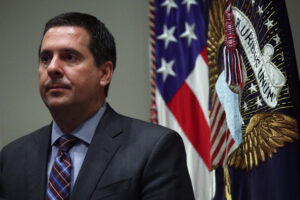
Devin Nunes Gets Out His Libelslander Lawsuit Dartboard, Lands On NBC

(Photo by Alex Wong/Getty Images)

He’s baaaaack!

Well, to be fair, he never left. Rep. Devin Nunes and his razzledazzle libelslander lawyer Steven Biss have been filing whackadoodle complaints for years, apparently undaunted by their complete lack of success. And yesterday he added to his collection with a spiffy new defamation suit against NBC over a March 18, 2021 broadcast in which Rachel Maddow allegedly accused Nunes of accepting a package from Ukrainian politician Andriy Derkach — who was later sanctioned by the US government for trying to influence the election by falsely smearing Joe Biden — and failing to turn it over to the FBI.

Nunes’s signature move has been to sue media companies in Virginia state court, as he did with Twitter, CNN, and the Washington Post. But with judges tiring of that game, the California Republican is striking out for greener pastures.

Sure, NBC is a Delaware corporation doing business in New York. But it has offices in Texas, and it, uh, broadcasts there. And although the allegedly defamatory statements were made in New York and the plaintiff himself has no connection to Texas other than having donors and social media followers there, he’d still like to avail himself of the Eastern District of Texas’s hospitality. Of course this has nothing whatsoever to do with the court’s highly conservative make up and a recent decision by the Fifth Circuit barring application of the Lone Star State’s anti-SLAPP law in federal court.

So Nunes found himself the general-est of general practice local counsel and two-stepped into the Eastern District, where he was immediately assigned to US District Judge Amos Lous Mazzant, III, an Obama appointee. Womp womp!

But perhaps Mr. Nunes’s case was not destined for greatness anyway. Aside from the various jurisdictional issues, the allegedly defamatory statements consist of Maddow saying that Nunes “accepted a package” from Derkach, that he “refused to hand it over to the FBI,” and that “the Republicans have kept Mr. Nunes on as the top Republican on the intelligence committee.”

The first and third statements are clearly true. Democrats on the Intelligence Committee discovered that Derkach had sent the package when they were mistakenly given a copy of the DHL shipping receipt — good luck arguing that the distinction between accepting and receiving a package you took physical custody of amounts to defamation. And indeed Nunes remains the ranking member of the Intelligence Committee today.

As for the second statement, Nunes alleges that he handed the document over to the FBI immediately and without opening it, writing in a December 11, 2019 email to Bill Barr:

The House Intelligence Committee today received a package from foreign individuals addressed to me. We have strong reason to believe that the sending of this package is part of a foreign disinformation campaign that included participation by Americans. As a result, I request a meeting with you discuss these concerns at your earliest convenience.

Which raises some interesting questions, since it seems to suggest that Nunes knew all the way back in 2019, before the first impeachment, that he was being recruited into a foreign influence campaign involving Derkach and “Americans.” And in case it’s not clear which of his countrymen Nunes is referring to, let’s just note that December 11, 2019 was six days after the president’s lawyer, Rudy Giuliani, publicly met with Derkach in Ukraine, posing for that infamous photo of him accepting a sheaf of documents about Joe Biden.

Giuliani meets with Ukrainian lawmaker Andriy Derkach in Kyiv, Ukraine, Thursday, Dec. 5, 2019. Photo provided by Derkach’s press office.

And although Nunes told the FBI that he knew he was being targeted, he failed to mention it in the lead-up to the election when Giuliani was all over the airways spewing Kremlin-sponsored lies. In fact, he refused to say anything at all about it, and wouldn’t even admit to his Democratic HPSCI colleagues that he’d received the package, in a testy exchange first reported by Politico.

Nunes cites a Breitbart article from July 30, 2020 as proof that Maddow knew or was negligent as to the veracity of her claim that Nunes had refused to share the document with intelligence officials. In it, Rep. Rick Crawford (R-AR) said, “Here’s the thing: it’s standard practice that if you get a package from unknown source in a foreign country, it’s probably a good idea to call the FBI and let them handle it and not handle those packages and don’t open them and go, ‘Hey I wonder what this is? I guess it’s Christmas came early this year.’ No, you follow the protocol, which is you turn that over to the FBI. That’s what happened.”

Nunes, who steadfastly refused to say publicly whether he’d given the document to the FBI, points to Crawford’s avowal that “That’s what happened” and insists that Maddow must have known that he’d turned Derkach’s love note over to the FBI. But Politico, which broke the story on July 23, reported that, although Nunes rebuffed multiple requests for comment, “One person familiar with the matter said the information was not turned over to the FBI.” And with Nunes AWOL, there’s a credible argument that reporting was contradictory.

On the plus side for Nunes, his lawyer does appear to be learning. Unlike previous Nunes/Biss joints, this pleading omits the panegyric on the congressman’s Portuguese heritage and devotion to dairy farming. And now that he’s within spitting distance of a credible claim, he’s dropped the demand for eleventy million dollars to compensate for his hurt feefees, opting for damages to be determined by a jury. But, there is the whole business about it being filed in Texas, so …

SLOW CLAP, DEVIN, you’re a little less wrong than usual.

Nunes v. NBCUniversal Media [Docket via Court Listener]


Elizabeth Dye lives in Baltimore where she writes about law and politics.

Vaccine Mandates Are Trending Across Biglaw Firms

We keep saying that the times we’re living in now are “post-pandemic,” but that seems to be far from the truth. COVID-19 continues to rage on across the United States, and the Delta variant now accounts for about 93 percent of all coronavirus infections in the country. Biglaw firms are now getting serious about prevention and protection, and many are now mandating vaccines for all.

Thus far, the firms that have made vaccination a requirement for those returning to the office include Akin Gump, Arent FoxClifford Chance, Cooley, Crowell & Moring, Davis Polk, Davis Wright TremaineDickinson WrightFenwick & WestFried Frank, Goodwin, Hanson BridgettHogan LovellsHueston HenniganLowenstein Sandler, McDermott Will & Emery, MintzPaul WeissReed Smith, Ropes & Gray, Sanford Heisler, Schiff Hardin, and Weil Gotshal. Now, we can add another two firms to the list. Norton Rose Fullbright and Patterson Belknap have both added a vaccination mandate to their safety protocols.

Patterson Belknap seems to have been ahead of the curve when it comes to vaccination requirements for its workforce, announcing that as of early last month (July 6, to be exact), everyone who entered the firm’s office “must be fully vaccinated subject to medical or religious accommodations under applicable law.”

Norton Rose will be limiting U.S. office access to those “who are fully vaccinated.” Although the firm is sill planning to return to its office in September, it will be “continually monitoring the situation and evaluating this timeline.” NRF’s vaccine requirement is new as of this week, in response to “a dramatic increase in COVID-19 cases among unvaccinated individuals.”

Will your firm be changing its plans when it comes to vaccination for attorneys and staff thanks to the Delta variant? Please let us know. The more information is out there, the more likely it is that firms will be able to establish a market standard for a return to the office.

As soon as you find out about the reopening plan at your firm, please email us (subject line: “[Firm Name] Office Reopening”) or text us at (646) 820-8477. We always keep our sources on stories anonymous. There’s no need to send a memo (if one exists) using your firm email account; your personal email account is fine. If a memo has been circulated, please be sure to include it as proof; we like to post complete memos as a service to our readers. You can take a photo of the memo and attach as a picture if you are worried about metadata in a PDF or Word file. Thanks.


Staci ZaretskyStaci Zaretsky is a senior editor at Above the Law, where she’s worked since 2011. She’d love to hear from you, so please feel free to email her with any tips, questions, comments, or critiques. You can follow her on Twitter or connect with her on LinkedIn.

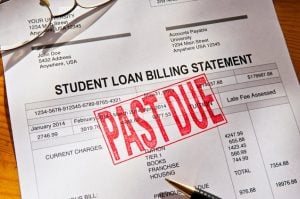
Will The Government Extend The Student Loan Repayment Moratorium Or Cancel The Loans Altogether?

On September 30, the student loan payment and interest moratorium is scheduled to end and those with federal student loans must begin repayment. While there is some talk about extending the moratorium, other signs indicate that reinstatement will at most be delayed for a few more months. The government passed no new stimulus packages or forgivable loans. And just recently, the federal eviction moratorium also ended except for cities with high levels of COVID-19 transmission which were given an additional 60 days of relief. And none of the various versions of the upcoming infrastructure spending bill addresses student loan forgiveness.

With this backdrop, people are asking what the government will do about the growing student loan problem. Will there be another extension? And will there will be a forgiveness plan for student loans in the future? The responses from politicians have been confusing and conflicting.

Democratic Sens. Elizabeth Warren and Chuck Schumer have called for $50,000 to be forgiven although neither have proposed a forgiveness bill in the Senate for an up or down vote. Instead, they have advised President Biden to do so via executive order.

But recently, House Speaker Nancy Pelosi stated that Biden does not have the power to unilaterally forgive student loans, although he has the power to delay.

Biden has repeatedly stated that he supports forgiving $10,000 of student loans per person while anything above that will require legislative action. He has referred the matter to the Department of Justice’s Office of Legal Counsel (OLC) to determine whether he has the legal authority to cancel student loan debt on his own.

The OLC’s opinion will be of great interest since it will likely reflect the president’s view of the issue. While it may appear that he wants an independent legal review, the OLC can sometimes be as impartial as a Supreme Court Justice: impartial on every issue except the important ones.

For example, just recently, the OLC released an opinion stating that the Treasury Department must submit former president Donald Trump’s tax returns to the House Ways and Means Committee. This opinion was released under the leadership of Acting Assistant Attorney General Dawn Johnsen, appointed by Biden at the beginning of the year. This opinion overturns the office’s previous 2019 opinion (then run by Trump appointee Steven Engel) where it stated that the order was unconstitutional because the Democrat-controlled committee had no legitimate legislative purpose for the tax returns.

For now, Biden has forgiven student loans on a piecemeal basis primarily focusing on victims of for-profit colleges who misled prospective students about post-graduation job prospects.

While this will sound unpopular, it is the wiser choice to end the student loan payment moratorium if circumstances permit as a prolonged moratorium will create a dependence. But if the delta variant of COVID-19 continues to spread, it is possible that the student loan repayment moratorium will be extended. But the federal government should consider requiring proof of vaccination before the extension is granted. Younger people are believed to be less likely to be vaccinated for a number of reasons so delaying repayment might be a good incentive to getting jabbed. Of course, there can be exemptions based on the recommendation of a health care professional.

As for student loan cancellation, based on the confusing and conflicting messages, wholesale forgiveness is unlikely for now. It is a politically sensitive subject among on-the-fence voters and solid Democrat voters will not switch votes on this issue alone. I stated earlier that forgiving student loans will have a negligible effect on stimulating the economy. A report from the Committee for a Responsible Federal Budget, a nonprofit, nonpartisan organization also believes that loan forgiveness will not stimulate the economy.

So what will happen when the moratorium ends? It should not negatively affect the vast majority of debtors. Some will resume their previous payment plan. While others whose finances were adversely affected due to the virus will either enter into forbearance or an income-based repayment plan. Others may get a new job which may qualify them for Public Service Loan Forgiveness.

By the end of September, we will learn whether there will be another extension of the student loan repayment moratorium based on the prevalence of the new delta strain. Responsible people should not put themselves financially in a position where they will be dependent on the moratorium because one day it will end no matter how many angry-faced emojis we put on social media. As for loan forgiveness, don’t count on it anytime soon as it is not a pressing election issue and politicians seem to be too busy fighting over who has the power to cancel.


Steven Chung is a tax attorney in Los Angeles, California. He helps people with basic tax planning and resolve tax disputes. He is also sympathetic to people with large student loans. He can be reached via email at sachimalbe@excite.com. Or you can connect with him on Twitter (@stevenchung) and connect with him on LinkedIn.

Vault ‘Quality Of Life’ Rankings: The Best Midsize Law Firms To Work For (2022)

Vault recently published the 2021 edition of all manner of its closely watched rankings for the largest law firms in the country, proving that money — in the form of Cravath’s perennially competitive pay scale (which all associates now know and love as the Davis Polk pay scale) — can buy prestige and happiness.

But what about the nation’s midsized and regional firms? Which ones are the best to work for, and will young associates be happy there as associates Today, Vault released the latest edition of its list of the 25 Best Midsize Law Firms to Work For.

Associates at firms with 200 attorneys or fewer were asked to rank their own law firms based on categories most relevant to their overall quality of life, including overall satisfaction; firm culture; hours; compensation; quality of work; informal training, mentorship, and sponsorship; business outlook; career outlook; associate/partner relations; leadership transparency; and formal training.

There was a huge amount of movement in the Top 10 this year. Which firms made the cut? Without any further ado, here are the Top 10 Best Midsize Law Firms to Work For based on Vault’s Annual Associate Survey for 2022:

  1. Bookoff McAndrews
  2. Durie Tangri
  3. Fitch, Even, Tabin & Flannery
  4. Farella Braun + Martel
  5. Tonkon Torp
  6. Buckley
  7. Susman Godfrey
  8. Stotler Hayes Group
  9. Robinson, Bradshaw & Hinson
  10. Smyser Kaplan & Veselka

You may recognize some of these firm names, since after all, they participated in this summer’s salary wars. But which firms took the spotlight when it came to individual Quality of Life categories? Here are all of the No. 1 firms for 2022:

Congratulations to each of the firms that made the latest edition of the Vault Best Midsize Firms to Work For rankings, and a huge congratulations to Bookoff McAndrews and Susman Godfrey for nearly sweeping the rankings. How did your firm do? Email us, text us at (646) 820-8477, or tweet us @atlblog to let us know how you feel.

Best Midsize Law Firms to Work For (2022) [Vault]


Staci ZaretskyStaci Zaretsky is a senior editor at Above the Law, where she’s worked since 2011. She’d love to hear from you, so please feel free to email her with any tips, questions, comments, or critiques. You can follow her on Twitter or connect with her on LinkedIn.

Deutsche Bank Lie About Progress In A Key Area? Impossible!

Over the last few years, every time it looked like Deutsche Bank had finally turned a corner and put the better part of a decade of failure and existential crisis behind it, it turned out not to have been a corner so much as a slight curve to the left obscuring some new tire-destroying pothole or mud-filled ditch, leaving whoever was in charge at the time on the side of the road, covered in filth and cursing a blue streak while struggling to get the well-worn donut on or to push the rickety old VW out of muck and mire before it overtook them both, only to be left behind when the beat-up Beetle is finally freed from the slop and speeds off without him on its way to the next hidden catastrophe… oh wait, are those flashing lights and sirens coming up behind it?

Morning Docket: 08.04.21

Screenshot via Twitter

* Pardon me?! St. Louis lawyer couple who pointed guns at 1st Amendment users pardoned of their assault and harassment charges. [NY Daily News]

* A/S/L = Jail time for NJ dude who posted a judge’s private information. [ABA Journal]

* His Brother’s Keeper: CNN’s Cuomo advised New York’s Cuomo amid his sexual harassment allegations. [The Hill]

* Push for eviction moratorium extension in the wake of COVID. [HuffPost]

* Lawyers with kids worry about returning to work and ferrying COVID back to their children. Sometimes family matters are more important than billables. [Reuters]


Chris Williams became a social media manager and assistant editor for Above the Law in June 2021. Prior to joining the staff, he moonlighted as a minor Memelord™ in the Facebook group Law School Memes for Edgy T14s. Before that, he wrote columns for an online magazine named The Muse Collaborative under the pen name Knehmo. He endured the great state of Missouri long enough to graduate from Washington University in St. Louis School of Law. He is a former boatbuilder who cannot swim, a published author on critical race theory, philosophy, and humor, and has a love for cycling that occasionally annoys his peers. You can reach him by email at cwilliams@abovethelaw.com.
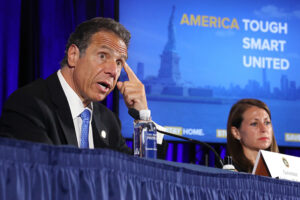
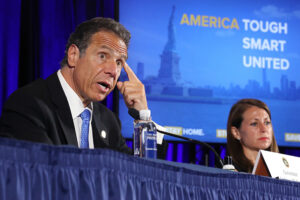
Not A Great Day For Andrew Cuomo — See Also

(Photo by Chip Somodevilla/Getty Images)

Blockbuster Cuomo Sexual Harassment Report: You won’t be surprised, but it is an interesting read.

More Biglaw Firms Tell Attorneys To Get Vaxxed: Good.

Meme Of The Day: What’s holding us back.

Cravath’s Back To The Office Plan: Plus they move to business casual, like pretty much every other firm.

Killed Biglaw Associate Remembered: Rest in peace.

3 Questions For A ‘Billions’ Battler (Part II)

This week, I continue my written interview with prominent author and performance coach, Denise Shull, who took on Showtime and the creators of the hit show “Billions” in the Southern District of New York and the Second Circuit over their mistreatment of her and alleged violation of her IP rights. While her case proved unsuccessful, she has graciously offered to discuss her experiences and frustrations with the litigation process on these pages. As I indicated last week, I have no stake in the outcome of her dispute with “Billions” as anything other than an interested observer — and if someone from Showtime Legal, one of the executive producers, or the outside legal team wants to participate in a similar interview for this audience, the invitation remains open.

Now to the remainder of my interview with Denise. As usual, I have added some brief commentary to Denise’s answers below but have otherwise presented her answers to my questions as she provided them.

Gaston Kroub: What do you suspect was behind the refusal of the “Billions” team to either settle with you or live up to their promise of hiring you to consult for the show?

Denise Shull: In the big picture, originality is what they are selling. If they have original ideas, then they are marketable creators. If they are simply taking from others, then not only do they have to pay in dollars, but they would pay in reputation.

Also, in February of 2016, I was told by a very senior executive at Showtime that there was a battle between the creators over money. I suspect I was also caught up in that.

GK: As I mentioned when I profiled Denise’s case for the first time on these pages, the role of emotion in IP cases is an oft-underestimated driver of behavior that can seem to an outside observer as irrational. At the heart of things here, at least in my view, is an unwillingness by the showrunning team to reckon with the way they led Denise into thinking that there was a continuing role for her to play with respect to the show. But it makes sense that if communication between the showrunners was not ideal with each other, that outside people would be even likelier collateral damage to whatever disputes plagued the creative team internally. On top of that potential dynamic, it can be very difficult as an IP plaintiff to get to a reasonable settlement once a legal team is brought in for the express purpose of getting the case tossed with early motion practice. Was a simple and fair settlement possible here that would have saved the parties time, expense, and aggravation? Reasonable minds could differ on the answer to that question. For her part, however, Denise’s answer suggests that external hurdles to such a settlement made such a result a major challenge in her case.

GK: What was most surprising to you about the litigation process?

DS: To be blunt, how much like the show it seems to be.

For example, I understood the pleading stage to be about “is this complaint plausible?” Judge Daniels ultimately determined, partially through a “quick internet search,” that my work was generic and therefore my claim implausible. Yet it’s my understanding that these sorts of judicial notices normally aren’t for disputable facts and require opportunities for the plaintiffs to respond. We weren’t offered that. Why? Why does the indisputable fact that the showrunners, actress, and marketing each requested my help, not supersede this internet search?

Furthermore, every single instance of dialogue analysis contained substantive errors. Alpha in the hedge fund world is a specific arithmetic measure of performance yet the SDNY declared I could not copyright the idea of an alpha male. Another particularly egregious example is the court’s misunderstanding of what happened [in Season 1’s 11th episode] “Magical Thinking.” The money losing was due to unconscious emotion being acted out with the market working like a Rorschach blot. The court said Axe’s behavior was conscious!

Or take the eating, sleeping, and exercising verbiage. We were saying that the fact both Wendy and the fictional Denise ask the question about physical aspects as their first coaching words and the fact that they do so in the same order is suspicious. Add in that the character in her background bio is from Ohio. There is less than a half of 1% chance these elements occurred by chance.

I could go on, but last, final judgment was entered in three days. I’m told this is unusually brief timing. We were then forced to try to vacate that judgment which created a much higher bar for the proposed first amended complaint that was ultimately denied as futile by the Second Circuit despite having two dozen pieces of evidence showing actual public confusion. How often is a plaintiff prevented from filing even one amended complaint?

When every single thing goes against you, when rules and norms are broken all in the defendant’s favor, one has to conclude that despite a 34-page opinion, it wasn’t even remotely a fair fight — just like in the show.

GK: One can definitely sympathize with Denise’s viewpoint, even if one also agrees that cases like hers have a high degree of difficulty, especially in the Second Circuit. The reality is that IP causes of action can be blunt tools to try to get recompense for what may be very specific and nuanced acts of trespass, making getting a favorable result against a motivated and well-resourced defendant a challenge — even when it feels like there are a plethora of facts that support the idea that the plaintiff was mistreated in some way. In Denise’s case, I can only hope that despite the fact that her litigation results were not as hoped, to say the least, that she can at least find comfort in the fact that she saw the legal process through to as final a decision as one can expect to receive in an IP case.

My thanks to Denise for the insights and cooperation, especially so close to her receiving the negative news about her case from the Second Circuit. I wish her the best of luck with continuing to build her performance coaching practice; there is a lot of beneficial work she could probably do with hard-charging IP litigators to help maximize their performance. Moreover, I greatly respect her willingness to pursue her litigation goals in the defense of her professional and personal reputation, an effort that I think should only raise and benefit her profile, even though the case itself proved unsuccessful. I am always open to conducting interviews of this type with other IP thought leaders, so feel free to reach out if you have a compelling perspective to offer.

Please feel free to send comments or questions to me at gkroub@kskiplaw.com or via Twitter: @gkroub. Any topic suggestions or thoughts are most welcome.


Gaston Kroub lives in Brooklyn and is a founding partner of Kroub, Silbersher & Kolmykov PLLC, an intellectual property litigation boutique, and Markman Advisors LLC, a leading consultancy on patent issues for the investment community. Gaston’s practice focuses on intellectual property litigation and related counseling, with a strong focus on patent matters. You can reach him at gkroub@kskiplaw.com or follow him on Twitter: @gkroub.