What Biglaw Decision-Makers Want From Their Tech

As law firms prepare for whatever new normal may emerge, it’s becoming increasingly clear that technology adoption is the key to maintaining a competitive advantage.

In the 2021 Biglaw Decision-Makers Survey — conducted with our friends at Wolters Kluwer — we sought to gain the views of those guiding the industry’s biggest players on the role of technology.

We asked about the importance of technology to varied aspects of a lawyer’s professional life, the industry’s performance in delivering optimal client service, and the risks of falling behind.

Fill out the form below to download this free report.

More Biglaw Firms Will Require Employees To Be Vaccinated, Some Push Back Reopening Dates

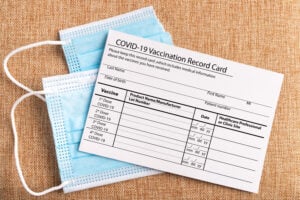
It seems that Biglaw firms have finally gotten in line with science and acknowledged that the best way to protect their personnel is to require vaccines against COVID-19. In light of the highly contagious Delta variant, this is more important than ever, and the list of firms that are now mandating vaccination before their employees can step foot in the office continues to grow.

Thus far, the firms that have made vaccination a requirement for those returning to the office include Arent Fox, CooleyClifford ChanceDavis Polk, Davis Wright TremaineDickinson WrightFenwick & WestFried Frank, Hanson BridgettHogan LovellsHueston HenniganLowenstein SandlerMintzPaul WeissReed Smith, Sanford Heisler, Schiff Hardin, and Weil Gotshal. Now, we can add another four firms to the list. Akin Gump, Crowell & Moring, Goodwin, and McDermott Will & Emery all added a vaccination mandate to their safety protocols.

Akin Gump is not only limiting office access to those who have been fully vaccinated (i.e., those who are two weeks past their final shot), but the firm has pushed back its reopening date to October 11 from September 13. Kim Koopersmith, Akin’s chair, said in a firmwide email, “I am hopeful that the advances in vaccines and knowledge of transmission will make this current wave short-lived and we will get through the current surge and begin to improve.”

Crowell & Moring recently adjusted its thoughts on vaccination, and will now require vaccines for all employees upon its reopening on September 7, “[t]o safeguard the health of all in our community, including the families of our lawyers and staff.” Firm personnel must upload their vaccination cards as proof.

Goodwin emailed all employees earlier today concerning mandatory vaccinations for all, following the FDA’s approval of COVID-19 vaccines for regular use (which will likely occur “in the coming weeks”). Once approved, the firm’s offices will “only be open to those individuals (including all partners, employees, onsite vendors and visitors) who have been fully vaccinated.” Employees must provide proof of vaccination to the firm. Of importance here is the following caveat, so pay attention, folks: “Please note that once our offices reopen, non-vaccination status will not be considered a legitimate reason to support 100% remote work.”

McDermott is also pushing back its reopening date to October 12, and will also require all employees who intend to enter the office to be vaccinated (with proof), starting this Friday. “The overwhelming body of scientific data shows that vaccines are safe and broadly effective in our battle against COVID. We need everyone to step up and get vaccinated,” firm chair Ira Coleman said in a memo.

Will your firm be changing its plans when it comes to vaccination for attorneys and staff thanks to the Delta variant? Please let us know. The more information is out there, the more likely it is that firms will be able to establish a market standard for a return to the office.

As soon as you find out about the reopening plan at your firm, please email us (subject line: “[Firm Name] Office Reopening”) or text us at (646) 820-8477. We always keep our sources on stories anonymous. There’s no need to send a memo (if one exists) using your firm email account; your personal email account is fine. If a memo has been circulated, please be sure to include it as proof; we like to post complete memos as a service to our readers. You can take a photo of the memo and attach as a picture if you are worried about metadata in a PDF or Word file. Thanks.


Staci ZaretskyStaci Zaretsky is a senior editor at Above the Law, where she’s worked since 2011. She’d love to hear from you, so please feel free to email her with any tips, questions, comments, or critiques. You can follow her on Twitter or connect with her on LinkedIn.


NYAG Investigation Concludes Andrew Cuomo Committed Multiple Sexual Harassment Violations

(Photo by Eduardo Munoz Alvarez/Getty Images)

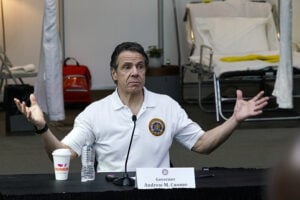
New York Attorney General Letitia James was asked by the Cuomo administration to investigate allegations of sexual harassment against the governor. In turn, she deputized Cleary’s Joon Kim and Anne Clark from Vladeck, Raskin & Clark to dig into the allegations. Today, the AG’s office released a 165-page, detailed report outlining stories of harassment from 11 complainants, evidence of retaliation efforts against one of the victims, and ample proof of a hostile work environment.

Upon completion of our independent investigation into allegations of sexual harassment brought against Governor Andrew Cuomo and the surrounding circumstances, we have reached the conclusion that the Governor sexually harassed a number of State employees through unwelcome and unwanted touching, as well as by making numerous offensive and sexually suggestive comments. We find that such conduct was part of a pattern of behavior that extended to his interactions with others outside of State government.

We also find the Executive Chamber’s response to allegations of sexual harassment violated its internal policies and that the Executive Chamber’s response to one complainant’s allegations constituted unlawful retaliation. In addition, we conclude that the culture of fear and intimidation, the normalization of inappropriate comments and interactions, and the poor enforcement of the policies and safeguards, contributed to the sexual harassment, retaliation, and an overall hostile work environment in the Executive Chamber.

The report concludes that multiple federal and state violations were committed.

An impeachment investigation is ongoing and sure to get a jolt from this report.


HeadshotJoe Patrice is a senior editor at Above the Law and co-host of Thinking Like A Lawyer. Feel free to email any tips, questions, or comments. Follow him on Twitter if you’re interested in law, politics, and a healthy dose of college sports news. Joe also serves as a Managing Director at RPN Executive Search.

Biglaw Associate Killed In Miami Building Collapse Remembered As ‘Fearless’

(Photo by Joe Raedle/Getty Images)

Reed Smith associate Nicole Langesfeld, 26, and her husband, Luis Sadovnic were killed in the June 24 collapse of Champlain Towers South in Surfside, Florida. Langesfeld was a summer associate at the firm and started full time in 2019. She and Sadovnic were married earlier this year and only moved into the doomed residence two months before the tragic collapse.

Reed Smith counsel Ana Barton tells Law.com Langesfeld was a fearless attorney:

“She was fearless,” Barton said. “The way she spoke up with ideas when we were doing an internal brainstorming session on how to advance the case for a client and what arguments to make. She was the same talking to Noah [Goldberg] and I, as fellow associates, as she was talking to partners and speaking on calls with the client, which says volumes about the person she was.”

And insurance recovery associate Noah Goldberg remembered Langesfeld’s sense of humor:

“It’s hard to describe the person Nicky was because some of the words sound like generic superlatives or platitudes, but she was the very real embodiment of so many things that people aspire to be,” Goldberg said. “I’ve never laughed so much when writing a brief as I have when I’ve done it with Nicky.”

One of Langesfeld’s former professors, University of Miami School of Law’s Andrew Dawson said she stood out in the crowd:

“They’re bar courses, they’re big classes, there are a lot of students in each. I’m not able to get to know that many students in those large classes, but I remember Nicole very clearly,” Dawson said. “She actually had fun acting as a lawyer. She was very memorable in that way.”

One of Langesfeld’s co-workers, legal assistant Regla Barrios started a GoFundMe to raise money for the couple’s family.


Kathryn Rubino is a Senior Editor at Above the Law, host of The Jabot podcast, and co-host of Thinking Like A Lawyer. AtL tipsters are the best, so please connect with her. Feel free to email her with any tips, questions, or comments and follow her on Twitter (@Kathryn1).

Cravath Lays Out ‘3.5 Day/Week’ Remote Working Model

As firms transition back to the post-pandemic reality we’ve seen 4-day work from the office proposals, 3-day models, and firms willfully oblivious to the potential recruiting nightmare of making everyone come back in full time. Which model would dominate the emerging post-pandemic Biglaw world? The answer may have just gotten a little clearer.

Cravath, the firm the legal world traditionally looks to for everything from bonuses to basic organization, has now spoken when it comes to remote work models. Befitting a firm that always endeavors to lead rather than follow, it’s got an innovative approach that still matches the mood of the moment.

We think the right balance is up to six business days of remote work each month. We expect and trust that professionals of the caliber of our people can determine how that should translate into their weekly routine when we are back in the office. Just as in the past, sometimes a week can be more flexible, and other times inflexible—all depending on client and group/team needs, In the spirit of being part of a high-functioning team, flexibility is an opportunity to benefit from the convenience or efficiency of working remotely while maintaining the nexus of the workplace for all of us.

Cravath managed to resolve the 3- and 4-day debate by going with “3.5.” Because 6 days a month is, roughly, a 3-day in office week for half the month and a 4-day week for the other half. But it also comes with the level of flexibility that attorneys require. Models that try to set which specific days attorneys will and won’t be in the office are just going to end in frustration.

On the other hand, too much flexibility may well provide no flexibility at all. A sufficiently busy lawyer may find that “up to 6 days” means “0 days” some months. The push and pull of flexibility and predictability will define the first few months of the new normal.

The memo from managing partner Faiza Saeed hits all the marks in the remote work debate, noting the power of the firm’s tech infrastructure allowing everyone to provide elite work product from home, while also recognizing that years of in-office interaction provided the roots of the seamless transition to remote. With a model allowing attorneys to forge their own schedules balancing time in and out of the office, Cravath thinks it’s got the perfect solution.

Another big reveal in the memo is the decision to go with business casual attire for in-office appearances:

When we come back, and adjust to having to dress for the office (and perhaps wear something on our feet other than flip-flops), office attire will be business casual. Of course, where making a court appearance, the rules of attire will remain formal business, and when meeting with clients, judgment should be guided by the etiquette the client follows.

Cravath targets an office reopening of October 8.

The full memo is reproduced on the next page.


HeadshotJoe Patrice is a senior editor at Above the Law and co-host of Thinking Like A Lawyer. Feel free to email any tips, questions, or comments. Follow him on Twitter if you’re interested in law, politics, and a healthy dose of college sports news. Joe also serves as a Managing Director at RPN Executive Search.

Seeking Life Sciences In-House Legal Counsel

Kinney Recruiting is working with a publicly traded life sciences company on its search for an in-house counsel to sit in either DC/Maryland or San Diego.

The role calls for 3+ years of experience and involves supporting the US operations on a wide range of matters including regulatory, general corporate, transactional, licensing, agreements (contract research, master services, clinical trial, etc.). You’ll have the opportunity to partner with/advise colleagues and have a real impact on the business.

The position comes with a competitive compensation package including a generous base, bonus, and options. Relocation is available. Please reach out to learn more.  cindy@kinneyrecruiting.com.

Justice Department joins False Claims lawsuits against Kaiser Permanente – MedCity News

The Department of Justice has joined six lawsuits alleging that Kaiser Permanente knowingly submitted false claims for Medicare Advantage beneficiaries to get higher reimbursements.

But Oakland, California-based Kaiser said it is confident that it has been compliant with Medicare Advantage program requirements.

The Centers for Medicare & Medicaid Services pay Medicare Advantage plans a per-person amount to provide benefits. The payments are adjusted based on demographic information and the diagnoses of each beneficiary. The adjustments, known as “risk scores,” are generally higher for those with more severe diagnoses.

To receive the risk-adjusted payments, Medicare Advantage plans must submit claims to CMS for each member and for each qualifying disease or condition. According to the complaints, members of the Kaiser Permanente consortium have been upcoding those claims, thereby violating the False Claims Act.

Since at least 2004, Kaiser entities have perpetrated a “systematic fraud on the Medicare Advantage program,” one of the unsealed lawsuits states.

The Kaiser entities allegedly pressured its physicians to create addenda to medical records to add risk-adjusting diagnoses which patients did not actually have and/or were not actually considered or addressed during a patient encounter. Kaiser did this often months or over a year after patient visits, the suit claims.

Further, the Kaiser entities have refused to correct — and to reimburse Medicare for — previously submitted risk adjustment claims when they discover that they were false, the lawsuits allege.

“Through this scheme, Kaiser has defrauded the United States of tens of millions of dollars,” according to the unsealed document.

In addition to Kaiser Permanente, the entities named in the complaints include:

  • Kaiser Foundation Health Plan Inc.
  • Kaiser Foundation Health Plan of Colorado
  • The Permanente Medical Group Inc.
  • Southern California Permanente Medical Group Inc.
  • Colorado Permanente Medical Group P.C.

Kaiser Permanente said it will vigorously defend against the allegations. The organization also lays some of the blame for the inaccuracies in coding on CMS.

“Our policies and practices represent well-reasoned and good-faith interpretations of sometimes vague and incomplete guidance from CMS,” said Kaiser in a statement posted to its website.

“For nearly a decade, Kaiser Permanente has achieved consistently strong performance on risk adjustment data validation audits conducted by CMS,” the statement reads. “With such a strong track record with CMS, we are disappointed the Department of Justice would pursue this path.”

The plaintiffs are seeking damages equal to three times the loss the United States has sustained as a result of the defendants’ actions as well as a civil penalty of $11,000 for each violation of the False Claims Act.

Photo: designer491, Getty Images

Morning Docket: 08.03.21

(Photo credit should read SEBASTIEN ST-JEAN/AFP via Getty Images)

* LA Mayor responds to lack of homeless shelter beds with a general ban on camping. [Jurist]

* 14th Amendment claim against mandatory vaccinations smacked down by the 7th circuit. Also, this is what the 14th is getting used for nowadays? Ugh. [Reuters]

* Just stay home: Fake vaccination cards cost these two about 16k. That’s almost a month of law school! [The Crime Report]

* Why can’t they just say it like $hort? SEC plans to review their whistleblower rules. [Law 360]

* What do you mean I can’t harass you?! California’s definition of “harassment” may include behavior clearly protected by the 1st Amendment. [Reason]


Chris Williams became a social media manager and assistant editor for Above the Law in June 2021. Prior to joining the staff, he moonlighted as a minor Memelord™ in the Facebook group Law School Memes for Edgy T14s. Before that, he wrote columns for an online magazine named The Muse Collaborative under the pen name Knehmo. He endured the great state of Missouri long enough to graduate from Washington University in St. Louis School of Law. He is a former boatbuilder who cannot swim, a published author on critical race theory, philosophy, and humor, and has a love for cycling that occasionally annoys his peers. You can reach him by email at cwilliams@abovethelaw.com.

Let The Finger Pointing Begin — See Also

U.S. Attorneys’ Offices Hit Hard By Data Breach

Ed. Note: Welcome to our daily feature Trivia Question of the Day!

According to the Department of Justice, what percentage of employees working in the U.S. Attorneys’ offices located in the Eastern, Northern, Southern, and Western Districts of New York had their email compromised by the Advanced Persistent Threat (APT) group responsible for the SolarWinds breach in December 2020?

Hint: They said this activity constituted a major incident under the Federal Information Security Modernization Act (FISMA).

See the answer on the next page.