Supreme Solicitors

As we approach the end of the 2010s, one of the defining features of the decade for patent lawyers has been the increased willingness of the Supreme Court to hear and decide patent cases. In contrast to the first decade of this century, where seven out of 10 years saw one or fewer Supreme Court patent decisions, most years this decade have seen three or more patent decisions by the Supreme Court. Which is an important development, because while some of the Court’s recent patent decisions have been more impactful than others, it is indisputable that there are significant ramifications for IP owners whenever the Supreme Court speaks. 

Considering that on balance the Supreme Court’s pronouncements have been perceived as negative for patent holders, it is hard to ignore the Court’s arguable contribution to the well-documented decline in patent values over the past decade. A decline particularly exacerbated in the minds of many by the Court’s Alice and Oil States decisions, on the issues of patent eligibility and IPR constitutionality, respectively. Or TC Heartland for that matter, which has erased venue-based advantages previously enjoyed by patent owners, by limiting patent enforcement to venues where the alleged infringers are incorporated or have a physical presence. Taken together, the Court’s recent jurisprudence has shifted the patent litigation landscape on a number of critical fronts. Ask any patent lawyer or patent owner if you need confirmation.

In light of the Court’s increased attention to patent issues, it is fair to ask what factors may be behind the phenomenon. Increased division of opinion at the Federal Circuit is one likely contributor, as has been the need to resolve issues arising out of the passage and implementation of the America Invents Act. A recent Iowa Law Review article by Boston University’s Paul R. Gugliuzza suggests another interesting factor at work as well. In his view, “[E]lite lawyers’ remarkable success in obtaining certiorari may help explain why the number of patent cases heard by the Supreme Court has increased so substantially over the past decade.” While I agree with his thesis, we must first clarify what he is getting at with his reference to “elite lawyers.”

Professor Gugliuzza defines an “elite Supreme Court lawyer as someone who has presented oral argument at the Court in five or more cases in the current and ten preceding Terms, combined.” As you can imagine, that is rarefied company. And that small cadre of elite lawyers handled around half of all Supreme Court oral arguments in one recent term. Moreover, that small group of lawyers has increasingly found clients interested in hiring them for patent matters, whether to argue Federal Circuit appeals or to file cert petitions in the Supreme Court. The latter activity has more than doubled this decade as compared to last, perhaps as clients have seen better results when using an “elite lawyer” to petition the Supreme Court. With more patent-based petitions being filed by top-drawer Supreme Court practitioners, it is not surprising that we have seen more uptake of patent cases by the Court. 

Likewise, the increased participation of Supreme Court expert advocates at the Federal Circuit level may also contribute to better positioning of cases in terms of attracting Supreme Court interest. One consequence of this shift from patent specialists to appellate luminaries for handling patent appeals, as noted by Professor Gugliuzza, is that ”patent law — particularly at the appellate level — is being shaped by the most notable generalist litigators at the country’s most prestigious law firms.” Whether or not that is a good thing is up for debate.

For Professor Gugliuzza, one important benefit of the increased activity amongst “elite lawyers” in patent cases is in helping to provoke necessary Supreme Court oversight over the Federal Circuit. In his view, “elite advocates can pick and choose specific legal issues on which settled Federal Circuit law is particularly in need of reform and that the Supreme Court might be willing to disrupt.” Adding to the Court’s comfort in dealing with such important issues is its confidence that “elite lawyers” will handle such difficult cases with aplomb. 

At the same time, there is also the danger that both non-patent specialist “elite lawyers” and the Court will focus more on those patent law questions that center on procedural or statutory issues, rather than important technological elements, such as questions of validity. As noted in the article, “the Court’s agenda in patent law doesn’t always focus on the core issues that are most salient to the day-to-day administration of the patent system. Indeed, it took more than a decade and numerous unsuccessful cert. petitions before the Court finally tackled (and overturned) perhaps the most important and controversial ruling the Federal Circuit ever made: that patent claim construction is a pure question of law subject to de novo review on appeal.” Put another way, when the Supreme Court’s patent agenda is being shaped in part by elite generalist lawyers, there is always the danger that key issues take longer to receive necessary attention.

Ultimately, Professor Gugliuzza’s article is a fantastic example of academic scholarship that practitioners and their clients should be reading and thinking about. For one, much has been made of the impact of lobbying by industry interests on Congress when it comes to patent law changes in the past decade. At the same time, the increased role of “elite lawyers” in patent matters can be viewed as a subtle type of judicial lobbying by the clients with the good sense and resources to hire those advocates for their appellate patent needs. The consequences of this shift towards “elite lawyers” thereby resonates down to the entire patent ecosystem. The supreme solicitor club may be a small one, but like the Court itself, their reach is both deep and wide in the patent space.

Please feel free to send comments or questions to me at gkroub@kskiplaw.com or via Twitter: @gkroub. Any topic suggestions or thoughts are most welcome.


Gaston Kroub lives in Brooklyn and is a founding partner of Kroub, Silbersher & Kolmykov PLLC, an intellectual property litigation boutique, and Markman Advisors LLC, a leading consultancy on patent issues for the investment community. Gaston’s practice focuses on intellectual property litigation and related counseling, with a strong focus on patent matters. You can reach him at gkroub@kskiplaw.com or follow him on Twitter: @gkroub.

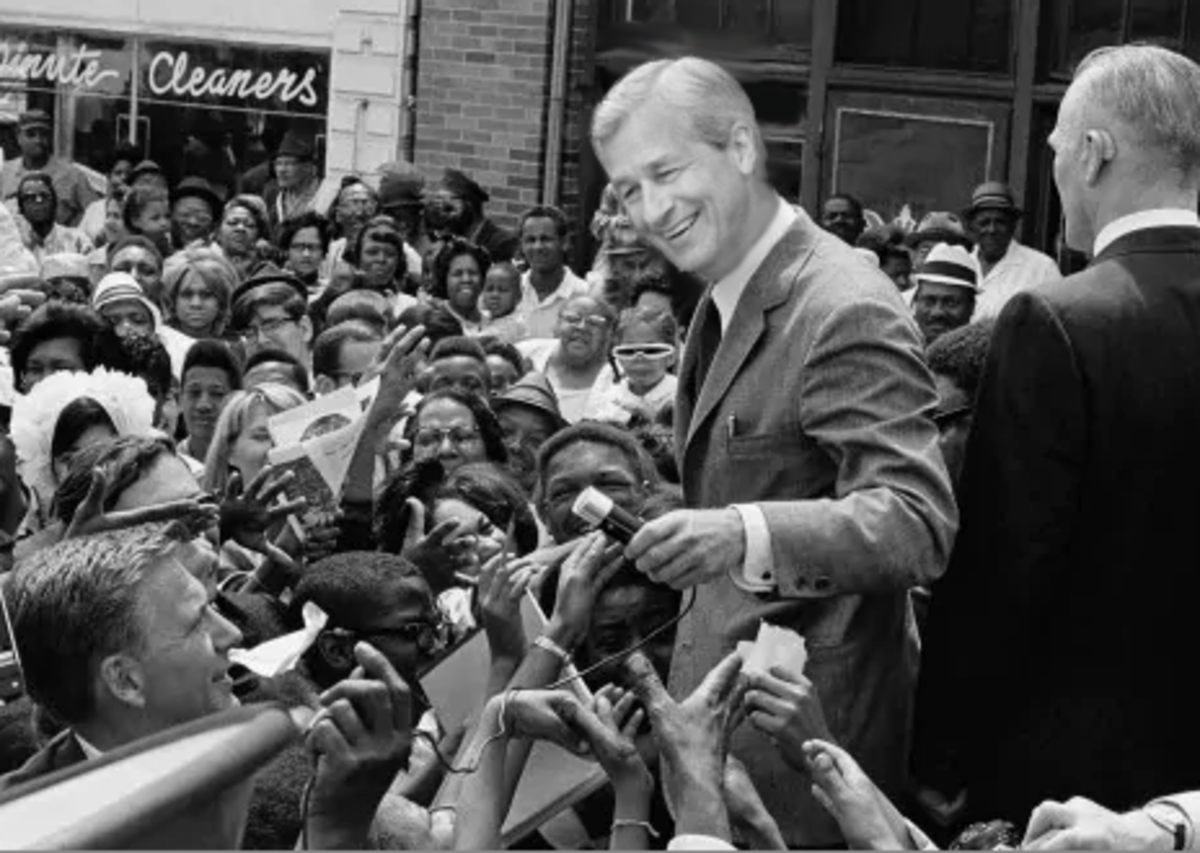
Jamie Dimon, Who Is Definitely Not Running For President, Unveils Newest Criminal Justice Reform Plan

Give him your hungry, your tired, your convicted felons yearning to, uh, say hello to people as they enter a Chase branch.

Morning Docket: 10.22.19

Roger Stone (Photo by Drew Angerer/Getty Images)

* An alleged New Hampshire church shooter has reportedly beaten his own lawyer… good luck trying to find another attorney to represent him. [Boston Herald]

* A bunch of law firms are vying to provide fixed-rate trademark services for Amazon. Wonder if they’ll offer free two-day delivery for Prime members. [American Lawyer]

* It may be time for the “Piper” to pay –another DLA Piper employee alleges inappropriate behavior by a firm partner and administrators. [Bloomberg]

* R. Kelly and his divorce lawyer are in Splitsville over R. Kelly’s alleged failure to pay his lawyer’s fees. [Chicago Sun Times]

* Roger Stone won’t be able to show clips from The Godfather Part II at his trial. I guess they made the judge an offer he could refuse. [Daily Beast]

* Unfortunately, two beaten-up lawyers make today’s Morning Docket. The Cleveland attorney sucker punched by a client after a 47-year sentence was handed down is mulling a lawsuit against the local sheriff’s department. [Cleveland.com]


Jordan Rothman is a partner of The Rothman Law Firm, a full-service New York and New Jersey law firm. He is also the founder of Student Debt Diaries, a website discussing how he paid off his student loans. You can reach Jordan through email at jordan@rothmanlawyer.com.

Zimbabwe says 55 elephants have died in two months following severe drought – The Zimbabwean

Some of the animals died while searching for water at the Hwange National Park. Others were killed by residents after wandering into surrounding communities looking for food, Tinashe Farawo, spokesman for Zimbabwe’s Parks and Wild Life Management Authority said.

“The elephants are traveling long distances to look for water and end up invading communities. Some died of thirst in the park, some while in search of water. Community members killed others after they destroyed their properties,” Farawo said.

Twenty people have killed in human-animal conflict in the country since January, according to the spokesman.

Farawo said an elephant mauled a man to death after he tried to chase the animal, which had wandered into his garden to drink water in his backyard in a local settlement last week.

“That’s why we are saying allow us to trade in these animals, and we can raise funds for their security and food. But the so-called conservationists condemn us. The park was meant for 15,000 elephants, but we are now talking of over 50,000,” he said.

Farawo said the water crisis at the park was at a dire stage, and authorities have had to dig boreholes deeper to provide care for the animals.

The El-Nino drought that lasted between last October and May has devastated water sources in Zimbabwe, and citizens are bearing the brunt of the disaster.

Zimbabwe’s government has often complained about its elephant numbers, arguing that selling the animals will help reduce their population and generate funds to care for them, a position that has been opposed by animal conservationists.

In May, Zimbabwe said it had made $2.7 million from the sale of 90 elephants to Dubai and China, and profits will be plowed into animals conservation efforts.

Lenin Chisaira, director of Advocates4Earth, a group challenging a purported plan to sell 35 elephants to countries in Asia, said the water problems at the park were not enough to justify elephants’ sale.

Chisaira said mining operations in Hwange have contaminated water sources and affected grazing lands, leaving the animals with no choice but to fend for themselves.

“The government has over the years been allowing mines to develop in Hwange and that’s reducing grazing land, and those operations have impact on water. Even polluting the water. So the government is squarely to blame for all this,” Chisaira told CNN.

Trump Falsely Claims Article I, Section 9, Of U.S. Constitution ‘Phony’

— Trump is the first American president to not have even bothered to read to the U.S. Constitution, right?

Contracts Reimagined: Ken Adams On Making Contracts Clear And Making The Contracts Process Efficient

(Image via Getty)

“I was a foot soldier in Biglaw when I thought to myself, why don’t I look more closely at how contract language works or doesn’t work, rather than just cranking out deals.” That’s how Ken Adams explains his dedicating over 20 years of his life to studying and sharing how best to draft contracts.

He says, “I found that that type of work was better suited to how my brain works. It’s a longer-term inquiry, compared with the expediency-driven task of getting the deal done. It involves relentlessly grinding away at issues related to how to say clearly and concisely whatever you want to say.” He wryly admits that there’s something a bit maniacal about it. “I suspect it’s driven by some deep-rooted need for order and a functioning civic society. And I’m the only person doing what I do. It’s been amazing having the field essentially to myself.”

I took Ken’s day-long “Drafting Clearer Contracts” seminar about 10 years ago, soon after I had switched from being a law-firm litigator to working in-house. Back then, he gave me a framework for understanding contracts and introduced me to their limited and stylized language. And in the process, he completely changed my practice. So I was eager to catch up with him again now, especially as so much activity in legal tech relates to contracts.

Taking Control of Contract Language

Ken says, “I always believed that my study of contract language wasn’t an end unto itself. It was a means to an end.” He continues, “If we’re going to create an efficient process, we’re going to need guidelines for coherent contract language.” We must know how to express a deal clearly and effectively. And then, and only then, we can automate, according to Ken. “If you automate without rigorous content, you’re doomed to garbage-in-garbage-out.”

Ken says that to produce reliable contract language, you have to realize that it’s analogous to software code — it’s limited and stylized. “It’s all well and good to say ‘be clear’ and ‘use short sentences,’ but that requires command of countless words and phrases. That’s what I’ve been working on.” That work is reflected in Ken’s 600-page book, A Manual of Style for Contract Drafting, now in its fourth edition.

The Culprits: Copy-and-Pasting and the Legalistic Mindset

Ken is still incredulous at the dysfunction of traditional contract drafting. “It’s a system that has smart people endlessly recycling profoundly defective prose. That’s the case regardless of how prestigious the law firm or how exalted the company.”

Why are things so bad? According to Ken, it’s a combination of two things. “First, contract drafting has long relied on copying, on faith, from precedent contracts of questionable quality and relevance. When you have generation after generation copy-and-pasting, the result is a disconnect between what’s in the contract and what people think is in the contract.”

Another factor is what Ken calls “the legalistic mindset.” He explains, “It’s a function of thinking that your work product should showcase legal intricacy.” According to Ken, the result is contracts clogged with terminology that gets in the way of expressing the deal. “That is why a phrase like ‘represents and warrants’ is a fixture in contracts, even though it’s absurdly pointless and confusing. In their urge to make things complicated, lawyers have managed to make contracts incomprehensible.”

Automating Contract Creation: Hard Work Worth Doing

Ken thinks that the obvious starting point for automating contracts is contract creation, but you have to understand the nature of the task. He explains, “Automating contract drafting isn’t glamorous — the technology involved is relatively basic. The work is primarily a matter of the research and editing involved in building a library of automated contracts.”

Eight years ago, he tested what could be done by creating an automated confidentiality agreement that allows you to create what Ken describes as “the confidentiality agreement of your dreams” by answering an annotated questionnaire. Ken says, “You might end up answering eighty questions before you’re done, but you get a great NDA that fits your needs and is clear and as concise as possible.”

“That’s how we should be drafting contracts, rather than randomly copy-and-pasting from who knows what and relying on conventional wisdom,” Ken asserts. It seems a straightforward enough proposition, but so far nothing on the market comes close to meeting Ken’s standards. “The challenge isn’t the technology or creating the content, it’s finding a constituency willing to dedicate to the task the resources required.” That’s something Ken’s still working on.

AI Must be Powered by Expert Humans

Ken is also involved in tackling the process of contract review. Ken says, “Reviewing contracts is likely more of a burden than drafting. If you draft the contracts for, say, 10 different deals of a certain kind, each time it’s just a matter of your making suitable adjustments to your template. But if the counterparties are responsible for preparing the documents, you would be faced with reviewing 10 different and unfamiliar drafts.”

Ken is an advisor to LegalSifter, an artificial-intelligence company that helps you review draft contracts. It flags whether a set of deal points are present or absent, and for each deal point it offers help text prepared by LegalSifter’s experts, your law firm, or your in-house counsel, whichever option best suits your needs. But Ken is eager to point out that despite the buzz surrounding artificial intelligence, at the core of LegalSifter is old-fashioned expertise, with the technology serving to make that expertise more accessible.

Ken described to me how LegalSifter’s process works. “For example, recently I worked on contracts used to book a meeting at a hotel. By looking at countless hotel agreements and reading relevant commentary, I identified those deal points worth looking for. For each of those deal points, I created a set of specifications showing how that issue might be expressed in a contract. Those specifications were handed off to the data scientists and natural-language-processing people, who test our specs and train each piece of software, or ‘sifter.’ So the product combines expertise and technology. It’s not some king of tech sleight-of-hand.”

Ken is wary of legal-tech companies that treat legal expertise as if it were a commodity, to be cranked out behind the scenes by a fungible and anonymous squad of lawyers. He says, “Relying on the expertise of others involves a leap of faith. If you don’t know where the expertise in artificial intelligence is coming from, then you can’t trust it. LegalSifter has made a point of telling the world that I’m helping them and what my role is. I hope that make it easier for people to rely on LegalSifter.”

Focusing on the Bigger Task

Ken has no illusions that replacing the current dysfunction will be easy, or that success is guaranteed. “But it depends on what you consider success. Regarding my guidelines on contract language, I’ve not been frustrated by the slow pace of progress. I’m happy knowing that many people around the world find my work useful. And regarding efforts to make the contracts process more effective, it’s a massive market, so you can be viable even if you start small.

More generally, Ken is gratified to be applying himself to a task he first conceived of long ago. “My aim has always been to help overhaul the contracts process, but first I had to take a 20-year break to make sense out of contract language. That work is now largely done, and I’m delighted that I’m now able to build on that foundation by helping to develop products that will make a real difference in how a vital business function operates.”

Stay tuned; Ken would like to think he’s just getting started.


Olga V. Mack is the CEO of Parley Pro, a next-generation contract management company that has pioneered online negotiation technology. Olga embraces legal innovation and had dedicated her career to improving and shaping the future of law. She is convinced that the legal profession will emerge even stronger, more resilient, and more inclusive than before by embracing technology. Olga is also an award-winning general counsel, operations professional, startup advisor, public speaker, adjunct professor, and entrepreneur. Olga founded the Women Serve on Boards movement that advocates for women to participate on corporate boards of Fortune 500 companies. Olga also co-founded SunLaw, an organization dedicated to preparing women in-house attorneys to become general counsels and legal leaders, and WISE to help female law firm partners become rainmakers. She authored Get on Board: Earning Your Ticket to a Corporate Board Seat and Fundamentals of Smart Contract Security. You can email Olga at olga@olgamack.com or follow her on Twitter @olgavmack. 

Above The Law Is Looking For A Part-Time Copy Editor & Writer

If you are a reader of this website, you’ve most likely noticed a typo. Since you are likely a lawyer, you’ve probably seen the typo and either felt superior about yourself, or it has nagged at you like a splinter in your mind.

Well, maybe you or somebody you know can help us out? We need a person to copy edit in the mornings, from 9:00 a.m. to Noon (Eastern). It should be fun, if you like pointing out when people make errors. It’s also one of the few jobs we have where a law degree is not required — though if you have spent three years and six figures getting that credential, we’ll certainly consider it.

Here are some details.

Responsibilities:

  • Copy edit all of our columnists.
  • Write stories in connection with our Research Division.

Requirements:

  • Must be attentive to detail and be able to spot errors quickly.
  • Some understanding of the law is preferred, but not required.

Rates:

  • $20 per hour
  • $40-$100 per article

Location: Remote or New York City (NoHo)

Please send your résumé and an example of your work to tips@abovethelaw.com.

Above the Law is the biggest site for original legal news, counting among its readers everyone from general counsels and senior partners at the nation’s biggest firms to the ranks of 1Ls. Written by lawyers for lawyers, Above the Law’s staff blankets institutions like the Supreme Court, law school, and life at big firms. It’s the first with salary and bonus information and is a hub of professional advice for legal professionals at all career stages.

Breaking Media owns and operates a network of next-generation business-to-business media brands targeting influential professionals: Above the LawDealbreakerFashionistaMedCity NewsBreaking DefenseBreaking Energy, and Breaking Gov. Because of its authentic, inside-the-industry content, Breaking Media reaches over 5 million affluent, decision-making professionals per month and connects brands with this deeply targeted, engaged, and influential audience through innovative content integration, custom research products, event marketing, and more.  Headquartered in Manhattan, the company was founded in 2006.

Research and Policy Analyst

Earthjustice is the nation’s premier nonprofit environmental law organization. We take on the biggest, most precedent-setting cases across the country. We wield the power of law and the strength of partnership to protect people’s health; to preserve magnificent places and wildlife; to advance clean energy; and to combat climate change. We partner with thousands of groups, supporters, individuals and communities to engage the critical environmental issues of our time, and bring about positive change. We are here because the earth needs a good lawyer.

Founded in 1971, Earthjustice has a distinguished track record of achieving significant, lasting environmental protections. We achieve this by hiring talented and dedicated staff who share a passion for justice and a healthy environment. Our headquarters are in San Francisco with fifteen offices across the U.S.

The Research and Policy Analyst supports the CA Regional Office’s programmatic focus on air pollution and clean energy issues in California by: developing the factual basis for lawsuits, writing and editing comment letters and other advocacy documents, representing Earthjustice in advocacy work with government decision makers, and developing and maintaining relationships with clients and other partners.

The individual will report to Adrian Martinez and will work in close coordination with the  team in California working on clean air and clean energy issues. This position is located in Los Angeles, CA.

RESPONSIBILITIES:

Advocacy (60 percent)  

  • Draft comment letters and present public comments and testimony at agency hearings.
  • Develop relationships with regional, state, and federal agencies and engage in advocacy to promote priorities of clean air and zero-emissions.
  • Prepare advocacy materials such as fact sheets, letters, action alerts, blogs, and other educational materials.
  • Work with our communications team on media outreach efforts.
  • Provide support for client coalitions by participating in committee groups, attending conferences, and tracking political and regulatory developments.
  • Track environmental news throughout the region and identify issues in which Earthjustice should engage.
  • Work with existing partners and clients, and cultivate new allies, partnerships, and coalitions, focusing on groups from diverse and/or underserved communities.
  • In coordination with the California Policy Advocate, develop and implement legislative and administrative advocacy strategies to advance our positions on environmental issues.
  • Monitor developments in programmatic priorities by tracking and analyzing legislation and policy initiatives relating to assigned issues.
  • Serve as spokesperson for Earthjustice on assigned issues.

Litigation Support (40 percent)  

  • Conduct preliminary case inquiries and investigate potential new cases, including preparing factual research, analysis and organization of relevant information, and a written report.
  • Conduct factual research to support all stages of litigation.
  • Draft case-related documents, including factual portions of pleadings, client and expert declarations, and formal requests to agencies for public records.
  • Review and interpret regulations, environmental planning documents, technical support documents and other factual and technical information to support legal strategies.
  • Produce multi-media materials (including GIS mapping) for case development and litigation.
  • Proofread pleadings.
  • Supervise projects and other efforts performed on assigned issues by litigation assistants, contractors or others.

QUALIFICATIONS:

  • At least two years of professional experience.
  • Bachelor’s degree in Applied Sciences, Public Health, Urban Planning, Environmental Sciences, or Engineering, with Master’s preferred.
  • Excellent research, writing, analytical and communication skills, including the ability to quickly understand complex scientific issues and communicate this knowledge to attorneys, staff and media.
  • Experience with scientific or technical issues related to land use, the electric sector, climate, energy, clean air policy and/or environmental justice issues preferred, but not required.
  • Experience working with communities, and proven ability to work in coalitions and with allies.
  • Detail oriented, with good organizational skills.
  • Excellent computer skills, including Microsoft Excel, Word, Access, and ARC GIS.
  • Demonstrated awareness and sensitivity to the needs and concerns of individuals from diverse cultures, backgrounds and orientations.
  • Demonstrated commitment to the creation of a diverse, equitable and inclusive work culture that encourages and celebrates differences.

We offer a mission- and employee-focused work environment and a competitive compensation package, including excellent benefits. Earthjustice is an equal opportunity employer and highly values diversity. Women and people of color are strongly encouraged to apply.

Salary is based on experience and location.
Salary range in Los Angeles, CA: $64,300 – $71,400

To Apply:  

Using the Jobvite application tool, please submit:

  • Resume
  • One- or two-page cover letter that addresses: (1) why you are drawn to Earthjustice’s mission and whether there are particular legal, environmental, or justice issues that inspire you; (2) what your experience and skills you would bring to this position; and (3) aspects of your background that demonstrate competence to work with diverse clients and colleagues.
  • Writing sample, preferable 4-5 pages that reflects your work.
  • List of three references.

Applications will be reviewed on a rolling basis until the position is filled.

Please, no phone calls, hard copies, or drop-ins. If you’re having technical difficulties submitting your application, reach out to jobs@earthjustice.org

Earthjustice is driven by a passion for justice, partnership, and excellence. Our core values lead us to seek a broad range of perspectives and backgrounds to achieve our mission and to maintain an inclusive environment where all staff are valued and respected. As an equal opportunity employer, we are committed to employment practices that ensure that employees and applicants for employment are provided with equal opportunities without regard to race, color, national origin, ancestry, sex, age, religion, physical or mental disability, medical condition, veteran status, marital status, pregnancy, sexual orientation, gender identity, gender expression, genetic information, or any other factor that is not related to the position.

For positions located within the City and County of San Francisco:  Pursuant to the San Francisco Fair Chance Ordinance, we will consider for employment-qualified applicants with arrest and conviction records.

For positions located within the City of Los Angeles:  We will consider qualified applicants with criminal histories in a manner consistent with the Los Angeles Fair Chance Initiative for Hiring.