Report: Teva and 3 distributors reach $260M settlement in opioids case with Ohio counties – MedCity News

An 11th-hour settlement between two counties in Ohio and four companies will allow the latter to avoid a trial over the opioid crisis, according to a news report.

Citing attorneys, The Wall Street Journal reported Monday that Israeli drugmaker Teva Pharmaceutical Industries and the three largest drug distributors in the country – McKesson, Cardinal Health and AmerisourceBergen – had reached the $260 million settlement with Ohio’s Cuyahoga and Summit counties, respectfully home to the cities of Cleveland and Akron. The judge reportedly said the trial against a fifth defendant, Walgreens Boots Alliance, would be postponed after that company failed to reach a deal.

It was reported last week that the three distributors were in talks to settle the litigation for $18 billion.

The two counties’ cases were to be the first to go to trial among suits filed by more than 2,300 municipal, county and tribal governments from around the country that are part of the multi-district litigation. The case, known as MDL 2804, had been scheduled to start on Monday in the U.S. District Court for the Northern District of Ohio, with U.S. District Judge Dan Polster presiding.

Other companies involved in the MDL have also been seeking settlements. Last month, it was reported that Purdue Pharma, the maker of OxyContin (oxycodone), had reached a partial settlement that would involve resolving the litigation by filing for Chapter 11 bankruptcy and paying billions of dollars over the course of several years. However, some attorneys general balked at the idea.

Another company involved in the case, Mallinckrodt, saw its shares fall by about 40 percent amid reports last month that it had hired restructuring advisers and was exploring options that could involve a bankruptcy filing.

And last week, it was reported that a judge in Oklahoma had miscalculated a large chunk of the charges he imposed on Johnson & Johnson. The judge, Thad Balkman, had ordered J&J to pay $572 million in August after finding that the company had created a “public nuisance” in Oklahoma by helping to fuel the opioid crisis. J&J subsequently appealed the ruling, stating that Balkman had made a computational error with respect to a charge of $107 million that was part of the amount. The judge acknowledged last week that the charge should have been $107,000, which would pay for developing a program for treating babies born with opioid addiction.

Photo: Stuart Ritchie, Getty Images

Agriculture in Masvingo’s communal areas: limited prospects – The Zimbabwean

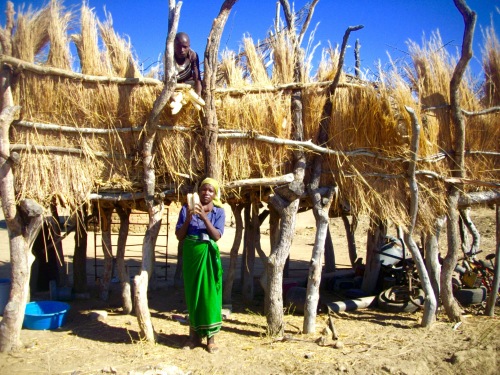
We investigated agricultural production across our communal area sites throughout Masvingo province during the 2016 and 2017 harvest seasons. These were relatively good rainfall years, with 690 mm recorded in Masvingo town in 2016-17, for instance. Compared to the past seasons, these were bumper harvest years, especially in the Lowveld site of Mwenezi.

Yet, as the table below shows, with the exception of Mwenezi, none of the sites produced on average sufficient grain to feed a family. If this is estimated to be one tonne of grain per year, three of the sites produced about half this amount on average. Of course there was a wide range, but across three sites only 14-18% households produced over a tonne of grain.

The Mwenezi results are unusual, given that this is drought prone area, but good soils under higher rainfall can produce the occasional good crop, especially as land areas are significantly higher. Here 51% of households produced over a tonne of grain on average across the two seasons, much of this from sorghum. Some sorghum is sold under contract to brewers, but most is retained for food, and because of good storage can tide people over through a number of years.

  Mwenezi Chivi Gutu West Gutu North
Maize 16/17 seasons average (kg) 915 543 509 613
Sorghum (kg) 1312 20 21 36
Pearl millet (kg) 0 3.4 3.9 0
Finger millet (kg) 3.3 1.7 37.6 52.5
% households producing over 1 tonne of grain (16/17 average) 51 16 14 18
Sunflower (kg) 5.8 0 18 12.7
Cotton (kg) 0 0 0 0
Groundnuts (kg) 73 182 189 220
Horticulture sales $ per household 26 6 5 8
Maize sales 16/17 seasons average(kg) 159 60 18 18
Zero maize sales 16/17 seasons (%) 85 89 96 95
Maize certified seed purchase (%) 59 88 90 100
Fertiliser purchase (%) 2 23 52 44
Manure applied (%) 3 37 44 65
Pesticide purchase (%) 40 41 45 23
Credit (%) 0 0 0 0
Contract (%) 13 0 0 0

Overall, crop diversity is limited. Outside Mwenezi, maize dominates, and pearl and finger millet have nearly disappeared, beyond being grown on very small plots for specialist production, usually for home brewing. Groundnuts are grown but not in large quantities and in these sites sunflowers are rare, because of the lack of markets these days. Cotton and tobacco are absent except for a few isolated cases.

Sales are also very limited. A few larger maize and sorghum producers sell, but most don’t. In fact across the two years on average 85%, 89%, 96% and 95% in the Mwenezi, Chivi, Gutu West and Gutu North communal area sites sold nothing, even in these relatively good years. With very few cash crops and little surplus to sell, this is largely a subsistence economy, one that requires off-farm income to supplement meagre agricultural production, as explored in a subsequent blog.

Tillage is especially reliant on access to livestock, which, as discussed in an earlier blog in this series, have a skewed ownership pattern. 50-68% of households use their own oxen, while others hire. Tractors are not a feature outside Mwenezi where a few have bought second-hand machines. Those with without other options must hoe their land, a feature most evident in Mwenezi.

% Mwenezi Chivi Gutu West Gutu North
Own oxen 54 68 51 50
Hired oxen 14 28 29 35
Loaned oxen 2 5 11 4
Own Tractor 7 0 0 0
Rented tractor 2 0 0 0
Hoeing 21 3 9 11

Big contrasts with the A1 resettlements

These patterns of agricultural production contrast significantly with the nearby A1 resettlement areas where, especially in the higher rainfall areas, production is higher. In 2010-11 for example, sites nearby the two Gutu sites produced on average 844kg and 1238kg of maize, with 38% of households selling surplus maize. Over the period from 2003-2013, 44% of households in those A1 sites produced more than one tonne of maize. Cultivated land areas are higher, averaging 3.2 ha in the resettlements near our Gutu sites, but also the intensity of production is greater, with higher inputs, including fertiliser (with over half of the households applying fertiliser).

As discussed in a later blog in this series, labour hiring is more common, both of permanent and temporary workers. Across our A1 land reform sites, excluding Mwenezi, over a third of households are regularly producing surpluses and reinvesting in the development of the farm. At the time of our last major census of A1 sites in 2011-12, the level of mechanisation was modest, however, with only half a dozen tractors across all the A1 sites, but this has changed since as people have invested in tractors and other equipment, notably pumps.

In the A1 resettlement areas, this results in a dynamic of accumulation for a significant group, where investments in farm and house improvements occur year on year. Not everyone manages this, and the patterns of differentiation – and associated dynamics of class formation – are very evident, with those not able to accumulate either dropping out and moving away or becoming wage labourers supporting the production of the accumulators.

Across the communal area sites this dynamic is not seen. Those able to realise surpluses are vanishingly few. Only around 15 percent in three of the areas achieved levels of output of grain sufficient to provide for household food needs, and even fewer sold surpluses. And this in relatively good rainfall years.

Although there is obvious differentiation in assets, production, labour hiring and so on, as other blogs in this series show, most communal area households are poor, unable to do much more than subsist off their farms and rely on off-farm incomes of various sorts. Agricultural production in the communal areas is therefore very low input and low output.

As the table shows, across the communal area sites, fertiliser input levels were low, although increasing in the wetter Gutu sites. Virtually no-one uses synthetic fertiliser or manure in Mwenezi, where soils are good and the potential for crop ‘burning’ due to excessive fertiliser is high. This contrasts with the sandy soils of the miombo areas further north, where higher rainfall and leaching means soil fertility is low and additions are required. In all sites, as another blog will discuss further, labour hiring is minimal, and outside Mwenezi collective work parties are very rare.

Perhaps surprisingly, given the low levels of production, outside Mwenezi the vast majority use certified maize seed, purchased hybrids or open-pollinated improved varieties. The proportion is less in Mwenezi, but still nearly 60%. The long-term commitment to improved varieties across Zimbabwe persists, supported by a 50-year tradition and continued extension reinforcement. This makes the economics of production of maize very risky, especially if purchased fertilisers are added too, and so this seed, along with most effort in agricultural production, is focused on the homefield areas, where extra labour, fertilisation and, if needed, additional irrigation can be applied. In small quantities, such maize may be produced as green maize for local consumption and sale rather than for grain.

Pesticides were bought by around a quarter of households, but these were in very small quantities and mostly applied to vegetables. Horticulture as a source of income, however, was highest (but not very high) in Mwenezi where irrigation projects provide opportunities. This again contrasts with the A1 resettlement areas, where informal irrigation has taken off in all sites, resulting in significant production of vegetables and green maize for market.

Finally, commercial credit was purchased by no one across the sites. Limited contracting for sorghum in Mwenezi provides some finance, but otherwise farmers are on their own. They rely on off-farm sources and remittances to finance agriculture, but overall, and by contrast to the A1 resettlements, this is a very low input, low output form of agriculture. Indeed, the possibilities of improvement are constrained. Land areas are small, soils are poor or rainfall is highly variable, labour is scarce and many farm owners are old and unable to invest effort.

Communal area projects: missing the mark

Agricultural production remains important of course, but more as stop-gap social security rather than as a basis for accumulation. This is vital given the absence of wider welfare opportunities and declining employment possibilities in Zimbabwe, but it is no surprise that government, NGO and donor food and cash for work schemes are an important source of livelihood for a significant group in these areas.

While there are many well-meaning projects aimed at improving agriculture in the communal areas of Masvingo province – usually with a ‘climate smart’ or ‘resilience building’ tag these days – you have to wonder whether these can have any impact, beyond marginal, often very labour intensive, improvements (like ‘conservation agriculture’). The communal areas, as discussed in other blogs, are structurally poor and disadvantaged and technical tinkering will make little difference. Maybe there are some high value, niche products that can be promoted – such as has been done with chillies in some parts of the country – but our Masvingo sites are in lower rainfall areas, more remote from markets, and it may make sense.

In sum, contrasting the communal areas with the A1 resettlements demonstrates how important land redistribution is if agriculture is to become more than a marginal, subsistence activity for most.

This post is the fourth in a series of nine and was written by Ian Scoones and first appeared on Zimbabweland.

This field research was led by Felix Murimbarimba and Jacob Mahenehene. Data entry was undertaken by Tafadzwa Mavedzenge

You know what it is?
Update on Statutory Instruments: Part 2

Post published in: Featured

The Firsts: Latinx Attorneys Who Paved the Way for Generations to Come

The legal profession is increasingly diverse, but it still has quite a way to go before the numbers truly reflect the nation at large. For example, only five percent of lawyers nationwide are Latino, despite Latinos comprising 18% of the general U.S. population. As Hispanic Heritage Month comes to a close, we honor five trailblazing Latino lawyers who forever changed the legal profession and the lives of future generations. Their perseverance paved the way for attorneys entering the field today.

Free Platform Connects Lawyers With Nonprofits For Pro Bono Help

(Image via Getty)

“We are passionate about the intersection of technology, law, and volunteerism.”

Those are the words of Sarah Baker, president and executive director of We The Action, a free digital platform that connects lawyers with leading nonprofit organizations across the nation in need of pro bono legal support.

As Pro Bono Week kicks off in the United States, We The Action offers an example of how technology can be used to encourage pro bono work by lawyers, by connecting the lawyers who want to volunteer their time with the organizations that need them — at no cost to either the lawyers or the nonprofits.

Since its launch in July 2017, We The Action has grown to more than 8,000 lawyers nationwide and more than 200 nonprofits, including Rock the Vote, Lawyers’ Committee for Civil Rights, Transgender Law Center, Justice for Military Families, and the American Immigration Lawyers Association.

Together, these lawyers and nonprofit partners have completed more than 3,000 pro bono projects valued at over $6.6 million in free legal services.

The organization launched at what Baker describes as a challenging time in our nation’s history, when a lot of people, including lawyers, where saying, “What can I do? How can I help?”

She was one of those. A lawyer whose past jobs include working in President Obama’s Office of White House Counsel, as senior policy director to Dr. Jill Biden, and as the senior pro bono associate at Hogan Lovells, she was one of the many lawyers who went to an airport to help after President Trump imposed his travel ban.

“It was an inspiring response, but also frustrating, because it was difficult to connect all those lawyers with actual client demand,” she recalled.

But her experience then and as pro bono coordinator at Hogan Lovells underscored for her the need for a better method to connect pro bono lawyers with clients who need them. When the board of directors of We the Action reached out to her, she jumped at the opportunity.

Initially, Baker focused on assembling a team and then building and testing the platform. Now, the organization is entering a new phase, in which it wants to expand awareness of its work and further grow its network of attorneys and nonprofits.

We the Action now has lawyers in every U.S. state. Of the 8,000 lawyers who have signed up to take cases, at least half have handled at least one project.

“It’s an active and engaged community,” Baker said. “The people who come have come for a reason. Our volunteer rate is higher than you might see elsewhere.”

For the nonprofits, the platform is appealing because it gives them access to lawyers and helps them ease off the administrative burden of managing their cases.

While We the Action has a broad progressive mission of defending the nation’s values and protecting its democracy, Baker says it is not a political organization and has no litmus test for the nonprofits it will help. Her organization does vet nonprofits before allowing them to join, and will not accept any that do not align with its core values.

Funding to incubate We the Action was provided by the Emerson Collective, the social-impact philanthropic organization founded by Laurene Powell Jobs, the widow of Apple cofounder and former CEO Steve Jobs.

Besides the We the Action site, the organization is involved in other projects at the intersection of law and technology. For example, to help the Lawyers’ Committee for Civil Rights Under Law manage its election-protection work, it built the site 866ourvote.org, which helps recruit and train lawyers to volunteer at polls on election days.

Going forward, Baker’s goal is to build We the Action from the marketplace it is now into more of a community.

“At base, we are a two-sided marketplace, but we would also like to be more of a community that helps connect lawyers to other lawyers as well as to nonprofits,” she said.

One sign that is already happening is We the Action’s Facebook page, which has nearly 12,000 members.

Baker says the organization encourages lawyers and nonprofits to share stories of successful projects accomplished through the site. I asked her if she has any favorites.

“Some of my favorite stories,” she answered, “are the small nonprofits that say, “But for you guys, we wouldn’t exist.’”


Robert Ambrogi Bob AmbrogiRobert Ambrogi is a Massachusetts lawyer and journalist who has been covering legal technology and the web for more than 20 years, primarily through his blog LawSites.com. Former editor-in-chief of several legal newspapers, he is a fellow of the College of Law Practice Management and an inaugural Fastcase 50 honoree. He can be reached by email at ambrogi@gmail.com, and you can follow him on Twitter (@BobAmbrogi).

SEC Increasingly Aware That Goldman Sachs Traders Are Deeply Desperate To Survive DJ D-Sol’s Purge

The blue windbreakers are now making biannual visits to the trading floors of 200 West Street.

DLA Piper Partner Accused Of Sexual Assault Speaks Out

Louis Lehot

The allegations against DLA Piper partner Louis Lehot have reverberated through Biglaw. Now Lehot has released a statement and over 40 pages of correspondence with his accuser, Vanina Guerrero.

Earlier this month, DLA Piper partner Vanina Guerrero released an open letter to the firm, and filed a complaint with the Equal Employment Opportunity Commission, alleging that the co-managing partner of the Silicon Valley office, Louis Lehot, repeatedly sexually assaulted her after she’d been recruited to the firm in 2018. She additionally asked the firm to release her from their mandatory arbitration agreement so she’d be able to pursue her claims in open court. The firm has been conspicuously silent on the forced arbitration agreement — despite the attention their arbitration stance in this case has garnered, but, they did announce that Lehot had been let go from the firm. Then the firm put Guerrero on leave, saying they’d uncovered allegations unrelated to Lehot during their investigation of her claims.

As reported by Law.com, today Lehot admitted to having an “emotional relationship” with Guerrero and he said that was the reason he agreed to leave the firm.  His statement also said in no uncertain terms that he does not believe Guerrero is a victim:

“I acknowledge poor judgment in developing an emotional relationship with Vanina Guerrero. I deeply regret the pain this has caused my family, colleagues, clients and friends,” Lehot continued. “This isn’t victim-blaming or victim-shaming. She’s not a victim here.”

Lehot also released emails that are purportedly between himself and Guerrero that he says show a friendly rapport between the two during the time of the alleged assault. Of course, it frequently takes time for victims of assault to process and name their experiences, particularly when they’ve been victimized by an acquaintance.

Guerrero’s attorney took this latest development as an opportunity to further push to be let out of her mandatory arbitration agreement:

Reached for comment Monday, Wigdor LLP partner Jeanne Christensen, who represents Guerrero, said, “By this, Louis Lehot is saying he’s OK with litigating in open court and no secret arbitration.”

DLA Piper has no new comment about this latest development.

What The Closing Of Rikers Means To The Criminal Justice Movement

Rikers Island sits on a slip of land encircled by barbed wire, tucked beneath open sky where the sound of prison alarms are punctuated by seagull cries and the steady overhead drone of jets leaving LaGuardia.  Looking out a cell window at the glistening water that separates Rikers from the mainland, an inmate is tantalized by freedom so close, yet impossible to attain.

Even for visitors, lawyers, or family members, Rikers has long been a black hole of poor management and isolation.  It takes the better part of a day to get there by public transportation, and once there, there’s no telling whether you’ll get in, or how long it will take to see the subject of your visit.

I’ve waited up to three hours only to be told at the end of a long morning that because of an alarm, “there’s no movement” in the building.

The funny thing is, the island itself is not a bad place as long as you’re not stuck in one of its 10 giant jails.  It’s surrounded by water. There’s a clean wind-swept smell.  The attorney is taken to the facility where his client is housed on an old-timey yellow school bus steered by a correction officer blasting R & B.  But that’s where the novelty stops. You’re then dropped at the prison gate and enter a soulless waiting room with barely a place to sit, either too cold or too hot, and a vending machine stocked with candy and chips for those unlucky enough not to have eaten before they came. Then the waiting starts.

New York officials have been talking about closing Rikers for years and last week voted to do just that.  They set a deadline of 2026 and promised to build four smaller prisons in each borough.  The stated motivation is to make it easier to get inmates to courts, for families to visit their loved ones, and also, hopefully, to provide better, cleaner, more humane facilities for inmates.  (Skeptics feel it’s about grabbing the Rikers real estate for more profitable uses.)

But is the idea that smaller, neighborhood prisons engender better treatment a pipe dream or a practical step in the de-carceration movement that might serve as a blueprint for cities around the country?

There’s no doubt that Rikers is a dangerous place.  I’ve had clients who’ve been stabbed, slashed, and beaten.  I had one case where an inmate was locked in an eight-by-ten cell 23 hours a day without air conditioning during a July heat wave.  He was punished for not obeying a “directive,” but had recently been stabbed so lay in his bed most of the time. Unbeknownst to him, a blood clot had developed in his leg that ran from his thigh to his shin. When he got up to leave segregation and return to general population, part of it broke off, migrated to his lungs, and killed him. My client was the guy who’d originally stabbed him.  Instead of assault, my client was then charged with murder under the theory that he was the proximate cause of the man’s death.

But creating smaller jails in neighborhoods doesn’t necessarily solve the problem.  Yes, such jails should be easier to visit.  There should be less red tape getting in and out of the facility and, theoretically, it should take less time to locate the inmate and escort him to the visit.  All of this is good. There might be more control over how the smaller prisons are run and who’s in charge.

But unless and until there’s reform in how we define the primary goal of jails which are currently warehousing and punishment, inmates won’t be treated any better and won’t be released in a position where they’re likely to have a chance at not re-offending.  Smaller does not necessarily mean safer or better.

There’s already a small prison in Brooklyn sandwiched between Schermerhorn and Atlantic Ave., adjacent to coffee shops, churches, and retail stores.  But even there, I’ve had clients injured in fights, beaten by corrections officers, and one was even poisoned.  They have no better education initiatives than Rikers, and in fact, because of the smaller size, have less space to hold such programs.

Moving the prisoners out of Rikers is only one small step toward criminal justice reform.  What needs to happen is a new approach to thinking about incarceration as a time not only to house offenders, but actually help them.  Inmates are literally a captive audience.  What better opportunity to take classes than when you can’t do anything else?

If we really want people to come out a step up from when they went in, education and mental-health and drug-abuse counseling are the best approaches.

Otherwise, it won’t matter if Rikers is closed or open. Putting guys in a pen with nothing to do but build their muscles, get frustrated, and pick fights only guarantees more trouble, no matter where they’re housed.


Toni Messina has tried over 100 cases and has been practicing criminal law and immigration since 1990. You can follow her on Twitter: @tonitamess.

Should Rudy Giuliani Be Disbarred?

Rudy Giuliani (Photo by Drew Angerer/Getty Images)

Mr. Giuliani’s comments in the media alone provide substantial basis to believe that he has repeatedly and egregiously engaged in conduct that adversely reflects on his honesty, trustworthiness, and fitness as a lawyer. [His conduct] also necessitates a complete investigation to determine whether he advised his client, the President, to engage in conduct that is illegal or fraudulent.

— Rep. Kathleen Rice (D-NY), a former New York district attorney and federal prosecutor, in a letter sent to the Attorney Grievance Committee for the New York Supreme Court’s First Judicial Department, where she called for Rudy Giuliani to be investigated for disbarment. Giuliani, who is reportedly the subject of several federal investigations and recently defied a congressional subpoena, had this to say about Rice’s attempt to have him disbarred: “Just part of the harassment. It really is outrageous trampling on the ability of a lawyer to defend his client.”


Staci ZaretskyStaci Zaretsky is a senior editor at Above the Law, where she’s worked since 2011. She’d love to hear from you, so please feel free to email her with any tips, questions, comments, or critiques. You can follow her on Twitter or connect with her on LinkedIn.

Overcoming Failure In Law School

These days, I spend the majority of my days working full-time at my bar exam coaching company, but I still moonlight as an adjunct professor of law (and sometimes even an adjunct professor of political science to college freshman, but that is a story for another day). 

Some of my students are required to take my classes for academic reasons and the mood in those classrooms can at times be tense, bordering on hostile. The students are angry because they are required to take a class they don’t believe they need and don’t think will help them. But on a deeper level, I believe they are upset with themselves and their perceived failure and I am the physical representation of all those things. It is much, much easier to be mad at me, their professors from last semester, the dean, and the school in general than it is to take a long, hard look at their own actions and responsibilities. 

While this situation sometimes creates a difficult-to-navigate classroom dynamic, I return to teach these classes again and again. This is not because I’m a masochist, but because I don’t view my classes as a manifestation of failure. Rather I see these classes as an opportunity to change, improve, and reach a different outcome than what these students are used to and expect.  

Through my teaching experiences, I’ve come to learn a lot about what law students perceive to be failure, such as getting “bad” grades, being placed in an academically mandated class, not getting on law review, not being in the top X percent of the class, not getting  a specific internship/externship/job, and the “ultimate” failure — failing the bar exam. 

Listen, I get it. Most law students are used to seeing all As and Bs in their undergraduate program, so it can be a real shock to the system to see a C on their transcript. It is a very humbling experience.  I can say this from firsthand experience… let’s just say you don’t want me to draft you a contract anytime in the near future. 

But, you might have noticed that I keep saying “perceived failures” instead of simply “failures.”  That is because basically every time I’ve “failed,” it has actually turned out to be one of the greatest things to happen to me.

Here are three “failures” just from my law school experience:

  1. Getting a C in contracts → Forced me to reevaluate my study methods and actually learn how to study which allowed me to crush the rest of law school and pass three bar exams on my first try. I also uncovered the skill set that has led me to build a business and career that I love. 
  2. I didn’t get a scholarship to cover living expenses in law school → Took a babysitting job working for two lawyers who helped me get amazing internships I otherwise probably wouldn’t have even gotten interviews for. 
  3. Didn’t get the post-grad job I wanted → Started running my own business one year out of law school and enjoy complete freedom over my time, schedule, and life today. 

None of those things felt good when they happened, but I didn’t let the “failure” eat me alive. Instead, I used the following five steps to overcome the “failure” and persevere. I have also used these steps to help countless law students when they are up against their own perceived failure. 

Be reflective and accept personal responsibility 

This is the hardest step, in my opinion, so we may as well get it out of the way first. It is crucially important for you to be reflective of your situation and accept personal responsibility where appropriate. I am not saying that you’re never going to get screwed over in law school. Sure, you might have an unfair or difficult experience with a professor, and if that happens, I hope you take advantage of the resources available to you through your school.

But, for the most part, if things aren’t going the way you want, the only person who has real control over fixing that is you. If you didn’t see the grades you were hoping for last year, it might be an issue of motivation or effort. However, more likely, it is an issue of “law school is brand new and I’m trying really hard but I have no idea what I’m doing.” Admitting that doesn’t make you a failure, stupid, or unworthy. It just makes you new at this. The sooner you can determine that there is a gap in the skill set that you have and the skill set that you need to have, the sooner you can get working on acquiring it. 

While this step is necessary, don’t get stuck here. While some students have real difficulty facing the role they play in their own achievements or lack thereof, other students over-identify, take things way too personally, and get really stuck in their feelings. That is not a helpful approach either. This step is about being honest and self-aware, not beating yourself up 

Seek advice 

Once you’ve taken the time to sort out your own thoughts and feelings on things, the next step to take is to seek out advice. Your life will be much easier if you can talk to someone who has “been there” and “done that.” If you determine your needs are academic, seek out the academic success department. Their job is to help you figure out “how-to” law school. Are mental health or emotional issues holding you back? Inquire about counseling services. Really stressed out about finding a job? Call up career services. If you aren’t sure where to start, your office of student services is probably a good place. Let the experts give you an outside perspective on your situation and give you some advice on how to reach your goals. 

Make a plan 

Using your own reflections and the expert advice that you received, formulate a plan. At this point, you know where you are, where you want to be, and what went wrong, and you have some pointers on things to change. Now you have to decide what steps you will take to reach those goals. If your goal is to improve your GPA, your plan may include making changes to the way you read and brief cases, take notes, create outlines, and do practice questions among other things. Whatever the goal, figure out the steps and write them down. 

Execute 

All the planning in the world won’t help you if you don’t take action. You absolutely must put your plan into action in order for it to work for you. And, spoiler alert, it won’t be easy. Change is hard. You already learned how to make outlines a certain way and that was hard enough. Now you have to unlearn that and learn something new. But, continuing to do the same thing even though you now know it won’t give you the results you want and know that there is a better way, won’t help you and will result in unnecessary stress. If executing a plan is not your strong suit, get an accountability system in place and let others help to keep you on track. 

Follow up and adjust 

I hate to break it to you, but this “plan” that you created is probably not perfect! There is a lot of trial and error that goes into learning new skills and reaching new goals. Set specific times where you will check back with your plan to see if it is still serving you and make adjustments as necessary. 

Law school, like life, is tough. Things are not always going to go the way you want or anticipated. You’ll fail sometimes, but that doesn’t mean you’re a failure. And fortunately, you can do something about it. Use these steps to take back control over your situation and fight to overcome any obstacles in your way.


Kerriann Stout is a millennial law school professor and founder of Vinco (a bar exam coaching company) who is generationally trapped between her students and colleagues. Kerriann has helped hundreds of students survive law school and the bar exam with less stress and more confidence. She lives, works, and writes in the northeast. You can reach her by email at info@vincoprep.com.

The Practice Of Law In The Age Of Artificial Intelligence

(Image via Getty)

The ever-hastening progress of legal technology continues to push law firms to a future where lawyers can do more than ever before, in a manner so efficient that the value being offered to clients is beyond compare. Although practice management, document management, and even legal research platforms have incorporated artificial intelligence and machine learning into their offerings, not all law firms have gotten on board with the new capabilities that this technology has made available to them.

Blue J Legal wants to help demystify the many ways lawyers can leverage AI and machine learning in their practices to improve results for clients. It’s unlikely that machines will ever replace lawyers, but one thing is becoming clear: lawyers who use artificial intelligence will replace lawyers who don’t.

Sign up below to join “Exploring artificial intelligence and the law,” an on-demand webinar hosted by Blue J Legal’s COO, Avi Brudner.